Todd Streelman

Todd Streelman
todd.streelman@biology.gatech.edu
Website

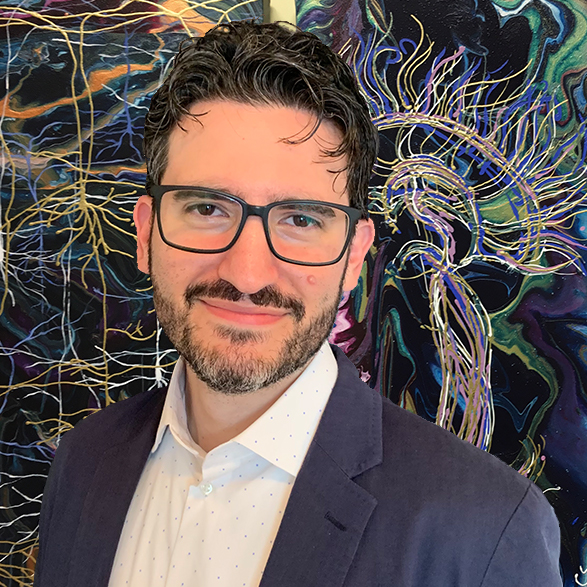
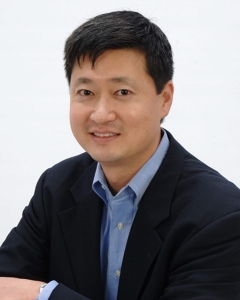
Streelman grew up in Chestertown Md, where he developed a keen interest in the outdoors. He graduated with a BS in Biology from Bucknell University. While there, he attended a semester (plus one cold winter-mester) at the Marine Biological Laboratory in Woods Hole Massachusetts — where a chance encounter with Les Kaufman, Karel Liem, a few jars of pickled fish and a dental X-ray technician led to his lifelong love of cichlids. Streelman won the Pangburn Scholar-Athlete award (lacrosse) at BU. As a PhD student with Stephen Karl, Streelman developed approaches to identify, clone and sequence multiple, independent single-copy nuclear loci to reconstruct accurate phylogenies for cichlid fishes and their relatives. These phylogenies changed perspective about how these species groups evolved, and allowed new and improved inference about the evolutionary history of key ecological traits. Multi-locus phylogenies are now the standard in the field. 

As a postdoc in Tom Kocher’s lab and then a young investigator at Georgia Tech, Streelman worked on the first unbiased quantitative genetic (QTL) studies in Malawi cichlids, some of the first such studies in evolutionary systems. In particular, work showed that adaptive features of the cichlid jaw and the striking orange-blotch color polymorphism had a simple genetic basis.  

Streelman was an Alfred P. Sloan Foundation Postdoctoral Fellow, an Alfred P. Sloan Foundation Faculty Research Fellow and a NSF CAREER Awardee.  

Over the past two decades as an independent investigator, with support from the NSF, NIH and the Human Frontier Science Program, Streelman’s group has pioneered genomic and molecular biology approaches in the Malawi cichlid system to solve problems difficult to address in traditional model organisms. Major projects include (i) tooth and taste bud patterning and regeneration; (ii) the underpinnings of complex behavior; and (iii) developmental diversification of the face and brain.  

Generally, we are captivated by context-dependent traits like development and behavior because they must be executed in space and time with exquisite control. We analyze and manipulate genomes and development in multiple species of Malawi cichlids, spanning divergence in embryonic/adult traits and behavior – and collaborate with folks studying these same traits in zebrafish, mouse and human. In 2014, Streelman helped to coordinate a large effort to sequence the genomes of five East African cichlids, including one from Lake Malawi. This was a landmark for our research community and has recast attention to genome-wide approaches. We are motivated by the prospect to dissect evolutionary change with genetic and cellular precision.  

In his free time, Streelman likes mountaineering, skipping rocks and pickling.
Professor and Chair
Phone
404-894-3700
Office
EBB 3007
Additional Research
Researchers in the Streelman lab use the cichlid fish model to address fundamental questions in ecology and evolution. We are fascinated by context-dependent processes like embryonic development, the regeneration of organs and complex behavior. Context-dependency is interesting because it reveals new rules of biological systems that are not necessarily operational during homeostasis. For instance, recent results suggest that stem-like cells in the brain may tune the evolution of male social behavior. We raise cichlids from Lake Malawi in custom fish facilities at Georgia Tech. We invent automated assays to quantify behavior, we sequence genomes and the transcriptomes of cells, and we collaborate with computational scientists, engineers and colleagues working in zebrafish, mouse and human. Members of the lab are keen to learn new things by working together, compelled by mechanism and comparative approaches.
Research Focus Areas
Google Scholar
https://scholar.google.com/citations?user=-aJZjvYAAAAJ&hl=en
http://biosci.gatech.edu/people/todd-streelman
Todd
Streelman
Show Regular Profile

Young-Hui Chang

Young-Hui Chang
yh.chang@ap.gatech.edu
Comparative Neuromechanics Laboratory

Young-Hui Chang is a professor in the School of Biological Sciences, Associate Dean of Faculty for College of Sciences, and director of research in the Georgia Tech Comparative Neuromechanics Lab where he studies the neuromechanics of movement in humans and other animals. Chang’s aim is to understand fundamental principles by which we control our movements as we move through our physical environment. This requires knowledge of the neural control of movement, the biomechanics of our musculoskeletal system, and the physics of our environmental interactions. The team also studies how our body adapts to acute and chronic changes. This involves processes of motor learning that are involved in everything from clinical rehabilitation to elite sports performance.

Professor
Phone
404-894-9993
Office
1309 B
Additional Research

Biomechanics

Neural signaling

Neuromechanics

Google Scholar
https://scholar.google.com/citations?user=97Xv4U4AAAAJ&hl=en&oi=ao
LinkedIn http://biosci.gatech.edu/people/young-chang
Young-Hui
Chang
Show Regular Profile

C. Ross Ethier

C. Ross Ethier
ross.ethier@bme.gatech.edu
Website

Prof. Ethier was originally trained as a mechanical engineer, receiving his Ph.D. from MIT in 1986 working in the lab of Roger D. Kamm. He then joined the University of Toronto, where he was a Professor of Bioengineering, Mechanical Engineering and Ophthalmology, and latterly the Director of the Institute of Biomaterials and Biomedical Engineering. Prior to joining Georgia Tech/Emory, Professor Ethier was the Head of the Department of Bioengineering at Imperial College, London from 2007-12. 

His research is in the biomechanics of cells and whole organs. His specific research topics include glaucoma (biomechanics of aqueous humour drainage in the normal and glaucomatous eye, and the mechanical and cellular response of optic nerve tissues to intraocular pressure), study of hemodynamic basis of arterial disease.

Professor
Georgia Research Alliance Lawrence L. Gellerstedt, Jr. Eminent Scholar in Bioengineering
Phone
404-385-0100
Office
Petit Biotechnology Building, Office 2306
Additional Research
"Biomechanics and mechanobiology, glaucoma, osteoarthritis, regenerative medicine, intraocular pressure control, optic nerve head biomechanics. We work at the boundaries between mechanics, cell biology and physiology to better understand the role of mechanics in disease, to repair diseased tissues, and to prevent mechanically-triggered damage to tissues and organs. Glaucoma is the second most common cause of blindness. We carry out a range of studies to understand and treat this disease. For example, we are developing a new, mechanically-based, strategy to protect fragile neural cells that, if successful, will prevent blindness. We are developing protocols for stem-cell based control of intraocular pressure. We study the mechanobiology and biomechanics of neurons and glial cells in the optic nerve head. We also study VIIP, a major ocular health concern in astronauts. Osteoarthritis is the most common cause of joint pain. We are developing paradigms based on magneto-mechanical stimulation to promote the differentiation and (appropriate) proliferation of mesenchymal stem cells."
Google Scholar
http://scholar.google.com/citations?user=YdRM39wAAAAJ
LinkedIn Related Site
C. Ross
Ethier
Show Regular Profile

Susan Margulies

Susan Margulies
susan.margulies@gatech.edu

Dr. Susan S. Margulies leads the U.S. National Science Foundation’s Directorate for Engineering in its mission to transform our world for a better tomorrow by driving discovery, inspiring innovation, enriching education, and accelerating access. With an annual budget of nearly $800 million, the NSF’s Engineering Directorate provides over 40 percent of federal funding for fundamental research in engineering at academic institutions, and it distributes more than 1500 awards supporting research and education each year. Projects funded by the Engineering Directorate span frontier research to generate new knowledge, problem-driven research to identify new solutions to societal challenges, and application-driven research to translate discoveries to uses that benefit society.

In partnership with industry and communities across the nation, the NSF’s investments in engineering research and education lead to innovative technologies and sustainable impacts in health, agriculture, clean energy and water, resilient infrastructure, advanced manufacturing and communication systems, and many other areas. NSF support also builds the Nation’s workforce capacity in engineering and supports the diversity and inclusion of engineers at all career stages. Together, the NSF’s investments in engineering research and education enhance prosperity, equity and quality of life for all Americans.

Margulies joined the NSF as the assistant director for the Directorate for Engineering in August 2021 after leading the Wallace H. Coulter Department of Biomedical Engineering at the Georgia Institute of Technology and Emory University. While on detail at the NSF, she is a professor and Georgia Research Alliance Eminent Scholar at Georgia Tech and Emory. She received her B.S.E. in mechanical and aerospace engineering at Princeton University, her Ph.D. in bioengineering from the University of Pennsylvania, and post-doctoral training at the Mayo Clinic. She joined the faculty at the University of Pennsylvania in 1993 as an assistant professor, rising through the ranks to professor. In 2017 she became the first faculty member tenured in both the Georgia Institute of Technology and Emory University, and she was a department chair in both the college of engineering at Georgia Tech and Emory’s school of medicine. 

Margulies is internationally recognized for pioneering studies spanning the micro-to-macro scales and across species to identify mechanisms underlying brain injuries in children and adolescents and lung injuries associated with mechanical ventilation, leading to improved injury prevention, diagnosis and treatments. She has launched numerous training and mentorship programs for students and faculty, created institute-wide initiatives to enhance diversity and inclusion, and led innovative projects in engineering education. 

Margulies’ transdisciplinary scholarly impact has been recognized by her election as fellow of the American Society of Mechanical Engineers, the Biomedical Engineering Society, and the American Institute for Medical and Biological Engineering, and as a member of the National Academy of Engineering and the National Academy of Medicine.  

Professor
National Science Foundation Engineering Directorate
Phone
404-385-5038
Office
UAW 2116
Additional Research
Biomechanics of brain injury, pediatric head injury, soft tissue mechanics, ventilator-induced lung injury, lung mechanics, pathways of cellular mechanotransduction, and tissue injury thresholds.My research in head injury will continue to focus on how and why head injuries occur in adults and children and to improve detection and treatment strategies. At Georgia Tech, I will be continuing that research, looking at innovative biomarkers and new devices to detect mild traumatic brain injuries. At Emory, my research will be focused on animal models for diffuse as well as focal brain injuries—incorporating developments at Georgia Tech into our preclinical model. I also look forward to close collaborations with Children's Healthcare of Atlanta and Emory University faculty to improve the outcomes after traumatic brain injuries.
Google Scholar
https://scholar.google.com/citations?user=tLrQhzIAAAAJ&hl=en
Related Site
Susan
Margulies
S.
Show Regular Profile

Zachary Danziger

Zachary Danziger
zachary.danziger@emory.edu
https://scholarblogs.emory.edu/danziger/

The effortlessness of moving your body belies the lurking complexity driving it. We are trying to understand how the nervous system makes something so complicated as controlling a human body feel so natural. We use human subjects studies, animal experiments, mathematical biology, and artificial intelligence to understand neural control of movement. New theories and insight promise advances in physical therapy, human-machine collaboration, brain-computer interfaces, neural modulation of peripheral reflexes, and more.

Associate Professor Division of Physical Therapy, Department of Rehabilitation Medicine
Associate Professor, W.H. Coulter Department of Biomedical Engineering
Phone
404-712-4801
University, College, and School/Department
Zachary
Danziger
Show Regular Profile

Michelle LaPlaca

Michelle LaPlaca
michelle.laplaca@bme.gatech.edu
Website

Michelle C. LaPlaca, Ph.D. is an Associate Professor in the Department of Biomedical Engineering, a joint department between Georgia Tech and Emory University. Dr. LaPlaca earned her undergraduate degree in Biomedical Engineering from The Catholic University of America, Washington, DC, in 1991 and her M.S.E. (1992) and Ph.D. (1996) in Bioengineering from the University of Pennsylvania, Philadelphia, PA, in the area of neuronal injury biomechanics. Following post-doctoral training in Neurosurgery at the University of Pennsylvania’s Head Injury Center from 1996-98, she joined the faculty at Georgia Tech. Dr. LaPlaca’s research interests are in neurotrauma, specifically: traumatic brain injury, injury biomechanics, cell culture modeling of traumatic injury, neural tissue engineering, and cognitive impairment associated with brain injury and aging. Her research is funded by NIH, NSF, and the Coulter Foundation.

Professor
Phone
404-385-0629
Office
UAW 3109
Additional Research
LaPlaca's broad research interests are in neurotrauma, injury biomechanics, and neuroengineering as they relate to traumatic brain injury (TBI). The goals are to better understand acute injury mechanisms in order to develop strategies for neuroprotection, neural repair, and more sensitive diagnostics. More specifically, the lab studies mechanotransduction mechanisms, cellular tolerances to traumatic loading, and plasma membrane damage, including mechanoporation and inflammatory- & free radical-induced damage. We are coupling these mechanistic-based studies with –omics discovery in order to identify new biomarker candidates. In addition, LaPlaca and colleagues have developed and patented an abbreviated, objective clinical neuropsychological tool (Display Enhanced Testing for Cognitive Impairment and Traumatic Brain Injury, DETECT) to assess cognitive impairment associated with concussion and mild cognitive impairment. An immersive environment, coupled with an objective scoring algorithm, make this tool attractive for sideline assessment of concussion in athletic settings. Through working on both basic and clinical levels she is applying systems engineering approaches to elucidate the complexity of TBI and promoting bidirectional lab-to-clinical translation.
Google Scholar
https://scholar.google.com/citations?user=Zod2gNUAAAAJ
Related Site
Michelle
LaPlaca
C.
Show Regular Profile

Shella Keilholz

Shella Keilholz
sk233@mail.gatech.edu
Website

Dr. Keilholz has been working in preclinical imaging for more than twenty years, with the goal of using animal models to improve the analysis of human MRI imaging. Her research uses multimodal approaches to extract information about neural dynamics from functional neuroimaging studies.

Associate Professor
Phone
404-727-2433
Office
Emory, HSRB W230
Additional Research
The goal of my research is to develop a method for mapping spontaneous activity throughout the whole brain with high spatial and temporal resolution, with the intention of using this technique to characterize alterations in dynamic neural activity linked to dysfunction and to identify potential targets for intervention. My primary expertise is in fMRI and functional connectivity mapping, and since my lab was established at Emory, we have focused on obtaining information about the dynamic activity of functional networks from the BOLD signal. Despite BOLD's indirect relationship to neural signals, evidence is growing that the BOLD fluctuations provide information about behaviorally relevant network activity. We take a two-pronged approach to the problem, combining MRI with direct neural measures like electrophysiology and optical imaging in the rodent, or with EEG and behavioral outputs in the human. Our effort to understand the relationship between BOLD and electrical or optical recordings (very different signals that cover very different spatial and temporal scales) has led us to develop new approaches to data analysis that include spectral, spatial, and temporal information. To better understand the large-scale dynamics of brain activity, we have become fluent in network modeling, nonlinear dynamics, and machine learning.
Research Focus Areas
Google Scholar
https://scholar.google.com/citations?user=OMS4d98AAAAJ&hl=en
LinkedIn
Shella
Keilholz
Show Regular Profile

Alberto Stolfi

Alberto Stolfi
alberto.stolfi@biosci.gatech.edu
Website

We study the simple larval nervous system of our closest invertebrate relatives, the tunicates. Tunicates, like us, belong to the Chordate phylum, but have very simple embryos and compact genomes. The laboratory model tunicate Ciona has only 177 neurons and is the only chordate with a fully mapped "connectome". We take advantage of this simplicity to understand molecular mechanisms that may underlie human neurodevelopment. We use transcriptome profiling to assay global transcriptional dynamics in neural progenitors during Ciona development, and use CRISPR/Cas9 to knock out important transcription factors and their downstream targets to understand how these gene networks control neuronal specification, morphology, physiology, neurotransmitter identity, and connectivity.

Assistant Professor
Phone
404-385-5975
Office
EBB 4014
Additional Research
We seek to answer how animal behavior is set up by the collective behaviors of individual cells, over the entire course of brain and spinal cord development. We want to understand how gene activity can instruct developing neurons to move around, change shape, and connect to other cells. To do this, we study the simple larval nervous system of our closest invertebrate relatives, the tunicates. Tunicates, like us, belong to the Chordate phylum, but have very simple embryos and compact genomes. The laboratory model tunicate Ciona has only 177 neurons and is the only chordate with a fully mapped "connectome". We take advantage of this simplicity to understand molecular mechanisms that may underlie human neurodevelopment.
Research Focus Areas
Google Scholar
https://scholar.google.com/citations?user=tux_KbEAAAAJ&hl=en
College of Sciences Profile
Alberto
Stolfi
S.
Show Regular Profile

Ravi Kane

Ravi Kane
ravi.kane@chbe.gatech.edu
Website

Ravi Kane is the Garry Betty/V Foundation Chair and GRA Eminent Scholar in Cancer Nanotechnology. He received a B.S. in Chemical Engineering from Stanford University in 1993. Also, he received an M.S. in Chemical Engineering Practice and a Ph.D. in Chemical Engineering from MIT, working with Bob Cohen and Bob Silbey. After postdoctoral research with George Whitesides in the Department of Chemistry and Chemical Biology at Harvard University, he joined Rensselaer Polytechnic Institute (RPI) as an assistant professor in 2001. He was promoted to associate professor in 2006, to full professor in 2007, and to the P.K. Lashmet Professor in 2008. He served as the head of RPI’s Howard P. Isermann Department of Chemical and Biological Engineering before moving to Georgia Tech in 2015. Prof. Kane has graduated 27 Ph.D students and contributed to over 130 scientific publications.

Professor
Garry Betty/V Foundation Chair
Georgia Research Alliance Eminent Scholar in Cancer Nanotechnology
Phone
404-385-4608
Office
EBB 5019
Additional Research
Professor Kane's groupconducts research at the interface of biotechnology and nanotechnology.The group is designing nanoscale polyvalent therapeutics and working on the molecular engineering of biosurfaces and nanostructures. A major focus of the group's research involves the design of polyvalent ligands, i.e., nanoscale scaffolds presenting multiple copies of selected biomolecules.The Kane group has made seminal contributions to a fundamental understanding of polyvalent recognition and has designed polyvalent inhibitors that are effectivein vivo.Currently, the group is designing polyvalent molecules that control stem cell fate as well as polyvalent inhibitors of pathogens such as HIV and influenza.The group is also designing nanoscale scaffolds for antigen presentation as part of novel strategies for designing vaccines.The approach could lead to the development of "universal" influenza vaccines as well as effective vaccines targeting RSV and malaria.Other interests of the group involve optogenetics — the development and application of methods that use light to control cell function — as well as the design of enzymes and nanocomposites that target antibiotic-resistant pathogens.
Google Scholar
https://scholar.google.co.uk/citations?user=QkjzSXgAAAAJ&hl=en&oi=sra
Related Site
Ravi
Kane
S.
Show Regular Profile

Levi Wood

Levi Wood
levi.wood@me.gatech.edu
Website

Dr. Wood completed his graduate training at the Massachusetts Institute of Technology. While there he worked under the guidance of Drs. H. Harry Asada and Roger Kamm to develop and use microfluidics to identify mechanisms governing vascular geometry. 

During his postdoc, Dr. Wood worked under Dr. Kevin Haigis (Beth Israel Deaconess Medical Center and Harvard Medical School) and Dr. Douglas Lauffenburger (Massachusetts Institute of Technology) to use systems biology to identify novel signaling mechanisms driving neuronal death in Alzheimer's disease and epithelial cell death during intestinal inflammation.

Associate Professor
Phone
404-385-4465
Office
Petit Biotechnology Building, Office 3303
Additional Research
Our research focuses on applying systems analysis approaches and engineering tools to identify novel clinical therapeutic targets for complex diseases. It is challenging to develop new treatments for these diseases, such as Alzheimer's disease(AD) and Traumatic Brain Injury (TBI), because they do not have a single genetic cause and they simultaneously present broad physiologic changes. By combining novel engineeredin vitroplatforms, mouse models, and multivariate computational systems analysis, we will be able to 1) capture a holistic systems-level understanding of complex diseases, and 2) isolate specific mechanisms driving disease. The ultimate goal of our laboratory is to use these tools to identify new mechanisms driving disease onset and progression that will translate to effective therapeutic strategies.
Google Scholar
https://scholar.google.com/citations?user=iK5nEOYAAAAJ&hl=en
Related Site
Levi
Wood
Show Regular Profile