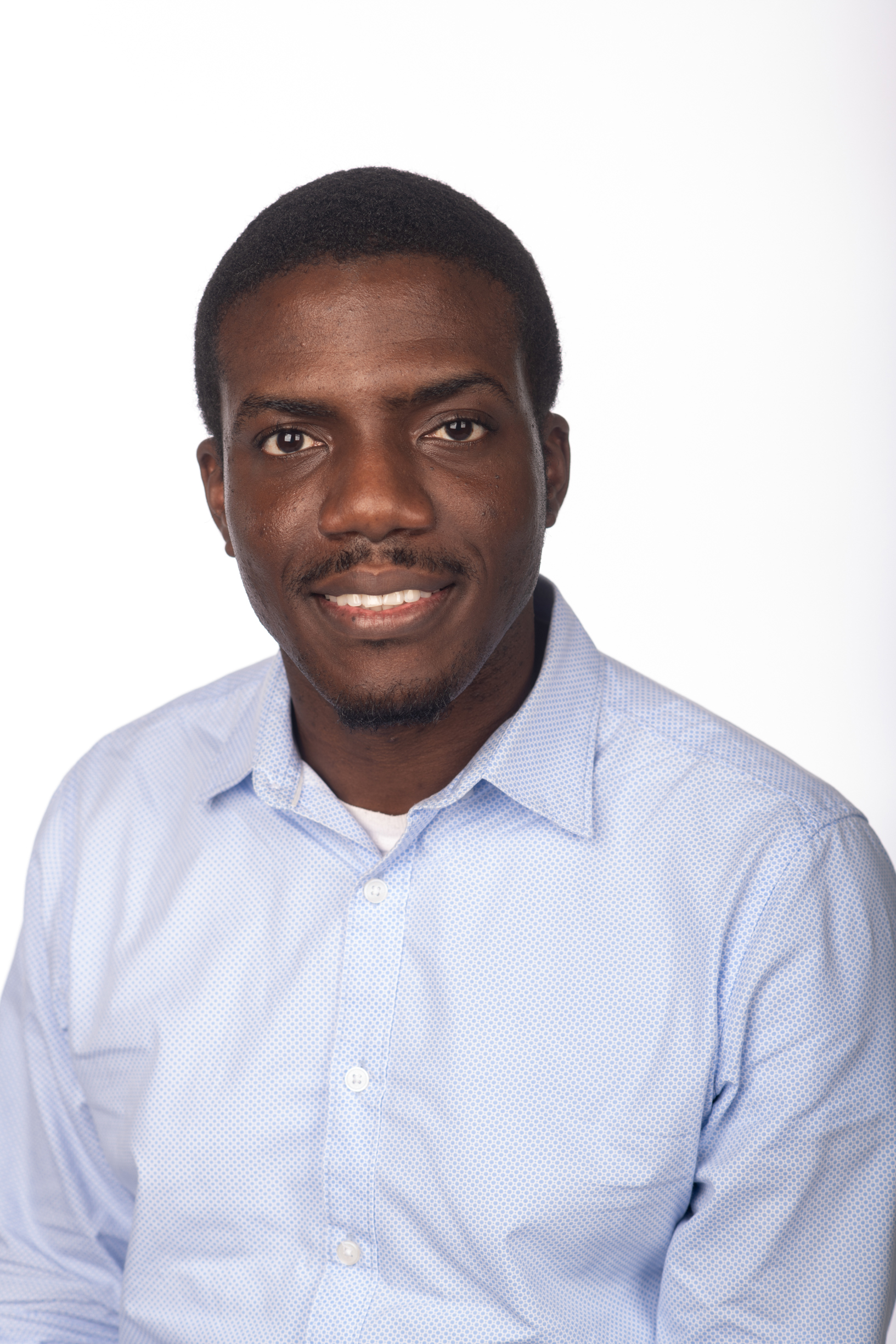
David Anderson

David Anderson
david.anderson@ece.gatech.edu
ECE Profile Page

David V. Anderson received the B.S and M.S. degrees from Brigham Young University and the Ph.D. degree from Georgia Institute of Technology (Georgia Tech) in 1993, 1994, and 1999, respectively. He is currently a professor in the School of Electrical and Computer Engineering at Georgia Tech. Anderson's research interests include audio and psycho-acoustics, machine learning and signal processing in the context of human auditory characteristics, and the real-time application of such techniques. His research has included the development of a digital hearing aid algorithm that has now been made into a successful commercial product. Anderson was awarded the National Science Foundation CAREER Award for excellence as a young educator and researcher in 2004 and the Presidential Early Career Award for Scientists and Engineers in the same year. He has over 150 technical publications and 8 patents/patents pending. Anderson is a senior member of the IEEE, and a member the Acoustical Society of America, and Tau Beta Pi. He has been actively involved in the

Professor, School of Electrical and Computer Engineering
Phone
404.385.4979
Office
TSRB 543
Additional Research

Audio and Psycho-AcousticsBio-DevicesDigital Signal ProcessingLow-Power Analog/Digital/Mixed-Mode Integrated Circuits 

Google Scholar
https://scholar.google.com/citations?hl=en&user=b9_uwfcAAAAJ&view_op=list_works&sortby=pubdate
LinkedIn
David
Anderson
Show Regular Profile

Srinivas Aluru

Srinivas Aluru
aluru@cc.gatech.edu
Website

Srinivas Aluru is executive director of the Institute for Data Engineering and Science (IDEaS) and professor in the School of Computational Science and Engineering at Georgia Institute of Technology. He co-leads the NSF South Big Data Regional Innovation Hub which nurtures big data partnerships between organizations in the 16 Southern States and Washington D.C., and the NSF Transdisciplinary Research Institute for Advancing Data Science. Aluru conducts research in high performance computing, large-scale data analysis, bioinformatics and systems biology, combinatorial scientific computing, and applied algorithms. An early pioneer in big data, Aluru led one of the eight inaugural mid-scale NSF-NIH Big Data projects awarded in the first round of federal big data investments in 2012. He has contributed to NITRD and OSTP led white house workshops, and NSF and DOE led efforts to create and nurture research in big data and exascale computing. He is a recipient of the NSF Career award, IBM faculty award, Swarnajayanti Fellowship from the Government of India, the John. V. Atanasoff Discovery Award from Iowa State University, and the Outstanding Senior Faculty Research Award, Dean's award for faculty excellence, and the Outstanding Research Program Development Award at Georgia Tech. He is a Fellow of AAAS, IEEE, and SIAM, and is a recipient of the IEEE Computer Society Golden Core and Meritorious Service awards.

Sr. Assoc. Dean, College of Computing
Professor, College of Computing
Co-Lead PI, NSF South Big Data Regional Innovation Hub
Phone
404.385.1486
Additional Research

Bioinformatics; High Performance Computing; Systems Biology; Combinatorial Scientific Computing; Applied Algorithms

Google Scholar
https://scholar.google.com/citations?hl=en&user=YOGOScoAAAAJ&view_op=list_works&sortby=pubdate
Srinivas
Aluru
Show Regular Profile

Ghassan AlRegib

Ghassan AlRegib
alregib@gatech.edu
Website

Prof. AlRegib is currently the John and Marilu McCarty Chair Professor in the School of Electrical and Computer Engineering at the Georgia Institute of Technology. His group is the Omni Lab for Intelligent Visual Engineering and Science (OLIVES) at Georgia Tech. In 2012, he was named the Director of Georgia Tech’s Center for Energy and Geo Processing (CeGP). He is the director of the Center for Signal and Information Processing (CSIP). He also served as the Director of Georgia Tech’s Initiatives and Programs in MENA between 2015 and 2018. He has authored and co-authored more than 300 articles in international journals and conference proceedings. He has been issued several U.S. patents and invention disclosures. He is a Fellow of the IEEE.

Prof. AlRegib received the ECE Outstanding Graduate Teaching Award in 2001 and both the CSIP Research and the CSIP Service Awards in 2003. In 2008, he received the ECE Outstanding Junior Faculty Member Award. In 2017, he received the 2017 Denning Faculty Award for Global Engagement. He and his students received the Beat Paper Award in ICIP 2019. He received the 2024 ECE Distinguished Faculty Achievement Award at Georgia Tech. He and his students received the Best Paper Award in ICIP 2019 and the 2023 EURASIP Best Paper Award for Image communication Journal.

Prof. AlRegib participated in a number of activities. He has served as Technical Program co-Chair for ICIP 2020 and ICIP 2024. He served two terms as a member of the IEEE SPS Technical Committees on Multimedia Signal Processing (MMSP) and Image, Video, and Multidimensional Signal Processing (IVMSP), 2015-2017 and 2018-2020. He was a member of the Editorial Boards of both the IEEE Transactions on Image Processing (TIP), 2009-2022, and the Elsevier Journal Signal Processing: Image Communications, 2014-2022. He was a member of the editorial board of the Wireless Networks Journal (WiNET), 2009-2016 and the IEEE Transaction on Circuits and Systems for Video Technology (CSVT), 2014-2016. He was an Area Chair for ICME 2016/17 and the Tutorial Chair for ICIP 2016. He served as the chair of the Special Sessions Program at ICIP’06, the area editor for Columns and Forums in the IEEE Signal Processing Magazine (SPM), 2009–12, the associate editor for IEEE SPM, 2007-09, the Tutorials co-chair in ICIP’09, a guest editor for IEEE J-STSP, 2012, a track chair in ICME’11, the co-chair of the IEEE MMTC Interest Group on 3D Rendering, Processing, and Communications, 2010-12, the chair of the Speech and Video Processing Track at Asilomar 2012, and the Technical Program co-Chair of IEEE GlobalSIP, 2014. He lead a team that organized the IEEE VIP Cup, 2017 and the 2023 IEEEE VIP Cup. He delivered short courses and several tutorials at international events such as BigData, NeurIPS, ICIP, ICME, CVPR, AAAI, and WACV.

In the Omni Lab for Intelligent Visual Engineering and Science (OLIVES), he and his group work on robust and interpretable machine learning algorithms, uncertainty and trust, and human in the loop algorithms. The group studies interventions into AI systems to enhance their trustworthiness. The group has demonstrated their work on a wide range of applications such as Autonomous Systems, Medical Imaging, and Subsurface Imaging. The group is interested in advancing the fundamentals as well as the deployment of such systems in real-world scenarios. His research group is working on projects related to machine learning, image and video processing, image and video understanding, subsurface imaging, perception in visual data processing, healthcare intelligence, and video analytics. The primary applications of the research span from Autonomous Vehicles to Portable AI-based Ophthalmology and Eye Exam and from Microscopic Imaging to Seismic Interpretation. The group was the first to introduce modern machine learning to seismic interpretation.

In 2024, and after more than three years of continuous work, he co-founded Georgia Tech’s AI Makerspace. The AI Makerspace is a resource for the entire campus community to access AI. Its purpose is to democratize access to AI. Together with his team, they are developing tools and services for the AI Makerspace via a VIP Team called AI Makerspace Nexus. In addition, he created two AI classes from scratch with innovative hands-on exercises using the AI Makerspace. One class is the ECE4252/8803 FunML class (Fundamentals of Machine Learning) where students learn the basics of Machine Learning as well as eight weeks of Deep learning both mathematically and using hands-on exercises on real-world data. The second class is a sophomore-level AI Foundations class (AI First) that teaches any student from any college the basics of AI such as data literacy, learning, decision, planning, and ethics using theory and hands-on exercises on the AI Makerspace. Prof. AlRegib wrote two textbooks for both classes.

Prof. AlRegib has provided services and consultation to several firms, companies, and international educational and R&D organizations. He has been a witness expert in a number of patents infringement cases and Inter Partes Review (IRP) cases.

John and Marilu McCarty Chair Professor, School of Electrical and Computer Engineering
Center Director
Phone
404-894-7005
Office
Centergy-One Room 5224
Additional Research

Machine learning, Trustworthy AI, Explainable AI (XAI), Robust Learning Systems, Multimodal Learning, Annotations Diversity in AI Systems


Google Scholar
https://scholar.google.com/citations?hl=en&user=7k5QSdoAAAAJ&view_op=list_works
LinkedIn Related Site
Ghassan
AlRegib
Show Regular Profile

Mark Borodovsky

Mark Borodovsky
borodovsky@gatech.edu
Website

Dr. Borodovsky and his group develop machine learning algorithms for computational analysis of biological sequences: DNA, RNA and proteins. Our primary focus is on prediction of protein-coding genes and regulatory sites in genomic DNA. Probabilistic models play an important role in the algorithm framework, given the probabilistic nature of biological sequence evolution.

Regents' Professor
Director, Center for Bioinformatics and Computational Genomics
Senior Advisor in Bioinformatics, Division of High Consequence Pathogens and Pathology, Centers for Disease Control and Prevention in Atlanta
Phone
404-894-8432
Office
EBB 2105
Additional Research

Development and applicaton of new machine learning and pattern recognition methods in bioinformatics and biological systems. Development and applicaton of new machine learning and pattern recognition methods in bioinformatics and biological systems. Chromatin; Epigenetics; Bioinformatics

Google Scholar
https://scholar.google.com/citations?user=ciQ3dn0AAAAJ&hl=en&oi=ao
LinkedIn GeneMark
Mark
Borodovsky
Show Regular Profile

Amirali Aghazadeh

Amirali Aghazadeh
aaghazadeh3@gatech.edu
Profile Page

Amirali Aghazadeh is an Assistant Professor in the School of Electrical and Computer Engineering and also program faculty of Machine Learning, Bioinformatics, and Bioengineering Ph.D. programs. He has affiliations with the Institute for Data Engineering and Science (IDEAS) and Institute for Bioengineering and Biosciences. Before joining Georgia Tech, Aghazaeh was a postdoc at Stanford and UC Berkeley and completed his Ph.D. at Rice University. His research focuses on developing machine learning and deep learning solutions for protein and small molecular design and engineering.
 

Assistant Professor
Phone
713-257-5758
Office
CODA S1209
Google Scholar
https://scholar.google.com/citations?hl=en&user=87wBxzUAAAAJ&view_op=list_works&sortby=pubdate
Amirali
Aghazadeh
Show Regular Profile

Alexander T. Adams

Alexander Adams
aadams322@gatech.edu
https://www.uncommonsenselabs.com

Alex Adams’s research focuses on designing, fabricating, and implementing new ubiquitous and wearable sensing systems. In particular, he is interested in how to develop these systems using equity-driven design principles for healthcare. Alex leverages sensing, signal processing, and fabrication techniques to design, deploy, and evaluate novel sensing technologies.

Originally a musician, Alex became fascinated by how he could capture and manipulate sounds through analog hardware and digital signal processing, which led him back to his hometown (Concord, NC). Alex completed his BS at the University of North Carolina at Charlotte in 2014 and his Ph.D. at Cornell University in 2021 (advised by Professor Tanzeem Choudhury). Alex then became the resident Research Scientist for the Precision Behavioral Health Initiative at Cornell Tech (NYC) until the fall of 2022, when he joined the School of Interactive Computing at the Georgia Institute of Technology. Currently, his research focuses on the equity-driven design and the development of multi-modal sensing systems to simultaneously assess mental and physical health to enable a new class of mobile health technologies.

Assistant Professor
Office
237 TSRB
Google Scholar
https://scholar.google.com/citations?hl=en&user=assJWZYAAAAJ&view_op=list_works&sortby=pubdate
Alexander
Adams
T.
Show Regular Profile

Jacob Abernethy

Jacob Abernethy
prof@gatech.edu
Website

Jacob Abernethy is an Associate Professor in the College of Computing at Georgia Tech. He started his faculty career in the Department of Electrical Engineering and Computer Science at the University of Michigan. He completed his Ph.D. in Computer Science at the University of California at Berkeley, and then spent two years as a Simons postdoctoral fellow at the CIS department at UPenn. Abernethy's primary interest is in Machine Learning, with a particular focus in sequential decision making, online learning, online algorithms and adversarial learning models. He did his Master's degree at TTI-C, and his Bachelor's Degree at MIT.

Director for Student Engagement, IDEaS
Jacob
Abernethy
Show Regular Profile

Wenke Lee

Wenke Lee
wenke@cc.gatech.edu
Website

Wenke Lee, Ph.D., is executive director of the Institute for Information Security & Privacy (IISP) and responsible for continuing Georgia Tech's international leadership in cybersecurity research and education. Additionally, he is the John P. Imlay, Jr. Professor of Computer Science in the College of Computing at Georgia Tech, where he has taught since 2001. Previously, he served as director of the IISP's predecessor -- the Georgia Tech Information Security Center (GTISC) research lab -- from 2012 to 2015. Lee is one of the most prolific and influential security researchers in the world. He has published several dozen, oft-cited research papers at top academic conferences, including the ACM Conference on Computer and Communications Security, USENIX Security, IEEE Security & Privacy ("Oakland"), and the Network & Distributed System Security (NDSS) Symposium. His research expertise includes systems and network security, botnet detection and attribution, malware analysis, virtual machine monitoring, mobile systems security, and detection and mitigation of information manipulation on the Internet. Lee regularly leads large research projects funded by the National Science Foundation (NSF), U.S. Department of Defense, Department of Homeland Security, and private industry. Significant discoveries from his research group have been transferred to industry, and in 2006, doing so enabled Lee to co-found Damballa, Inc., which focused on detection and mitigation of advanced persistent threats. Lee’s awards and honors include the “Internet Defense Prize” awarded by Facebook and USENIX in 2015, an “Outstanding Community Service Award” from the IEEE Technical Committee on Security and Privacy in 2013, a Raytheon Faculty Fellowship in 2005, an NSF Career Award in 2002, as well as best paper awards in the IEEE Symposium on Security and Privacy and the ACM SIGKDD International Conference on Knowledge Discovery and Data Mining. Passionate about quality education, Lee serves on the advisory boards of the Faculty of Engineering at the Chinese University of Hong Kong and the board of trustees at Pace Academy in Atlanta. He received his Ph.D. in Computer Science from Columbia University in 1999.

Executive Director, Institute for Information Security and Privacy
Co-Executive Director, SEI
Professor
Phone
404.385.2879
Additional Research

Data Security & Privacy; Encryption; Internet Infrastructure & Operating Systems; Machine Learning; Cyber Technology

Wenke
Lee
Show Regular Profile

Adonis Bovell

Adonis Bovell
adonis.bovell@gtri.gatech.edu

Adonis Bovell leads the algorithm assurance branch in the Assured Software and Information Division of GTRI’s CIPHER Lab. His group’s work focuses on the security benefits and risks associated with the application of advanced algorithms to cybersecurity problems. This entails research on model robustness, trustworthiness and privacy, including data valuation and synthetic data generation, formal verification and adversarial machine learning, and privacy and fairness. Previously, Bovell has worked on automated malware analysis and malicious network traffic detection.

Branch Head, Algorithm Assurance, Assured Software and Information Division (ASID)
Additional Research

ML Privacy

GTRI
Geogia Tech Research Institute > Cybersecurity, Information Protection, and Hardware Evaluation Research Laboratory
Adonis
Bovell
Show Regular Profile

Julie Swann

Julie Swann
julie.swann@isye.gatech.edu
Website

Julie Swann is the department head and A. Doug Allison Distinguished Professor of the Fitts Department of Industrial and Systems Engineering. She is an affiliate faculty in the Joint Department of Biomedical Engineering at both NC State and the University of North Carolina at Chapel Hill. Before joining NC State, Swann was the Harold R. and Mary Anne Nash Professor in the Stewart School of Industrial and Systems Engineering at the Georgia Institute of Technology. There she co-founded and co-directed the Center for Health and Humanitarian Systems (CHHS), one of the first interdisciplinary research centers on the Georgia Tech campus. Starting with her work with CHHS, Swann has conducted research, outreach and education to improve how health and humanitarian systems operate worldwide.

Adjunct Professor
A. Doug Allison Distinguished Professor and Department Head
NC State
Additional Research

Swann is a research leader in using mathematical modeling to enable supply chain systems and health care to become more efficient, effective, or equitable. Recent collaborations have been to quantify the return on public investments to improve pediatric asthma, plan for infectious disease outbreaks, analyze administrative claims data from Medicaid patients across the US, and design systems with decentralized decision-makers.

University, College, and School/Department
Julie
Swann
Show Regular Profile