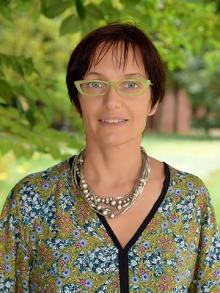
Vince Calhoun

Vince Calhoun
vcalhoun@gatech.edu
Learn more

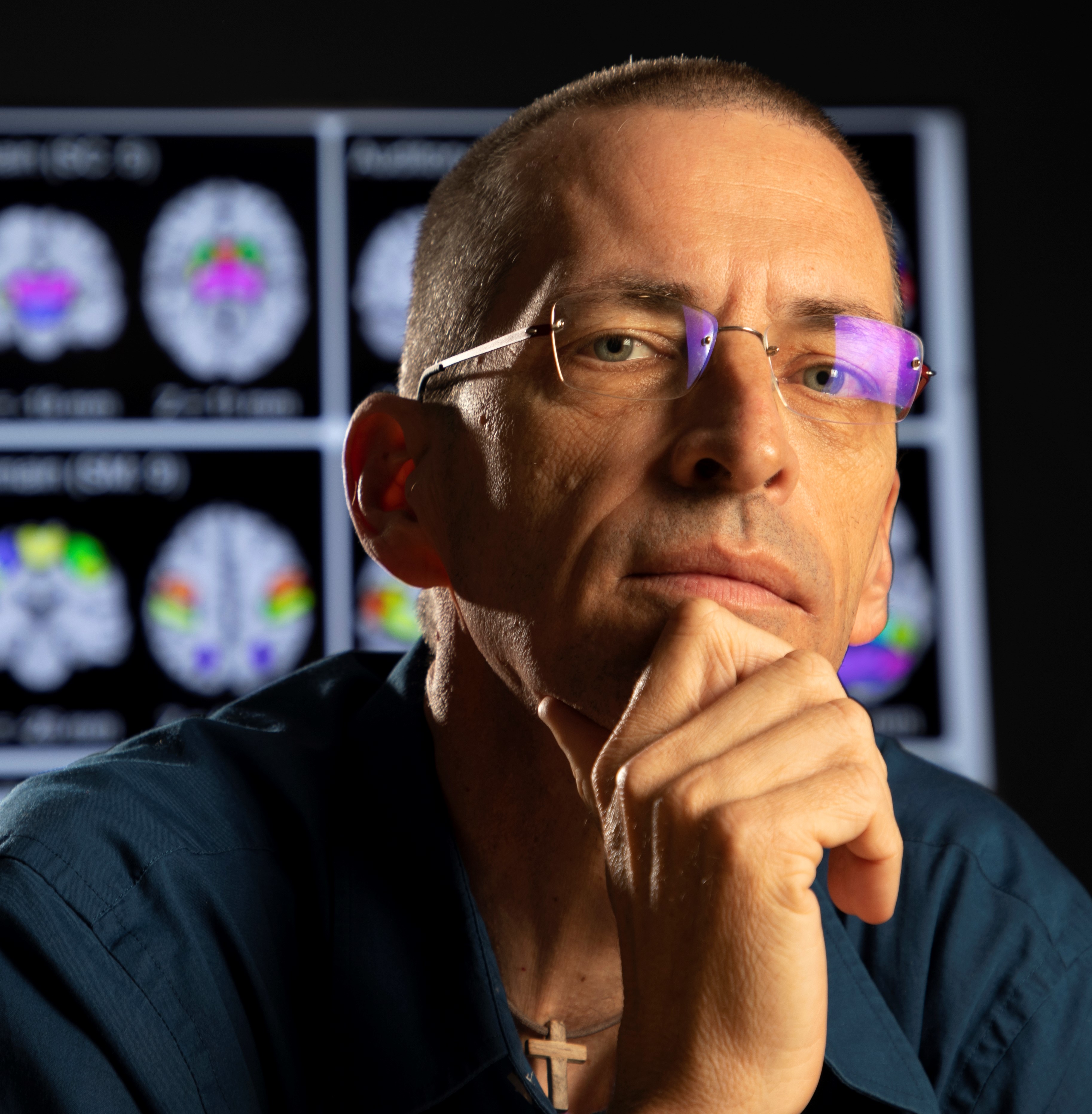
Vince Calhoun, Ph.D., is the founding director of the tri-institutional Center for Translational Research in Neuroimaging and Data Science (TReNDS) where he holds appointments at Georgia State, Georgia Tech and Emory. He is the author of more than 900 full journal articles. His work includes the development of flexible methods to analyze neuroimaging data including blind source separation, deep learning, multimodal fusion and genomics, neuroinformatics tools. Calhoun is a fellow of the Institute of Electrical and Electronic Engineers, The American Association for the Advancement of Science, The American Institute of Biomedical and Medical Engineers, The American College of Neuropsychopharmacology, The Organization for Human Brain Mapping (OHBM) and the International Society of Magnetic Resonance in Medicine. He currently serves on the IEEE BISP Technical Committee and is also a member of IEEE Data Science Initiative Steering Committee as well as the IEEE Brain Technical Committee.

Director TReNDS
Director CABI
Distinguished University Professor
Vince
Calhoun
Show Regular Profile

Julia Kubanek

Julia Kubanek
julia.kubanek@biosci.gatech.edu
Lab Website

Julia Kubanek serves as Georgia Tech’s Vice President for Interdisciplinary Research and is a professor in the School of Biological Sciences and the School of Chemistry and Biochemistry. In this role, she oversees and supports interdisciplinary activities at Georgia Tech including the Interdisciplinary Research Institutes (IRIs); the Pediatric Technology Center (PTC), the Novelis Innovation Hub; the Center for Advanced Brain Imaging (CABI); and the Global Center for Medical Innovation (GCMI). She also partners across the institute on developing and advancing new research initiatives based on student and faculty interests, expertise, and societal need.

Kubanek has held several previous leadership roles at Georgia Tech, including Associate Dean for Research in the College of Sciences and Associate Chair in the School of Biological Sciences. She joined the faculty at Georgia Tech in 2001. Her areas of research interest include chemical signaling among organisms (especially in aquatic systems), natural products chemistry, metabolomics, chemical biology, and drug discovery. She has authored approximately 100 research articles on marine plankton and coral reef chemical ecology, and on the discovery, mechanism of action, and biosynthesis of marine natural products. She was awarded the NSF CAREER Award in 2002, the Presidential Early Career Award for Scientists and Engineers (PECASE) in 2004, and was elected Fellow of the American Association for the Advancement of Science (AAAS) in 2012. In 2016, she served as chair of the Gordon Research Conference in Marine Natural Products; since 2016, she has chaired the Scientific Advisory Board of the Max Planck Institute for Chemical Ecology. Kubanek received her B.Sc. in Chemistry from Queen’s University, Canada, in 1991 and her Ph.D. in at the University of British Columbia in 1998, and performed postdoctoral research at the University of California – San Diego and the University of North Carolina at Wilmington.

Professor
Vice President of Interdisciplinary Research
Phone
404-894-8424
Office
ES&T 2242
Additional Research
All organisms use chemicals to assess their environment and to communicate with others. Chemical cues for defense, mating, habitat selection, and food tracking are crucial, widespread, and structurally and functionally diverse. Yet our knowledge of chemical signaling is patchy, especially in marine environments. In our research we ask, "How do marine organisms use chemicals to solve critical problems of competition, disease, predation, and reproduction?" Our group uses an integrated approach to understand how chemical cues function in ecological interactions, working from molecular to community levels. We also use ecological insights to guide discovery of novel pharmaceuticals and molecular probes. In collaboration with other scientists, our most significant scientific achievements to date are: 1) characterizing the unusual molecular structures of antimicrobial defenses that protect algae from pathogens and which show promise to treat human disease; 2) understanding that competition among single-celled algae (phytoplankton) is mediated by a complex interplay of chemical cues that affect harmful algal bloom dynamics; 3) unraveling the molecular modes of action of antimalarial natural products towards developing new treatments for drug-resistant infectious disease; 4) discovering that progesterone signaling and quorum sensing are key pathways in the alternating sexual and asexual reproductive strategy of microscopic invertebrate rotifers - animals whose evolutionary history was previously thought to preclude either cooperative behavior (quorum sensing) typically associated with bacteria and hormonal regulation via progesterone typically seen in vertebrates; 5) identifying a novel aversivechemoreception pathway in predatory fish thatresults inrapid recognition and rejectionofchemically defended foods, thereby protecting these foods (prey) from predators. Ongoing projects include: 1) Waterborne chemical cues in the marine plankton: a systems biology approach (including metabolomics); 2) Exploration, conservation, and development of marine biodiversity in Fiji and the Solomon Islands (including drug discovery, mechanisms of action, and chemical ecology); 3) The role of sensory environment and predator chemical signal properties in determining non-consumptive effect strength in cascading interactions on oyster reefs; 4) Regulation of red tide toxicity by chemical cues from marine zooplankton; 5) Chemoreception of prey chemical defenses on tropical coral reefs.
Google Scholar
https://scholar.google.com/citations?user=AxeeT2wAAAAJ&hl=en&oi=ao
http://biosciences.gatech.edu/people/julia-kubanek
Julia
Kubanek
M.
Show Regular Profile

Shoichiro Ono, Ph.D.

Shoichiro Ono, Ph.D.
sono@emory.edu
Website

The Shoichiro's lab primary research interest is the mechanisms that regulate dynamic rearrangement of the actin cytoskeleton during various cellular events including development, cell movement, cytokinesis, and human diseases. We have been studying this problem using the nematode Caenorhabditis elegans as a model system. C. elegans has been used to study many aspects of development, because of its relative simplicity in the body patterning, and application of genetics, molecular biology, biochemistry, and cell biology. We are especially interested in the functions of the actin depolymerizing factor (ADF)/cofilin family of actin-binding proteins, which are required for enhancement of actin filament dynamics. We found that two ADF/cofilin proteins that are generated from the unc-60 gene have different actin-regulating activities. Mutation and expression analyses demonstrated that one of the two ADF/cofilin isoforms (UNC-60B) was specifically required for organized assembly of actin filaments in muscle. ADF/cofilin promotes depolymerization and severing of actin filaments, but tropomyosin inhibits this effect by stabilizing filaments. The other ADF/cofilin isoform (UNC-60A) is highly expressed in early embryos and regulates cytokinesis and embryonic patterning. In addition, we found that actin-interacting protein 1 (AIP1) is a new regulator of muscle actin filaments. AIP1 (UNC-78) specifically interacts with ADF/cofilin-bound actin filaments and enhances filament depolymerization. We also found that the gene product of sup-12 (an RBM24 homolog) regulates alternative splicing of the unc-60 gene and is required for generation of the unc-60B mRNA. We are currently studying functions of these proteins and other regulators of actin dynamics in several developmental aspects in C. elegans.

Associate Professor of Pathology and Laboratory Medicine
Associate Professor of Cell Biology
Phone
404.727.3916
Office
615 Michael Street, Whitehead Biomedical Research Building Room 105N, Atlanta, GA 30322
University, College, and School/Department
Google Scholar
https://scholar.google.com/citations?user=tq7ihbkAAAAJ&hl=en
NCBI
Shoichiro
Ono
Show Regular Profile

Aditi Das

Aditi Das
aditi.das@chemistry.gatech.edu
Chemistry Profile

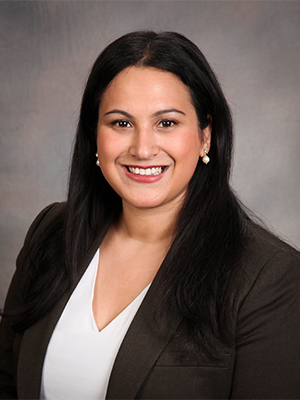
Aditi Das did her BSc. (Hons.) Chemistry from St. Stephen's College Delhi, followed by M.S. (Chemistry) from I.I.T (Kanpur). She received her Ph.D. in Chemistry from Princeton University. She did post-doctoral work with Prof. Steve Sligar. She joined University of Illinois, Urbana-Champaign (UIUC) as a tenure track assistant professor in 2012. In 2019, she was promoted to associate professor with tenure. In 2022, she joined School of Chemistry and Biochemistry at Georgia Institute of Technology as an associate professor with tenure. Her research is in the area of enzymology of oxygenases that are involved lipid metabolism and cannabinoid metabolism.

Das is recipient of an American Heart Associate (AHA) career award and has been funded by National Institute of Health (NIH - NIGMS, NIDA and NCCIH), USDA, and National Multiple Sclerosis Society (NMSS). Her research was recognized by several National awards: Young Investigator award From Eicosanoid Research Foundation, Mary Swartz Rose Young Investigator Award and E.L.R. Stokstad award from American Society for Nutrition (ASN) for outstanding research on bioactive compounds for human health. She is also the recipient of Zoetis Research Excellence Award from her college. She was a co-organizer of the International Conference on Cytochrome P450. Recently her laboratory contributed several papers on cannabinoid metabolism by p450s. In recognition of this work, she was awarded El Sohly award from the ACS-Cannabis division for excellence in Cannabis research and is invited to give plenary lecture at ISSX meeting.  Das is also a standing study section member of BBM NIH study section. 

Associate Professor
Phone
609-203-6924
Office
3306 IBB
Aditi
Das
Show Regular Profile

Shaheen Dewji, Ph.D.

Shaheen Dewji, Ph.D.
shaheen.dewji@gatech.edu

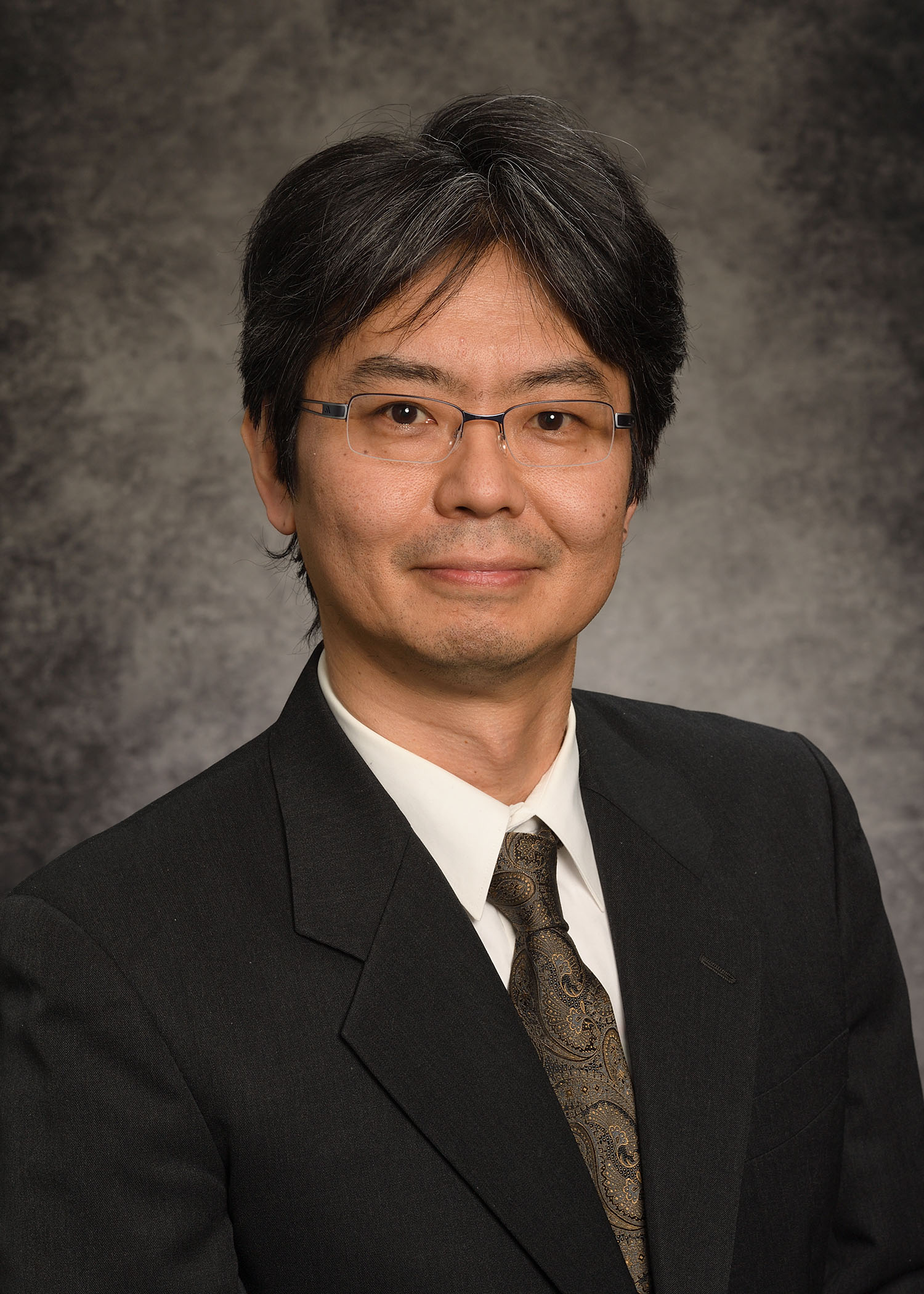
Shaheen Azim Dewji, Ph.D., (she/her/hers) is an Assistant Professor in the Nuclear & Radiological Engineering and Medical Physics Programs at the Georgia Institute of Technology, where she leads the Radiological Engineering, Detection, and Dosimetry (RED²) research group. Dewji joined Georgia Tech following three years as faculty at Texas A&M University in the Department of Nuclear Engineering, and as a Faculty Fellow of the Center for Nuclear Security Science and Policy Initiatives (NSSPI). In her prior role at Oak Ridge National Laboratory, where she remained for almost 9 years, Dewji was Radiological Scientist in the Center for Radiation Protection Knowledge. Her research interests include development of dose coefficients, shielding design, and nuclear material detection assay using gamma-ray spectroscopy. Her recent work has focused on associated challenges in uncertainty quantification in dose estimation/reconstruction associated with the external exposure and internal uptake of radionuclides associated with applications of emergency response, defense, nuclear medicine, and occupational/public safety using Monte Carlo radiation transport codes and internal dose modeling. Dewji completed her Masters and Ph.D. degrees in Nuclear and Radiological Engineering at the Georgia Institute of Technology in Atlanta, GA and was a fellow of the Sam Nunn Security Program. She received her Bachelor of Science in Physics from the University of British Columbia. Dewji currently serves on the National Academies of Science, Engineering, and Medicine – Nuclear and Radiation Studies Board and is a member of the Board of Directors for both the American Nuclear Society and Health Physics Society.
   

Assistant Professor
Phone
404.894.5800
Office
Boggs 3-15
Lab
Shaheen
Dewji
Azim
Show Regular Profile

Ming-fai Fong

Ming-fai Fong
ming-fai.fong@bme.gatech.edu
https://fong-lab.github.io/

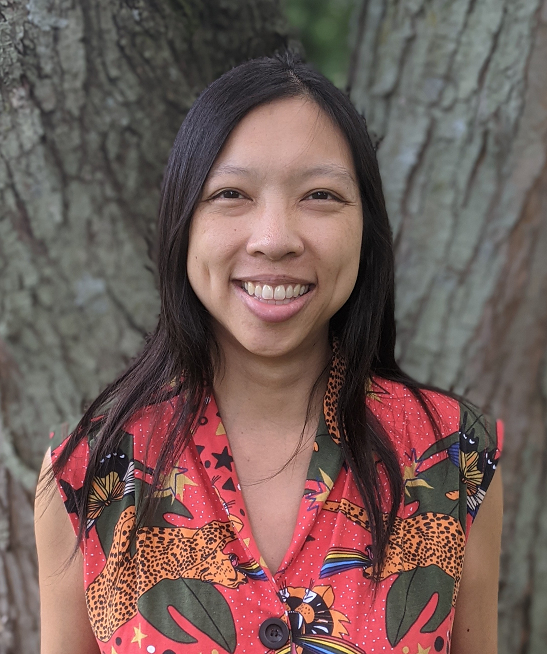
Ming-fai Fong is an Assistant Professor in the Coulter Department of Biomedical Engineering at Georgia Tech and Emory. She received her BS in Mechanical Engineering from MIT and Ph.D. in Neuroscience from Emory University. She completed her postdoctoral training in the Department of Brain and Cognitive Sciences at MIT and a visiting lectureship in the Neuroscience Department at Wellesley College.
 

Assistant Professor
Phone
404.894.6059
Office
UAW 3103
Ming-fai
Fong
Show Regular Profile

Munmun De Choudhury

Munmun De Choudhury
munmund@gatech.edu
http://www.munmund.net/biography.html

Munmun De Choudhury is an Associate Professor at the School of Interactive Computing in Georgia Institute of Technology. Dr. De Choudhury is renowned for her groundbreaking contributions to the fields of computational social science, human-computer interaction, and digital mental health. Through fostering interdisciplinary collaborations across academia, industry, and public health sectors, Dr. De Choudhury and her collaborators have contributed significantly to advancing the development of computational techniques for early detection and intervention in mental health, as well as in unpacking how social media use benefits or harms mental well-being. De Choudhury's contributions have been recognized worldwide, with significant scholarly impact evidenced by numerous awards like induction into the SIGCHI Academy and the 2023 SIGCHI Societal Impact Award. Beyond her academic achievements, Dr. De Choudhury is a proactive community leader, a persistent contributor to policy-framing and advocacy initiatives, and is frequently sought for expert advice to governments, and national and international media.


Associate Professor; Director of Social Dynamics and Well-Being Laboratory; Co-Lead of Children's Healthcare of Atlanta Pediatric Technology Center at Georgia Tech's Patient-Centered Care Delivery
Phone
4043858603
Munmun
De Choudhury
Show Regular Profile

Arthi Rao

Arthi Rao
arthir@gatech.edu
Profile

Arthi Rao is a research scientist at the Center for Quality Growth and Regional Development at Georgia Tech. She has had a consistent focus on Health and Place research throughout her career. She has an interdisciplinary educational and professional background in Urban Planning, Epidemiology and Geographic Information Systems (GIS) from Georgia Tech. Her research interests focus on social determinants of health, healthcare access, healthy communities, and spatial methods. She uses methods including spatial clustering, data mining/classification techniques and hierarchical modeling in her research. She has integrated these methods to create decision-support tools for academic and industrial applications.

She regularly collaborates with researchers at The Morehouse School of Medicine, Georgia Tech, and the American Planning Association as a subject matter expert on healthy communities’ research and geospatial methods. She has published in journals on the topics of Health Impact Assessment (HIA), sustainability, walkability analysis, regional planning, and therapeutic landscapes. She also teaches courses titled “Public Health and the Built Environment” and “Public Health Analytics” at Georgia Tech.

Specialization Area: Health and Environment

Part-Time Lecturer, School of City & Regional Planning
Research Scientist II, Center for Quality Growth and Regional Development
University, College, and School/Department
Arthi
Rao
Show Regular Profile

Annalisa Bracco

Annalisa Bracco
abracco@gatech.edu
Website

Dr. Annalisa Bracco is a professor at Georgia Tech with extensive background in computational fluid dynamics and physical oceanography. Her research interests include coastal ocean circulation, with focus on meso- and submesoscale processes, ocean predictability and inverse dynamics, impacts of physical forcing on ecosystems, and climate model validation. Her group has been involved in field collections during the Deepwater Horizon spill (July/Aug. 2010) and was back in the Gulf in the summer of 2011.

Associate Chair and Professor; Earth and Atmospheric Sciences
Additional Research
  • Data Mining
  • Climate Modeling
  • Computational Fluid Dynamics
Research Focus Areas
University, College, and School/Department
Annalisa
Bracco
Show Regular Profile

Munmun De Choudhury

MDC

Munmun De Choudhury is an Associate Professor at the School of Interactive Computing in Georgia Institute of Technology. Dr. De Choudhury is renowned for her groundbreaking contributions to the fields of computational social science, human-computer interaction, and digital mental health. Through fostering interdisciplinary collaborations across academia, industry, and public health sectors, Dr.