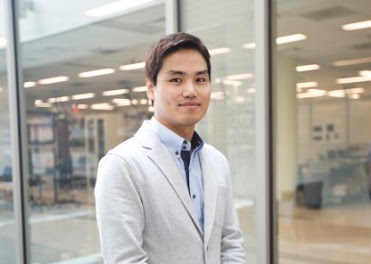
W. Hong Yeo

W. Hong Yeo
woonhong.yeo@me.gatech.edu
ME Profile Page

Dr. Yeo holds the titles of G.P. "Bud" Peterson and Valerie H. Peterson Endowed Professor, as well as Harris Saunders Jr. Endowed Professor, in the Woodruff School of Mechanical Engineering and the Coulter Department of Biomedical Engineering at Georgia Tech. He is also the director of the Wearable Intelligent Systems and Healthcare Center (WISH Center) and the KIAT-Georgia Tech Semiconductor Electronics Center (K-GTSEC). Dr. Yeo's research focuses on understanding the fundamentals of soft materials, deformable mechanics, interfacial physics, manufacturing, and the integration of hard and soft materials for the development of biomedical systems. He earned his Ph.D. in mechanical engineering and genome sciences from the University of Washington in Seattle and subsequently worked as a postdoctoral research fellow at the University of Illinois at Urbana-Champaign. With over 180 peer-reviewed publications, Dr. Yeo has contributed to many prestigious journals, including Nature Materials, Nature Machine Intelligence, Nature Communications, and Science Advances. He is an IEEE Senior Member and has received numerous awards, including the Visiting Professorship from the Institute Jean Lamour at the Université de Lorraine in France, the Lucy G. Moses Lectureship Award at the Mount Sinai School of Medicine, the NIH Trailblazer Young Investigator Award, the IEEE Outstanding Engineer Award, the Emory School of Medicine Research Award, the Imlay Innovation Award, the American Heart Association Innovative Project Award, the Sensors Young Investigator Award, the Med-X Young Investigator Award, and the Outstanding Service Award from the Korea Institute for Advancement of Technology, as well as the Outstanding Yonsei Scholar Award. Dr. Yeo is also the founder of two startup companies: Huxley Medical, Inc. and WisMedical, Inc.

Professor, Woodruff School of Mechanical Engineering
Faculty, Wallace H. Coulter Department of Biomedical Engineering
Director, WISH Center
Phone
404.894.9425
Office
Marcus Nano 4133
Additional Research

Human-machine interface; hybrid materials; bio-MEMS; Soft robotics. Flexible Electronics; Human-machine interface; hybrid materials; Electronic Systems, Devices, Components, & Packaging; bio-MEMS; Soft robotics. Yeo's research in the field of biomedical science and bioengineering focuses on the fundamental and applied aspects of biomolecular interactions, soft materials, and nano-microfabrication for the development of nano-biosensors and soft bioelectronics.
Google Scholar
https://scholar.google.com/citations?hl=en&user=ryhsv18AAAAJ&view_op=list_works&sortby=pubdate
Bio-Interfaced Translational Nanoengineering Group Wearable Intelligent Systems and Healthcare Center (WISH Center)
W. Hong
Yeo
Show Regular Profile

Alex Abramson

Alex Abramson
aabramson6@gatech.edu
Abramson Lab

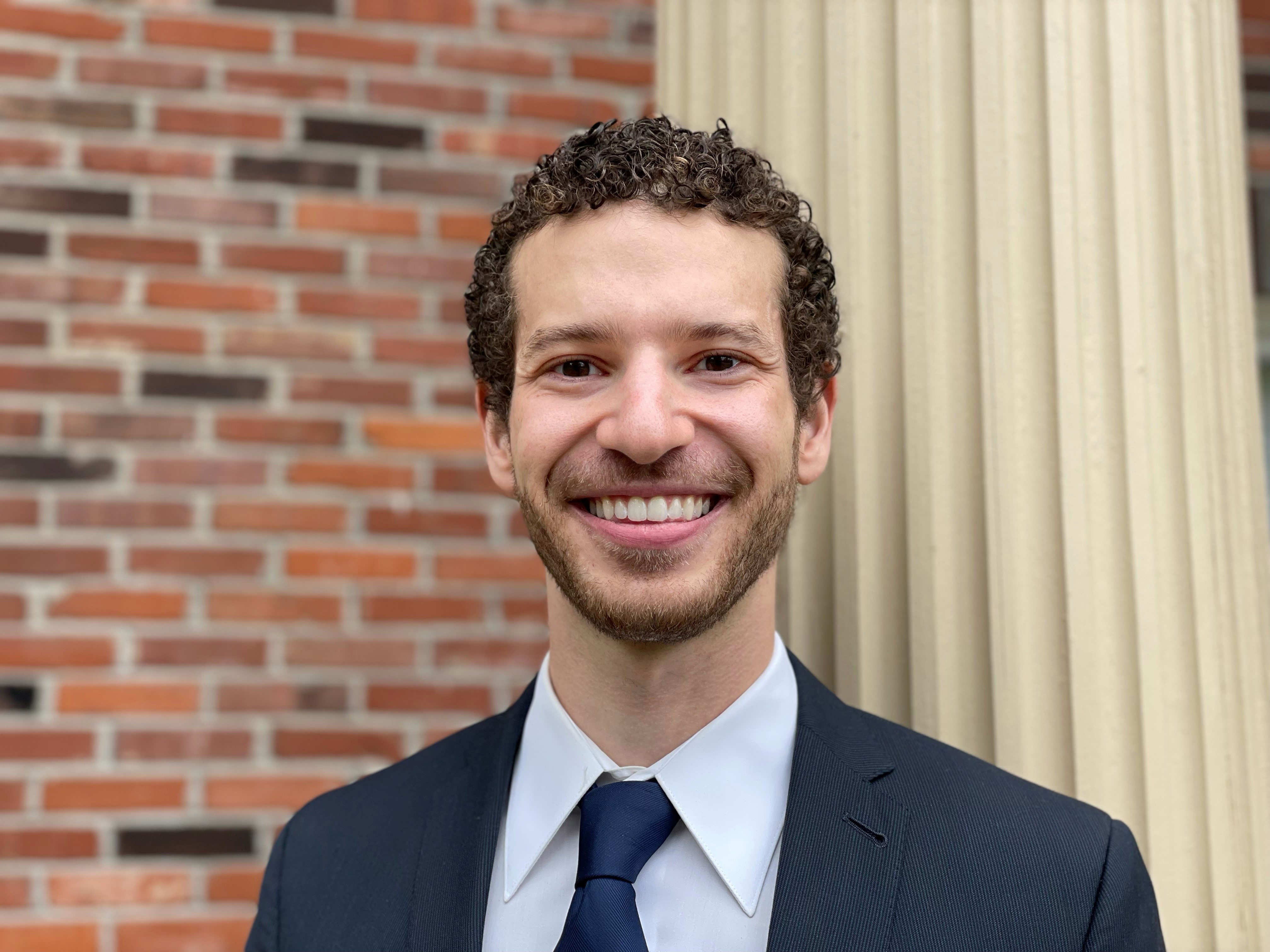
Alex Abramson is an assistant professor in the School of Chemical and Biomolecular Engineering at Georgia Tech. His research, which focuses on drug delivery and bioelectronic therapeutics, has been featured in news outlets such as The New York Times, NPR, and Wired. Abramson has received several recognitions for scientific innovation, including being named a member of the Forbes 30 Under 30 Science List and the MIT Technology Review Innovators Under 35 List. He is passionate about translating scientific endeavors from bench to bedside. Large pharmaceutical companies have exclusively licensed a portfolio of his patents to bring into clinical trials, and Abramson serves as a scientific advisor overseeing their commercialization. In addition to his scientific endeavors, Abramson plays an active role in his community by leading diversity and inclusion efforts on campus and volunteering as a STEM tutor to local students.

Abramson received a B.S. in chemical and biomolecular engineering from Johns Hopkins University and a Ph.D. in chemical engineering from MIT as an NSF Graduate Research Fellow under the direction of Professors Robert Langer and Giovanni Traverso. He conducted postdoctoral work at Stanford University as an NIH fellow with Professors Zhenan Bao and the late Sanjiv S. Gambhir.

The Abramson Lab develops ingestible, implantable, and wearable robotic therapeutic devices that solve key healthcare problems and provide measurable therapeutic outcomes. Our translationally focused research spans a multitude of areas, including (1) drug delivery devices for optimal drug adherence, (2) soft materials for bioelectronic sensors and therapeutics, and (3) preclinical drug screening technologies.

Assistant Professor, School of Chemical and Biomolecular Engineering
Office
MoSE 4120B
Additional Research
  • Biosensors
Google Scholar
https://scholar.google.com/citations?user=9-E5owYAAAAJ
ChBE Profile Page
Alex
Abramson
Show Regular Profile

Manos Tentzeris

Manos  Tentzeris
etentze@ece.gatech.edu
ECE Profile Page

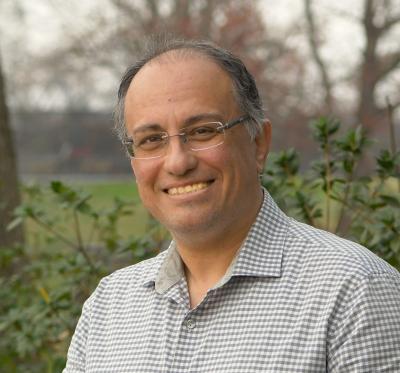
Manos Tentzeris was born and grew up in Piraeus, Greece. He graduated from Ionidios Model School of Piraeus in 1987 and he received the Diploma degree in Electrical Engineering and Computer Science (Magna Cum Laude) from the National Technical University in Athens, Greece, in 1992 and the M.S. and Ph.D. degrees in Electrical Engineering and Computer Science from the University of Michigan, Ann Arbor in 1993 and 1998. He is currently a Professor with the School of ECE, Georgia Tech and he has published more than 550 papers in refereed Journals and Conference Proceedings, 4 books and 23 book chapters, while he is in the process of writing 1 book. He has served as the Head of the Electromagnetics Technical Interest Group of the School of ECE, Georgia Tech. Also, he has served as the Georgia Electronic Design Center Associate Director for RFID/Sensors research from 2006-2010 and as the GT-Packaging Research Center (NSF-ERC) Associate Director for RF research and the leader of the RF/Wireless Packaging Alliance from 2003-2006. Also, Dr. Tentzeris is the Head of the A.T.H.E.N.A. Research Group (20 students and researchers) and has established academic programs in 3D Printed RF electronics and modules, flexible electronics, origami and morphing electromagnetics, Highly Integrated/Multilayer Packaging for RF and Wireless Applications using ceramic and organic flexible materials, paper-based RFID 's and sensors, inkjet-printed electronics, nanostructures for RF, wireless sensors, power scavenging and wireless power transfer, Microwave MEM 's, SOP-integrated (UWB, mutliband, conformal) antennas and Adaptive Numerical Electromagnetics (FDTD, MultiResolution Algorithms). He was the 1999 Technical Program Co-Chair of the 54th ARFTG Conference and he is currently a member of the technical program committees of IEEE-IMS, IEEE-AP and IEEE-ECTC Symposia. He was the TPC Chair for the IMS 2008 Conference and the Co-Chair of the ACES 2009 Symposium. He was the Chairman for the 2005 IEEE CEM-TD Workshop. He was the Chair of IEEE-CPMT TC16 (RF Subcommittee) and he was the Chair of IEEE MTT/AP Atlanta Sections for 2003. He is a Fellow of IEEE, a member of MTT-15 Committee, an Associate Member of European Microwave Association (EuMA), a Fellow of the Electromagnetics Academy, and a member of Commission D, URSI and of the the Technical Chamber of Greece. He is the Founder and Chair of the newly formed IEEE MTT-S TC-24 (RFID Technologies). He is one of the IEEE C-RFID DIstinguished Lecturers and he has served as one IEEE MTT-Distinguished Microwave Lecturers (DML) from 2010-2012. His hobbies include basketball, swimming, ping-pong and travel.

Ken Byers Professor in Flexible Electronics, School of Electrical and Computer Engineering
Phone
404.385.1478
Office
TSRB 539
Additional Research

3D-Printed/Inkjet-Printed RF Electronics, Batteries and Sensors "Green" and sustainable energy harvesting (e.g. RF, mechanical, thermal, UV) and Wireless Power Transfer systemsNanotechnology-based Ultrasensitive Sensors Origami Antennas and RF Modules with Morphing Characteristics Novel Flexible Electronics, Packaging & 3D Modules up to mm-wave Frequency-range Wearable and Implantable Wireless Body-Area Networks Internet of Things, "Smart Skin", "Zero-Power", and "Smart Energy" ApplicationsReal-Time Multiresolution Algorithms for the Analysis and Design of Wireless Communication Front-Ends.Novel RFID Antennas, Architectures and Sensor Systems

Google Scholar
https://scholar.google.com/citations?hl=en&user=zMR4S7EAAAAJ&view_op=list_works&sortby=pubdate
LinkedIn
Manos
Tentzeris
Show Regular Profile

Madhavan Swaminathan

Madhavan Swaminathan
Professor Emeritus
Additional Research

Numerical methods in electromagneticsMixed signal designSignal, power, and thermal integrityPower deliveryIC-Package Co-design

Google Scholar
https://scholar.google.com/citations?hl=en&user=jkhJfqQAAAAJ&view_op=list_works&sortby=pubdate
ECE Profile Page
Madhavan
Swaminathan
Show Regular Profile

Muhannad S. Bakir

Muhannad S. Bakir
muhannad.bakir@mirc.gatech.edu
Integrated 3D Systems Group @ GT

Muhannad S. Bakir is the Dan Fielder Professor in the School of Electrical and Computer Engineering at Georgia Tech. He and his research group have received more than thirty paper and presentation awards including six from the IEEE Electronic Components and Technology Conference (ECTC), four from the IEEE International Interconnect Technology Conference (IITC), and one from the IEEE Custom Integrated Circuits Conference (CICC). Bakir’s group was awarded 2014 and 2017 Best Papers of the IEEE Transactions on Components Packaging and Manufacturing Technology (TCPMT). He is the recipient of the 2013 Intel Early Career Faculty Honor Award, 2012 DARPA Young Faculty Award, 2011 IEEE CPMT Society Outstanding Young Engineer Award, and was an Invited Participant in the 2012 National Academy of Engineering Frontiers of Engineering Symposium. Bakir is the co-recipient of the 2018 IEEE Electronics Packaging Society (EPS) Exceptional Technical Achievement Award "for contributions to 2.5D and 3D IC heterogeneous integration, with focus on interconnect technologies." He is also the co-recipient of the 2018 McKnight Foundation Technological Innovations in Neuroscience Awards. In 2020, Bakir was the recipient of the Georgia Tech Outstanding Doctoral Thesis Advisor Award.  
 
Bakir serves on the editorial board of IEEE Transactions on Components, Packaging and Manufacturing Technology (TCPMT) and IEEE Transactions on Electron Devices (TED). Dr. Bakir serves as a Distinguished Lecturer for IEEE EPS. 

Dan Fielder Professor, School of Electrical and Computer Engineering
Director, 3D Systems Packaging Research Center
Phone
404.385.6276
Office
Marcus 4135
Additional Research

Advanced cooling and power delivery for emerging system architecturesBiosensor technologies and their integration with CMOSElectrical and photonic interconnect technologiesHeterogeneous microsystem design and integration, including 2.5D and 3D ICs and packagingNanofabrication technologies

LinkedIn ECE Profile Page
Muhannad S.
Bakir
S.
Show Regular Profile

Suresh Sitaraman

Suresh Sitaraman
suresh.sitaraman@me.gatech.edu
ME Profile Page

Suresh Sitaraman is a Professor in the George W. Woodruff School of Mechanical Engineering, and leads the Flexible Hybrid Electronics Initiative at Georgia Tech and directs the Computer-Aided Simulation of Packaging Reliability (CASPaR) Lab at Georgia Tech. He is a Thrust Leader/Faculty Member, Reliability/Mechanical Design Research, 3D Systems Packaging Research Center; a Faculty Member, Georgia Tech Manufacturing Institute; a Faculty Member, Interconnect and Packaging Center, an SRC Center of Excellence, Institute for Electronics and Nanotechnology; a Faculty Member, Nanoscience and Nanotechnology, Nanotechnlogy Research Center, Institute for Electronics and Nanotechnology; a Faculty Member, Institute of Materials. Dr. Suresh Sitaraman's research is exploring new approaches to develop next-generation microsystems. In particular, his research focuses on the design, fabrication, characterization, modeling and reliability of micro-scale and nano-scale structures intended for microsystems used in applications such as aerospace, automotive, computing, telecommunicating, medical, etc. Sitaraman's research is developing physics-based computational models to design flexible as well as rigid microsystems and predict their warped geometry and reliability. His virtual manufacturing tools are able to simulate sequential fabrication and assembly process mechanics to be able to enhance the overall yield, even before prototypes are built. Sitaraman's work is developing free-standing, compliant interconnect technologies that can mechanically decouple the chip from the substrate without compromising the overall electrical functionality. This work is producing single-path and multi-path interconnect technologies as well as nanowire and carbon nanotube interconnects for electrical and thermal applications, and such interconnect technologies can be employed in flexible as well as 3D microelectronic systems. Sitaraman's research is also developing innovative material characterization techniques such as the stressed super layer technique as well as magnetic actuation test that can be used to study monotonic and fatigue crack propagation in nano- and micro-scale thin film interfaces. In addition, Sitaraman has developed fundamental modeling methodologies combined with leading-edge experimentation techniques to study delamination in the dielectric material and copper interface used in back-end-of-the-line (BEOL) stacks and through-silicon vias as well as epoxy/copper and epoxy/glass interfaces as in microelectronic packaging and photovoltaic module applications. Examining the long-term operational as well as accelerated thermal cycling reliability of solder interconnects, his work has direct implications in implantable medical devices, photovoltaic modules, computers and smart devices as well as rugged automobile and aerospace applications. Through the above-mentioned fundamental and applied research and development pursuits, Sitaraman's work aims to address some of the grand challenges associated with clean energy, health care, personal mobility, security, clean environment, food and water, and sustainable infrastructure

Regents' Professor, Woodruff School of Mechanical Engineering
Morris M. Bryan, Jr. Professor, Woodruff School of Mechanical Engineering
Phone
404.894.3405
Office
MARC 471
Additional Research

Computer-Aided Engineering; micro and nanomechanics; Fabrication; Modeling; fracture and fatigue; Flexible Electronics; Emerging Technologies

CASPaR Lab
Suresh
Sitaraman
Show Regular Profile

Olivier Pierron

Olivier  Pierron
olivier.pierron@me.gatech.edu
ME Profile Page

Oliver Pierron joined Georgia Tech in summer 2007. Prior, he was a senior engineer at the R&D center of Qualcomm MEMS Technologies, Inc. in San Jose, California. Pierron's research group investigates the mechanical properties of small-scale materials with emphasis on the degradation properties (fracture, fatigue, creep). The scientific contribution of this research is to develop a fundamental understanding of the degradation mechanisms at the nanoscale while the engineering motivation is to assess and predict the structural reliability of devices and systems fabricated with emerging technologies. An underlying challenge is to develop experimental techniques that permit to accurately measure these properties. Pierron's research is currently sponsored by the National Science Foundation.

Professor, Woodruff School of Mechanical Engineering
Phone
404.894.7877
Office
Love 228
Additional Research

micro and nanomechanics; Micro and Nano Engineering; Thin Films; fracture and fatigue; Flexible Electronics

Google Scholar
https://scholar.google.com/citations?hl=en&user=rX_WBbQAAAAJ&view_op=list_works&sortby=pubdate
Olivier
Pierron
Show Regular Profile

Sundaresan Jayaraman

Sundaresan Jayaraman
sundaresan.jayaraman@mse.gatech.edu
MSE Profile Page

Sundaresan Jayaraman is a professor in the School of Materials Science and Engineering at the Georgia Institute of Technology. He is also the Founding Director of the Kolon Center for Lifestyle Innovation established at Georgia Tech in October 2016. A pioneer in bringing about convergence between textiles and computing, Jayaraman’s research has led to the paradigm of “Fabric is the Computer.” He is a leader in studying and defining the roles of engineering design, manufacturing and materials technologies in public policy for the nation. 

Jayaraman and his research students have made significant contributions in the following areas: (i) Smart Textile-based Wearable Systems; (ii) Computer-aided Manufacturing, Automation and Enterprise Architecture Modeling; (iii) Engineering Design and Analysis of Intelligent Textile Structures and Processes; (iv) Design and Development of Knowledge Based Systems (KBS) for textiles and apparel; and (v) Design and Development of Respiratory Protection Systems. His group's research has led to the realization of the world's first Wearable Motherboard™, also known as the “Smart Shirt” (www.smartshirt.gatech.edu). This invention was featured in a Special Issue of LIFE Magazine entitled Medical Miracles for the New Millennium (Fall 1998) as One of the 21 Breakthroughs that Could Change Your Life in the 21st Century. The first Smart Shirt is now part of the Archives of the Smithsonian Museum in Washington, DC. 

Prior to Georgia Tech, Jayaraman had the privilege of working with Dan Bricklin and Bob Frankston, the Co-Creators of the world’s first spreadsheet – VisiCalc®. VisiCalc was the first “killer app” that transformed the computing industry by bringing computing to the masses through the proliferation of personal computers. During his PhD, he was involved in the design and development of TK!Solver, the world’s first equation-solving program from Software Arts, Inc., Cambridge, MA. He worked there as a Product Manager and then at Lotus Development Corporation (makers of 1-2-3®) in Cambridge, MA. 

Jayaraman is a recipient of the 1989 Presidential Young Investigator Award from NSF for his research in the area of computer aided manufacturing and enterprise architecture. In September 1994, he was elected a Fellow of the Textile Institute, (UK). His publications include a textbook on computer-aided problem solving published by McGraw-Hill in 1991, ten U.S. patents, and numerous refereed journal papers, and book chapters. As Principal Investigator, he has received nearly $16Million in research funding from a variety of sources including NSF, DARPA, DoD, NIST, CDC, and industry. Dr. Jayaraman served as Technical Editor, Information Technology, for ATI Magazine (now Textile World) from 1995-2003. From May 2000 to October 2004, he was an Editor of the Journal of the Textile Institute and is currently on the Editorial Advisory Board.

Jayaraman is a founding member of the IOM Standing Committee on Personal Protective Equipment in the Workplace (2005-2013). From December 2008 to February 2011, he served on the Board on Manufacturing and Engineering Design of the National Academies. In February 2011, he became a founding member of the National Materials and Manufacturing Board of the National Academies. He has also served on nine Study Committees for the National Academy of Medicine (formerly Institute of Medicine) and the National Research Council of the National Academies. He is also a founding member of the IEEE Technical Committee on Biomedical Wearable Systems (2004 –2008). In October 2000, Jayaraman received the Georgia Technology Research Leader Award from the State of Georgia. He received The 2018 Textile Institute Research Publication Award for the most outstanding paper published in 2018 in the Journal of the Textile Institute. In December 2019, he received the Inaugural Distinguished Alumni Award from A.C. College of Technology, Chennai, India.

Professor, School of Materials Science and Engineering
Phone
404.894.2461
Office
MRDC 4411
Additional Research

Biomedical Devices; wearable devices; smart textiles; Innovation; Industrial Engineering

Google Scholar
https://scholar.google.com/citations?hl=en&user=CBhd_qQAAAAJ&view_op=list_works&sortby=pubdate
Kolon Center for Lifestyle Innovation
Sundaresan
Jayaraman
Show Regular Profile

Josiah Hester

Josiah Hester
josiah@gatech.edu
Personal Site

Josiah Hester works broadly in computer engineering, with a special focus on wearable devices, edge computing, and cyber-physical systems. His Ph.D. work focused on energy harvesting and battery-free devices that failed intermittentently. He now focuses on sustainable approaches to computing, via designing health wearables, interactive devices, and large-scale sensing for conservation. 
   
His work in health is focused on increasing accessibility and lowering the burden of getting preventive and acute healthcare. In both situations, he designs low-burden, high-fidelity wearable devices that monitor aspects of physiology and behavior, and use machine learning techniques to suggest or deliver adaptive and in-situ interventions ranging from pharmacological to behavioral. 
   
His work is supported by multiple grants from the NSF, NIH, and DARPA. He was named a Sloan Fellow in Computer Science and won his NSF CAREER in 2022. He was named one of Popular Science's Brilliant Ten, won the American Indian Science and Engineering Society Most Promising Scientist/Engineer Award, and the 3M Non-tenured Faculty Award in 2021. His work has been featured in the Wall Street Journal, Scientific American, BBC, Popular Science, Communications of the ACM, and the Guinness Book of World Records, among many others.

Interim Associate Director for Community-Engaged Research
Catherine M. and James E. Allchin Early Career Professor
Professor
Director, Ka Moamoa – Ubiquitous and Mobile Computing Lab
Office
TSRB 246
Ka Moamoa BBISS Initiative Lead Project—Computational Sustainability
Josiah
Hester
Show Regular Profile

Frank Hammond III

Frank  Hammond III
frank.hammond@me.gatech.edu
The Adaptation Robotic Manipulation Laboratory

Frank L. Hammond III joined George W. Woodruff George W. Woodruff School of Mechanical Engineering in April 2015. Prior to this appointment, he was a postdoctoral research affiliate and instructor in the Department of Mechanical Engineering at MIT and a Ford postdoctoral research fellow at the Harvard School of Engineering and Applied Sciences. He received his Ph.D. in 2010 from Carnegie Mellon University.

Assistant Professor, School of Mechanical Engineering
Director, The Adaptation Robotic Manipulation Laboratory
Phone
404.385.4208
Office
UA Whitaker Room 4102
Additional Research

Hammond's research focuses on the design and control of adaptive robotic manipulation (ARM) systems. This class of devices exemplified by kinematic structures, actuation topologies, and sensing and control strategies that make them particularly well-suited to operating in unstructured, dynamically varying environments - specifically those involving cooperative interactions with humans. The ARM device design process uses an amalgamation of bioinspiration, computational modeling and optimization, and advanced rapid prototyping techniques to generate manipulation solutions which are functionally robust and versatile, but which may take completely non-biomorphic (xenomorphic) forms. This design process removes human intuition from the design loop and, instead, leverages computational methods to map salient characteristics of biological manipulation and perception onto a vast robotics design space. Areas of interest for ARM research include kinematically redundant industrial manipulation, wearable robotic devices for human augmentation, haptic-enabled teleoperative robotic microsurgery, and autonomous soft robotic platforms.

Google Scholar
https://scholar.google.com/citations?hl=en&user=H2QWyooAAAAJ&view_op=list_works&sortby=pubdate
LinkedIn ME Profile Page
Frank
Hammond III
L.
Show Regular Profile