
Nancey Green Leigh

Nancey Green Leigh
ngleigh@design.gatech.edu
Website

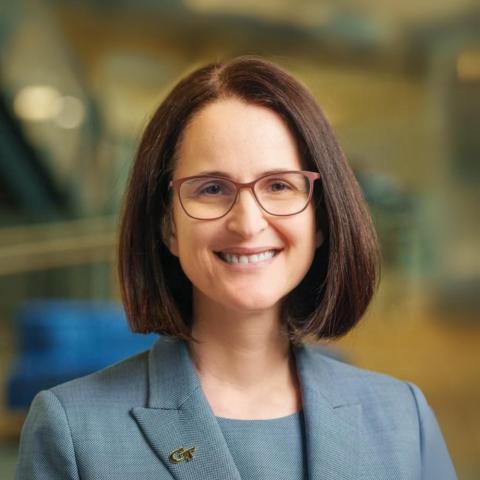
Nancey Green Leigh is a Professor in the School of City and Regional Planning and adviser for the economic development planning, working with masters and doctoral students. Maintaining an active research program, Leigh is currently leading a project entitled "Workers, Firms and Industries in Robotic Regions," funded by the National Science Foundation's Robotics Initiative. She previously led a large scale research effort by three universities focused on sustainable industrial systems for urban regions. Both of these efforts as well as other funded research (brownfields, urban land and manufacturing, resilient infrastructure) contribute to Leigh's long term focus on advancing sustainable development for local and regional economies. As Associate Dean for Research, Leigh is focused on strengthening the research impact of the College of Design. She develops and administers competitive initiatives to support individual and collaborative research by college faculty and affiliated researchers. She oversees the college's seven major research units. She also is engaged in building research connections within Georgia Tech between the College of Design, other colleges and Interdisciplinary Research Institutes, as well as to external funders and collaborators in the public, private and nonprofit sectors. Leigh has published more than 60 articles and four books, Routledge Handbook of International Planning Education (2019 with S.P. French, S. Guhathakurta, and B. Stiftel), Planning Local Economic Development, 6th edition (2017 with E.J. Blakely) adopted for courses in a wide array of universities; Economic Revitalization: Cases and Strategies for City and Suburb (2002 with J. Fitzgerald); and Stemming Middle Class Decline: The Challenge to Economic Development Planning (1994). She was co-editor of the Journal of Planning Education and Research from 2012 to 2016, and was elected a Fellow of the American Institute of Certified Planners in 2008.

Professor, School of City & Regional Planning
Associate Dean for Research, College of Design
Phone
404.894.9839
Office
Architecture-East Building, 209
Additional Research

economic development; robots & AI impact on workers; firms & regions; City and Regional Planning; System Design & Optimization; Design Sciences

University, College, and School/Department
Google Scholar
https://scholar.google.com/citations?hl=en&user=bRfE9-MAAAAJ&view_op=list_works&sortby=pubdate
Nancey
Green Leigh
Show Regular Profile

Joe F. Bozeman III

Joe F. Bozeman III
joe.bozeman@ce.gatech.edu
Departmental Bio
Assistant Professor, Civil and Environmental Engineering, Public Policy
SEI Lead: Ethics in Energy Transition
Additional Research

industrial ecology; climate change adaptation and mitigation strategies; sociodemographic impacts of the food-energy-water nexus; ethical applications in energy and environmental systems; urban carbon management strategies; life cycle assessment; scenario analysis; and survey administration; addressing the complex and ‘wicked’ challenges of our time

Joe
Bozeman
F.
Show Regular Profile

Michael Gamble

Michael Gamble
michael.gamble@coa.gatech.edu
Website

Michael’s love of design at all scales is evident in his teaching, research and practice. 

He is a registered architect, director of the Modern Cities Europe Program, and creative director at Gamble + Gamble Architects in Atlanta. From 2015 to 2022, he directed the Master of Architecture program in the School of Architecture.  His design-driven research operates at a variety of scales, from house to city, with emphasis on innovation, alternative energy, and building technology pursued within the context of a larger concern for the creation of healthy, well-conceived environments. He has received numerous awards for excellence in design and scholarship. www.gg-architects.com 

Michael was the first point of contact for the $30 million Living Building gift, a.k.a. Kendeda Building for Innovative Sustainable Design (KBISD), and actively participated in pre-planning and fund acquisition, design competition and team formation, all the way through building execution, implementation and certification.  He also led a series of interdisciplinary design studios that paralleled the effort, and chaired the Academic and Research Council connected to the project.  He is co-author of the novel organizational structure of the living building workgroups, now tested, and currently  serves as chair of the KBISD advisory council and leads the Living Building Pilot Project Program, comprised of faculty, researchers and students from across campus, now in round three of funding. 

Michael’s research has received grants from The Alcoa Foundation, The Kendeda Foundation, Center for Quality Growth and Regional Development, the National Endowments of the Arts, and received First Prize for Research in an international competition sponsored by the Environmental Design and Research Association. Gamble has published essays on the design of the public realm in Harvard Design Magazine with W. Jude Leblanc. 

Associate Professor, School of Architecture
Director of Graduate Studies; Director, Master of Architecture Program
Phone
(404) 894-4885
Additional Research

Building Technologies

Research Focus Areas
University, College, and School/Department
Michael
Gamble
Show Regular Profile

Beril Toktay

Beril Toktay
beril.toktay@scheller.gatech.edu
Website

Dr. Beril Toktay is Regents' Professor and the Brady Family Chairholder in the Scheller College of Business. She serves as Executive Director of the Brook Byers Institute for Sustainable Systems. A globally recognized leader in sustainable operations management, Dr. Toktay has dedicated her career to bridging academic excellence with real-world impact in sustainability research and education.

Since joining Georgia Tech in 2005, Dr. Toktay has established herself as an influential leader in sustainability scholarship and cross-institute initiatives. She founded the Ray C. Anderson Center for Sustainable Business and co-created the Center for Serve-Learn-Sustain (SLS). Under her leadership as Executive Faculty Co-Director, the SLS team expanded sustainability-focused academic community engagement across Georgia Tech until its 2024 institutionalization as the Center for Sustainable Communities Research and Education within BBISS. Most recently, she co-chaired Georgia Tech's Sustainability Next Strategic Plan Implementation Team, under which Georgia Tech recommitted to growing BBISS, elevated and restructured the Office of Sustainability, and launched the Sustain-X startup accelerator, educational innovation and transdisciplinary research seed grant programs, the Climate Action Plan, and the Sustainability Education Curriculum Committee.

A Distinguished Fellow of the INFORMS Manufacturing and Service Operations Management Society, Dr. Toktay is internationally recognized for her research in sustainable operations management spanning circular economy models and climate mitigation strategies. Her circular economy research includes developing improved Extended Producer Responsibility cost allocation mechanisms recommended for adoption by the UK government. Her climate mitigation work features in a multi-university project that identified Georgia's top twenty decarbonization solutions, catalyzing the creation of the 70-member Drawdown Georgia Business Compact facilitated by the Ray C. Anderson Center.

Dr. Toktay serves on the boards of the New York Climate ExchangeGeorgia Cleantech Innovation Hub, and Alliance for Research on Corporate Sustainability. Her former professional service includes VP for Marketing, Communications and Advocacy at INFORMS, Department Co-Editor for "Health, Environment, and Society" at Manufacturing & Service Operations Management and Area Editor for "Environment, Energy, and Sustainability" at Operations Research. She served as the Scheller College of Business ADVANCE Professor from 2012-2020.

Dr. Toktay’s research has earned recognition including being named among the World's Top Business and Management Scientists (Research.com, 2024),the  M&SOM Best Paper Award (2021), the M&SOM Responsible Research Award (2019), and the Management Science Best Paper in Operations Management Award (2015).

Her commitment to developing the next generation of sustainability leaders earned her Georgia Tech's Outstanding Doctoral Thesis Advisor Award (2018) and recognition as a E3 Impact Award Finalist (2019) by the Metro Atlanta Chamber of Commerce for Serve-Learn-Sustain's impact on Atlanta communities. She co-developed the Carbon Reduction Challenge, an interdisciplinary program that engages undergraduate students in climate intrapreneurship and which earned top ten finalist recognition from Reimagine Education among 1,184 projects from 39 countries.

Dr. Toktay holds a Ph.D. in Operations Research from MIT, an M.S. in Industrial Engineering from Purdue University, and B.S. degrees in Industrial Engineering and Mathematics from Bogazici University.

Executive Director, Brook Byers Institute for Sustainable Systems
Professor of Operations Management and Brady Family Chair
Regents' Professor and Brady Family Chairholder
Phone
404.385.0104
Office
800 West Peachtree Street, N.W., Room 4426
Additional Research

Sustainable operations; closed-loop supply chains; supply chain management; Strategic Planning

University, College, and School/Department
Beril
Toktay
Show Regular Profile

Brigitte Stepanov

Brigitte Stepanov
bstepanov@gatech.edu
Departmental Bio

Dr. Brigitte Stepanov is a war researcher and Assistant Professor of Francophone Studies. She is the founder and director of the Energy Today Lab, an interdisciplinary research hub that reflects creatively and analytically on the energy - broadly defined from labor to thermodynamics - of our contemporary world. Her research interests focus on 20th- and 21st-century French, North African, and Sub-Saharan African literary and visual culture. Trained as a scholar of French and Francophone Studies and as a mathematician, she holds degrees from Queen’s University at Kingston in Canada and a PhD from Brown University. At Brown, she was a Fellow at the Cogut Institute for the Humanities and awarded an Archambault Award for Teaching Excellence.

Before coming to Georgia Tech, she was an Andrew W. Mellon Postdoctoral Fellow with the Department of French and Arabic at Grinnell College, where she organized the Theories of Decolonization working group with the support of a grant from Grinnell’s Center for the Humanities. She has been a Silas Palmer Fellow at the Hoover Library and Archives at Stanford University, a Lecturer at the Université Lumière Lyon 2 in France, and a selected participant of the National Endowment for the Humanities seminar “The Search for Humanity after Atrocity.” Additionally, she has trained in conflict mediation, having most recently taken part in the Peacebuilding Institute hosted by the Center for Justice and Peacebuilding at EMU.

Her current book project, Cruelty, War, Fiction: Redefining the In-Human, explores excessive forms of violence in warfare and their representation in fiction and visual media from Algeria, Rwanda, and France. She argues that the concept of cruelty is fundamental to any discussion of political instability, war, and crimes against humanity. More broadly, this project examines the relationship between the evolution of warfare over the last eighty years and shifting conceptions of the human in the face of “universal” manifestations of violence. This work is closely tied to her second research project, which examines literary, artistic, and cultural responses to radioactive fallout and its ensuing ecological crisis following France’s nuclear arsenal testing in Algeria and the South Pacific. Dr. Stepanov’s scholarship has appeared in Contemporary French & Francophone Studies, The French Review, Voix plurielles, and in the volume Memory, Voice, and Identity: Muslim Women’s Writing from Across the Middle East (Routledge, 2021). Dr. Stepanov is also the translator of works by Peter Szendy and Laura Odello and has worked with the Derrida Seminar Translation Project.

Finally, she is a photographer, focusing on archiving memory and the geometry of ecological forms. Both facets of her work are preoccupied with minute documentation – be it to collect visual reminders of patches of lichen or the detailed brickwork of a monument. Among other venues, her work has been exhibited at the Houston Center for Photography, the Ukrainian Institute of Modern Art in Chicago, the Granoff Center for the Creative Arts and AS220 in Providence. Her recent exhibit, “Why I’ll Always Dream of Poland,” supported by a grant from the Program in Judaic Studies at Brown, features photographs she took while conducting research on Holocaust remembrance in Israel, Germany, France, Ukraine, Poland, Canada, and the US. Shedding light on public mourning and memorialization, the project also reflects on personal loss and family histories and attempts to bridge the gap between private experiences and public sites of inhuman violence.

Assistant Professor, School of Modern Languages
Director, Energy Today Lab
Research Focus Areas
BBISS Initiative Lead Project - Energy Today, Tomorrow: Illuminating the Effect…
Brigitte
Stepanov
Show Regular Profile

Carsten Sievers

Carsten Sievers
carsten.sievers@chbe.gatech.edu
ChBE Profile Page

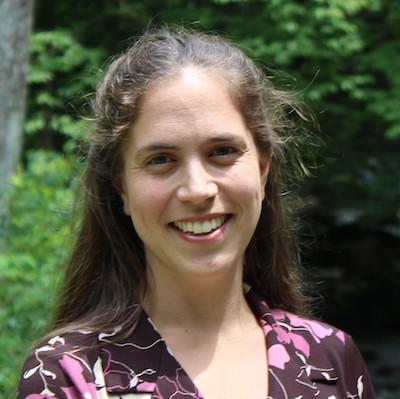
Sievers’ research interests are in heterogeneous catalysis, reactor design, applied spectroscopy, and characterization and synthesis of solid materials. Combining these interests he seeks to develop processes for the production of fuels and chemicals. His research program combines fundamental and applied research.

In fundamental studies, a suite of analytical and spectroscopic techniques (e.g. IR, NMR) is used to gain knowledge on structure-reactivity relationships of heterogeneous catalysts. Moreover, surface reactions are studied on a molecular level to identify reaction pathways over different catalysts. Information obtained from these studies provides the foundation for designing innovative catalysts.

Applied studies focus specific catalytic processes. For these projects, continuously operated flow reactor systems are designed. Different catalysts are tested for reactivity, selectivity and stability and the influence of the operating conditions is investigated. Catalyst deactivation is studied in detail to develop suitable regeneration methods or to avoid deactivation entirely by improved catalyst design. Specific projects include hydrodeoxygenation of pyrolysis oils, selective hydration of polyols, conversion of sugars into lactic acid and ethylene glycol, and selective oxidation of methane.

An important goal of Sievers’ research is to enable technology for utilization of alternative resources in order to reduce the current dependence of oil. Among these biomass is a particularly promising candidate because it is renewable and can be produced CO2 neutral.

Sievers has contributed to 80 peer reviewed publications on heterogeneous catalysis in petroleum refining (isobutane/2-butene alkylation, fluid catalytic cracking, hydrotreating), alkane activation, supported ionic liquid as catalysts for fine chemical synthesis, and biomass processing.  He is Director and Past President of the Southeastern Catalysis Society, former Program Chair and Director of the ACS Division of Catalysis Technology & Engineering, former Director of the AIChE Division of Catalysis and Reaction Engineering, and Editor of Applied Catalysis A: General.
Professor, School of Chemical and Biomolecular Engineering
Phone
404.385.7685
Office
ES&T 2218
Additional Research

Biomass; Biofuels; Catalysis; Advanced Characterization; Gasification; Biorefining; Lignin Upgrading; Catalysis; Energy & Water; Separation Technologies; Chemical Feedstocks; Sugars; Lignin & Hemicellulose

Google Scholar
https://scholar.google.com/citations?hl=en&user=qeq3njwAAAAJ&view_op=list_works&sortby=pubdate
Sievers Research Group
Carsten
Sievers
Show Regular Profile

Kate Pride Brown

Kate Pride Brown
k.p.brown@gatech.edu
Website

Kate Pride Brown is an environmental and political sociologist whose research focuses on a range of issues, including environmental activism in Russia and conservation policy in the United States. She received her doctorate from Vanderbilt University and completed a postdoctoral fellowship at the Vanderbilt Institute for Energy and Environment. Her book, Saving the Sacred Sea: The Power of Civil Society in an Age of Authoritarianism and Globalization (Oxford University Press, 2018), examines the conflict between local and transnational environmentalists, multinational corporations, and the Russian government over the future of Lake Baikal, the largest, deepest and oldest freshwater lake on Earth. While she continues to study environmental issues in Russia, especially around Lake Baikal, Dr. Brown has also published research on water and energy politics and policy in the United States. She is currently studying the "nuclear renaissance" in the southeastern United States. Among other honors, she has received a Fulbright Fellowship, a Critical Language Scholarship from the U.S. Department of State, and funding from the Horowitz Foundation for Social Policy and the National Council for Eurasian and East European Research. Her research has appeared in Communist and Post-Communist Studies, Energy Research and Social Science, Environmental Politics, Environmental Sociology, Ethnography, Memory Studies, Nature and Culture, Research in Political Sociology, Social Movement Studies, Sustainability: Science, Practice and Policy, Water Policy and WIREs Water.

Associate Professor, School of History and Sociology
Phone
(404) 894-0616
University, College, and School/Department
Kate
Pride Brown
Show Regular Profile

Jennifer Kaiser

Jennifer Kaiser
jennifer.kaiser@ce.gatech.edu
Departmental Bio

In the Kaiser group, we work to improve the understanding of the emissions and atmospheric processes that influence air quality and climate. Our research focuses largely on volatile organic compounds (VOCs), which are reactive organic species that are precursors to ozone and aerosol. Our work is grounded in insights from field, and aimed at understanding atmospheric composition at broad spatial and temporal scales.

Associate Professor, School of Earth and Atmospheric Sciences
Phone
(404) 894-2644
Additional Research

Climate/EnvironmentAtmospheric Chemistry, Aerosols & CloudsRemote SensingAtmospheric composition and chemistryBiogenic and anthropogenic emissionsGlobal chemistry-transport modelingIn-situ and remote sensing

Research Focus Areas
Lab Website
Jennifer
Kaiser
Show Regular Profile

Daniel Matisoff

Daniel Matisoff
matisoff@gatech.edu
Website

Daniel Matisoff teaches and conducts research in the areas of public policy, energy policy, and corporate sustainability. His research focuses on the effectiveness and efficiency of comparative approaches to addressing environmental problems and the adoption and diffusion of energy technologies and policies. He currently is a fellow with the Brook Byers Institute for Sustainability, and is affiliated with the Strategic Energy Institute and Center for Urban Innovation. He has participated in over $4 million of sponsored research through the National Science Foundation, the European Union Center for Excellence, the German Academic Exchange Service, the Georgia Department of Transportation, and the National Electric Energy Testing Research and Applications Center. His recent research has resulted in publications in the Review of Environmental Economics and Policy, Environmental and Resource Economics, Energy Economics, Environmental Science and Technology, Energy Policy, and Business Strategy and the Environment, among other outlets. His current research interests include: evaluating the effectiveness of voluntary eco-labeling programs; the effectiveness of incentives for solar electricity; the adoption of smart grid technologies and policies; and the impact of large scale solar adoption on consumer rates and bills.

Professor, School of Public Policy
Phone
(404) 385-0504
Additional Research

Building Technologies; Policy/Economics

Daniel
Matisoff
Show Regular Profile