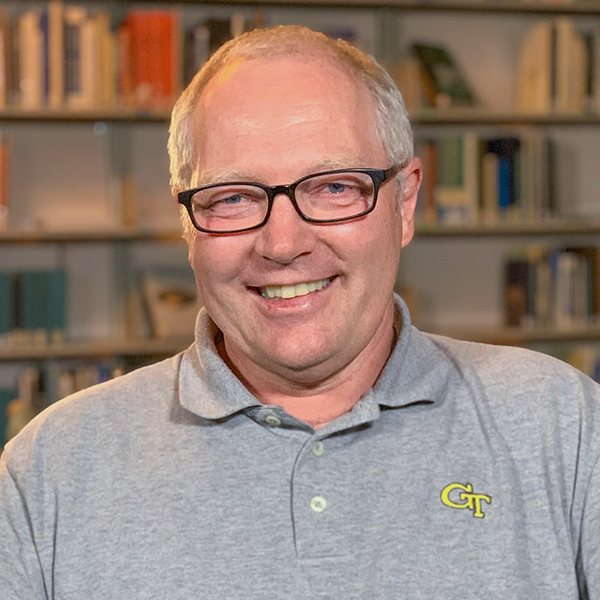
Martial Taillefert
Climate Environment
Climate Environment
Water
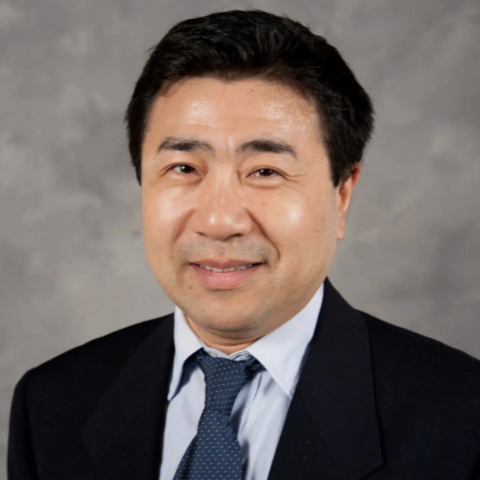
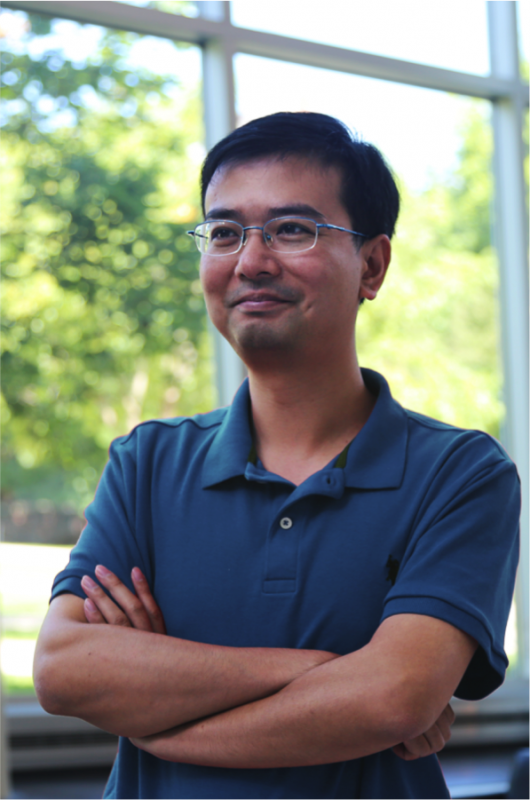
Xing Xie is the Carlton S. Wilder Assistant Professor in the School of Civil and Environmental Engineering at Georgia Institute of Technology. Prior to joining Georgia Tech, he was a post-doctoral scholar at California Institute of Technology. He received his B.S. (2006) and M.S. (2008) degrees in Environmental Science & Engineering from Tsinghua University, and a second M.S. degree (2012) in Materials Science & Engineering and a Ph.D. degree (2014) in Civil & Environmental Engineering from Stanford University. His research focuses on the applications of innovative materials for sustainable and reliable water and energy. He has worked on many projects related to water treatment and reuse, microbial detection and quantification, energy and resource recovery, energy storage, etc. He has published more than 60 peer-reviewed articles with more than 6,000 citations
Water & wastewater treatment; Energy & resources recovery; Energy storage; Salinity energy & desalination; self-sustained sanitation; Oil-water separation; Environmental monitoring
Climate/Environment
System Design & Optimization
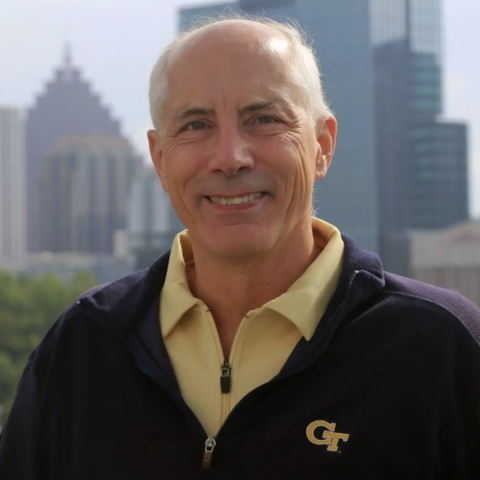
Mark D. Losego is a professor in the School of Materials Science and Engineering at Georgia Tech. The Losego research lab focuses on materials processing to develop novel organic-inorganic hybrid materials and interfaces for microelectronics, sustainable energy devices, national security technologies, and advanced textiles. The Losego Lab combines a unique set of solution and vapor phase processing methods to convert organic polymers into organic-inorganic hybrid materials, including developing the science to scale these processes for manufacturing. Prof. Losego’s work is primarily experimental, and researchers in his lab gain expertise in the vapor phase processing of materials (atomic layer deposition, physical vapor deposition, vapor phase infiltration, etc.), the design and construction of vacuum equipment, interfacial and surface science, and materials and surface characterization. Depending on the project, Losego Lab researchers explore a variety of properties ranging from electrical to electrochemical to optical to thermal to sorptive to catalytic and more.
Catalysis; Cellulose Nanomaterials; Coatings; Coatings and Barriers; Corrosion & Materials Engineering; Corrosion and Reliability; Energy; Films and Coatings; Microporous Materials; Nanocellulose Applications; Nanomaterials; New Materials; Polymers; Vapor Phase Processing
Energy Storage; Biofuels
Phanish Suryanarayana joined the School of Civil and Environmental Engineering at the Georgia Institute of Technology in August 2011. He received his B.Tech. from Indian Institute of Technology, Madras, India in 2005. He obtained his M.S. in Aeronautics from California Institute of Technology in 2006. Subsequently, he received his Ph.D. in Aeronautics from California Institute of Technology in 2011 for his thesis titled "Coarse-graining Kohn-Sham Density Functional Theory". His research interests are in the areas of multiscale modeling, ab-initio calculations, density functional theory, continuum mechanics and smart materials. Overall, he is interested in developing efficient numerical methods for solving problems arising in a variety of fields. On a personal level, Dr. Suryanarayana is a sports enthusiast. He plays badminton, cricket, waterpolo, and ultimate frisbee. He also is an avid gamer (PC) and enjoys playing bridge and other board game
Chris Jones was born in suburban Detroit, Michigan in July of 1973. After his primary and secondary schooling and 14 years living Troy, Michigan, he enrolled as a chemical engineering student at the University of Michigan. In route to earning a BSE in chemical engineering, Chris carried out research on transition metal carbide and nitride catalytic materials under the direction of Levi Thompson. After graduating in 1995, Chris moved to Pasadena, California, to study inorganic materials chemistry and catalysis under Mark E. Davis at Caltech. There he earned M.S. and Ph.D. degrees in chemical engineering in 1997 and 1999, respectively. Subsequently, he studied organometallic chemistry and olefin polymerization under the direction of both Davis and John E Bercaw at Caltech. He started as an assistant professor at Georgia Tech in the summer of 2000 and was promoted to associate professor in July 2005. In May, 2005, he was appointed the J. Carl and Sheila Pirkle Faculty Fellow, followed by a promotion to professor in July 2008. He was named New-Vision Professor of Chemical and Biomolecular Engineering in July 2011. In 2015, he became the Love Family Professor of Chemical and Biomolecular Engineering, and in 2019 the William R. McLain Chair. Chris was named the associate vice president for research at Georgia Tech in November 2013. In this role, he directed 50% of his time on campus-wide research administration with a primary focus on interdisciplinary research efforts and policy related to research institutes, centers and research core facilities. In 2018, he served as the interim executive vice-president for research, before returning full time to his research and teaching roles in chemical and biomolecular engineering in 2019.
Jones directs a research program focused primarily on catalysis and CO2 separation, sequestration and utilization. A major focus of his laboratory is the development of materials and processes for the removal of CO2 from air, or “direct air capture” (DAC). In 2010 he was honored with the Ipatieff Prize from the American Chemical Society for his work on palladium catalyzed Heck and Suzuki coupling reactions. That same year, he was selected as the founding Editor-in-Chief of ACS Catalysis, a new multi-disciplinary catalysis journal published by the American Chemical Society. In 2013, Chris was recognized by the North American Catalysis Society with the Paul E. Emmett Award in Fundamental Catalysis and by the American Society of Engineering Education with the Curtis W. McGraw Research Award. In 2016 he was recognized by the American Institute of Chemical Engineers with the Andreas Acrivos Award for Professional Progress in Chemical Engineering, distinguishing him as one of the top academic chemical engineers under 45. In 2020, after ten years building and leading ACS Catalysis, he was selected as the founding Editor-in-Chief of JACS Au by an international editorial search committee commissioned by the ACS. Dr. Jones has been PI or co-PI on over $72M in sponsored research in the last seventeen years, and as of December 2020, has published over 300 papers that have been cited >28,000 times. He has an H-Index of 82 (Google Scholar).
CO2 capture, catalysis, membrane and separations, separations technology, catalysis, carbon capture, biofuels
Ryan Lively was born in 1984. He spent approximately 16 years in Gainesville, FL and attended almost every home football game at The Swamp. He enrolled at Georgia Tech in 2002 as an eager Chemical Engineering student and has been a Yellow Jacket at heart ever since. During his studies at Georgia Tech, Ryan worked on research projects as diverse as ab initio quantum mechanical methods to estimate molecular binding energies, fresh Georgia peach preservation, composite spinneret design, dual-layer hollow fiber membrane spinning, and sorbent-loaded fiber spinning. Ryan introduced a rapid temperature swing adsorption (RTSA) approach for post-combustion CO2 capture, which was successfully demonstrated by adapting knowledge developed in membrane science to design unique nanoscale composite adsorbent/heat exchangers. After his Ph.D. (awarded in 2010), he spent almost 3 years as a post-doctoral research engineer at Algenol Biofuels, where he published 25 papers and filed two U.S. patent applications. His work at Algenol focused on developing energy-efficient liquid and vapor separation systems for downstream biofuel purification.
He is now the Thomas C. DeLoach Professor in the School of Chemical & Biomolecular Engineering at the Georgia Institute of Technology. His current research seeks to revolutionize fluid separation processes critical to the global energy and carbon infrastructure. He has a specific focus on membrane- and adsorbent-based science and technology to address some of the most difficult chemical separations. His group’s research activities range from fundamental material science and discovery to translational engineering applications focusing on making and testing separation devices.
Ryan has received a variety of awards for his research efforts including the 2020 Allan P. Colburn Award from AIChE, and the 2022 Curtis W. McGraw Award from ASEE. He is currently an Editor for the Journal of Membrane Science and is the Secretary of the North American Membrane Society. He is the Director of the Center for Understanding & Controlling Accelerated and Gradual Evolution of Materials for Energy (UNCAGE-ME), an Energy Frontier Research Center of the US Department of Energy. He has over 160 publications in the field of separations including articles in Science, Nature and other impactful venues.
Biofuels; Carbon Capture; Separations Technology; Membranes; Adsorbents;Polymers; Microporous Materials