Fani Boukouvala

Fani Boukouvala
fani.boukouvala@chbe.gatech.edu
ChBE Bio Page

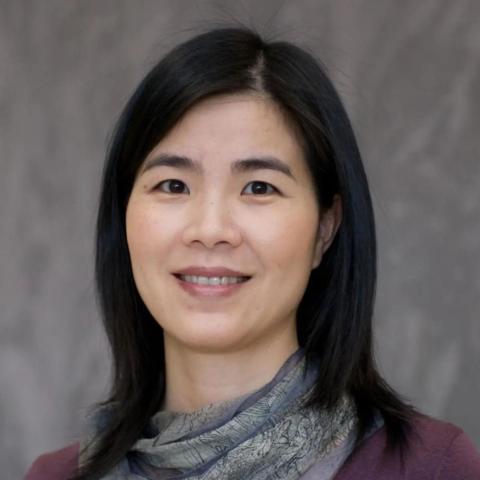
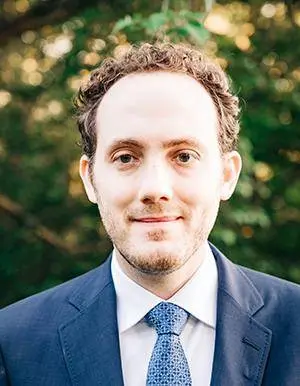
Dr. Boukouvala is originally from Piraeus, which is the port of Athens in Greece. As the daughter of an airforce pilot, she travelled a lot with her family. Her first international move was actually to the USA, where she spent one year in Montgomery, Alabama. She later on lived in Riyadh, Saudi Arabia and Crete, Greece, before returning to Athens to get her B.S Degree in Chemical Engineering from the National Technical University in Athens. In 2008, she moved back to the US to obtain a PhD in Chemical Engineering at Rutgers University in NJ. She then worked as a Postdoctoral Associate in both Princeton University and Texas A&M University. In August 2016, Dr. Boukouvala returned to the South East US, as an Assistant Professor in the School of Chemical & Biomolecular Engineering at Georgia Tech. 

Her research interest in Process Systems Engineering (PSE) started during her PhD years, where she worked under the supervision of Dr. Marianthi Ierapetritou, on modeling and optimization of continuous pharmaceutical manufacturing. Her background on optimization and data-driven modeling was enhanced during her years as a postdoc with the late Christodoulos A. Floudas. Dr. Boukouvala is a proud 4th generation member of the academic family tree of the father of PSE, Roger Sargent.

Associate Professor, School of Chemical and Biomolecular Engineering
Phone
(404) 385-5371
Additional Research

System Design & Optimization; Energy; Sustainability
Google Scholar
https://scholar.google.com/citations?hl=en&user=tyO6KxAAAAAJ&view_op=list_works&sortby=pubdate
Linked In Profile
Fani
Boukouvala
Show Regular Profile

Yongsheng Chen

Yongsheng Chen
yongsheng.chen@ce.gatech.edu
Website

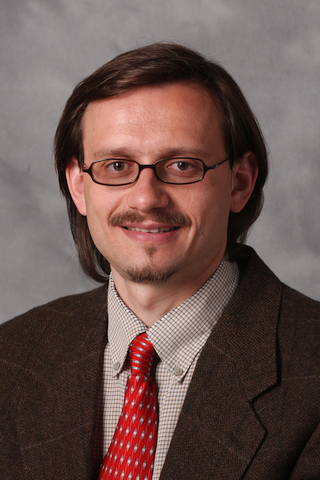
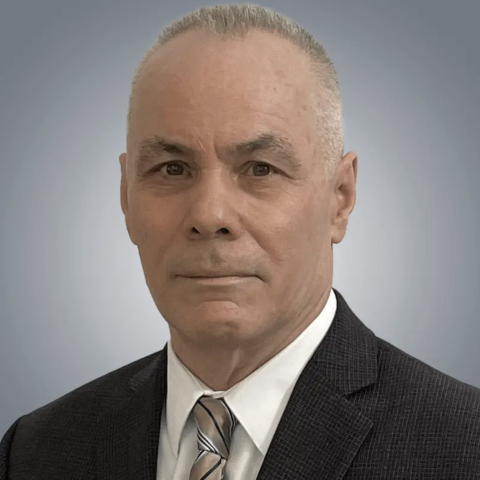
Chen has an extensive research interests in environmental science and engineering. More specifically, he is a leading researcher in the environmental applications of nanomaterials and their potential fate, transport, transformation, bioaccumulation and toxicity in the environment. His interests in environmental nanomaterials dated back in his graduate research in 1992. He has also been active on algae based bio-renewable energy and sustainable urban development. Chen has been principle and co-principal investigators for 28 research projects (by June 2010) funded by the National Science Foundation, U.S. Environmental Protection Agency, NASA, Boeing and other organizations. The total funds are $7 million. He has also served as a review member or panel review member in the U.S. National Science Foundation, the U.S. Environmental Protection Agency, the U.S. Department of Energy evaluation committee. He has also been invited to serve as an abroad review expert for the China Changjiang Scholars Program (which is to awarded to the top researchers in China). He has published more than 40 papers and two book chapters in this field.

Chen received his Ph.D in Nankai University, China. He joined the Georgia Tech School of Civil and Environmental Engineering in May 2009.

Bonnie W. and Charles W. Moorman IV Professor, School of Civil and Environmental Engineering
Phone
(404) 894-3089
Office
Daniel Environmental Engineering Laboratory, Room 206
Additional Research

Biofuels; Separations Technology; Water

University, College, and School/Department
Civil Engineering Profile
Yongsheng
Chen
Show Regular Profile

Haiying Huang

haiying.huang@ce.gatech.edu
Departmental Bio

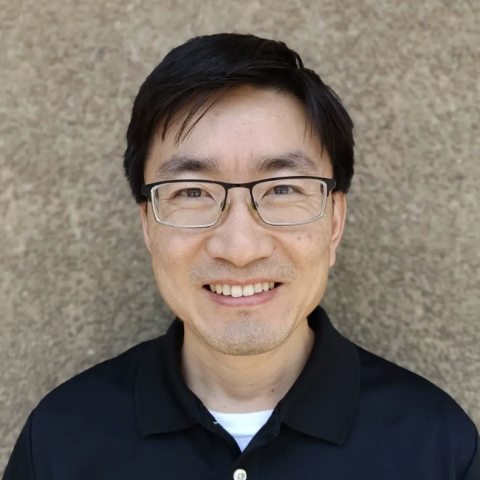
Dr. Huang obtained her Ph.D in Geological Engineering from the University of Minnesota in 1999. She then worked as a senior engineer in Schlumberger Oilfield Services in Sugar Land, TX from 2000 to 2006 before she joined the faculty in Georgia Tech in 2007. Dr. Huang is a recipient of the NSF CAREER in 2011.

Associate Professor, School of Civil and Environmental Engineering
Phone
404.385.0059
Office
Mason 2263
Additional Research

Geomechanics aspects of drilling, rock indentation and cutting., Reservoir stimulation and production, in particular, slurry flow, fluid injection in granular media, hydraulic fracturing

IRI And Role
Google Scholar
https://scholar.google.com/citations?user=Xpj-x0oAAAAJ&hl=en
LinkedIn Profile Department Page
Haiying
Huang
Show Regular Profile

Andrei Fedorov

Andrei Fedorov
AGF@gatech.edu
Fedorov Lab

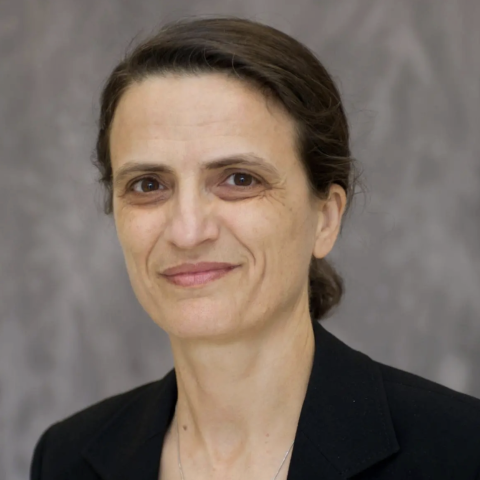
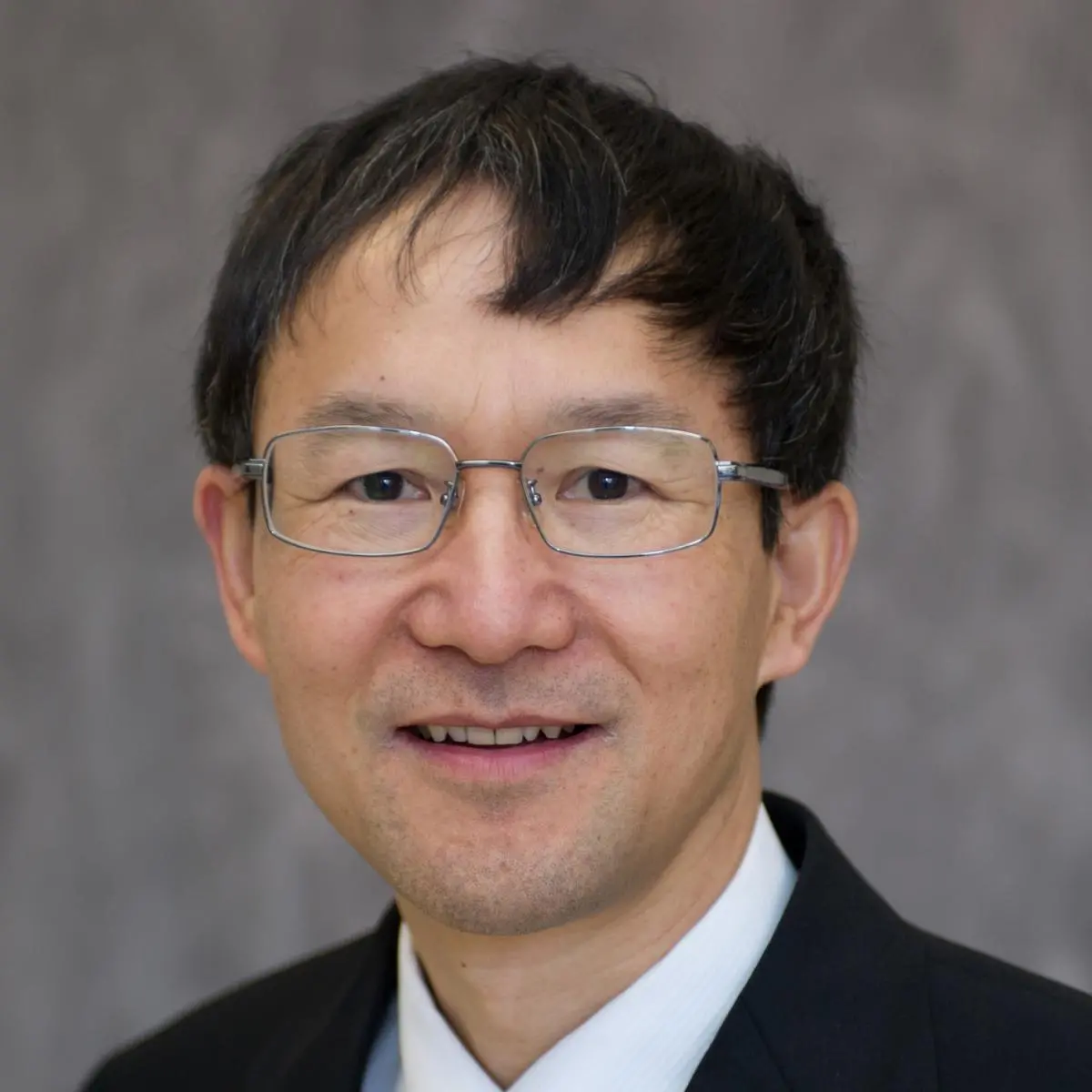
Fedorov's background is in thermal/fluid sciences, chemical reaction engineering as well as in applied mathematics. His laboratory works at the intersection between mechanical and chemical engineering and solid state physics and analytical chemistry with the focus on portable/ distributed power generation with synergetic CO2 capture; thermal management of high power dissipation devices and electronics cooling; special surfaces and nanostructured interfaces for catalysis, heat and moisture management; and development of novel bioanalytical instrumentation and chemical sensors. Fedorov joined Georgia Tech in 2000 as an assistant professor after finishing his postdoctoral work at Purdue University.

Professor and Rae S. and Frank H. Neely Chair, Woodruff School Mechanical Engineering
Associate Chair for Graduate Studies, School Mechanical Engineering
Director, Fedorov Lab
Phone
404.385.1356
Office
Love 307
Additional Research

Heat Transfer; power generation; CO2 Capture; Catalysis; fuel cells; "Fedorov's research is at the interface of basic sciences and engineering. His research portfolio is diverse, covering the areas of portable/ distributed power generation with synergetic carbon dioxide management, including hydrogen/CO2 separation/capture and energy storage, novel approaches to nanomanufacturing (see Figure), microdevices (MEMS) and instrumentation for biomedical research, and thermal management of high performance electronics. Fedorov's research includes experimental and theoretical components, as he seeks to develop innovative design solutions for the engineering systems whose optimal operation and enhanced functionality require fundamental understanding of thermal/fluid sciences. Applications of Fedorov's research range from fuel reformation and hydrogen generation for fuel cells to cooling of computer chips, from lab-on-a-chip microarrays for high throughput biomedical analysis to mechanosensing and biochemical imaging of biological membranes on nanoscale. The graduate and undergraduate students working with Fedorov's lab have a unique opportunity to develop skills in a number of disciplines in addition to traditional thermal/fluid sciences because of the highly interdisciplinary nature of their thesis research. Most students take courses and perform experimental and theoretical research in chemical engineering and applied physics. Acquired knowledge and skills are essential to starting and developing a successful career in academia as well as in many industries ranging from automotive, petrochemical and manufacturing to electronics to bioanalytical instrumentation and MEMS."

Google Scholar
https://scholar.google.com/citations?hl=en&user=_X-PrRkAAAAJ&view_op=list_works&sortby=pubdate
LinkedIn ME Profile Page
Andrei
Fedorov
G.
Show Regular Profile

Andrew Medford

Andrew Medford
andrew.medford@chbe.gatech.edu
Website

Dr. Medford is interested in leveraging materials informatics, statistics, and machine learning to maximize the practical impact of fundamental atomic-scale simulations in the field of surface science and catalysis. His research areas include heterogeneous catalysis, oxide surface chemistry, density functional theory, kinetic models, uncertainty quantification, and Bayesian optimization and inference.

Assistant Professor, School of Chemical and Biomolecular Engineering
Phone
(404) 385-5531
Additional Research

Catalysis, Biochemicals, Biorefining, Chemistry, Sugars, Molecular Simulations, Computational Biology

Andrew
Medford
J.
Show Regular Profile

Valerie Thomas

Valerie Thomas
valerie.thomas@isye.gatech.edu
ISyE Profile

Valerie Thomas is the Anderson-Interface Chair of Natural Systems and Professor in the H. Milton School of Industrial and Systems Engineering, with a joint appointment in the School of Public Policy. 

Dr. Thomas's research interests are energy and materials efficiency, sustainability, industrial ecology, technology assessment, international security, and science and technology policy. Current research projects include low carbon transportation fuels, carbon capture, building construction, and electricity system development. Dr. Thomas is a Fellow of the American Association for the Advancement of Science, and of the American Physical Society. She has been an American Physical Society Congressional Science Fellow, a Member of the U.S. EPA Science Advisory Board, and a Member of the USDA/DOE Biomass Research and Development Technical Advisory Committee. 

She has worked at Princeton University in the Princeton Environmental Institute and in the Center for Energy and Environmental Studies, and at Carnegie Mellon University in the Department of Engineering and Public Policy.

Dr. Thomas received a B. A. in physics from Swarthmore College and a Ph.D. in theoretical physics from Cornell University.

Anderson-Interface Chair of Natural Systems
Professor, School of Industrial and Systems Engineering
RBI Initiative Lead: Sustainability Analysis
Phone
(404) 894-0390
Additional Research

Hydrogen Transport/Storage; Biofuels; ClIMaTe/Environment; Electric Vehicles; System Design & Optimization; Energy and Materials Efficiency; Sustainability; Industrial Ecology; Technology Assessment; Science and Technology Policy

Website
Valerie
Thomas
Show Regular Profile

Sheng Dai

sheng.dai@ce.gatech.edu
Website

Sheng Dai, Ph.D., P.E., earned his degrees from Tongji University and Georgia Tech. He worked as an ORISE postdoc at the National Energy Technology Laboratory of the U.S. Department of Energy, and returned to Georgia Tech as a faculty member in 2015. He is currently an associate professor in the School of Civil and Environmental Engineering, Ocean Science and Engineering. and holds a courtesy appointment at the School of Earth and Atmospheric Sciences at Georgia Tech.

Dr. Dai's group addresses emerging energy and environment challenges through studying subsurface geomechanics, geomaterials characterization, energy geotechnics, bio-inspired geotechnics, flow in porous media, and granular dynamics. His research has been funded by federal funding agencies (DOE, NSF, NASA, DOT), national labs (INL, NETL), and industry (AECOM, GTI, Leidos).  Dr. Dai has been recognized for his research and teaching, including being a recipient of the NSF CAREER award, the ORISE Fellowship, the Bill Schutz Junior Faculty Teaching Award, and the Class of 1969 Teaching Fellows at Georgia Tech.

He is an associated editor of the Journal of Geophysical Research: Solid Earth and Advances in Geo-Energy Research, an editorial advisor of Geomechanics for Energy and Environment, and serves on the Pressure Core Advisory Board for U.S. Geological Survey, the GOM2 Marine Test Technical Advisory Committee for UT/DOE, the National Gas Hydrate Program for NETL, and the Task Force Leader of TC308 Energy Geotechnics of ISSMGE. 

Assistant Professor, School of Civil and Environmental Engineering
Phone
(404)385-4757
Additional Research

Oil/Gas; Combustion; Electronics; Energy Harvesting; Energy Storage; Thermal Systems

University, College, and School/Department
Sheng
Dai
Show Regular Profile

Micah Ziegler

Micah Ziegler
micah.ziegler@gatech.edu
Personal Website

Dr. Micah S. Ziegler is an assistant professor in the School of Chemical and Biomolecular Engineering and the School of Public Policy.

Dr. Ziegler evaluates sustainable energy and chemical technologies, their impact, and their potential. His research helps to shape robust strategies to accelerate the improvement and deployment of technologies that can enable a global transition to sustainable and equitable energy systems. His approach relies on collecting and curating large empirical datasets from multiple sources and building data-informed models. His work informs research and development, public policy, and financial investment.

Dr. Ziegler conducted postdoctoral research at the Institute for Data, Systems, and Society at the Massachusetts Institute of Technology. At MIT, he evaluated established and emerging energy technologies, particularly energy storage. To determine how to accelerate the improvement of energy storage technologies, he examined how rapidly and why they have changed over time. He also studied how energy storage could be used to integrate solar and wind resources into a reliable energy system.

Dr. Ziegler earned a Ph.D. in Chemistry from the University of California, Berkeley and a B.S. in Chemistry, summa cum laude, from Yale University. In graduate school, he primarily investigated dicopper complexes in order to facilitate the use of earth-abundant, first-row transition metals in small molecule transformations and catalysis. Before graduate school, he worked in the Climate and Energy Program at the World Resources Institute (WRI). At WRI, he explored how to improve mutual trust and confidence among parties developing international climate change policy and researched carbon dioxide capture and storage, electricity transmission, and international energy technology policy. Dr. Ziegler was also a Luce Scholar assigned to the Business Environment Council in Hong Kong, where he helped advise businesses on measuring and managing their environmental sustainability.

Dr. Ziegler is a member of AIChE and ACS, and serves on the steering committee of Macro-Energy Systems. His research findings have been highlighted in media, including The New York Times, Nature, The Economist, National Geographic, BBC Newshour, NPR’s Marketplace, and ABC News.

Assistant Professor, School of Chemical and Biomolecular Engineering, School of Public Policy
SEI Lead: Energy Storage
Phone
404.894.5991
Office
ES&T 2228
Additional Research
  • Energy
  • Materials and Nanotechnology
  • Sustainable Engineering
Google Scholar
https://scholar.google.com/citations?hl=en&user=tMFMFdUAAAAJ&view_op=list_works&sortby=pubdate
LinkedIn ChBE Profile Page
Micah
Ziegler
Show Regular Profile