Shimeng Yu

Shimeng Yu
shimeng.yu@ece.gatech.edu
ECE Profile Page

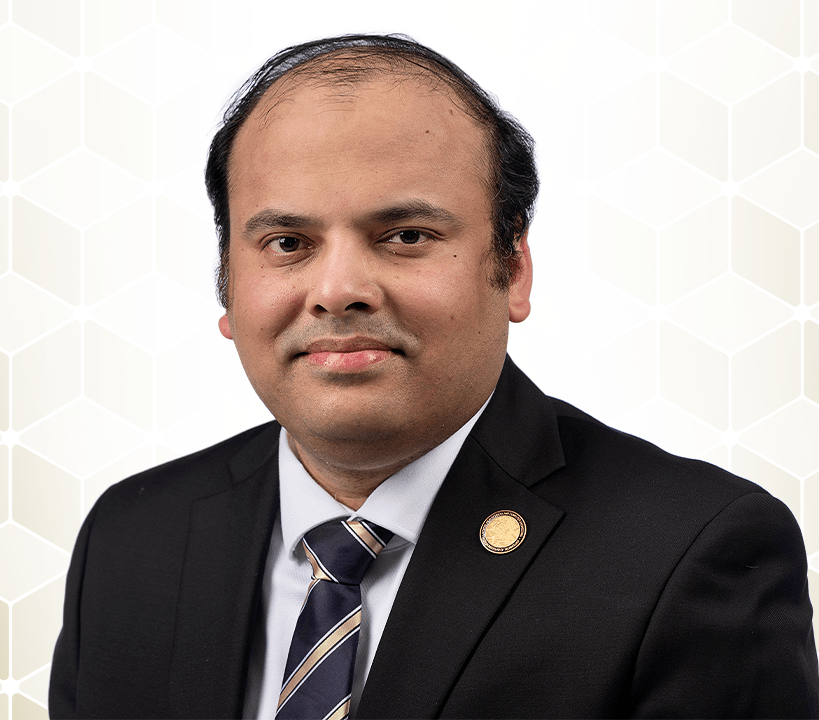
Shimeng Yu is a professor of electrical and computer engineering at the Georgia Institute of Technology. He received the B.S. degree in microelectronics from Peking University in 2009, and the M.S. degree and Ph.D. degree in electrical engineering from Stanford University in 2011 and 2013, respectively. From 2013 to 2018, he was an assistant professor at Arizona State University.

Yu’s research interests are semiconductor devices and integrated circuits for energy-efficient computing systems. His expertise is on the emerging non-volatile memories (e.g., RRAM, ferroelectrics) for applications such as AI hardware, in-memory computing, 3D integration, etc.

Among Yu’s honors, he was a recipient of NSF Faculty Early CAREER Award in 2016, IEEE Electron Devices Society (EDS) Early Career Award in 2017, ACM Special Interests Group on Design Automation (SIGDA) Outstanding New Faculty Award in 2018, Semiconductor Research Corporation (SRC) Young Faculty Award in 2019, ACM/IEEE Design Automation Conference (DAC) Under-40 Innovators Award in 2020, IEEE Circuits and Systems Society (CASS) Distinguished Lecturer for 2021-2022, and IEEE EDS Distinguished Lecturer for 2022-2023, etc.

Yu is active in professional services. He served or is serving technical program committee for IEEE International Electron Devices Meeting (IEDM), IEEE Symposium on VLSI Technology and Circuits, ACM/IEEE Design Automation Conference (DAC), ACM/IEEE Design, Automation & Test in Europe (DATE), ACM/IEEE International Conference on Computer-Aided-Design (ICCAD), etc.  He is an editor of IEEE Electron Device Letters and a senior member of the IEEE.

Professor, School of Electrical and Computer Engineering
Phone
404.894.2571
Office
Pettit 116
Additional Research

Nanoelectronic DevicesNon-volatile MemoriesIntegrated Circuit DesignElectronic Design Automation (EDA)Deep Learning AcceleratorHardware Security


Research Focus Areas
Google Scholar
https://scholar.google.com/citations?hl=en&user=XFgMpqYAAAAJ&view_op=list_works&sortby=pubdate
Laboratory for Emerging Devices and Circuits
Shimeng
Yu
Show Regular Profile

Suresh Sitaraman

Suresh Sitaraman
suresh.sitaraman@me.gatech.edu
ME Profile Page

Suresh Sitaraman is a Professor in the George W. Woodruff School of Mechanical Engineering, and leads the Flexible Hybrid Electronics Initiative at Georgia Tech and directs the Computer-Aided Simulation of Packaging Reliability (CASPaR) Lab at Georgia Tech. He is a Thrust Leader/Faculty Member, Reliability/Mechanical Design Research, 3D Systems Packaging Research Center; a Faculty Member, Georgia Tech Manufacturing Institute; a Faculty Member, Interconnect and Packaging Center, an SRC Center of Excellence, Institute for Electronics and Nanotechnology; a Faculty Member, Nanoscience and Nanotechnology, Nanotechnlogy Research Center, Institute for Electronics and Nanotechnology; a Faculty Member, Institute of Materials. Dr. Suresh Sitaraman's research is exploring new approaches to develop next-generation microsystems. In particular, his research focuses on the design, fabrication, characterization, modeling and reliability of micro-scale and nano-scale structures intended for microsystems used in applications such as aerospace, automotive, computing, telecommunicating, medical, etc. Sitaraman's research is developing physics-based computational models to design flexible as well as rigid microsystems and predict their warped geometry and reliability. His virtual manufacturing tools are able to simulate sequential fabrication and assembly process mechanics to be able to enhance the overall yield, even before prototypes are built. Sitaraman's work is developing free-standing, compliant interconnect technologies that can mechanically decouple the chip from the substrate without compromising the overall electrical functionality. This work is producing single-path and multi-path interconnect technologies as well as nanowire and carbon nanotube interconnects for electrical and thermal applications, and such interconnect technologies can be employed in flexible as well as 3D microelectronic systems. Sitaraman's research is also developing innovative material characterization techniques such as the stressed super layer technique as well as magnetic actuation test that can be used to study monotonic and fatigue crack propagation in nano- and micro-scale thin film interfaces. In addition, Sitaraman has developed fundamental modeling methodologies combined with leading-edge experimentation techniques to study delamination in the dielectric material and copper interface used in back-end-of-the-line (BEOL) stacks and through-silicon vias as well as epoxy/copper and epoxy/glass interfaces as in microelectronic packaging and photovoltaic module applications. Examining the long-term operational as well as accelerated thermal cycling reliability of solder interconnects, his work has direct implications in implantable medical devices, photovoltaic modules, computers and smart devices as well as rugged automobile and aerospace applications. Through the above-mentioned fundamental and applied research and development pursuits, Sitaraman's work aims to address some of the grand challenges associated with clean energy, health care, personal mobility, security, clean environment, food and water, and sustainable infrastructure

Regents' Professor, Woodruff School of Mechanical Engineering
Morris M. Bryan, Jr. Professor, Woodruff School of Mechanical Engineering
Phone
404.894.3405
Office
MARC 471
Additional Research

Computer-Aided Engineering; micro and nanomechanics; Fabrication; Modeling; fracture and fatigue; Flexible Electronics; Emerging Technologies

CASPaR Lab
Suresh
Sitaraman
Show Regular Profile

Scott Danielsen

Scott Danielsen
scott.danielsen@mse.gatech.edu
https://danielsen.mse.gatech.edu/

Scott Danielsen is an Assistant Professor in the School of Materials Science and Engineering at the Georgia Institute of Technology. He obtained his Ph.D. in chemical engineering at the University of California, Santa Barbara in 2018 and his B.S.E. in chemical and biomolecular engineering at the University of Pennsylvania in 2014. He then spent five years as a postdoctoral associate at Duke University and as a visiting scholar at the University of North Carolina School of Medicine from 2019-2023. 

Prof. Danielsen’s group uses a combination of theoretical, computational, and experimental methods to reveal structure–property–processing relationships of soft materials. Their current primary research interests are the structure and dynamics of nonideal structured fluids, particularly polymer gels and biological fluids, with a focus on designing new materials and processing conditions for functional materials.

Assistant Professor, School of Materials Science and Engineering
Scott
Danielsen
Show Regular Profile

C.P. Wong

C.P. Wong
cp.wong@mse.gatech.edu
Website

Professor C. P. Wong is the Charles Smithgall Institute Endowed Chair and Regents’ Professor. After his doctoral study, he was awarded a two-year postdoctoral fellowship with Nobel Laureate Professor Henry Taube at Stanford University. Prior to joining Georgia Tech, he was with AT&T Bell Laboratories for many years and became an AT&T Bell Laboratories Fellow in 1992. 

His research interests lie in the fields of polymeric materials, electronic packaging and interconnect, interfacial adhesions, nano-functional material syntheses and characterizations. nano-composites such as well-aligned carbon nanotubes, grahenes, lead-free alloys, flip chip underfill, ultra high k capacitor composites and novel lotus effect coating materials. 

He received many awards, among those, the AT&T Bell Labs Fellow Award in 1992, the IEEE CPMT Society Outstanding Sustained Technical Contributions Award in 1995, the Georgia Tech Sigma Xi Faculty Best Research Paper Award in 1999, Best MS, PhD and undergraduate Thesis Awards in 2002 and 2004, respectively, the University Press (London) Award of Excellence, the IEEE Third Millennium Medal in 2000, the IEEE EAB Education Award in 2001, the IEEE CPMT Society Exceptional Technical Contributions Award in 2002, the Georgia Tech Class of 1934 Distinguished Professor Award in 2004, Outstanding Ph.D. Thesis Advisor Award in 2005, the IEEE Components, Packaging and Manufacturing Technology Field Award in 2006, the Sigma Xi’s Monie Ferst Award in 2007, the Society of Manufacturing Engineers (SME)’s TEEM Award in 2008, the 2009 IEEE -CPMT David Feldman Outstanding Contribution Award and the 2009 Penn State University Distinguished Alumni Award. The 2012 International Dresden Barkhausen Award (Germany). 

He holds over 65 U.S. patents, numerous international patents, has published over 1000 technical papers, 12 books and a member of the National Academy of Engineering of the USA since 2000.

Regents' Professor, School of Materials Science and Engineering
Smithgall Institute Endowed Chair
Phone
404-894-8391
Office
Love 367
School of Materials Science and Engineering
C.P.
Wong
Show Regular Profile

Arijit Raychowdhury

Arijit Raychowdhury
arijit.raychowdhury@ece.gatech.edu
ECE Profile Page

Arijit Raychowdhury is currently an Professor in the School of Electrical and Computer Engineering at the Georgia Institute of Technology where he joined in January, 2013. He received his Ph.D. degree in Electrical and Computer Engineering from Purdue University (2007) and his B.E. in Electrical and Telecommunication Engineering from Jadavpur University, India (2001). His industry experience includes five years as a Staff Scientist in the Circuits Research Lab, Intel Corporation, and a year as an Analog Circuit Designer with Texas Instruments Inc. His research interests include low power digital and mixed-signal circuit design, design of power converters, sensors and exploring interactions of circuits with device technologies. Raychowdhury holds more than 25 U.S. and international patents and has published over 80 articles in journals and refereed conferences. He serves on the Technical Program Committees of DAC, ICCAD, VLSI Conference, and ISQED and has been a guest associate-editor for JETC. He has also taught many short courses and invited tutorials at multiple conferences, workshops and universities. He is the winner of the Intel Labs Technical Contribution Award, 2011; Dimitris N. Chorafas Award for outstanding doctoral research, 2007; the Best Thesis Award, College of Engineering, Purdue University, 2007; Best Paper Awards at the International Symposium on Low Power Electronic Design (ISLPED) 2012, 2006; IEEE Nanotechnology Conference, 2003; SRC Technical Excellence Award, 2005; Intel Foundation Fellowship, 2006; NASA INAC Fellowship, 2004; M.P. Birla Smarak Kosh (SOUTH POINT) Award for Higher Studies, 2002; and the Meissner Fellowship 2002. Raychowdhury is a Senior Member of the IEEE

Chair, School of Electrical and Computer Engineering
ON Semiconductor Professor, School of Electrical and Computer Engineering
Phone
404.894.1789
Office
Klaus 2362
Additional Research

Design of low power digital circuits with emphasis on adaptability and resiliencyDesign of voltage regulators, adaptive clocking, and power managementDevice-circuit interactions for logic and storageAlternative compute architectures

Google Scholar
https://scholar.google.com/citations?hl=en&user=Uug6p-AAAAAJ&view_op=list_works&sortby=pubdate
LinkedIn Integrated Circuits & Systems Research Lab
Arijit
Raychowdhury
Show Regular Profile

Walter de Heer

Walter de Heer
eheer@physics.gatech.edu
Physics Profile

Walter Alexander “Walt” de Heer is a Dutch physicist and nanoscience researcher known for discoveries in the electronic shell structure of metal clusters, magnetism in transition metal clusters, field emission and ballistic conduction in carbon nanotubes, and graphene-based electronics.

De Heer earned a doctoral degree in Physics from the University of California, Berkeley in 1986 under the supervision of Walter D. Knight. He worked at the École Polytechnique Fédérale de Lausanne in Switzerland from 1987 to 1997, and is currently a Regents' Professor of Physics at the Georgia Institute of Technology. He directs the Epitaxial Graphene Laboratory in the School of Physics and leads the Epitaxial Graphene Interdisciplinary Research Group at the Georgia Tech Materials Research Science and Engineering Center.

Regents' Professor, School of Physics
Phone
(404) 894-7879
Additional Research

Electronics; Carbon Nanotubes; Epitaxial Growth; Graphene; Nanomaterials; quantum materials

University, College, and School/Department
Google Scholar
https://scholar.google.com/citations?hl=en&user=klW4cOMAAAAJ&view_op=list_works&sortby=pubdate
Website Wikipedia Article
Walter
de Heer
Show Regular Profile

Anna Erickson

Anna  Erickson
anna.erickson@me.gatech.edu
Website
Professor, Woodruff School of Mechanical Engineering
Woodruff Professor
Additional Research

Nuclear

Departmental Bio
Anna
Erickson
Show Regular Profile

Lauren Garten

Lauren Garten
lauren.garten@mse.gatech.edu

Lauren Garten joined the School of Materials Science and Engineering as an assistant professor in Fall 2021. Her group focuses on developing new materials for energy and electronic applications, particularly at the nexus between ferroelectricity, ferromagnetism, electronics, and photovoltaics. 

Lauren received her B.S. in ceramic engineering from the Missouri University of Science and Technology. She then went on to earn a Ph.D. in material science from the Pennsylvania State University for her work on ferroelectric, piezoelectric, and dielectric synthesis and characterization with Prof. Susan Trolier-McKinstry. She then became a post-doc at the National Renewable Energy Laboratory working on metastable materials for energy applications. After a very short stint as a material scientist at Sandia National Laboratory, she won the NRC Research Associateship from the National Academies of Science, Engineering, and Math which was hosted at the U.S. Naval Research Lab (NRL). She then received the Jerome and Isabella Karle Distinguished Scholar Fellowship from NRL to work on lead-free multiferroic materials and devices.

Assistant Professor, School of Materials Science and Engineering
Phone
404-894-5748
Office
Pettit 210
Additional Research

Electronics, Energy Harvesting, Energy Storage, Solar

University, College, and School/Department
Departmental Bio
Lauren
Garten
Show Regular Profile

Mark Losego

Mark Losego
losego@gatech.edu
Research Website

Mark D. Losego is a professor in the School of Materials Science and Engineering at Georgia Tech. The Losego research lab focuses on materials processing to develop novel organic-inorganic hybrid materials and interfaces for microelectronics, sustainable energy devices, national security technologies, and advanced textiles. The Losego Lab combines a unique set of solution and vapor phase processing methods to convert organic polymers into organic-inorganic hybrid materials, including developing the science to scale these processes for manufacturing.  Prof. Losego’s work is primarily experimental, and researchers in his lab gain expertise in the vapor phase processing of materials (atomic layer deposition, physical vapor deposition, vapor phase infiltration, etc.), the design and construction of vacuum equipment, interfacial and surface science, and materials and surface characterization. Depending on the project, Losego Lab researchers explore a variety of properties ranging from electrical to electrochemical to optical to thermal to sorptive to catalytic and more.

Professor, MSE Faculty Fellow, and Dean’s Education Innovation Professor
Phone
404.385.3630
Additional Research

Catalysis; Cellulose Nanomaterials; Coatings; Coatings and Barriers; Corrosion & Materials Engineering; Corrosion and Reliability; Energy; Films and Coatings; Microporous Materials; Nanocellulose Applications; Nanomaterials; New Materials; Polymers; Vapor Phase Processing

Related Site
Mark
Losego
Show Regular Profile

Zhigang Jiang

Zhigang Jiang
zhigang.jiang@physics.gatech.edu
Physics Profile Page

Zhigang Jiang received his B.S. in physics in 1999 from Beijing University and his Ph.D. in 2005 from Northwestern University. He was also a postdoctoral research associate at Columbia University jointly with Princeton University and NHMFL from 2005 till 2008. Jiang is interested in the quantum transport and infrared optical properties of low dimensional condensed matter systems. The current ongoing projects include: (1) infrared spectroscopy study of graphene and topological insulators, (2) spin transport in graphene devices, and (3) Andreev reflection spectroscopy of candidate topological superconductors.

Professor, School of Physics
Initiative Lead, Georgia Tech Quantum Alliance
Phone
404.385.3906
Office
Boggs B-18
Additional Research

quantum materials; nanoelectronics; Graphene; Epitaxial Growth

University, College, and School/Department
Google Scholar
https://scholar.google.com/citations?hl=en&user=6MNSoU8AAAAJ&view_op=list_works&sortby=pubdate
Jiang Group Website
Zhigang
Jiang
Show Regular Profile