Marilyn Smith

Marilyn Smith
marilyn.smith@ae.gatech.edu
AE Profile Page

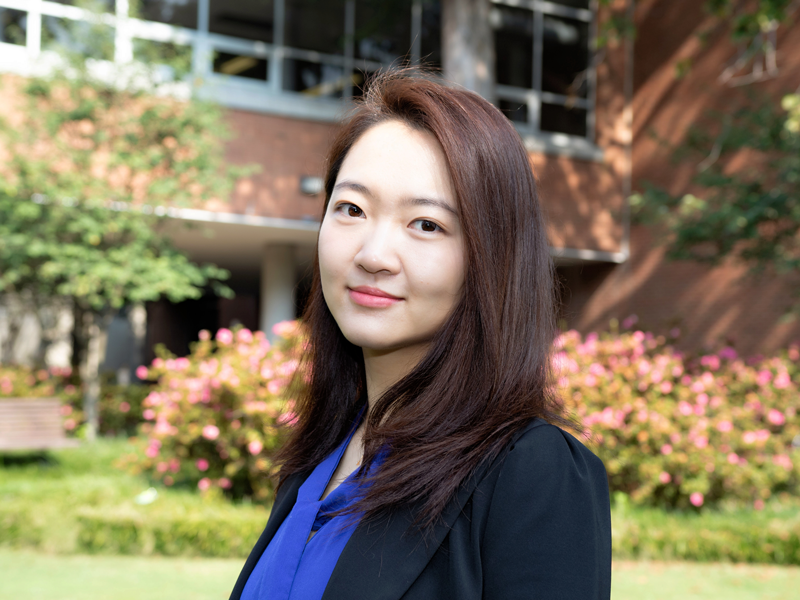
Marilyn Smith is a Professor in the School of Daniel Guggenheim School of Aerospace Engineering at the Georgia Institute of Technology. She is director of Georgia Tech's Vertical Lift Research Center of Excellence (VLRCOE), where she leads a seven-university team of experts in vertical lift research for the U.S. Army, U.S. Navy and NASA. She has partnered with the Georgia Tech Research Institute (GTRI) to successfully win multiple research funding mechanisms for both organizations that total more than $200 million dollars. As the director of the AE School's Computational Nonlinear Computational Aeroelasticity Lab, Prof. Smith leads an internationally recognized and award-winning research team in the areas of unsteady aerodynamics and computational aeroelasticity using Computational Fluid Dynamics (CFD) across rotary-wing, fixed wing and launch vehicles, as well as sustainable energy. As a member of the NASA FUN3D development team, Prof. Smith contributes to state-of-the-art unstructured algorithm development, in particular for overset, moving frames. As an affiliate of the Aerospace Systems Design Lab (ASDL), she helps to integrate high performance computing with the design process. Prof. Smith is the author or co-author of more than 200 technical publications, and her research products are in active use by the US Government and other organizations, including the Drone Racing League. She is active internationally on three NATO AVT Panels investigating nonlinear gusts behaviors on UAVs and collaboration of experimental/computational aerodynamics. She is on Board of Directors of the Vertical Lift Consortium (VLC) and the Vertical Flight Society (VFS). She is also the Deputy Technical Director for Aeromechanics for the VFS. Prof. Smith has demonstrated her leadership as ARO Dynamic Stall Workshop Chair (2019); 70th AHS Annual Forum Technical Chairperson (2014); 69th AHS Annual Forum Technical Deputy Chairperson (2013); and 2014 Overset Grid Symposium (OGS) Chairperson. She was a member on the first International Aeroelastic Prediction Workshop Organizing Committee and is a member of the OGS organizing committee. Prof. Smith has been a guest expert in aviation for National Geographic, PBS, and NPR, as well as local television and numerous publications.

Professor; School of Aerospace Engineering
Director; Vertical Lift Research Center of Excellence
Phone
404.894.3065
Office
Weber 202
Additional Research

aeroelasticity; aerodynamics; computational fluid dynamics
Research Focus Areas
Google Scholar
https://scholar.google.com/citations?hl=en&user=lEKsoQIAAAAJ&view_op=list_works&sortby=pubdate
Vertical Lift Research Center of Excellence
Marilyn
Smith
J.
Show Regular Profile

Joseph Perry

Joseph Perry
joe.perry@chemistry.gatech.edu
Research Website
Professor, School of Chemistry and Biochemistry
Phone
(404) 385-6046
Additional Research

Analytical Chemistry; Characterization; Energy; Sustainability; Materials Chemistry; Molecular Biophysics; Nanoscience and Technology; Physical Chemistry; Polymer Chemistry; Spectroscopy; Surface and Interfacial Chemistry; Theory and Modeling

http://www.chemistry.gatech.edu/faculty/perry/
Joseph
Perry
Show Regular Profile

Christopher Jones

Christopher Jones
cjones@chbe.gatech.edu
ChBE Profile Page

Chris Jones was born in suburban Detroit, Michigan in July of 1973. After his primary and secondary schooling and 14 years living Troy, Michigan, he enrolled as a chemical engineering student at the University of Michigan. In route to earning a BSE in chemical engineering, Chris carried out research on transition metal carbide and nitride catalytic materials under the direction of Levi Thompson. After graduating in 1995, Chris moved to Pasadena, California, to study inorganic materials chemistry and catalysis under Mark E. Davis at Caltech. There he earned M.S. and Ph.D. degrees in chemical engineering in 1997 and 1999, respectively. Subsequently, he studied organometallic chemistry and olefin polymerization under the direction of both Davis and John E Bercaw at Caltech. He started as an assistant professor at Georgia Tech in the summer of 2000 and was promoted to associate professor in July 2005. In May, 2005, he was appointed the J. Carl and Sheila Pirkle Faculty Fellow, followed by a promotion to professor in July 2008. He was named New-Vision Professor of Chemical and Biomolecular Engineering in July 2011. In 2015, he became the Love Family Professor of Chemical and Biomolecular Engineering, and in 2019 the William R. McLain Chair. Chris was named the associate vice president for research at Georgia Tech in November 2013. In this role, he directed 50% of his time on campus-wide research administration with a primary focus on interdisciplinary research efforts and policy related to research institutes, centers and research core facilities. In 2018, he served as the interim executive vice-president for research, before returning full time to his research and teaching roles in chemical and biomolecular engineering in 2019.

Jones directs a research program focused primarily on catalysis and CO2 separation, sequestration and utilization. A major focus of his laboratory is the development of materials and processes for the removal of CO2 from air, or “direct air capture” (DAC). In 2010 he was honored with the Ipatieff Prize from the American Chemical Society for his work on palladium catalyzed Heck and Suzuki coupling reactions. That same year, he was selected as the founding Editor-in-Chief of ACS Catalysis, a new multi-disciplinary catalysis journal published by the American Chemical Society. In 2013, Chris was recognized by the North American Catalysis Society with the Paul E. Emmett Award in Fundamental Catalysis and by the American Society of Engineering Education with the Curtis W. McGraw Research Award. In 2016 he was recognized by the American Institute of Chemical Engineers with the Andreas Acrivos Award for Professional Progress in Chemical Engineering, distinguishing him as one of the top academic chemical engineers under 45. In 2020, after ten years building and leading ACS Catalysis, he was selected as the founding Editor-in-Chief of JACS Au by an international editorial search committee commissioned by the ACS. Dr. Jones has been PI or co-PI on over $72M in sponsored research in the last seventeen years, and as of December 2020, has published over 300 papers that have been cited >28,000 times. He has an H-Index of 82 (Google Scholar).

Professor and John F. Brock III School Chair, School of Chemical and Biomolecular Engineering
Phone
404.385.1683
Office
ES&T 2202
Additional Research

CO2 capture, catalysis, membrane and separations, separations technology, catalysis, carbon capture, biofuels

Google Scholar
https://scholar.google.com/citations?hl=en&user=ltWKpYgAAAAJ&view_op=list_works&sortby=pubdate
Jones Group Website
Christopher
Jones
Show Regular Profile

Seymour Goodman

Seymour Goodman
goodman@cc.gatech.edu
Website

Seymour E. Goodman, Ph.D., joined the Georgia Tech faculty in 2000 as Professor of International Affairs and Computing and Co-Director of the Georgia Tech Information Security Center, jointly in the Sam Nunn School of International Affairs and the College of Computing. Prof. Goodman's research interests include international developments in the information technologies (IT), technology diffusion, IT and national security, critical infrastructure protection, and related public policy issues. Areas of geographic interest include the former Soviet Union and Eastern Europe, Latin America, the Middle East, South and East Asia, and parts of Africa. Earlier research had been in areas of statistical and continuum physics, combinatorial algorithms, and software engineering. He is the author or co-author of about 150 publications in these subjects, and serves in various editorial capacities for several academic journals, including contributing editor for International Perspectives for the Communications of the ACM since 1990. He has served on numerous study and advisory committees for the ACM, the Departments of Commerce, Defense, and State, the US Congress, and the National Research Council. Prof. Goodman's work has been supported by almost three dozen funding sources, most recently by multi-year grants from the National Science Foundation and the MacArthur Foundation. He teaches several undergraduate and graduate courses in science and technology and national and international security.  In 2010, he was appointed to the Computer Science and Telecommunications Board of the National Research Council of the National Academies. Secondary research interests include the impact of S&T on the American Civil War, World War II, and the Cold War. Prof. Goodman was an undergraduate at Columbia University and obtained his Ph.D. from the California Institute of Technology.

Regents' Professor, School of Computer Science
Professor, Sam Nunn School of International Affairs
Phone
404.385.1461
Office
Habersham 302
Additional Research

Software & Applications; Algorithms; Defense / National Security; Cyber Technology

Seymour
Goodman
Show Regular Profile

Santiago Grijalva

Santiago Grijalva
sgrijalva@ece.gatech.edu

Dr. Grijalva joined the Georgia Institute of Technology in the summer of 2009 as Associate Professor of Electrical and Computer Engineering. He is the Director of the Advanced Computational Electricity Systems (ACES) Laboratory, where he conducts research on real-time power system control, informatics, and economics, and renewable energy integration in power. From 2012-2015, Dr. Grijalva served as the Strategic Energy Institute (SEI) Associate Director for Electricity Systems, responsible for coordinating large efforts on electricity research and policy at Georgia Tech. Dr. Grijalva received the Electrical Engineer degree from EPN-Ecuador in 1994, the M.S. Certificate in Information Systems from ESPE-Ecuador in 1997, and the M.S. and Ph.D. degrees in Electrical Engineering from the University of Illinois at Urbana-Champaign in 1999 and 2002, respectively. He was a post-doctoral fellow in Power and Energy Systems at the University of Illinois from 2003 to 2004. From 1995 to 1997, he was with the Ecuadorian National Center for Energy Control (CENACE) as engineer and manager of the Real-Time EMS Software Department. From 2002 to 2009, he was with PowerWorld Corporation as a senior software architect and developer of innovative real-time and optimization applications used today by utilities, control centers, and universities in more than 60 countries. Dr. Grijalva is a leading researcher on ultra-reliable architectures for critical energy infrastructures. He has pioneered work on de-centralized and autonomous power system control, renewable energy integration in power, and unified network models and applications. He is currently the principal investigator of various future electricity grid research projects for the US Department of Energy, ARPA-E, EPRI, PSERC as well as other Government organizations, research consortia, and industrial sponsors. Research interests: Power system and smart grid computation De-centralized and autonomous power control architectures Ultra-reliable electricity internetworks Seamless integration of large-scale renewable energy Electricity markets design and power system economics

Georgia Power Distinguished Professor, School of Electrical and Computer Engineering
Phone
(404) 894-2974
Office
VL E284
Additional Research
  • AI for Power Generation
  • Electrical Grid
  • Energy Storage
  • System Design & Optimization
Santiago
Grijalva
Show Regular Profile

Richard Simmons

Richard Simmons
richard.simmons@me.gatech.edu

Richard Simmons is currently a Principal Research Engineer and the Director of Research and Studies at Georgia Tech’s Strategic Energy Institute (SEI) where he directs cross-cutting energy projects with an emphasis on clean electric power, vehicle efficiency and alternative fuels. He is also an instructor in Georgia Tech’s Woodruff School of Mechanical Engineering, with a specialization in design, mechatronics, and thermal systems. 

Simmons received his bachelor's degree from Georgia Tech, and masters and Ph.D. from Purdue, all in Mechanical Engineering. He is a licensed professional engineer (PE) with more than 20 years of RD&D experience in automotive, advanced materials, and alternative energy and fuels. 

From 2009 to 2012, he served a prestigious American Association for the Advancement of Science S&T (Science and Technology) Policy Fellowship at the U.S. Department of State, providing technical analysis on international policy issues related to renewable energy. He has recently authored numerous publications including an open-access eBook entitled “Understanding the Global Energy Crisis” (Purdue Press, 2014), several book chapters and journal articles related to advanced energy technologies, transportation energy technology, and future energy policy strategies.

Director, Research and Studies
Principal Research Engineer
Phone
(404) 385-6326
Additional Research

Biofuels

Research Focus Areas
University, College, and School/Department
Richard
Simmons
Show Regular Profile

Yiyi He

Yiyi He
yiyi.he@design.gatech.edu
College of Design Profile Page

Yiyi He is an assistant professor in the School of City and Regional Planning (SCaRP) at the College of Design at Georgia Tech. Her research centers on the interdisciplinary fields of urban planning, GIScience, climate science, and artificial intelligence. She is interested in building a better understanding of the uncertainty and asymmetric impacts of climate-change-induced extreme weather events (e.g., flooding, wildfires, extreme heat) on critical components of the built environment (e.g., lifeline infrastructure networks, vulnerable neighborhoods). She leverages data-driven approaches, such as GIS, network science, hyperspectral remote sensing, machine learning, and spatial statistics to tackle complex challenges in climate change and resilience research and to inform more intelligent planning and policy directives.

Her previous work involves using 3D hydrodynamic flood models to simulate flooding under different climate change scenarios and analyze the impact of both coastal and inland flooding on critical infrastructure networks. She received her bachelor’s degree from Nanjing University and her master’s and Ph.D. degree from UC Berkeley.

Assistant Professor, School of City and Regional Planning
Additional Research

GI Science Network ScienceEnvironmental Planning

Google Scholar
https://scholar.google.com/citations?hl=en&user=xoUOI-wAAAAJ&view_op=list_works&sortby=pubdate
LinkedIn
Yiyi
He
Show Regular Profile

Raphaël Pestourie

Raphaël Pestourie
rpestourie3@gatech.edu
CoC Profile Page

Raphaël Pestourie earned his Ph.D. in Applied Mathematics and an AM in Statistics from Harvard University in 2020. Prior to Georgia Tech, he was a postdoctoral associate at MIT Mathematics, where he worked closely with the MIT-IBM Watson AI Lab. Raphaël’s research focuses on scientific machine learning at the intersection of applied mathematics and machine learning and inverse design via scientific machine learning and large-scale electromagnetic design. 

Assistant Professor, School of Computer Science
Additional Research

Scientific Machine LearningInverse Design in Electromagnetism

Research Focus Areas
Google Scholar
https://scholar.google.com/citations?hl=en&user=Lxv3W74AAAAJ&view_op=list_works&sortby=pubdate
LinkedIn Personal Website
Raphaël
Pestourie
Show Regular Profile

Dylan Brewer

Dylan Brewer
brewer@gatech.edu
Website

Dylan Brewer joined the faculty at the School of Economics in 2019. He received his PhD in Economics with a dual major in Environmental Science and Policy from Michigan State University in May 2019 as well as a Master of Arts degree in Economics from the same institution in 2016. Prior to his graduate studies, Dylan completed a Bachelor of Arts degree with majors in Economics and International Relations at the University of Virginia in 2014. Dylan's research uses the tools of applied econometrics and machine learning to answer questions in energy and environmental economics. He has published research on household energy consumption, the economics of thermostat settings, recycling, electricity demand, machine learning methodology, and air quality among other topics. He teaches courses on environmental economics at the graduate and undergraduate level, and his Principles of Microeconomics course has won awards at Georgia Tech.

Assistant Professor, School of Economics
Dylan
Brewer
Show Regular Profile

Ryan Lively

Ryan Lively
ryan.lively@chbe.gatech.edu
Website

Ryan Lively was born in 1984. He spent approximately 16 years in Gainesville, FL and attended almost every home football game at The Swamp. He enrolled at Georgia Tech in 2002 as an eager Chemical Engineering student and has been a Yellow Jacket at heart ever since. During his studies at Georgia Tech, Ryan worked on research projects as diverse as ab initio quantum mechanical methods to estimate molecular binding energies, fresh Georgia peach preservation, composite spinneret design, dual-layer hollow fiber membrane spinning, and sorbent-loaded fiber spinning. Ryan introduced a rapid temperature swing adsorption (RTSA) approach for post-combustion CO2 capture, which was successfully demonstrated by adapting knowledge developed in membrane science to design unique nanoscale composite adsorbent/heat exchangers. After his Ph.D. (awarded in 2010), he spent almost 3 years as a post-doctoral research engineer at Algenol Biofuels, where he published 25 papers and filed two U.S. patent applications. His work at Algenol focused on developing energy-efficient liquid and vapor separation systems for downstream biofuel purification. 

He is now the Thomas C. DeLoach Professor in the School of Chemical & Biomolecular Engineering at the Georgia Institute of Technology. His current research seeks to revolutionize fluid separation processes critical to the global energy and carbon infrastructure. He has a specific focus on membrane- and adsorbent-based science and technology to address some of the most difficult chemical separations. His group’s research activities range from fundamental material science and discovery to translational engineering applications focusing on making and testing separation devices. 

Ryan has received a variety of awards for his research efforts including the 2020 Allan P. Colburn Award from AIChE, and the 2022 Curtis W. McGraw Award from ASEE. He is currently an Editor for the Journal of Membrane Science and is the Secretary of the North American Membrane Society. He is the Director of the Center for Understanding & Controlling Accelerated and Gradual Evolution of Materials for Energy (UNCAGE-ME), an Energy Frontier Research Center of the US Department of Energy. He has over 160 publications in the field of separations including articles in Science, Nature and other impactful venues.

Professor, School of Chemical and Biomolecular Engineering
Thomas C. DeLoach Jr. Endowed Professorship
Phone
(404) 894-8795
Additional Research

Biofuels; Carbon Capture; Separations Technology; Membranes; Adsorbents;Polymers; Microporous Materials

Google Scholar
https://scholar.google.com/citations?hl=en&user=1ktJriEAAAAJ&view_op=list_works&sortby=pubdate
Research Website
Ryan
Lively
Show Regular Profile