Lauren Garten

Lauren Garten
lauren.garten@mse.gatech.edu

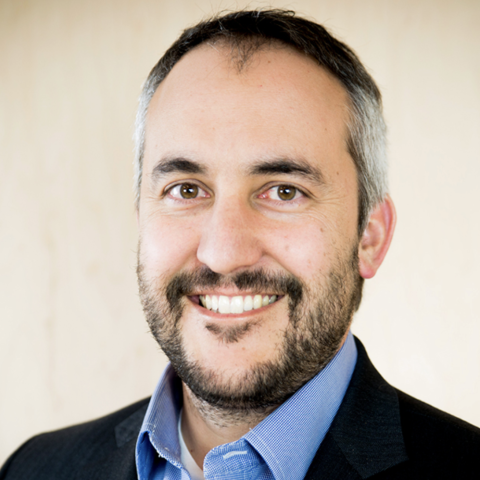
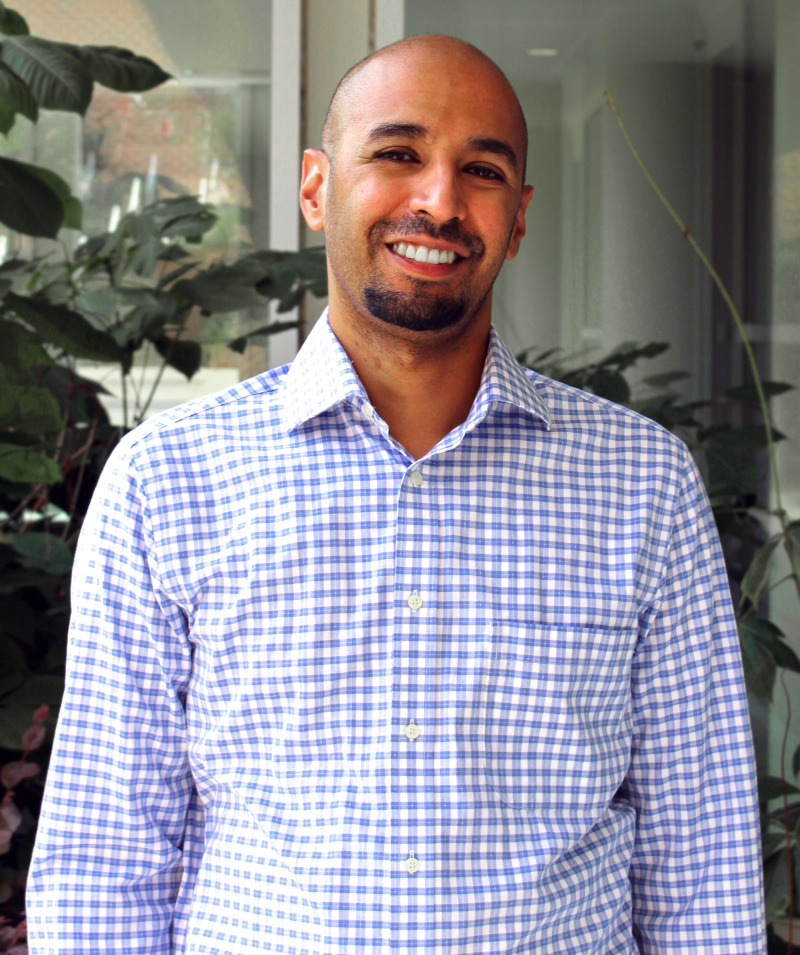
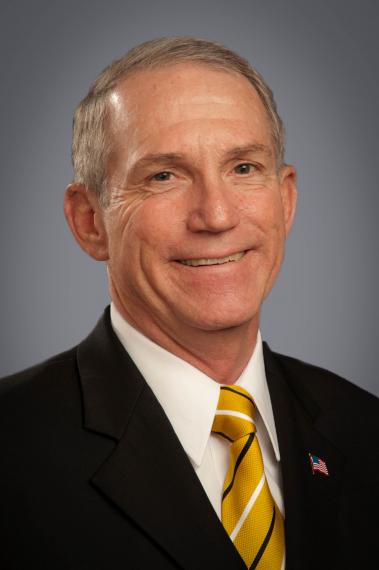
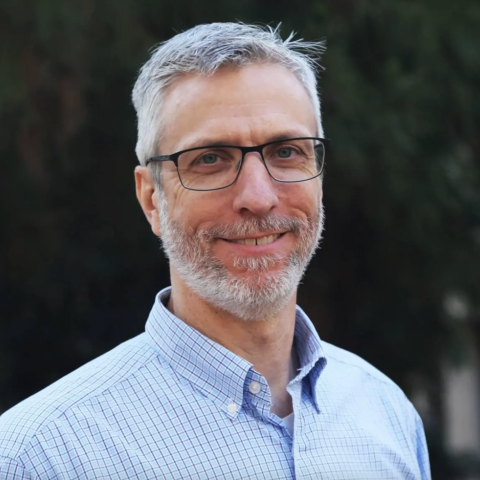
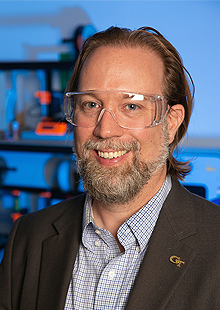
Lauren Garten joined the School of Materials Science and Engineering as an assistant professor in Fall 2021. Her group focuses on developing new materials for energy and electronic applications, particularly at the nexus between ferroelectricity, ferromagnetism, electronics, and photovoltaics. 

Lauren received her B.S. in ceramic engineering from the Missouri University of Science and Technology. She then went on to earn a Ph.D. in material science from the Pennsylvania State University for her work on ferroelectric, piezoelectric, and dielectric synthesis and characterization with Prof. Susan Trolier-McKinstry. She then became a post-doc at the National Renewable Energy Laboratory working on metastable materials for energy applications. After a very short stint as a material scientist at Sandia National Laboratory, she won the NRC Research Associateship from the National Academies of Science, Engineering, and Math which was hosted at the U.S. Naval Research Lab (NRL). She then received the Jerome and Isabella Karle Distinguished Scholar Fellowship from NRL to work on lead-free multiferroic materials and devices.

Assistant Professor, School of Materials Science and Engineering
Phone
404-894-5748
Office
Pettit 210
Additional Research

Electronics, Energy Harvesting, Energy Storage, Solar

University, College, and School/Department
Departmental Bio
Lauren
Garten
Show Regular Profile

Scott Sinquefield

Scott Sinquefield
Scott.Sinquefield@rbi.gatech.edu
Website

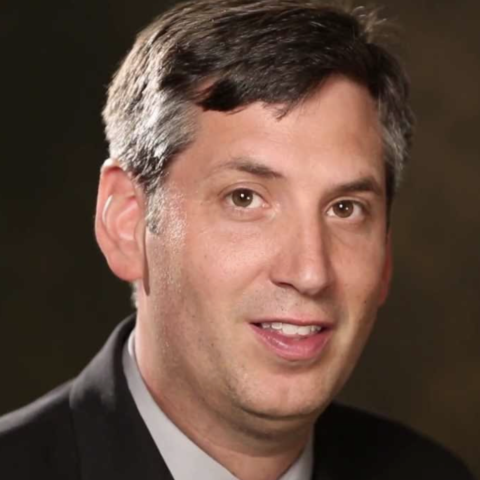
Scott Sinquefield completed his Ph.D. in Chemical Engineering in 1998 at Oregon State University. He spent three years working with the Multi-Fuel Combustion Group at the Combustion Research Facility at Sandia National Labs (Livermore); where he performed the experimental portion of his thesis research. He joined the Chemical Recovery group at IPST in 1998 and was lead.engineer in the construction and operation of the Pressurize Entrained Flow Reactor facility. He now leads the research program on black liquor gasification. He has extensive experience in the design and construction of pilot research reactors and control systems. He also has expertise in boiler fire-side fouling and thermodynamic modeling of aqueous electrolyte systems.

Senior Research Engineer
Phone
(404) 385-0241
Additional Research

Gasification; Biofuels; Chemical Recovery; Environmental Processes; Separation Technologies

University, College, and School/Department
Scott
Sinquefield
Show Regular Profile

Preet Singh

Preet Singh
preet.singh@mse.gatech.edu
Corrosion and Materials Lab

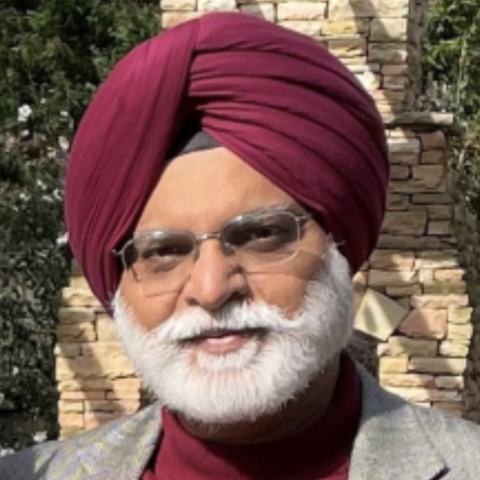
Prior to joining MSE in July 2003 Professor Singh was a faculty member in Corrosion and Materials Engineering Group at The Institute of Paper Science and Technology (IPST) since 1996.  While in IPST Singh worked on fundamental as well as applied research projects related to the corrosion problems in the pulp and paper industry. From 1990 to 1996, he was a Senior Research Associate at Case Western Reserve University, Cleveland, Ohio, working on various materials and corrosion related research projects, including damage accumulation in metal matrix composites (MMCs), Environmental sensitive fracture of Al-alloys MMCs, and High temperature oxidation of Nb/Nb5Si3 composites. He received the Alcan International's Fellowship in 1988-90 to work on "Effects of Low Melting Point Impurities on Slow Crack Growth in Al Alloys,"  He has published over 50 papers in reputed scientific journals and conference proceedings. He is active member of NACE, TMS, TAPPI and has co-organized a number of international symposiums.

Reliable performance of the materials is very important for any industrial process and especially for the chemical process industry for the manufacture of a high quality product. Material selection is generally based on the required material properties, low initial capital investment, and minimum maintenance. Changes in the process parameters to improve products can often lead to higher corrosion susceptibilities of the plant materials. Moreover, with increase in capital cost, there is pressure to extend the life of existing plant equipment beyond its original design life. Corrosion and Materials Engineers are also playing a key role in selecting, maintaining, and modifying materials for changing needs for every industry. Corrosion Science and Engineering research includes understanding the basic mechanisms involved in material degradation in given environments and using that knowledge to develop a mitigation strategy against environment-induced failures

Professor, School of Materials Science and Engineering
Associate Chair of Graduate Studies, School of Materials Science and Engineering
Phone
404.894.6641
Office
IPST 246
Additional Research

Composites; fracture and fatigue; stress corrosion; Materials Failure and Reliability; Biofuels; Chemical Recovery; Environmental Processes; Sustainable Manufacturing; Energy & Water; Corrosion & Reliability
Google Scholar
https://scholar.google.com/citations?hl=en&user=AqrDFI8AAAAJ&view_op=list_works&sortby=pubdate
MSE Profile Page
Preet
Singh
Show Regular Profile

Dennis Hess

Dennis Hess
dennis.hess@chbe.gatech.edu
ChBE Profile Page

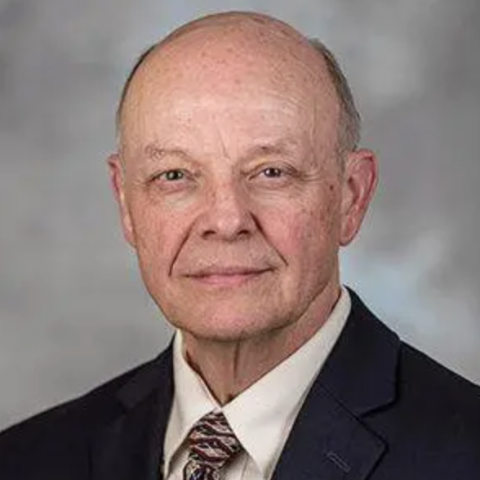
Dennis Hess’s research interests are in thin film science and technology, surface and interface modification and characterization, microelectronics processing and electronic materials. His group focuses on the establishment of fundamental structure-property relationships and their connection to chemical process sequences used in the fabrication of novel films, electronic materials, devices, and nanostructures. Control of the surface properties of materials such as dielectrics, semiconductors, metals, and paper or paper board by film deposition or surface modification allows the design of such surfaces for a variety of applications in microelectronics, packaging, sensors, microfluidics, and separation processes.

Professor Emeritus, School of Chemical and Biomolecular Engineering
Phone
(404) 894-5922
Additional Research

Electronics; Thin Films; Surfaces and Interfaces; plasma processing; Papermaking; Coatings & Barriers; Films & Coatings; Biomaterials

University, College, and School/Department
Hess Group
Dennis
Hess
W.
Show Regular Profile

Mark Losego

Mark Losego
losego@gatech.edu
Research Website

Mark D. Losego is a professor in the School of Materials Science and Engineering at Georgia Tech. The Losego research lab focuses on materials processing to develop novel organic-inorganic hybrid materials and interfaces for microelectronics, sustainable energy devices, national security technologies, and advanced textiles. The Losego Lab combines a unique set of solution and vapor phase processing methods to convert organic polymers into organic-inorganic hybrid materials, including developing the science to scale these processes for manufacturing.  Prof. Losego’s work is primarily experimental, and researchers in his lab gain expertise in the vapor phase processing of materials (atomic layer deposition, physical vapor deposition, vapor phase infiltration, etc.), the design and construction of vacuum equipment, interfacial and surface science, and materials and surface characterization. Depending on the project, Losego Lab researchers explore a variety of properties ranging from electrical to electrochemical to optical to thermal to sorptive to catalytic and more.

Professor, MSE Faculty Fellow, and Dean’s Education Innovation Professor
Phone
404.385.3630
Additional Research

Catalysis; Cellulose Nanomaterials; Coatings; Coatings and Barriers; Corrosion & Materials Engineering; Corrosion and Reliability; Energy; Films and Coatings; Microporous Materials; Nanocellulose Applications; Nanomaterials; New Materials; Polymers; Vapor Phase Processing

Related Site
Mark
Losego
Show Regular Profile

Rhett Mayor

Rhett Mayor
rhett.mayor@me.gatech.edu
Website

Dr. Mayor is a distinguished expert in thermal sciences, electro-mechanical machine design, and micro-manufacturing. As the inventor of the DwHX cooling technology for electric machines, he specializes in the research and development of advanced power electronics cooling, electric machine design, micro-power generation, and sustainable energy systems. Alongside his technical pursuits, Dr. Mayor has a rich entrepreneurial backdrop, having navigated product-oriented tech startups and led multiple advanced research and development programs. His expertise is sought in IP litigation, where he serves as a technical authority. 

He has presented keynotes and seminars on diverse topics, from micro-manufacturing and electric machines to energy systems. He teaches courses in mechanical engineering courses at Georgia Tech, including machine design, manufacturing processes, design thinking and internal combustion engines, including H2ICE, and has taught courses as a visiting lecturer in China, France, Saudi Arabia, and South Africa. He has a substantial academic contribution with over 120 publications in leading archival journals and conferences and is a member of ASME and IEEE and SME. 

Dr. Mayor's commitment goes beyond teaching and research as he engages in service as the Secretary of the Faculty. He strives to build on the learnings from the pandemic to expand the resourcefulness, understanding, and trust in shared governance. Moreover, Dr. Mayor serves as the faculty advisor for the Student Competition Center, further highlighting his commitment to student mentoring and leadership development. He looks forward to implementing AI in a robust manner in institute learnings, as a core capability in education.

Associate Professor, Woodruff School of Mechanical Engineering
Phone
404.894.0301
Office
Callaway Manufacturing Research Building, 435
Additional Research

Manufacturing and Heat Transfer; Combustion and Energy Systems; Micro-factories; micro/meso-scale manufacturing processes; integrated micro-mechatronics; micro-engines; micro-power generation

Rhett
Mayor
Show Regular Profile

Zhiqun Lin

Zhiqun Lin
zhiqun.lin@mse.gatech.edu
MSE Profile Page

Zhiqun Lin is currently Professor of Materials Science and Engineering at the Georgia Institute of Technology. His research focuses on nanostructured functional materials (NanoFM). An extensive list of materials currently under investigation in his group includes polymer-based nanocomposites, block copolymers, polymer blends, conjugated polymers, quantum dots (rods, tetrapods, wires), magnetic nanocrystals, metallic nanocrystals, semiconductor metal oxide nanocrystals, ferroelectric nanocrystals, multiferroic nanocrystals, upconversion nanocrystals, thermoelectric nancrystals, core/shell nanoparticles (nanorods), hollow nanocrystals, Janus nanocrystals, nanopores, nanotubes, hierarchically structured and assembled materials, and semiconductor organic-inorganic nanohybrids.

The goal of his research is to understand the fundamentals of these nanostructured materials. His group intends to create these nanostructures in a precisely controllable manner and to exploit the structure-property relationships in the development of multifunctional materials for potential use in energy conversion (e.g., solar cells, photocatalysis, and hydrogen generation) and storage (e.g., batteries), electronics, optics, optoelectronics, magnetic materials and devices, nanotechnology, and biotechnology.

Professor, Materials Science and Engineering
Phone
404.385.4404
Office
MOSE 3100K
Additional Research

Nanocomposites; Polymeric Composites; Polymers; Nanocrystals; Self-Assembly; Solar Cells; Batteries; Composites; Nanostructures; Electronics; Energy Storage

Google Scholar
https://scholar.google.com/citations?hl=en&user=7NT8lAEAAAAJ&view_op=list_works&sortby=pubdate
Nanosctructure Functional Materials Group
Zhiqun
Lin
Show Regular Profile

Anirban Mazumdar

Anirban Mazumdar
anirban.mazumdar@me.gatech.edu
DART Lab

Dr. Anirban Mazumdar joined Georgia Tech as an Assistant Professor in Mechanical Engineering in 2018. Dr. Mazumdar studies robot mobility with the goal of understanding and achieving agile, versatile, and efficient robot behaviors in unstructured environments. His previous experience includes a postdoctoral research position in the High Consequence Automation and Robotics Group at Sandia National Laboratories in Albuquerque, NM. He has broad experience with novel robotic systems including energy efficient bipedal robots, reconfigurable aerial vehicles, prosthetic devices, and relaxed stability mobile robots.

Assistant Professor; School of Mechanical Engineering
Director; Dynamic Adaptive Robotic Technologies (DART) Lab
Phone
404.385.8061
Office
Callaway Building 432
Additional Research

Mobile Robots; Human Performance; Autonomy

Research Focus Areas
Google Scholar
https://scholar.google.com/citations?hl=en&user=cRHSdPYAAAAJ&view_op=list_works&sortby=pubdate
Anirban
Mazumdar
Show Regular Profile

Rusty Roberts

Rusty  Roberts
rusty.roberts@gtri.gatech.edu
GTRI Page

Rusty Roberts is the Director of the Aerospace, Transportation and Advanced Systems (ATAS) Laboratory at the Georgia Tech Research Institute (GTRI). ATAS develops advanced systems concepts, builds system prototypes, and performs research on technologies related to aerospace, transportation, power and energy, threat systems, and food processing. A nationally recognized expert in test and evaluation, Roberts has held the position of the President of the International Test and Evaluation Association (ITEA). He also started and presently leads a GTRI-wide test and evaluation initiative that brought together the resources to provide Science & Technology support to the Office of the Secretary of Defense Test Resource Management Center. Mr. Roberts has also worked with U.S. government officials to establish key requirements for the testing of U.S. electronic countermeasures against surface-to-air missile threats and has been able to provide solutions developed by GTRI. Solutions included the threat replica of a medium range surface-to-air missile (SAM) acquisition radar for the U.S. Army and the Advanced Airborne Interceptor Simulator (AAIS) for the U.S. Air Force. He also led the efforts that developed the Missle-on-a-Mountain program at the Electronic Combat Range in China Lake, California. This one-of-a-kind simulation facility has been called a key national asset in testing electronic countermeasures against surface-to-air missle systems. The facility is in high demand by the U.S. Navy, U.S. Air Force, and allied air forces. Prior to joining GTRI, Mr. Roberts served as an active duty U.S. Army Signal Corps officer for ten years, with assignments at Fort Gordon, GA and Kaiserslautern, Germany. His last assignment was at the U.S. Military Academy at West Point as an Assistant Professor in the Department of Electrical Engineering teaching Electronic Circuit Design. During his tour at West Point he became the Course Director for the Senior-level, two-semester electronics course for the Department. Mr. Roberts continued to serve in the Army Reserve after leaving Active Duty while at GTRI. Roberts holds a Bachelor of Science degree in Electrical Engineering from West Point, a Master of Science degree in Electrical Engineering from the Georgia Institute of Technology, and a Maste

Director | Aerospace, Transportation & Advanced Systems Laboratory; Georgia Tech Research Institute
Phone
404.407.7826
Additional Research

Autonomy; Transportation; Smart Infrastructure

Research Focus Areas
GTRI
Geogia Tech Research Institute
Rusty
Roberts
Show Regular Profile

Edmond Chow

 Edmond Chow
echow@cc.gatech.edu
CoC Profile Page

Edmond Chow is a Professor in the School of Computational Science in the College of Computing. He previously held positions at D. E. Shaw Research and Lawrence Livermore National Laboratory. His research is in developing and applying numerical methods and high-performance computing to solve large-scale scientific computing problems and seeks to enable scientists and engineers to solve larger problems more efficiently using physical simulation. Specific interests include numerical linear algebra (preconditioning, multilevel methods, sparse matrix computations) and parallel methods for quantum chemistry, molecular dynamics, and Brownian/Stokesian dynamics.  Chow earned an Honors B.A.Sc. in systems design engineering from the University of Waterloo, Canada, in 1993, and a Ph.D. in computer science with a minor in aerospace engineering from the University of Minnesota in 1997. Chow was awarded the 2009 ACM Gordon Bell prize and the 2002 Presidential Early Career Award for Scientists and Engineers (PECASE).

Professor, School of Computational Science and Engineering
Phone
404.894.3086
Office
CODA S1311
Additional Research

High performance computing, materials, data Sciences, cyber/ information technology, quantum information sciences

Google Scholar
https://scholar.google.com/citations?hl=en&user=jGqGKGMAAAAJ&view_op=list_works&sortby=pubdate
Edmond
Chow
Show Regular Profile