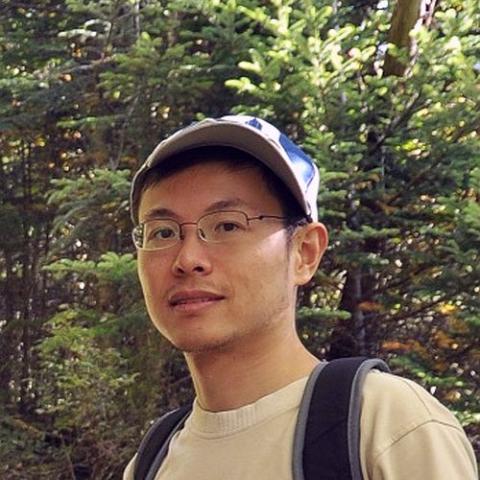
Yalong Yang

Yalong Yang
yalong.yang@gatech.edu
Immersive Visualization & Interaction Lab

I am an assistant professor in the School of Interactive Computing at Georgia Tech. Before joining Georgia Tech, I spent two wonderful years at Virginia Tech as a faculty member. Prior to this, I was a postdoctoral fellow in the Visual Computing Group at Harvard University, and received my Ph.D. from Human-Centred Computing Department, Monash University, Australia.

My research encompasses a wide range of topics within the fields of Visualization (VIS), VR/AR, and Human-Computer Interaction (HCI). I actively contribute to these communities and regularly publish my work in leading venues such as IEEE VIS, ACM CHI, IEEE TVCG, EuroVis, and IEEE VR. I am honored to have received three best paper honorable mention awards, notably from IEEE VIS in 2016 and 2022, as well as ACM CHI in 2021. I also serve as a program committee member for several prestigious conferences in my fields, including IEEE VIS 2022/23/24, ACM CHI 2023/24, and IEEE VR 2022/23/24.

Assistant Professor
Additional Research
  • Human-Data Interaction
  • Human-Computer Interaction
  • Immersive Analytics
  • VR/AR Data Visualization 
Google Scholar
https://scholar.google.com/citations?hl=en&user=B2Qy_xAAAAAJ&view_op=list_works&sortby=pubdate
LinkedIn Profile
Yalong
Yang
Show Regular Profile

King Jordan

King Jordan
king.jordan@biology.gatech.edu
Website

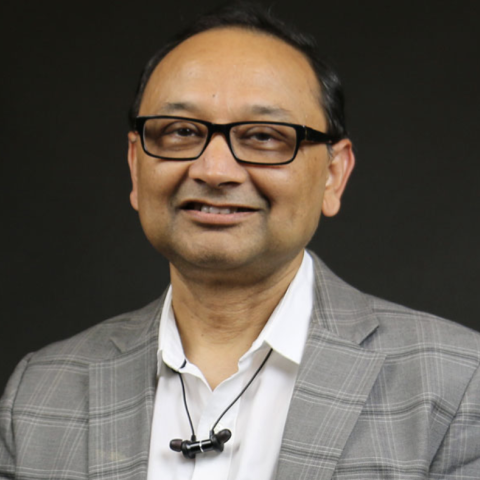
King Jordan is Professor in the School of Biological Sciences and Director of the Bioinformatics Graduate Program at the Georgia Institute of Technology. He has a computational laboratory and his group works on a wide variety of research and development projects related to: (1) human clinical & population genomics, (2) computational genomics for public health, and (3) computational approaches to functional genomics. He is particularly interested in the relationship between human genetic ancestry and health. His lab is also actively engaged in capacity building efforts in genomics and bioinformatics in Latin America. 

Professor
Director, Bioinformatics Graduate Program
Phone
404-385-2224
Office
EBB 2109
Additional Research
Epigenetics ; Computational genomics for public health. We are broadly interested in the relationship between genome sequence variation and health outcomes. We study this relationship through two main lines of investigation - human and microbial.Human:we study how genetic ancestry and population structure impact disease prevalence and drug response. Our human genomics research is focused primarily on complex common disease and aims to characterize the genetic architecture of health disparities, in pursuit of their elimination.Microbial:we develop and apply genome-enabled approaches to molecular typing and functional profiling of microbial pathogens that cause infectious disease. The goal of our microbial genomics research is to empower public health agencies to more effectively monitor and counter infectious disease agents.
Google Scholar
https://scholar.google.com/citations?user=v1hVGqgAAAAJ&hl=en
LinkedIn http://biosciences.gatech.edu/people/king-jordan
King
Jordan
Show Regular Profile

Martha Grover

Martha Grover
martha.grover@chbe.gatech.edu
Grover Group

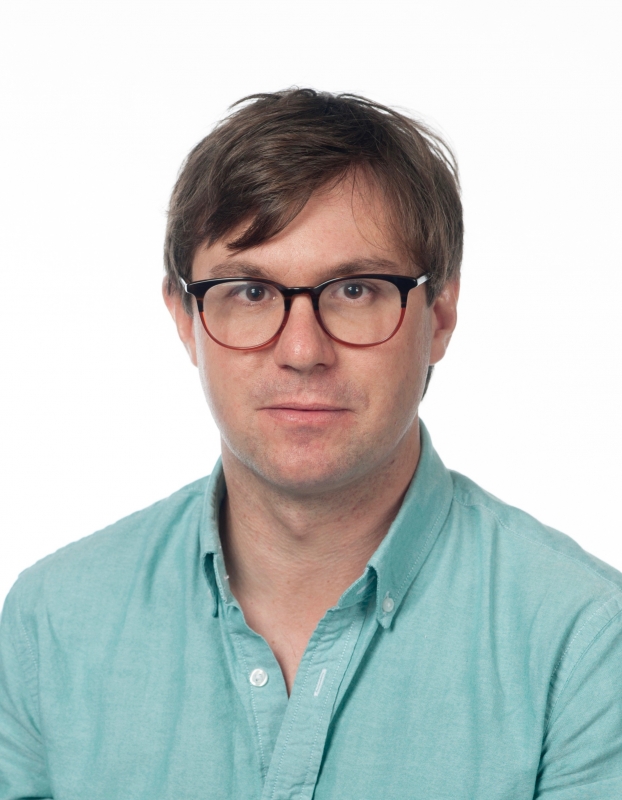
Grover’s research activities in process systems engineering focus on understanding macromolecular organization and the emergence of biological function. Discrete atoms and molecules interact to form macromolecules and even larger mesoscale assemblies, ultimately yielding macroscopic structures and properties. A quantitative relationship between the nanoscale discrete interactions and the macroscale properties is required to design, optimize, and control such systems; yet in many applications, predictive models do not exist or are computationally intractable.

The Grover group is dedicated to the development of tractable and practical approaches for the engineering of macroscale behavior via explicit consideration of molecular and atomic scale interactions. We focus on applications involving the kinetics of self-assembly, specifically those in which methods from non-equilibrium statistical mechanics do not provide closed form solutions. General approaches employed include stochastic modeling, model reduction, machine learning, experimental design, robust parameter design, and estimation.

Professor, School of Chemical and Biomolecular Engineering
James Harris Faculty Fellow, School of Chemical and Biomolecular Engineering
Member, NSF/NASA Center for Chemical Evolution
Phone
404.894.2878
Office
ES&T 1228
Additional Research

Colloids; Crystallization; Organic and Inorganic Photonics and Electronics; Polymers; Discrete atoms and molecules interact to form macromolecules and even larger mesoscale assemblies, ultIMaTely yielding macroscopic structures and properties. A quantitative relationship between the nanoscale discrete interactions and the macroscale properties is required to design, optimize, and control such systems; yet in many applications, predictive models do not exist or are computationally intractable. The Grover group is dedicated to the development of tractable and practical approaches for the engineering of macroscale behavior via explicit consideration of molecular and atomic scale interactions. We focus on applications involving the kinetics of self-assembly, specific those in which methods from non-equilibrium statistical mechanics do not provide closed form solutions. General approaches employed include stochastic modeling, model reduction, machine learning, experimental design, robust parameter design, estIMaTion, and optimal control, monitoring and control for nuclear waste processing and polymer organic electronics

Google Scholar
https://scholar.google.com/citations?hl=en&user=PgpLoqIAAAAJ&view_op=list_works&sortby=pubdate
ChBE Profile Page
Martha
Grover
A.
Show Regular Profile

Micah Ziegler

Micah Ziegler
micah.ziegler@gatech.edu
Personal Website

Dr. Micah S. Ziegler is an assistant professor in the School of Chemical and Biomolecular Engineering and the School of Public Policy.

Dr. Ziegler evaluates sustainable energy and chemical technologies, their impact, and their potential. His research helps to shape robust strategies to accelerate the improvement and deployment of technologies that can enable a global transition to sustainable and equitable energy systems. His approach relies on collecting and curating large empirical datasets from multiple sources and building data-informed models. His work informs research and development, public policy, and financial investment.

Dr. Ziegler conducted postdoctoral research at the Institute for Data, Systems, and Society at the Massachusetts Institute of Technology. At MIT, he evaluated established and emerging energy technologies, particularly energy storage. To determine how to accelerate the improvement of energy storage technologies, he examined how rapidly and why they have changed over time. He also studied how energy storage could be used to integrate solar and wind resources into a reliable energy system.

Dr. Ziegler earned a Ph.D. in Chemistry from the University of California, Berkeley and a B.S. in Chemistry, summa cum laude, from Yale University. In graduate school, he primarily investigated dicopper complexes in order to facilitate the use of earth-abundant, first-row transition metals in small molecule transformations and catalysis. Before graduate school, he worked in the Climate and Energy Program at the World Resources Institute (WRI). At WRI, he explored how to improve mutual trust and confidence among parties developing international climate change policy and researched carbon dioxide capture and storage, electricity transmission, and international energy technology policy. Dr. Ziegler was also a Luce Scholar assigned to the Business Environment Council in Hong Kong, where he helped advise businesses on measuring and managing their environmental sustainability.

Dr. Ziegler is a member of AIChE and ACS, and serves on the steering committee of Macro-Energy Systems. His research findings have been highlighted in media, including The New York Times, Nature, The Economist, National Geographic, BBC Newshour, NPR’s Marketplace, and ABC News.

Assistant Professor, School of Chemical and Biomolecular Engineering, School of Public Policy
SEI Lead: Energy Storage
Phone
404.894.5991
Office
ES&T 2228
Additional Research
  • Energy
  • Materials and Nanotechnology
  • Sustainable Engineering
Google Scholar
https://scholar.google.com/citations?hl=en&user=tMFMFdUAAAAJ&view_op=list_works&sortby=pubdate
LinkedIn ChBE Profile Page
Micah
Ziegler
Show Regular Profile

Molei Tao

Molei Tao
mtao@gatech.edu
Personal Website

Molei Tao received B.S. in Math & Physics in 2006 from Tsinghua Univ. (Beijing) and Ph.D. in Control & Dynamical Systems with a minor in Physics in 2011 from Caltech (advisor: Houman Owhadi, co-advisor: Jerry Marsden). Afterwards, he worked as a postdoc in Computing & Mathematical Sciences at Caltech from 2011 to 2012, and then as a Courant Instructor at NYU from 2012 to 2014. From 2014 on, he has been an assistant, and then associate professor in School of Math at Georgia Tech. He is a recipient of W.P. Carey Ph.D. Prize in Applied Mathematics (2011), American Control Conference Best Student Paper Finalist (2013), NSF CAREER Award (2019), AISTATS best paper award (2020), IEEE EFTF-IFCS Best Student Paper Finalist (2021), Cullen-Peck Scholar Award (2022), GT-Emory AI.Humanity Award (2023), a Plenary Speaker at Georgia Scientific Computing Symposium (2024), a Keynote Speaker at (2024) International Conference on Scientific Computing and Machine Learning, SONY Faculty Innovation Award (2024), Best Poster Award at 2024 international conference “Recent Advances and Future Directions for Sampling” held at Yale, and Richard Duke Fellowship (2025).

Professor
Phone
(404) 894-8380;
Additional Research
  • Energy Harvesting
  • Smart Infrastructure
Molei
Tao
Show Regular Profile

Subhro Guhathakurta

Subhro Guhathakurta
subhro.guha@design.gatech.edu
Website
Chair, School of City & Regional Planning
Director, Center for Spatial Planning Analytics and Visualization
Harry West Professor, School of City & Regional Planning
Phone
(404) 894-2351
Additional Research
  • City and Regional Planning
  • Cyber/ Information Technology
  • Strategic Planning
  • Visualizations
Research Focus Areas
Subhro
Guhathakurta
Show Regular Profile

Martin Mourigal

Martin Mourigal
mourigal@gatech.edu
Physics Profile Page

Martin Mourigal received the B.S in Materials from Ecole des Mines de Nancy in 2004. He later received his M.S. and Ph.D. in physics from Ecole Polytechnique Federale (EPFL) located in Lausanne, Switzerland in 2007 and 2011, respectively. He was also a postdoctoral research fellow in John Hopkins University from 2011 until 2014. He joined Georgia Tech in 2015 and is currently an assistant professor in the School of Physics. Mourigal's lab focuses on the study of collective electronic and magnetic phenomena in quantum materials. His research exploits the unique strengths of neutron and X-ray scattering to probe the organization and the dynamics of matter at the nanoscale.In addition to his own lab research, Mourigal is the co-director of the Georgia Tech Quantum Alliance, a university wide program that will work towards solving problems in optimization, cryptography, and artificial intelligence. Mourigal was awarded the Cullen Peck Faculty Scholar Award from Georgia Tech in 2019. He was also awarded the National Science Foundation CAREER Award for excellence as a young educator and researcher in 2018.

Professor, School of Physics
Initiative Lead, Georgia Tech Quantum Alliance
Phone
404.385.5669
Office
Howey C202
Additional Research

Quantum Materials, Micro and Nanomechanics, Ferroelectronic Materials, Materials Data Sciences, Electronics

University, College, and School/Department
Google Scholar
https://scholar.google.com/citations?hl=en&user=utYY3jYAAAAJ&view_op=list_works&sortby=pubdate
Mourigal Lab
Martin
Mourigal
Show Regular Profile

Rampi Ramprasad

Rampi Ramprasad
rampi.ramprasad@mse.gatech.edu
MSE Profile Page

Ramprasad joined the School of Materials Science and Engineering at Georgia Tech in February 2018. Prior to joining Georgia Tech, he was the Centennial Term Professor of Materials Science and Engineering at the University of Connecticut. He joined the University of Connecticut in Fall 2004 after a 6-year stint with Motorola’s R&D laboratories at Tempe, AZ. Ramprasad received his B. Tech. in Metallurgical Engineering at the Indian Institute of Technology, Madras, India, an M.S. degree in Materials Science and Engineering at the Washington State University, and a Ph.D. degree also in Materials Science and Engineering at the University of Illinois, Urbana-Champaign.

Ramprasad’s area of expertise is in the development and utilization of computational and data-driven (machine learning) methods aimed at the design and discovery of new materials. Materials classes under study include polymers, metals and ceramics (mainly dielectrics and catalysts), and application areas include energy production and energy storage. Prof. Ramprasad’s research has been funded by the Office of Naval Research (ONR), the National Science Foundation (NSF), the Department of Energy (DOE), the Army Research Office (ARO), and Toyota Research Institute (TRI). He has lead a ONR-sponsored Multi-disciplinary University Research Initiative (MURI) in the past to accelerate the discovery of polymeric capacitor dielectrics for energy storage, and is presently leading another MURI aimed at the understanding and design of dielectrics tolerant to enormous electric fields.

Ramprasad is a Fellow of the American Physical Society, an elected member of the Connecticut Academy of Science and Engineering, and the recipient of the Alexander von Humboldt Fellowship and the Max Planck Society Fellowship for Distinguished Scientists.

Michael E. Tennenbaum Family Chair, Materials Science and Engineering
Georgia Research Alliance Eminent Scholar in Energy Sustainability
Phone
404.385.2471
Office
Love 366
Additional Research

Data Analytics; Materials discovery; Energy Storage; Modeling; Electronic Materials; Electronics

University, College, and School/Department
Ramprasad Group
Rampi
Ramprasad
Show Regular Profile

David S. Sholl

David S.  Sholl
david.sholl@chbe.gatech.edu
ChBE Profile Page

Sholl’s research focuses on materials whose macroscopic dynamic and thermodynamic properties are strongly influenced by their atomic-scale structure. Much of this research involves applying computational techniques such as molecular dynamics, Monte Carlo simulations and quantum chemistry methods to materials of interest. Although the group's work is centered on computational methods, it involves extensive collaboration with experimental groups and industrial partners.

Professor, School of Chemical and Biomolecular Engineering
Phone
404.894.2822
Office
ES&T 2214
Additional Research

Metal-Organic Frameworks; Separation Membranes; Separations Technology; Carbon Capture; Hydrogen; SMART Manufacturing; Sustainable Manufacturing; Biochemicals

Google Scholar
https://scholar.google.com/citations?hl=en&user=BR7UkKYAAAAJ&view_op=list_works&sortby=pubdate
Sholl Research Group
David S.
Sholl
Show Regular Profile

Phanish Suryanarayana

Phanish Suryanarayana
phanish.suryanarayana@ce.gatech.edu
CEE Profile Page

Phanish Suryanarayana joined the School of Civil and Environmental Engineering at the Georgia Institute of Technology in August 2011. He received his B.Tech. from Indian Institute of Technology, Madras, India in 2005. He obtained his M.S. in Aeronautics from California Institute of Technology in 2006. Subsequently, he received his Ph.D. in Aeronautics from California Institute of Technology in 2011 for his thesis titled "Coarse-graining Kohn-Sham Density Functional Theory". His research interests are in the areas of multiscale modeling, ab-initio calculations, density functional theory, continuum mechanics and smart materials. Overall, he is interested in developing efficient numerical methods for solving problems arising in a variety of fields. On a personal level, Dr. Suryanarayana is a sports enthusiast. He plays badminton, cricket, waterpolo, and ultimate frisbee. He also is an avid gamer (PC) and enjoys playing bridge and other board game

Associate Professor, School of Civil and Environmental Engineering
Phone
404.894.2773
Office
Mason 5139A
Additional Research
  • Computational Materials Science
  • Energy Use & Conservation
  • High Performance Computing
Google Scholar
https://scholar.google.com/citations?hl=en&user=emIr7xQAAAAJ&view_op=list_works&sortby=pubdate
Material Physics & Mechanics Group
Phanish
Suryanarayana
Show Regular Profile