David S. Sholl

David S.  Sholl's profile picture
david.sholl@chbe.gatech.edu
ChBE Profile Page

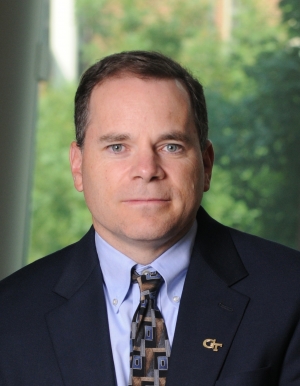
Sholl’s research focuses on materials whose macroscopic dynamic and thermodynamic properties are strongly influenced by their atomic-scale structure. Much of this research involves applying computational techniques such as molecular dynamics, Monte Carlo simulations and quantum chemistry methods to materials of interest. Although the group's work is centered on computational methods, it involves extensive collaboration with experimental groups and industrial partners.

Professor, School of Chemical and Biomolecular Engineering
Phone
404.894.2822
Office
ES&T 2214
Additional Research

Metal-Organic Frameworks; Separation Membranes; Separations Technology; Carbon Capture; Hydrogen; SMART Manufacturing; Sustainable Manufacturing; Biochemicals

Google Scholar
https://scholar.google.com/citations?hl=en&user=BR7UkKYAAAAJ&view_op=list_works&sortby=pubdate
Sholl Research Group

Phanish Suryanarayana

Phanish Suryanarayana's profile picture
phanish.suryanarayana@ce.gatech.edu
CEE Profile Page

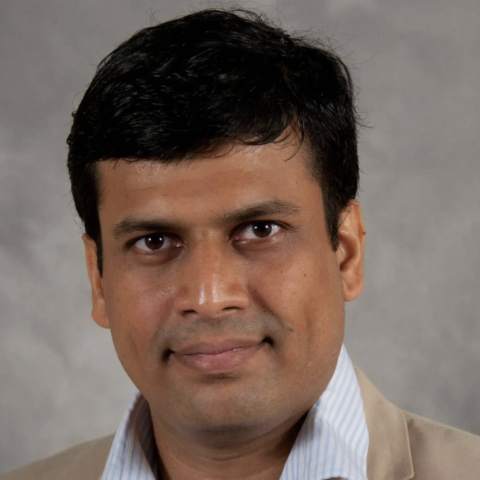
Phanish Suryanarayana joined the School of Civil and Environmental Engineering at the Georgia Institute of Technology in August 2011. He received his B.Tech. from Indian Institute of Technology, Madras, India in 2005. He obtained his M.S. in Aeronautics from California Institute of Technology in 2006. Subsequently, he received his Ph.D. in Aeronautics from California Institute of Technology in 2011 for his thesis titled "Coarse-graining Kohn-Sham Density Functional Theory". His research interests are in the areas of multiscale modeling, ab-initio calculations, density functional theory, continuum mechanics and smart materials. Overall, he is interested in developing efficient numerical methods for solving problems arising in a variety of fields. On a personal level, Dr. Suryanarayana is a sports enthusiast. He plays badminton, cricket, waterpolo, and ultimate frisbee. He also is an avid gamer (PC) and enjoys playing bridge and other board game

Professor, School of Civil and Environmental Engineering
Phone
404.894.2773
Office
Mason 5139A
Additional Research
  • Computational Materials Science
  • Energy Use & Conservation
  • High Performance Computing
Google Scholar
https://scholar.google.com/citations?hl=en&user=emIr7xQAAAAJ&view_op=list_works&sortby=pubdate
Material Physics & Mechanics Group

Santiago Grijalva

Santiago Grijalva's profile picture
sgrijalva@ece.gatech.edu

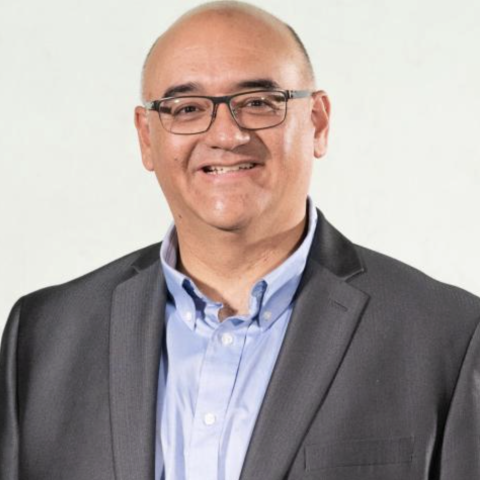
Dr. Grijalva joined the Georgia Institute of Technology in the summer of 2009 as Associate Professor of Electrical and Computer Engineering. He is the Director of the Advanced Computational Electricity Systems (ACES) Laboratory, where he conducts research on real-time power system control, informatics, and economics, and renewable energy integration in power. From 2012-2015, Dr. Grijalva served as the Strategic Energy Institute (SEI) Associate Director for Electricity Systems, responsible for coordinating large efforts on electricity research and policy at Georgia Tech. Dr. Grijalva received the Electrical Engineer degree from EPN-Ecuador in 1994, the M.S. Certificate in Information Systems from ESPE-Ecuador in 1997, and the M.S. and Ph.D. degrees in Electrical Engineering from the University of Illinois at Urbana-Champaign in 1999 and 2002, respectively. He was a post-doctoral fellow in Power and Energy Systems at the University of Illinois from 2003 to 2004. From 1995 to 1997, he was with the Ecuadorian National Center for Energy Control (CENACE) as engineer and manager of the Real-Time EMS Software Department. From 2002 to 2009, he was with PowerWorld Corporation as a senior software architect and developer of innovative real-time and optimization applications used today by utilities, control centers, and universities in more than 60 countries. Dr. Grijalva is a leading researcher on ultra-reliable architectures for critical energy infrastructures. He has pioneered work on de-centralized and autonomous power system control, renewable energy integration in power, and unified network models and applications. He is currently the principal investigator of various future electricity grid research projects for the US Department of Energy, ARPA-E, EPRI, PSERC as well as other Government organizations, research consortia, and industrial sponsors. Research interests: Power system and smart grid computation De-centralized and autonomous power control architectures Ultra-reliable electricity internetworks Seamless integration of large-scale renewable energy Electricity markets design and power system economics

Georgia Power Distinguished Professor, School of Electrical and Computer Engineering
Phone
(404) 894-2974
Office
VL E284
Additional Research
  • AI for Power Generation
  • Electrical Grid
  • Energy Storage
  • System Design & Optimization

Anton Leykin

Anton Leykin's profile picture
leykin@math.gatech.edu
Personal Website

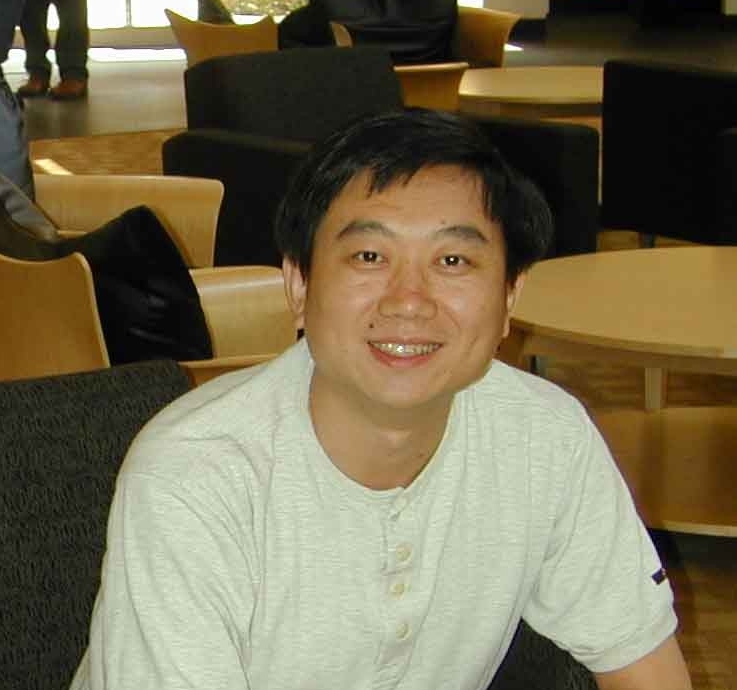
Anton Leykin conducts research in nonlinear algebra with an emphasis on algorithm design and applications. His recent work centers on computer algebra, spanning topics from computer-assisted proofs to hybrid symbolic–numerical computation to parallel computing. He is also interested in applying methods from algebra and geometry to problems in science and engineering, with applications in areas such as computer vision and astrodynamics.

Professor; School of Mathematics
Office
Skiles 109
University, College, and School/Department
Google Scholar
https://scholar.google.com/citations?user=ztNR6w8AAAAJ

Fang (Cherry) Liu

Fang (Cherry) Liu's profile picture
CoC Profile Page

Dr. Fang (Cherry) Liu is a Research Scientist at Partnership for Advanced Computing Environment (PACE) center at Georgia Tech. She actively provides expert diagnosis and resolution of complex technical issues with High Performance Computing (HPC) resources; leverages HPC software and application stack, including compilers, scientific libraries and user applications to effectively run on HPC environment; educates campus-wide HPC community, teaching courses including introduction to Linux, intermediate Linux, introduction to Python and Python for Data Analysis courses; and does on-going research on big data with school of computational science and engineering (CSE) faculties. She is awarded the title of Adjunct Associate Professor by CSE to better serve campus HPC community in both teaching and research.

Before joining Georgia Tech, she was an assistant scientist at mathematics and computational science division at Department of Energy (USDOE) Ames Laboratory, where she gained extensive experience with multi-disciplinary research team and worked closely with world-class domain scientists from physics, chemistry and fusion energy. The projects she participated in included scientific workflows and data management system for nuclear physics applications, GPU computing for large scale quantum chemistry applications, concurrent data processing for fusion simulation through distributed component infrastructure, and so much more.

Her research interests broadly span parallel/distributed scientific computing, software interface design for monolithic scientific applications, multi-physics and multi-code coupling, multilevel parallelism support for Multi-Physics coupling, data management and provenance for scientific applications, big data infrastructure design and implementation, and data analytics for large graph dataset.She has been served as program committee member for various conferences including HPC, ICCS, ICCSA, CBHPC, ICPP, and she also was vice program general chair, program general chair for HPC2012 and HPC2013, now she sits in program steering committee for HPC since 2014.

Currently her primary interest focuses on tackling big data issues with using Hadoop and Spark in graph database, security and streaming data, while she is closely working with professor Polo Chau's group.

Dr. Liu graduated from Indiana University at Bloomington in 2009 with a Ph.D. degree in Computer Science. Her dissertation titled, "Building Sparse Linear Solver Component for Large Scale Scientific Simulation and Multi-physics Coupling," and her Ph.D. advisor was Professor Randall Bramley.

Senior Research Scientist | Partnership for an Advanced Computing Environment
Adjunct Faculty
Research Focus Areas
PACE Website

John Eric Coulter

John Eric Coulter's profile picture
j.eric@gatech.edu
PACE Website

Eric joined PACE in 2021, and currently leads the Research Computing Facilitation team, after having worked as a Cyberinfrastructure Architect and RCF. Before joining PACE, Eric could be found at Indiana University as a systems engineer with the XSEDE Campus Bridging team, providing HPC-oriented consultations to institutions across the US. He also worked closely with the Cyberinfrastructure Research Center at IU, providing support for several different science gateway projects. Prior to that, his research in condensed matter physics at Florida State University involved computational studies of the optical properties of strongly correlated materials.

Research Scientist | Partnership for an Advanced Computing Environment
Research Focus Areas
University, College, and School/Department

Aaron Jezghani

Aaron Jezghani's profile picture
ajezghani3@gatech.edu
PACE Website

Aaron joined the PACE team in May 2019 as a computing facilitator, and currently serves as the Scheduler Architect. Through supporting users, he grew to appreciate the opportunity to improve HPC workflows through scheduler and systems configurations that lower the barrier to entry and passively optimize code execution. Additionally, Aaron has been involved in the Vertically Integrated Projects (VIP) program since Spring 2020, mentoring multiple teams of students with the Team Phoenix VIP through international HPC competitions at the ISC-HPC and Supercomputing conferences and more recently, providing leadership for the Future Computing with the Rogues Gallery VIP as they research applications of novel compute architectures. Prior to joining PACE, Aaron studied free neutron and nuclear beta decay as a precision test of the Standard Model, which entailed a diverse range of activities, including particle simulation and detection, digital and analog signal processing, and algorithm optimization across x86, GPU, and FPGA architectures.

Research Scientist | Partnership for an Advanced Computing Environment
University, College, and School/Department
Google Scholar
https://scholar.google.com/citations?hl=en&user=dCfNS98AAAAJ&view_op=list_works&sortby=pubdate

Dimitrios Psaltis

Dimitrios Psaltis's profile picture
dpsaltis3@gatech.edu
Personal Website

I am a professor of Physics at Georgia Tech. I use advanced computational techniques, hybrid computer architectures, and innovative algorithms to answer fundamental questions related to the observational appearance of black holes, the properties of magnetohydrodynamic turbulence, and the interaction of matter with radiation in extreme conditions.

I am a founding member of the Event Horizon Telescope, the international mm-VLBI experiment that has taken the first picture of a black hole with the horizon-scale resolution, and served for three years (2016-2019) as the Project Scientist of the collaboration.

Before moving to Georgia Tech in 2022, I was a professor of Physics and Astronomy at the University of Arizona and the Chair of the Theoretical Astrophysics Program there.

Professor
Additional Research

Black Hole Images General Relativity

University, College, and School/Department