
Why the Strait of Hormuz Is More Than an Energy Crisis
Apr 03, 2026 —
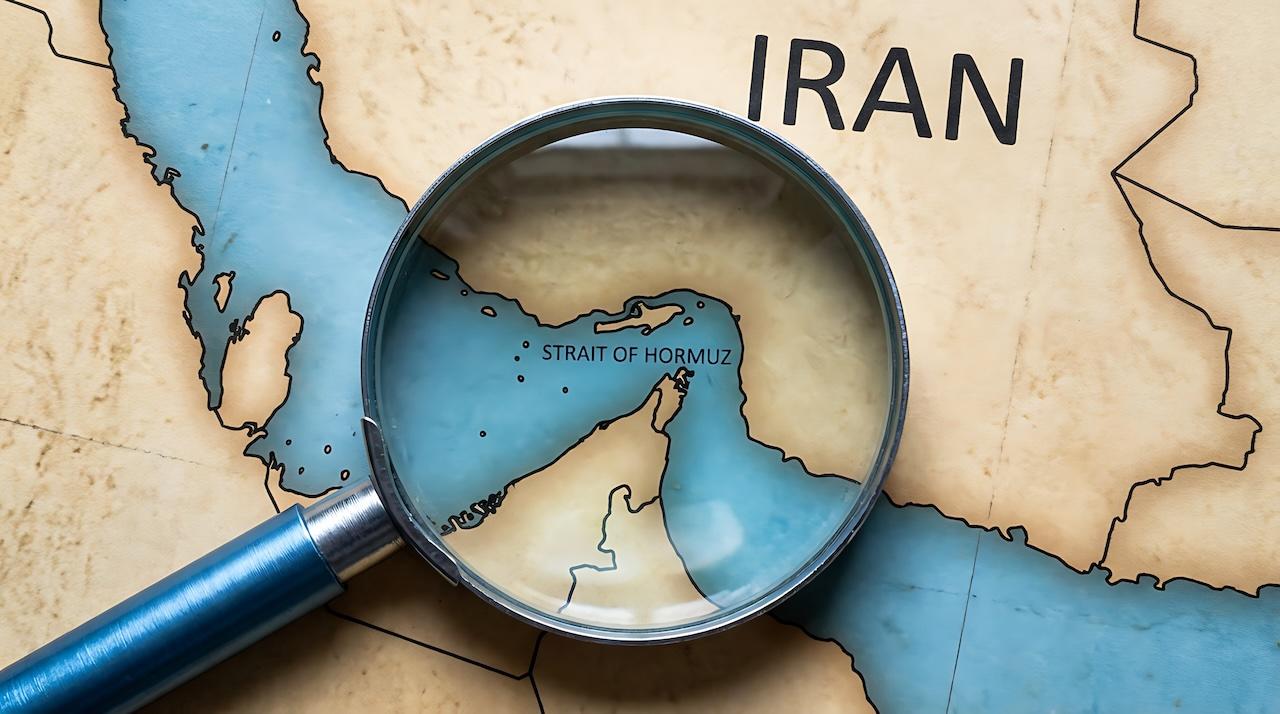
Rising oil and gasoline prices have been the center of attention since the closure of the Strait of Hormuz. But that immediate effect tells only part of the story. Because oil and gas underpin production, transportation, and logistics, higher energy costs will gradually move through supply chains — meaning the most significant economic consequences may not appear for months.
“The effects move slowly and appear in places people do not connect to energy,” said Tibor Besedes, professor in the School of Economics. “Oil and natural gas are part of the cost structure for an enormous range of goods.”
About 20% of global oil and liquefied natural gas flows through the waterway linking the Persian Gulf to world markets. When that flow is constrained, the impact ripples outward across industries most people never associate with an energy crisis.
“In complex supply chains, a disruption in one critical link, even if only briefly, can cascade through the system, well beyond the initial event,” says Pinar Keskinocak, chair and professor in the H. Milton Stewart School of Industrial and Systems Engineering. “As delays persist and compound, interconnected systems often take a long time to recover, rebalance, and return to normal.”
Price Pressures That Arrive Quietly
Early effects are already visible.
Jet fuel availability is tightening, and diesel prices are rising across Asia. China has ordered refineries to stop exporting fuel, creating shortages that are increasing shipping costs for U.S. imports, from consumer electronics to pharmaceuticals.
The strait is also a key corridor for naphtha, a feedstock used to produce plastics, packaging, solvents, textiles, and pharmaceutical components. Roughly 85% of Middle Eastern polyethylene exports move through the strait.
“Consumers won't see the effect of this quickly,” Besedes says, “but the longer the strait is closed, the higher the cost will be of all of these products naphtha is used for.”
Aluminum is equally exposed.
“Smelters require sustained, low-cost energy,” said Chris Gaffney, a professor of the practice in the Stewart School. “The Middle East accounted for roughly 21% of U.S. unwrought aluminum imports in 2025. When energy prices spike or supply is constrained, capacity is reduced or shut down, and those decisions are difficult and slow to reverse.”
Fertilizer is one of the clearest examples of delayed inflation. Natural gas is essential for its production, and Persian Gulf states account for one-third of global urea exports and half of global sulfur exports. Urea prices at the New Orleans import hub have already climbed sharply.
“We won't see the effects quickly, but rather in six to 12 months, depending on the crop and its cycle,” Besedes says. “Without or with less fertilizer, crop yields will decrease, resulting in higher prices.”
Why Hormuz Is Different From Other Chokepoints
On top of all those factors, the strait closure presents a uniquely dangerous vulnerability.
“Unlike a port strike or canal blockage, there is no meaningful way to reroute volume,” says Gaffney. “If it is disrupted, flow is constrained rather than redirected.” Pipeline alternatives replace only a fraction of the 20 million barrels per day that normally transit the strait.
“Choke point vulnerability arises when a large portion of flow depends on a route that is hard to substitute,” said Mathieu Dahan, associate professor in the Stewart School. “Hormuz has no scalable alternatives with sufficient capacity.”
Alan Erera, senior associate chair in the Stewart School expanded on Dahan’s point, noting that strait disruptions raise costs across manufacturing and distribution.
“Ships are rerouted onto longer paths, which drives up fuel and labor costs, ties up vessels and containers for longer periods, and ultimately raises inventory costs for shippers because capital is locked up while goods are still in transit,” Erera said.
When Geopolitics Meets Global Supply Chains
Additionally, the strait closure raises the risk of wartime miscalculation.
“We haven’t seen a disruption on this scale since the tanker wars of the late 1980s,” said Larry Rubin, associate professor in the Sam Nunn School of International Affairs. Gulf states' dependence on the strait constrains both regional actors and U.S. strategy, raising risks around crisis decision-making.
Rubin also points to a dimension most coverage has missed entirely. “One thing that has been overlooked by many commentators is the fact that the Iranian people have probably been hit the hardest economically,” he says. “They were already in a challenging situation. The Iranian economy won't recover quickly after the war.”
Resilience Has a Short Memory
Meanwhile, for the United States, “The Strategic Petroleum Reserve provides a buffer, and domestic energy production has improved resilience,” says Gaffney. “But the gap remains between enabling capacity and sustaining resilience. Policy can support infrastructure, but it cannot ensure private sector participants invest in resilience when cost pressures rise.”
For policymakers and industry leaders, the disruption reinforces a familiar pattern. "The supply chain remains optimized for efficiency rather than resilience, in part due to the high investment costs required to build flexibility," says Dahan.
Gaffney added that resilience does improve after disruption, but that “it erodes over time if not actively maintained.”
Even if the strait reopens, higher costs and slow restart timelines mean the system will not snap back. Experts suggest that when headlines have moved on from this disruption, it will still be shaping prices across the economy.


