
What does an accessible community look like for people who are medically healthy but have physical, cognitive or sensory disabilities?
Conversations@TechSquare with the Shepherd Center.
Please RSVP to attend this event with the Shepherd Center here >>
The Shepherd Center is visiting Georgia Tech on March 31. The Shepherd Center is a top-ranked, nationally recognized rehabilitation hospital specializing in spinal cord injuries, brain injuries, stroke, multiple sclerosis, and other complex neurological conditions. Their expert teams provide medical care, therapy, and support services designed to help patients regain independence and rebuild their lives.
Shepherd will have members from their Accessibility User Research Collective (AURC), a sociology researcher who focuses on community integration and social determinants of health in the population we serve, MS researchers investigating wearable technologies, and clinicians from their Center for Access Technology.
Please RSVP to attend this in-person conversation event with the Shepherd Center here >>
By bringing awareness to the scientific community of barriers that create challenges for people with disabilities when accessing their community, we hope to spark ideas and conversations that would lead toward a greater goal of reducing barriers and creating environments accessible to all.
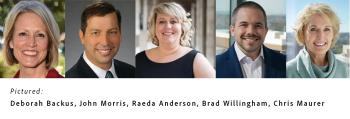
- Speakers/Representatives from the Shepherd Center that will be at the event:
Facilitated by Dr. Deborah Backus, Vice President of Research and Innovation, and Director of Virginia C. Crawford Research Institute. Dr. Deborah Backus is a nationally recognized leader in neurorehabilitation research, physical therapy, and education, with more than 30 years of experience advancing evidence-based care for individuals with spinal cord injury (SCI), multiple sclerosis (MS), and other neurological conditions. She oversees multidisciplinary research programs and strategic partnerships that translate discoveries into real-world solutions for people with complex neurological conditions.
Dr. John Morris is Director of the Accessibility User Research Collective (AURC) and a Senior Research Scientist in the User Experience and Usability Research Program. He leads research and development projects focused on assistive and rehabilitation technologies, ensuring that innovations are accessible, usable, and designed with the end user in mind. Dr. Morris also directs knowledge translation initiatives that bring research findings into practice, expanding access and independence for people with disabilities.
Dr. Raeda Anderson is a Research Scientist at the Shepherd Center’s Virginia C. Crawford Research Institute, where she leads transdisciplinary analytics to advance rehabilitation science with a strong emphasis on community participation and community integration for people with disabilities. Dr. Anderson’s work centers on understanding the social and environmental contexts that shape health equity, leveraging multimodal data to generate actionable insights that improve realworld rehabilitation outcomes. In addition to directing the iCORD Lab at Georgia State University, she collaborates widely across clinical and academic settings to promote evidence-based practices that enhance meaningful community engagement.
Dr. Brad Willingham directs Shepherd Center’s Multiple Sclerosis Research Program, where he leads a multidisciplinary team focused on improving health, function, and quality of life for people with multiple sclerosis (MS). His work spans neuromuscular physiology, neurorehabilitation, and digital health, bridging the gap between scientific discovery and clinical practice. Brad collaborates closely with clinicians and individuals with MS to design studies that generate practical, translation-ready solutions. His research integrates physiology, rehabilitation science, and technology to create strategies that can be adopted into real-world care.
Chris Maurer, Program Manager for the Center for Assistive Technologies
The Center for Assistive Technologies at Shepherd Center helps individuals regain independence after a neurological injury or condition. Challenges with mobility and cognitive function can impact daily activities like using devices, controlling home environments, and driving. Our team develops, tests, and customizes assistive technologies to support rehabilitation, empowering you to navigate life with greater ease and autonomy. Services include the Access Technology Lab (personal devices and technologies for life), the Driving Program, and the Wheelchair Seating and Mobility Clinic.
-----
Shepherd Center was founded in 1975 as a private, not-for-profit hospital specializing in medical treatment, research, and rehabilitation for people with spinal cord injury, brain injury, stroke, multiple sclerosis, spine and chronic pain, multi-trauma, and other neurological conditions. Serving patients along the full continuum from the ICU through outpatient services, Shepherd Center is one of the nation’s top hospitals for rehabilitation, with patient rehabilitation programs that focus on individualized recovery and lifelong wellness. The Virginia C. Crawford Research Institute (CRI) was established at Shepherd Center in 1996 to promote the synthesis of research into clinical practice. CRI supports an integrated program of rehabilitation research, including clinical, health services, and outcomes research. Support personnel have expertise in clinical trials coordination, grants management and financial accounting, information technology, library sciences, and biostatistics. The James M. Cox Innovation Institute was established in 2025 to accelerate the journey from idea to impact and provide collaborative spaces where engineers, researchers, clinicians, therapists, and patients converge to build the future of rehabilitation. https://www.shepherd.org/
----------------
Conversations@TechSquare is a dynamic space for new ideas, not an environment for established concepts. We gather creators and innovators from across Georgia Tech, the broader Tech Square community, and beyond, to engage in open dialogue around some of today’s biggest challenges and opportunities. These gatherings are organized and hosted by the Georgia Tech Institute for People and Technology (IPaT) and will occur several times during a semester at the Tech Square Clubhouse. The Clubhouse address is 848 Spring Street NW, Atlanta, Georgia, 30308 (street level, behind the Centergy One Bldg.).
Tech Square Clubhouse
All conversation gatherings are held in the Tech Square Clubhouse.
The Clubhouse address is 848 Spring Street NW, Atlanta, Georgia, 30308 < map >
The Tech Square Clubhouse is on the bottom level (street level, behind the Centergy One Bldg.), close to LA Fitness and only a few blocks away from the Midtown and North Ave. MARTA stations. Look closely and you'll see there is an outdoor staircase to the left of the Centergy One Building leading down to the street where you'll find the Tech Square Clubhouse.
PARKING:
Parking is available at the Centergy One parking deck, located right next door. You can also find additional street parking via Park Mobile on Spring and 5th Street. Centergy One parking deck daily rates: Half Hour: $3.00 | One Hour: $6.00 | Two Hours: $12.00 | Daily Max: $20.00
GT CAMPUS BUS: Take the Gold route bus which stops at Tech Square.


