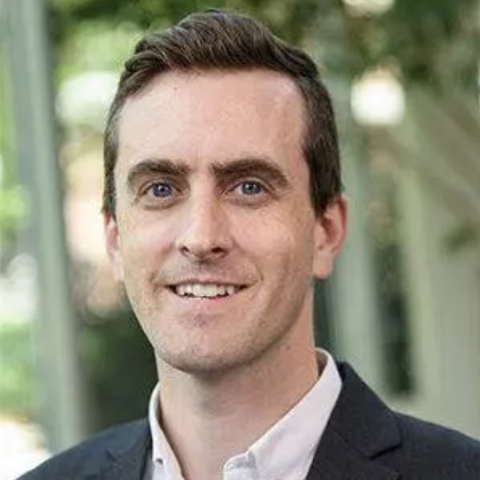
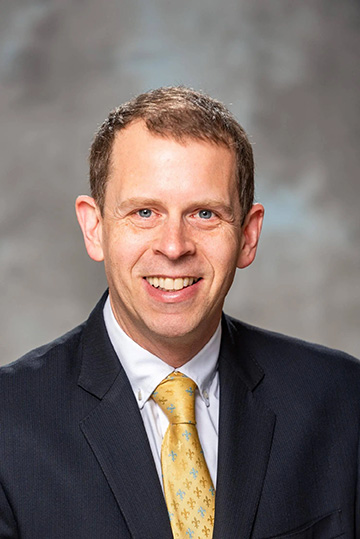
Christopher Jones

Christopher Jones
cjones@chbe.gatech.edu
ChBE Profile Page

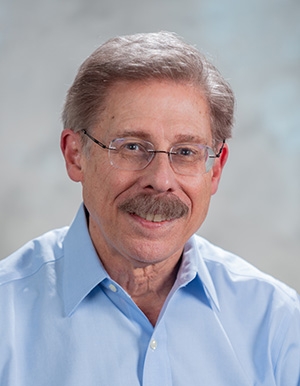
Chris Jones was born in suburban Detroit, Michigan in July of 1973. After his primary and secondary schooling and 14 years living Troy, Michigan, he enrolled as a chemical engineering student at the University of Michigan. In route to earning a BSE in chemical engineering, Chris carried out research on transition metal carbide and nitride catalytic materials under the direction of Levi Thompson. After graduating in 1995, Chris moved to Pasadena, California, to study inorganic materials chemistry and catalysis under Mark E. Davis at Caltech. There he earned M.S. and Ph.D. degrees in chemical engineering in 1997 and 1999, respectively. Subsequently, he studied organometallic chemistry and olefin polymerization under the direction of both Davis and John E Bercaw at Caltech. He started as an assistant professor at Georgia Tech in the summer of 2000 and was promoted to associate professor in July 2005. In May, 2005, he was appointed the J. Carl and Sheila Pirkle Faculty Fellow, followed by a promotion to professor in July 2008. He was named New-Vision Professor of Chemical and Biomolecular Engineering in July 2011. In 2015, he became the Love Family Professor of Chemical and Biomolecular Engineering, and in 2019 the William R. McLain Chair. Chris was named the associate vice president for research at Georgia Tech in November 2013. In this role, he directed 50% of his time on campus-wide research administration with a primary focus on interdisciplinary research efforts and policy related to research institutes, centers and research core facilities. In 2018, he served as the interim executive vice-president for research, before returning full time to his research and teaching roles in chemical and biomolecular engineering in 2019.

Jones directs a research program focused primarily on catalysis and CO2 separation, sequestration and utilization. A major focus of his laboratory is the development of materials and processes for the removal of CO2 from air, or “direct air capture” (DAC). In 2010 he was honored with the Ipatieff Prize from the American Chemical Society for his work on palladium catalyzed Heck and Suzuki coupling reactions. That same year, he was selected as the founding Editor-in-Chief of ACS Catalysis, a new multi-disciplinary catalysis journal published by the American Chemical Society. In 2013, Chris was recognized by the North American Catalysis Society with the Paul E. Emmett Award in Fundamental Catalysis and by the American Society of Engineering Education with the Curtis W. McGraw Research Award. In 2016 he was recognized by the American Institute of Chemical Engineers with the Andreas Acrivos Award for Professional Progress in Chemical Engineering, distinguishing him as one of the top academic chemical engineers under 45. In 2020, after ten years building and leading ACS Catalysis, he was selected as the founding Editor-in-Chief of JACS Au by an international editorial search committee commissioned by the ACS. Dr. Jones has been PI or co-PI on over $72M in sponsored research in the last seventeen years, and as of December 2020, has published over 300 papers that have been cited >28,000 times. He has an H-Index of 82 (Google Scholar).

Professor and John F. Brock III School Chair, School of Chemical and Biomolecular Engineering
Phone
404.385.1683
Office
ES&T 2202
Additional Research

CO2 capture, catalysis, membrane and separations, separations technology, catalysis, carbon capture, biofuels

Google Scholar
https://scholar.google.com/citations?hl=en&user=ltWKpYgAAAAJ&view_op=list_works&sortby=pubdate
Jones Group Website
Christopher
Jones
Show Regular Profile

Vigor Yang

Vigor Yang
vigor.yang@aerospace.gatech.edu
Departmental Bio

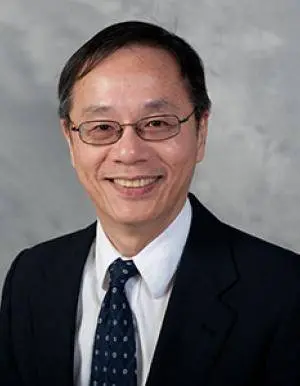
Vigor Yang earned his Ph.D. from the California Institute of Technology in 1984. After serving for one year as a research fellow in Jet Propulsion at Caltech, he joined the Pennsylvania State University in August 1985, becoming the John L. and Genevieve H. McCain Chair in Engineering in 2006. In 2009, he began his tenure as the William R.T. Oakes Professor Chair at the Daniel Guggenheim School of Aerospace Engineering at the Georgia Tech. He retired from the chair position and returned to teaching and research in August of 2018

Yang’s research encompasses a wide spectrum of topics, including (1) data-enabled design and data science; (2) combustion dynamics in propulsion and power-generation systems;(3) multi-fidelity modeling and simulations of fluid flows and combustion; (4) combustion of energetic materials; (5) high-pressure transport phenomena, thermodynamics and combustion, and (6) nano technologies for propulsion and energetic applications. He has established, as the principal or co-principal investigator, more than 70 research projects, including nine (9) DoD-MURI projects. He has published 10 comprehensive volumes and numerous technical papers on combustion, propulsion, energetics, and data science. He was the recipient of  the Air-Breathing Propulsion Award (2005), the Pendray Aerospace Literature Award (2008), the Propellants and Combustion Award (2009), and the von Karman Lectureship in Astronautics Award (2016) from the American Institute of Aeronautics and Astronautics (AIAA); the Worcester Reed Warner Medal (2014) from the American Society of Mechanical Engineers (ASME); and the Lifetime Achievement Award (2014) from the Joint Army, Navy, NASA, and Air Force (JANNAF) Interagency Propulsion Committee.

Yang was the editor-in-chief of the AIAA Journal of Propulsion and Power (2001-2009) and the JANNAF Journal of Propulsion and Energetics (2009-2012). He is currently a co-editor of the Aerospace Book Series of the Cambridge University Press (2010-).  He serves, or has served, on a large number of steering committees and review/advisory boards for government agencies and universities in the U.S. and abroad. A member of the U.S. National Academy of Engineering and an academician of Academia Sinica, Dr. Yang is a fellow of the AIAA, ASME, and Royal Aeronautical Society (RAeS).

Regents Professor
Additional Research
  • Combustion
  • Energy
  • High Performance Computing
  • Hydrogen Production &  Utilization 
Website
Vigor
Yang
Show Regular Profile

Ryan Lively

Ryan Lively
ryan.lively@chbe.gatech.edu
Website

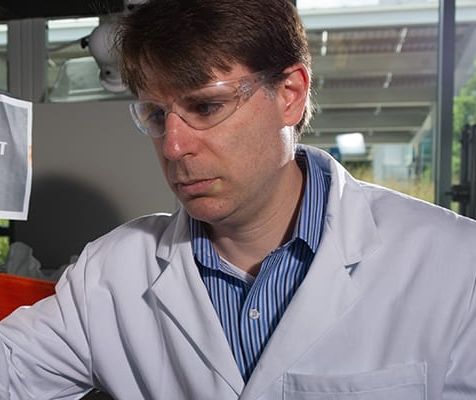
Ryan Lively was born in 1984. He spent approximately 16 years in Gainesville, FL and attended almost every home football game at The Swamp. He enrolled at Georgia Tech in 2002 as an eager Chemical Engineering student and has been a Yellow Jacket at heart ever since. During his studies at Georgia Tech, Ryan worked on research projects as diverse as ab initio quantum mechanical methods to estimate molecular binding energies, fresh Georgia peach preservation, composite spinneret design, dual-layer hollow fiber membrane spinning, and sorbent-loaded fiber spinning. Ryan introduced a rapid temperature swing adsorption (RTSA) approach for post-combustion CO2 capture, which was successfully demonstrated by adapting knowledge developed in membrane science to design unique nanoscale composite adsorbent/heat exchangers. After his Ph.D. (awarded in 2010), he spent almost 3 years as a post-doctoral research engineer at Algenol Biofuels, where he published 25 papers and filed two U.S. patent applications. His work at Algenol focused on developing energy-efficient liquid and vapor separation systems for downstream biofuel purification. 

He is now the Thomas C. DeLoach Professor in the School of Chemical & Biomolecular Engineering at the Georgia Institute of Technology. His current research seeks to revolutionize fluid separation processes critical to the global energy and carbon infrastructure. He has a specific focus on membrane- and adsorbent-based science and technology to address some of the most difficult chemical separations. His group’s research activities range from fundamental material science and discovery to translational engineering applications focusing on making and testing separation devices. 

Ryan has received a variety of awards for his research efforts including the 2020 Allan P. Colburn Award from AIChE, and the 2022 Curtis W. McGraw Award from ASEE. He is currently an Editor for the Journal of Membrane Science and is the Secretary of the North American Membrane Society. He is the Director of the Center for Understanding & Controlling Accelerated and Gradual Evolution of Materials for Energy (UNCAGE-ME), an Energy Frontier Research Center of the US Department of Energy. He has over 160 publications in the field of separations including articles in Science, Nature and other impactful venues.

Professor, School of Chemical and Biomolecular Engineering
Thomas C. DeLoach Jr. Endowed Professorship
Phone
(404) 894-8795
Additional Research

Biofuels; Carbon Capture; Separations Technology; Membranes; Adsorbents;Polymers; Microporous Materials

Google Scholar
https://scholar.google.com/citations?hl=en&user=1ktJriEAAAAJ&view_op=list_works&sortby=pubdate
Research Website
Ryan
Lively
Show Regular Profile

Thomas Fuller

tom.fuller@chbe.gatech.edu
ChBE Profile

Tom Fuller is Professor of Chemical Engineering at the Georgia Tech. Dr. Fuller received a BS from the University of Utah in Chemical Engineering in 1982. Dr. Fuller then served for five years in the U.S. Navy working as a Nuclear Engineer. In 1992 he obtained a Ph.D. from UC, Berkeley also in Chemical Engineering. 

Subsequently, Dr. Fuller developed advanced lithium batteries while working as a postdoctoral fellow at Lawrence Berkeley National Laboratory. He then moved to United Technologies. He was responsible for technology development, design, assembly, and test of cell stacks for UTC Fuel Cells. 

His research group at Georgia Tech is focused on durability challenges for electrochemical systems. For the last eight years Dr. Fuller has been a Technical Editor for the Journal of the Electrochemical Society. In 2009 Dr. Fuller was named a Fellow of the Electrochemical Society.

Professor, School of Chemical and Biomolecular Engineering
Phone
(404) 894-2898
Additional Research

Electric Vehicles; Energy Storage; Hydrogen; Modeling; Materials Failure and Reliability; Energy Conversion; Energy Storage; Batteries; fuel cells

University, College, and School/Department
Google Scholar
https://scholar.google.com/citations?hl=en&user=I1RqBRoAAAAJ&view_op=list_works&sortby=pubdate
Website
Thomas
Fuller
Show Regular Profile

Carsten Sievers

Carsten Sievers
carsten.sievers@chbe.gatech.edu
ChBE Profile Page

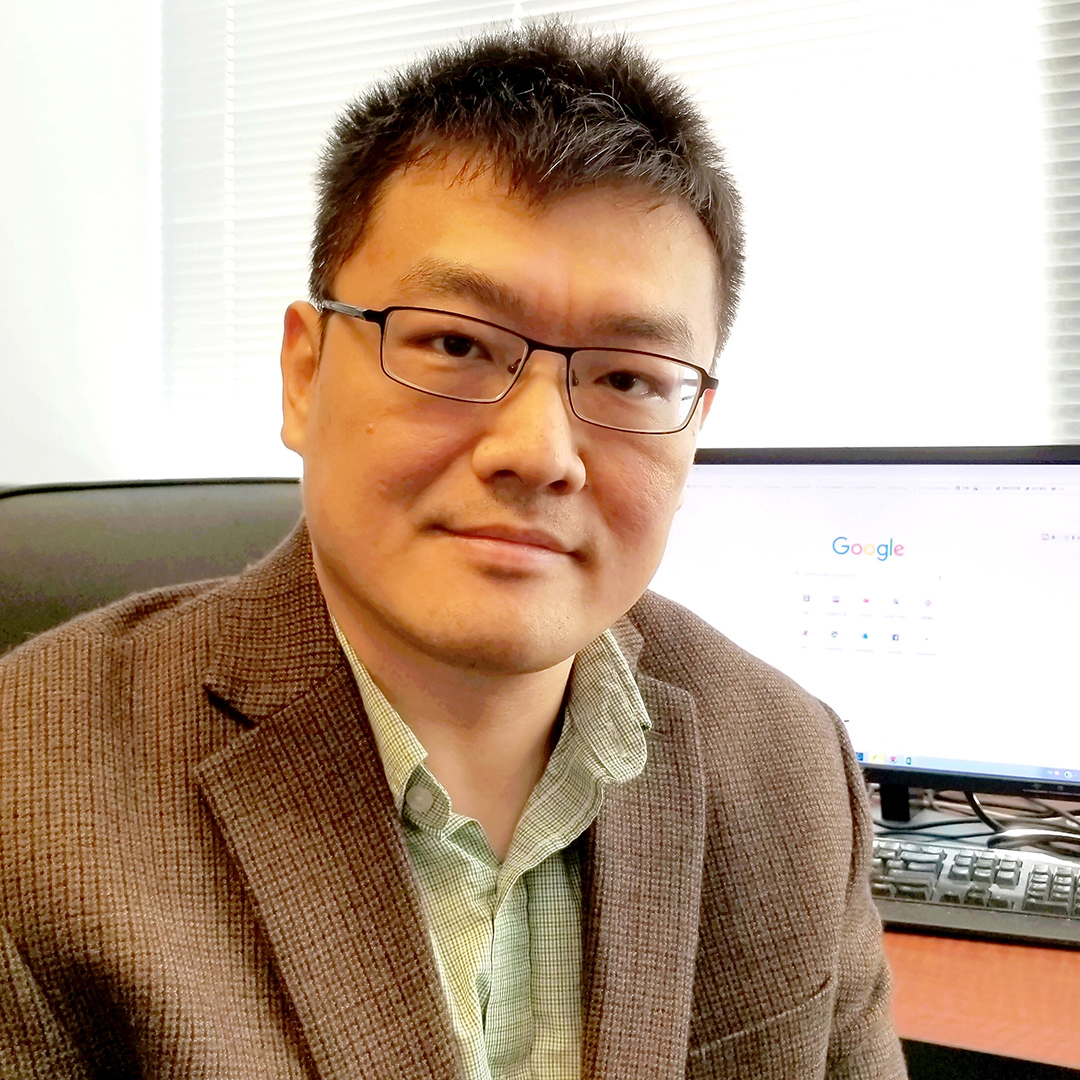
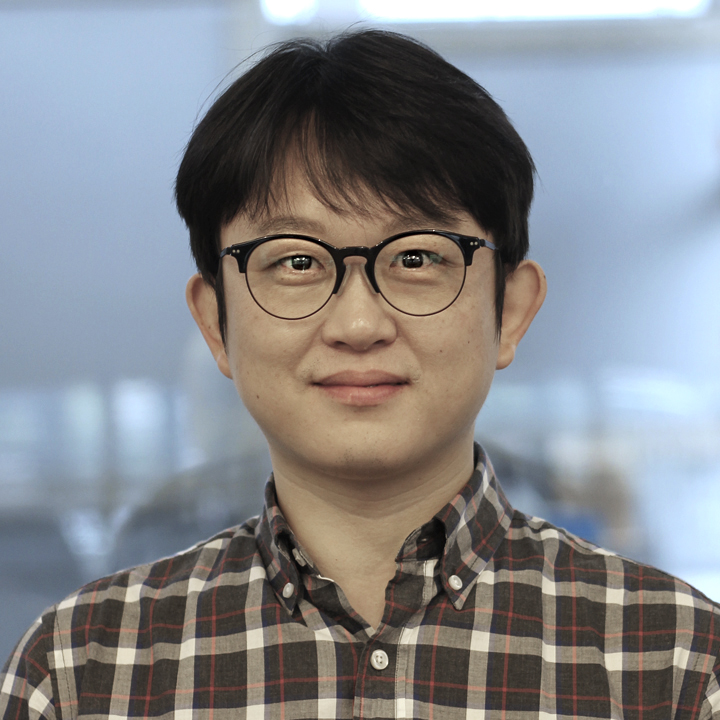
Sievers’ research interests are in heterogeneous catalysis, reactor design, applied spectroscopy, and characterization and synthesis of solid materials. Combining these interests he seeks to develop processes for the production of fuels and chemicals. His research program combines fundamental and applied research.

In fundamental studies, a suite of analytical and spectroscopic techniques (e.g. IR, NMR) is used to gain knowledge on structure-reactivity relationships of heterogeneous catalysts. Moreover, surface reactions are studied on a molecular level to identify reaction pathways over different catalysts. Information obtained from these studies provides the foundation for designing innovative catalysts.

Applied studies focus specific catalytic processes. For these projects, continuously operated flow reactor systems are designed. Different catalysts are tested for reactivity, selectivity and stability and the influence of the operating conditions is investigated. Catalyst deactivation is studied in detail to develop suitable regeneration methods or to avoid deactivation entirely by improved catalyst design. Specific projects include hydrodeoxygenation of pyrolysis oils, selective hydration of polyols, conversion of sugars into lactic acid and ethylene glycol, and selective oxidation of methane.

An important goal of Sievers’ research is to enable technology for utilization of alternative resources in order to reduce the current dependence of oil. Among these biomass is a particularly promising candidate because it is renewable and can be produced CO2 neutral.

Sievers has contributed to 80 peer reviewed publications on heterogeneous catalysis in petroleum refining (isobutane/2-butene alkylation, fluid catalytic cracking, hydrotreating), alkane activation, supported ionic liquid as catalysts for fine chemical synthesis, and biomass processing.  He is Director and Past President of the Southeastern Catalysis Society, former Program Chair and Director of the ACS Division of Catalysis Technology & Engineering, former Director of the AIChE Division of Catalysis and Reaction Engineering, and Editor of Applied Catalysis A: General.
Professor, School of Chemical and Biomolecular Engineering
RBI Initiative Lead: Maximizing the Value of Products from Plastics Upcycling
Phone
404.385.7685
Office
ES&T 2218
Additional Research

Biomass; Biofuels; Catalysis; Advanced Characterization; Gasification; Biorefining; Lignin Upgrading; Catalysis; Energy & Water; Separation Technologies; Chemical Feedstocks; Sugars; Lignin & Hemicellulose

Google Scholar
https://scholar.google.com/citations?hl=en&user=qeq3njwAAAAJ&view_op=list_works&sortby=pubdate
Sievers Research Group
Carsten
Sievers
Show Regular Profile

Hailong Chen

Hailong Chen
hailong.chen@me.gatech.edu
nanoACES

The research in Chen Group is cross-disciplinary, bridging mechanical engineering, chemistry, and materials science, focusing on electrochemical energy storage related materials and devices, as well as functional and structural metals/alloys. The technical expertise of the group include development and application of advance in situ characterization methods for energy storage devices, computation-aided materials design and novel synthesis methods for nanostructured materials.

Associate Professor, Woodruff School of Mechanical Engineering
Phone
404.385.5598
Office
Love 329
Additional Research

Materials Design, in situ characterization, energy conversion and Storage, batteries, and functional materials

Google Scholar
https://scholar.google.com/citations?hl=en&user=M0ZEwtEAAAAJ&view_op=list_works&sortby=pubdate
ME Profile Page BBISS Initiative Lead Project - Sustainable Resources for Clean Energy
Hailong
Chen
Show Regular Profile

Jinho Park

Jinho Park
jinho.park@gtri.gatech.edu
Research Scientist II
Additional Research
Hydrogen Generation, Hydrogen Utilization, Electrochemical production of green hydrogen, Design/synthesis of high-performance electrocatalysts for water electrolysis and PEMFCs, design/synthesis/characterization of functional materials for energy storage systems, energy conversion systems, fuel cells, water electrolyzers, ammonia cracking, multifunction sensors
IRI And Role
GTRI
Geogia Tech Research Institute
LinkedIn
Jinho
Park
Show Regular Profile

William Koros

William Koros
wjk@chbe.gatech.edu
ChBE Profile Page

Materials for membranes, sorbents, and barrier packaging applications rely upon the same fundamental principles. Thermodynamically controlled partitioning of a penetrant, such as carbon dioxide into a membrane, sorbent or barrier packaging layer is the first step in the transport process. If the material is a polymer, cooperative motions of the matrix enable diffusive motion by the penetrant. In highly rigid carbon molecular sieves and zeolites, motion of the matrix is negligible, and penetrant transport is governed by the relative size of pre-existing pores and the penetrant molecule.

Koros’s group is a leader in developing advanced materials for membranes, sorbents, and barrier applications by optimization materials to either promote or retard transport of specific components. For instance, for a chosen penetrant such as carbon dioxide, the Koros group can create a barrier, a selective membrane, or a sorbent by materials engineering. Work is also underway in the Koros group to form “mixed matrix composite” materials comprised of blends of metal organic framework or other specialty components within the matrix of a conventional polymer. This approach allows further optimization of transport properties without sacrificing the ease of processing associated with conventional polymers.

Effects due to non equilibrium thermodynamic and non-Fickian transport phenomena are additional topics his group studies. Long lived conditioning effects due to exposure of membranes and barriers to elevated concentrations of certain penetrants are typical of such non equilibrium phenomena. Protracted aging of glassy polymers, carbons, and inorganic membranes after formation or conditioning treatments also are of interest to his research group. In many cases, these effects seem to defy logic—until one realizes that an expanded set of rules governs these out-of-equilibrium materials.

Professor, School of Chemical and Biomolecular Engineering
GRA Eminent Scholar in Membranes
Roberto C. Goizueta Chair for Excellence in Chemical Engineering
Phone
404.385.2845
Office
B-H 447
Additional Research

Polymers; Seperation Membranes; Heat Transfer

Google Scholar
https://scholar.google.com/citations?hl=en&user=nWxkxtgAAAAJ&view_op=list_works&sortby=pubdate
William
Koros
Show Regular Profile

Meilin Liu

Meilin Liu
meilin.liu@mse.gatech.edu
MSE Profile Page

Liu's primary interests lie in fundamental understanding of the effect of structure, defects, and microstructure on transport and electrical properties of surfaces and interfaces. In particular, he is interested in developing new materials for energy storage and conversion, for chemical sensing, and for hydrogen production and separation In addition, he is interested in mathematical modeling of mass and charge transport in solid electrochemical systems and polarization at interfaces.

Liu's current research activities include (1) in-situ characterization of gas-solid interactions using FTIR/Raman spectromicroscopy, impedance spectroscopy, and mass spectrometry; (2) study of transport phenomena and kinetics in ionic and electronic conductors and the effect of imperfections on electrophysical and electrochemical properties; (3) fabrication and characterization of ceramic membranes, thin films, and coatings; mesoporous and nanostructured electrodes and interfaces; and solid-state ionic devices; and (4) development of new materials for high-selectivity gas sensors, for high-energy-density batteries, for low-temperature solid-state fuel cells, and for high temperature PEM fuel cells.

Liu holds 20 U.S. patents and a number of patent applications, co-edited seven proceedings volumes, and published more than 250 papers in reputed journals, book chapter, and conference proceedings. He has also been the co-organizer of 11 international symposia/workshops on materials for energy storage and conversion devices, sensors, and gas separation.

Liu is a fellow of the American Ceramic Society (ACerS) and the Electrochemical Society (ECS). He is the recipient of a Ross Coffin Purdy Award (American Ceramic Society, 2010), an NASA Tech Brief Award (2007), an invited participant, US-Japan Frontiers of Engineering (National Academy of Engineering, 2007); a Crystal Flame Innovation Award in Research (FuelCell South, 2005); an Outstanding Achievement in Research Program Development Award (Georgia Tech, 2003), A Sustained Research Award (Sigma Xi, 2003), a senior Teaching Fellow (Georgia Tech, 2002), a Best Faculty Paper Award (Sigma Xi, 2001), an Outstanding Faculty Research Author Award (Georgia Tech, 1999), an invited participant, Frontiers of Engineering (National Academy of Engineering, 1997), a Best MS Thesis Advisor Award (Sigma Xi, 1996), a National Young Investigator Award (NSF, 1993-98), and a Scholastic Achievement Award (Golden Gate Chapter of ASM, 1986).

Regents' Professor, School of Materials Science and Engineering
Associate Chair, Academics, School of Materials Science and Engineering
Co-Director, Center for Innovative Fuel Cell and Battery Technologies
Phone
404.894.6114
Office
Love 258
Additional Research

Energy Storage; Energy Conversion; Fuel Cells; Batteries; Thin Films; Hydrogen

Google Scholar
https://scholar.google.com/citations?hl=en&user=1YvZ8LAAAAAJ&view_op=list_works&sortby=pubdate
Liu Research Group
Meilin
Liu
Show Regular Profile

Seung Woo Lee

Seung Woo Lee
seung.lee@me.gatech.edu
ME Profile Page

Seung Woo Lee joined the Woodruff School of Mechanical Engineering at the Georgia Institute of Technology as an assistant professor in January of 2013. Lee received his Ph.D. in chemical engineering at MIT, focusing on designing high-energy and high-power density nanostructured electrodes for electrochemical energy storage devices, and synthesizing catalysts for electrochemical energy conversion of small molecules such as methanol oxidation and O2 reduction. He conducted his postdoctoral research in designing electrodes for lithium rechargeable batteries and catalysts for solar energy storage in the Department of Mechanical Engineering and the Department of Chemistry at MIT.

Assistant Professor, Woodruff School of Mechanical Engineering
Director, Energy Storage and Conversion Lab
Phone
404.385.0764
Office
Love 137
Additional Research

Heat Transfer; Micro and Nano Engineering; Energy Conversion; Energy Storage; Batteries; Supercapacitors; Catalysis; Fuel Cells; Self-Assembly; Nanostructured Materials

Google Scholar
https://scholar.google.com/citations?hl=en&user=nGYeKpIAAAAJ&view_op=list_works&sortby=pubdate
Energy Storage and Conversion Lab
Seung Woo
Lee
Show Regular Profile