Vincent Mooney
Computer Engineering; Architecture & Design; Modeling & Simulation;
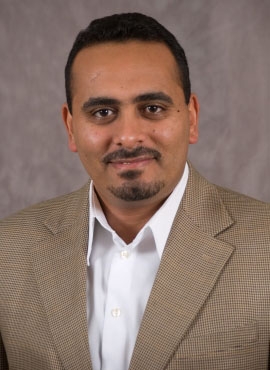
Huggins is a subject matter expert in the field of vulnerability assessment of communication devices in general, and industrial control systems in particular. Research interests include vulnerability assessment of industrial communication protocols and both wired and wireless industrial networks with particular focus on electric energy distribution systems. He is the PI for the Survivable Industrial Control Systems (SICS) project, a collaboration of Sandia National Lab, Schweitzer Engineering Laboratory, the Night Vision and Electronic Sensors Directorate, and the Georgia Tech School of Electrical and Computer Engineering. Huggins also served as the cybersecurity SME for a large industrial automation research project for ExxonMobil.
Defense / National Security; Network Security
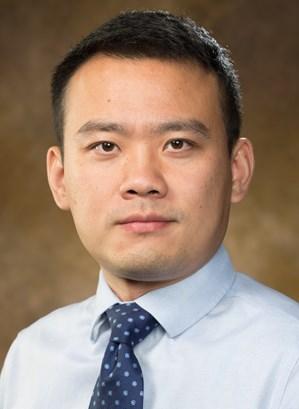
Nian Liu began as an Assistant Professor at Georgia Institute of Technology, School of Chemical and Biomolecular Engineering in January 2017. He received his B.S. in 2009 from Fudan University (China), and Ph.D. in 2014 from Stanford University, where he worked with Prof. Yi Cui on the structure design for Si anodes for high-energy Li-ion batteries. In 2014-2016, he worked with Prof. Steven Chu at Stanford University as a postdoc, where he developed in situ optical microscopy to probe beam-sensitive battery reactions. Dr. Liu 's lab at Georgia Tech is broadly interested in the combination of nanomaterials, electrochemistry, and light microscopy for understanding and addressing the global energy challenges. Dr. Liu is the recipient of the Electrochemical Society (ECS) Daniel Cubicciotti Award (2014) and American Chemical Society (ACS) Division of Inorganic Chemistry Young Investigator Award (2015).
Electronic Systems; Packaging and Components; Nanostructures & Materials; Optoelectronics Photonics & Phononics; Semiconductors; Materials & Processes
Professor Nagi Gebraeel is the Georgia Power Early Career Professor and Professor in the H. Milton Stewart School of Industrial and Systems Engineering at Georgia Tech. He received his MS and PhD from Purdue University in 1998 and 2003, respectively.
Dr. Gebraeel's research interests lie at the intersection of Predictive Analytics and Machine Learning in IoT enabled maintenance, repair and operations (MRO) and service logistics. His key focus is on developing fundamental statistical learning algorithms specifically tailored for real-time equipment diagnostics and prognostics, and optimization models for subsequent operational and logistical decision-making in IoT ecosystems. Dr. Gebraeel also develops cyber-security algorithms intended to protect IoT-enabled critical assets from ICS-type cyberattacks (cyberattacks that target Industrial Control Systems). From the standpoint of application domains, Dr. Gebraeel has general interests in manufacturing, power generation, and service-type industries. Applications in Deep Space missions are a recent addition to his research interests, specifically, developing Self-Aware Deep Space Habitats through NASA's HOME Space Technology Research Institute.
Dr. Gebraeel leads Predictive Analytics and Intelligent Systems (PAIS) research group at Georgia Tech's Supply Chain and Logistics Institute. He also directs activities and testing at the Analytics and Prognostics Systems laboratory at Georgia Tech's Manufacturing Institute. Formerly, Dr. Gebraeel served as an associate director at Georgia Tech's Strategic Energy Institute (from 2014 until 2019) where he was responsible for identifying and promoting research initiatives and thought-leadership at the intersection of Data Science and Energy applications. He was also the former president of the Institute of Industrial and Systems Engineers (IISE) Quality and Reliability Engineering Division, and is currently a member of the Institute for Operations Research and the Management Sciences (INFORMS), and IISE (since 2005).
Water; Wind
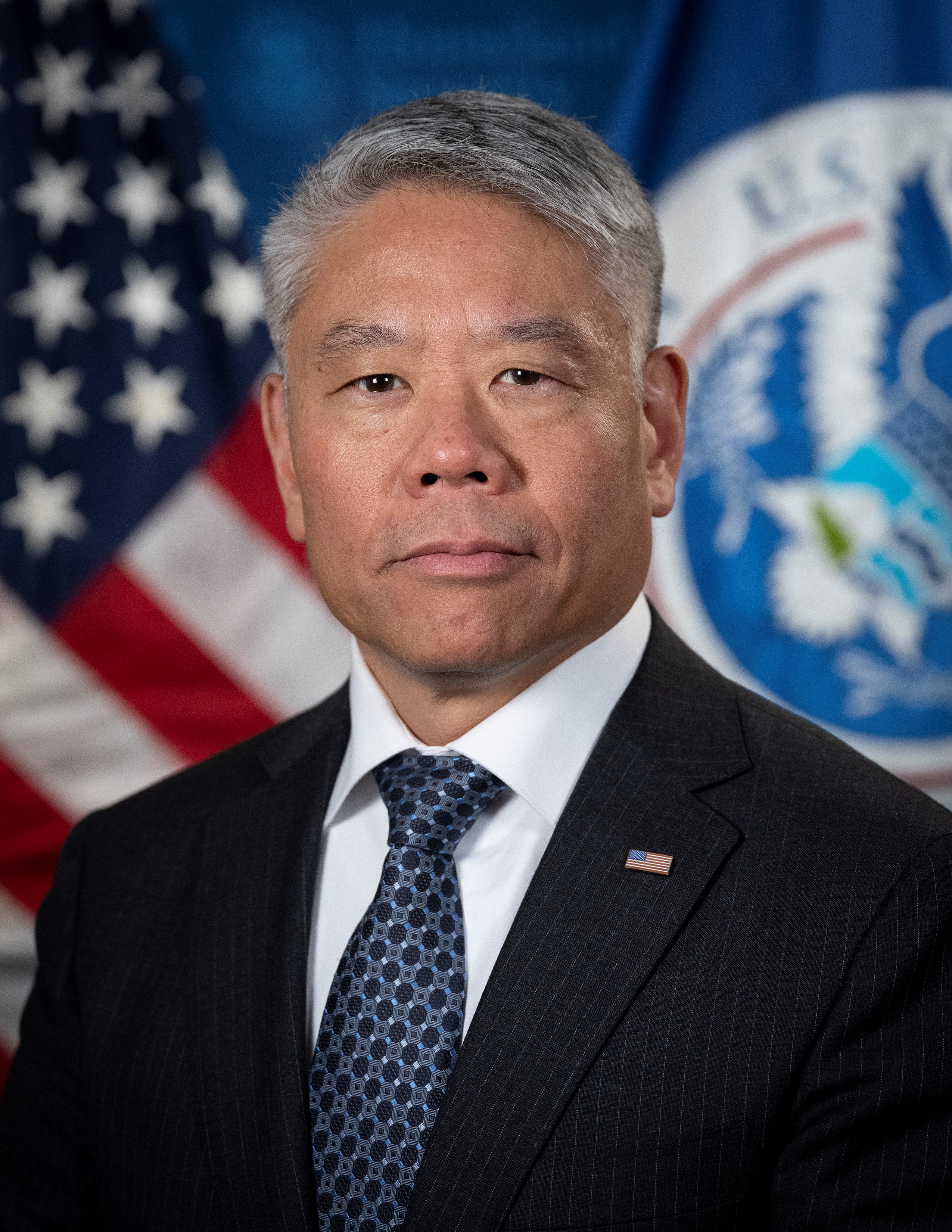
The Hon. John Tien is a distinguished external fellow at the Georgia Tech Strategic Energy Institute and the Georgia Tech Research Institute. He is also a distinguished professor of the practice in both the Sam Nunn School of International Affairs and the School of Cybersecurity and Privacy and a senior fellow at the Belfer Center for Science and International Affairs at the Harvard Kennedy School.
Before joining Georgia Tech, Tien was deputy secretary of the U.S. Department of Homeland Security (DHS) from 2021 to 2023. In that role, he was the DHS chief operating officer, overseeing a budget of $105 billion and facilities in all 50 U.S. states and all territories as well as more than 3,000 personnel stationed overseas in more than 75 countries.
Alongside the secretary of Homeland Security, Deputy Secretary Tien led the policy development, operational oversight, and risk management of the department’s statutory mission areas and subordinate agencies, including cybersecurity and protection of America’s critical physical and cyber infrastructure; disaster preparedness and recovery; supply chain optimization, border security, and free and fair trade; air, pipeline, and rail security; maritime physical and cyber security; citizenship and immigration services; protection of senior officials and safeguarding the U.S. financial system; and counter-narcotics production and trafficking.
In his broader policy administration role, Deputy Secretary Tien served as a member of the National Security Council’s Deputies Committee, the board of the National Counterterrorism Center, and the President’s Management Council.
Upon his retirement from DHS in 2023, he was awarded two of DHS’ highest civilian awards: the DHS Distinguished Service Medal, and the United States Coast Guard Distinguished Public Service Medal.
Tien previously served in the Obama administration as a National Security Council (NSC) senior director for Afghanistan and Pakistan, the Bush administration as an NSC director for Iraq, and the Clinton administration as a White House Fellow for the United States Trade Representative.
From 2011 to 2021, he held various senior leadership positions at Citigroup as a managing director in their Citi Retail Services and Global Consumer Bank organizations. Before Citigroup, he was a U.S. Army officer, retiring at the rank of colonel. His Army career included commanding an 1,100-soldier armored task force in combat in Iraq, serving overseas for nearly a decade, and teaching political science at West Point. Col. Tien’s military awards and decorations include the Bronze Star Medal, Combat Action Badge, and Valorous Unit Award.
Tien is now serving on the corporate board of directors for Union Pacific Railroad, on the Carter Presidential Center’s Board of Councilors, and as a founding board member of the Avalon Action Alliance, a nonprofit focused on nationally scaling proven healthcare programs to help heal veterans and first responders who struggle with depression, PTSD, and traumatic brain injury. He is also an executive partner and ambassador for the Master’s in Business for Veterans program at Emory University’s Goizueta Business School.
Tien holds a B.S. in civil engineering from the United States Military Academy at West Point and an M.A. in philosophy, politics, and economics from Oxford University, where he was a Rhodes Scholar. He is a life member of the Council on Foreign Relations. He lives with his wife Tracy in Atlanta and volunteers with and supports numerous local civic institutions including the High Museum of Art.
Dr. Micah S. Ziegler is an assistant professor in the School of Chemical and Biomolecular Engineering and the School of Public Policy.
Dr. Ziegler evaluates sustainable energy and chemical technologies, their impact, and their potential. His research helps to shape robust strategies to accelerate the improvement and deployment of technologies that can enable a global transition to sustainable and equitable energy systems. His approach relies on collecting and curating large empirical datasets from multiple sources and building data-informed models. His work informs research and development, public policy, and financial investment.
Dr. Ziegler conducted postdoctoral research at the Institute for Data, Systems, and Society at the Massachusetts Institute of Technology. At MIT, he evaluated established and emerging energy technologies, particularly energy storage. To determine how to accelerate the improvement of energy storage technologies, he examined how rapidly and why they have changed over time. He also studied how energy storage could be used to integrate solar and wind resources into a reliable energy system.
Dr. Ziegler earned a Ph.D. in Chemistry from the University of California, Berkeley and a B.S. in Chemistry, summa cum laude, from Yale University. In graduate school, he primarily investigated dicopper complexes in order to facilitate the use of earth-abundant, first-row transition metals in small molecule transformations and catalysis. Before graduate school, he worked in the Climate and Energy Program at the World Resources Institute (WRI). At WRI, he explored how to improve mutual trust and confidence among parties developing international climate change policy and researched carbon dioxide capture and storage, electricity transmission, and international energy technology policy. Dr. Ziegler was also a Luce Scholar assigned to the Business Environment Council in Hong Kong, where he helped advise businesses on measuring and managing their environmental sustainability.
Dr. Ziegler is a member of AIChE and ACS, and serves on the steering committee of Macro-Energy Systems. His research findings have been highlighted in media, including The New York Times, Nature, The Economist, National Geographic, BBC Newshour, NPR’s Marketplace, and ABC News.
Dr. Manos Antonakakis (PhD’12) is an Associate Professor in the School of Electrical and Computer Engineering (ECE) and an adjunct faculty member in the College of Computing (CoC), at the Georgia Institute of Technology. He is responsible for the Astrolavos Lab, where students conduct research in the areas of Attack Attribution, Network Security and Privacy, Intrusion Detection, and Data Mining. In May 2012, he received his Ph.D. in Computer Science from Georgia Tech.
Before joining the Georgia Tech ECE faculty ranks, Dr. Antonakakis held the Chief Scientist role at Damballa. He currently serves as the co-chair of the Academic Committee for the Messaging Anti-Abuse Working Group (MAAWG). In his tenure at Georgia Tech ECE, Dr. Antonakakis has raised several tens of millions in research funding as Primary Investigator from government agencies and the private sector. He is the author of several U.S. patents and more than 20 academic publications in top academic conferences. He has served as a program committee member for all top tier security conferences.
Cyber Technology
Domain-aware data-driven methodologies for scientific and engineering applications, environment and energy, urban resilience, applied statistics, system informatics and reliability engineering, model interactions between solar energy production and wildfires.
Energy Storage; Hydrogen