Nian Liu

Nian Liu
nliu82@mail.gatech.edu
Website

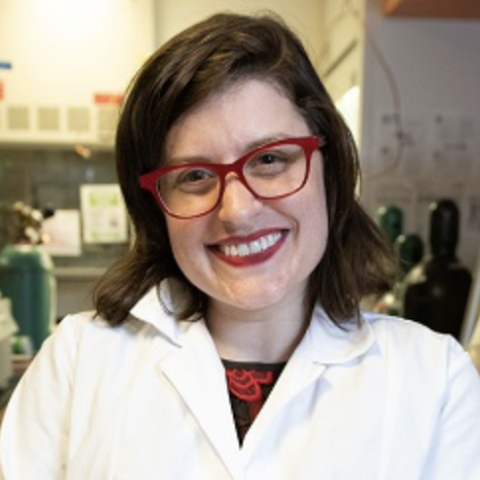
Nian Liu began as an Assistant Professor at Georgia Institute of Technology, School of Chemical and Biomolecular Engineering in January 2017. He received his B.S. in 2009 from Fudan University (China), and Ph.D. in 2014 from Stanford University, where he worked with Prof. Yi Cui on the structure design for Si anodes for high-energy Li-ion batteries. In 2014-2016, he worked with Prof. Steven Chu at Stanford University as a postdoc, where he developed in situ optical microscopy to probe beam-sensitive battery reactions. Dr. Liu 's lab at Georgia Tech is broadly interested in the combination of nanomaterials, electrochemistry, and light microscopy for understanding and addressing the global energy challenges. Dr. Liu is the recipient of the Electrochemical Society (ECS) Daniel Cubicciotti Award (2014) and American Chemical Society (ACS) Division of Inorganic Chemistry Young Investigator Award (2015).

Associate Professor, School of Chemical and Biomolecular Engineering
Robert G. Miller Faculty Fellow, School of Chemical and Biomolecular Engineering
Phone
404-894-5103
Office
ES&T 1230
Additional Research

Electronic Systems; Packaging and Components; Nanostructures & Materials; Optoelectronics Photonics & Phononics; Semiconductors; Materials & Processes

Google Scholar
https://scholar.google.com/citations?user=nvMAHY8AAAAJ&hl=en
LinkedIn Related Site
Nian
Liu
Show Regular Profile

Jennifer Glass

Jennifer Glass
jennifer.glass@eas.gatech.edu
Website

The Glass research group studies the microbes that made Earth habitable, and, more specifically, the microbial mechanisms underpinning cryptic transformations of methane and nitrous oxide in oxygen-free ecosystems. Why focus on the microbial world? The Earth has been constantly inhabited for four billion years. For three-quarters of that time, life was solely microbial. Ancient microbes produced the gases that warmed the planet to clement temperatures when the sun was faint, and that invented the molecular machines that drive biogeochemical cycles. The co-evolution of Earth and life is woven into the fabric of our research group, which examines the interplay between microbes and the greenhouses gases that control planetary temperature. Our research informs the microbial metabolisms that (i) made the early Earth habitable for life, (ii) make the deep subsurface habitable for life, (iii) serve as biosignatures for life on exoplanets, and (iv) play crucial roles in regulating atmospheric fluxes of greenhouse gases on our warming planet.

Associate Professor, School of Earth and Atmospheric Sciences
Phone
404.894.3942
Additional Research

Anaerobic oxidation of methane, Environmental controls on greenhouse gas cycling, with afocus on methane and nitrous oxide, in terrestrial and marineecosystems Biogeochemical cycles of bioessential trace elements Marine microbiology, with a focus on anaerobic metabolisms Influence of trace metal bioavailability on microbial carbon and nitrogen cycling Integrating omic and geochemical datasets Co-evolution of microbial metabolisms and ocean chemistry over Earthhistory,

Google Scholar
https://scholar.google.com/citations?user=zKOyWKQAAAAJ&hl=en
Related Site
Jennifer
Glass
B.
Show Regular Profile

Micah Ziegler

Micah Ziegler
micah.ziegler@gatech.edu
Personal Website

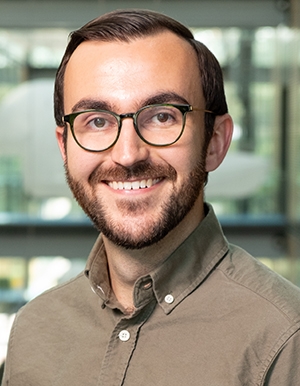
Dr. Micah S. Ziegler is an assistant professor in the School of Chemical and Biomolecular Engineering and the School of Public Policy.

Dr. Ziegler evaluates sustainable energy and chemical technologies, their impact, and their potential. His research helps to shape robust strategies to accelerate the improvement and deployment of technologies that can enable a global transition to sustainable and equitable energy systems. His approach relies on collecting and curating large empirical datasets from multiple sources and building data-informed models. His work informs research and development, public policy, and financial investment.

Dr. Ziegler conducted postdoctoral research at the Institute for Data, Systems, and Society at the Massachusetts Institute of Technology. At MIT, he evaluated established and emerging energy technologies, particularly energy storage. To determine how to accelerate the improvement of energy storage technologies, he examined how rapidly and why they have changed over time. He also studied how energy storage could be used to integrate solar and wind resources into a reliable energy system.

Dr. Ziegler earned a Ph.D. in Chemistry from the University of California, Berkeley and a B.S. in Chemistry, summa cum laude, from Yale University. In graduate school, he primarily investigated dicopper complexes in order to facilitate the use of earth-abundant, first-row transition metals in small molecule transformations and catalysis. Before graduate school, he worked in the Climate and Energy Program at the World Resources Institute (WRI). At WRI, he explored how to improve mutual trust and confidence among parties developing international climate change policy and researched carbon dioxide capture and storage, electricity transmission, and international energy technology policy. Dr. Ziegler was also a Luce Scholar assigned to the Business Environment Council in Hong Kong, where he helped advise businesses on measuring and managing their environmental sustainability.

Dr. Ziegler is a member of AIChE and ACS, and serves on the steering committee of Macro-Energy Systems. His research findings have been highlighted in media, including The New York Times, Nature, The Economist, National Geographic, BBC Newshour, NPR’s Marketplace, and ABC News.

Assistant Professor, School of Chemical and Biomolecular Engineering, School of Public Policy
SEI Lead: Energy Storage
Phone
404.894.5991
Office
ES&T 2228
Additional Research
  • Energy
  • Materials and Nanotechnology
  • Sustainable Engineering
Google Scholar
https://scholar.google.com/citations?hl=en&user=tMFMFdUAAAAJ&view_op=list_works&sortby=pubdate
LinkedIn ChBE Profile Page
Micah
Ziegler
Show Regular Profile

Thomas Gartner

Thomas Gartner
tgartner3@gatech.edu
Departmental Bio
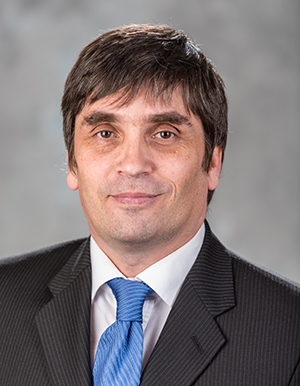
Assistant Professor, School of Chemical and Biomolecular Engineering
Additional Research

Materials for energy conversion and storage. Polymer sustainability, polymer degradation, polymer recycling & upcycling Polymer physics, solution processing of polymers, polymer architecture effects Polymer- and nanoparticle-based electrical & optical nanomaterials Liquid state theory, molecular simulations, and statistical mechanics Developing machine learning interaction potentials to predict the properties and phase behavior of fluids and materials

IRI And Role
Thomas Gartner Research Website
Thomas
Gartner
Show Regular Profile

Martin Maldovan

Martin Maldovan
maldovan@gatech.edu
ChBE Profile Page

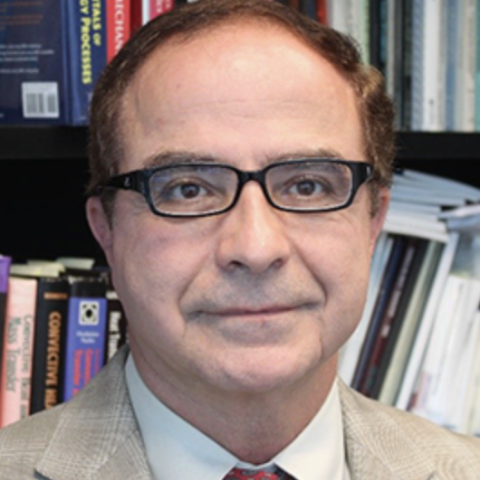
Martin Maldovan is an associate professor in the School of Chemical and Biomolecular Engineering and the School of Physics at the Georgia Institute of Technology. He received his Ph.D. at the Massachusetts Institute of Technology (MIT) in the Department of Materials Science and Engineering. He was also a postdoctoral associate and research scientist at MIT.  Maldovan’s group is developing novel heat and mass transport processes as an enabling technology for energy converter materials and devices, micro and nanoelectronics, chemical and biological separations, and catalysis. His group focuses on designing, predicting, and controlling heat and mass transfer in rationally engineered systems with length scales ranging from macro to nano, to advance new paradigms for energy saving materials and devices.  

Associate Professor, School of Chemical and Biomolecular Engineering and School of Physics
Phone
404.385.3753
Office
ES&T L1226
Additional Research

Thermal Management; Energy Storage; Energy Conversion; Thermal Systems

University, College, and School/Department
Google Scholar
https://scholar.google.com/citations?hl=en&user=kEMlX3sAAAAJ&view_op=list_works&sortby=pubdate
Maldovan Research Group
Martin
Maldovan
Show Regular Profile