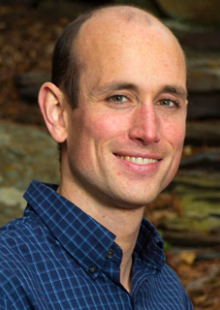
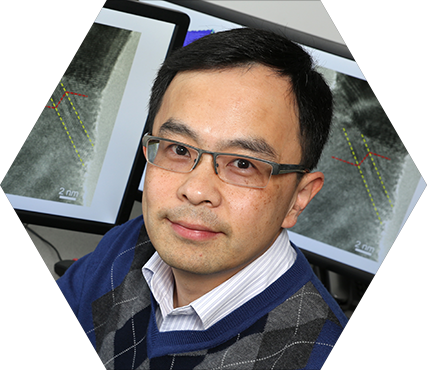
Antonio Facchetti

Antonio Facchetti
afacchetti6@gatech.edu
MSE Profile Page

Antonio Facchetti obtained his Laurea degree in Chemistry cum laude and a Ph.D in Chemical Sciences from the University of Milan. In 2022 he joined the School of Material Science and Engineering at Georgia Tech. He is a co-founder and the Chief Technology Officer of Flexterra Corporation.

Facchetti has published more than 600 research articles, 14 book chapters, and holds more than 120 patents (H-index 141). He received the 2009 Italian Chemical Society Research Prize, the team IDTechEx Printed Electronics Europe 2010 Award, the corporate 2011 Flextech Award. In 2010 was elected a Kavli Fellow, in 2012 a Fellow of the American Association for the Advanced of Science (AAAS), in 2013 Fellow of the Materials Research Society, in 2015 he became a Fellow of the Royal Society of Chemistry, and in 2016 a Fellow of the ACS Polymeric Materials Science and Engineering. In 2010 he was selected among the "TOP 100 MATERIALS SCIENTISTS OF THE PAST DECADE (2000-2010)" by Thomson Reuters and in 2015-2023 recognized as a Highly Cited Scientist. In 2016 he has been elected a Fellow of the National Academy of Inventors and was awarded the 2016 ACS Award for Creative Invention. In 2017 he was awarded the Giulio Natta Gold Medal from the Italian Chemical Society for his work on polymeric materials and in 2019 he was inducted into the Advanced Materials Hall of Fame. In 2025 he was elected to the National Academy of Engineering. Facchetti’s research interests include organic semiconductors and dielectrics for thin-film and electrochemical transistors, metal oxides, conducting polymers, molecular electronics, sensors, batteries, and photovoltaics.


Professor
Hightower Chair in Materials Science and Engineering
Office
MRDC 4515
Google Scholar
https://scholar.google.com/citations?hl=en&user=oQ9ZPFkAAAAJ&view_op=list_works…
Facchetti Lab
Antonio
Facchetti
Show Regular Profile

Valerie Thomas

Valerie Thomas
valerie.thomas@isye.gatech.edu
ISyE Profile

Valerie Thomas is the Anderson-Interface Chair of Natural Systems and Professor in the H. Milton School of Industrial and Systems Engineering, with a joint appointment in the School of Public Policy. 

Dr. Thomas's research interests are energy and materials efficiency, sustainability, industrial ecology, technology assessment, international security, and science and technology policy. Current research projects include low carbon transportation fuels, carbon capture, building construction, and electricity system development. Dr. Thomas is a Fellow of the American Association for the Advancement of Science, and of the American Physical Society. She has been an American Physical Society Congressional Science Fellow, a Member of the U.S. EPA Science Advisory Board, and a Member of the USDA/DOE Biomass Research and Development Technical Advisory Committee. 

She has worked at Princeton University in the Princeton Environmental Institute and in the Center for Energy and Environmental Studies, and at Carnegie Mellon University in the Department of Engineering and Public Policy.

Dr. Thomas received a B. A. in physics from Swarthmore College and a Ph.D. in theoretical physics from Cornell University.

Anderson-Interface Chair of Natural Systems
Professor, School of Industrial and Systems Engineering
RBI Initiative Lead: Sustainability Analysis
Phone
(404) 894-0390
Additional Research

Hydrogen Transport/Storage; Biofuels; ClIMaTe/Environment; Electric Vehicles; System Design & Optimization; Energy and Materials Efficiency; Sustainability; Industrial Ecology; Technology Assessment; Science and Technology Policy

Website
Valerie
Thomas
Show Regular Profile

Anju Toor

Anju Toor
anju.toor@mse.gatech.edu
Departmental Bio

Anju Toor is a researcher in nanomaterials for energy systems. She was a Bakar Innovation Fellow at the University of California, Berkeley, and worked on printed on-chip integrated micro batteries. She earned an M.S. in Electrical Engineering and a Ph.D. in Mechanical Engineering at University of California, Berkeley.

Her research focuses on advanced energy materials, printed electronics, energy storage systems, and nanoparticle self-assembly. She has led research on flexible and stretchable batteries for next-generation Augmented/Virtual Reality applications at Meta Reality Labs. She was named EECS Rising Star and selected for The Rising Stars Women in Engineering Workshop in Asia.

As an expert in self-assembly and energy materials, she has published over 20 research publications in the most reputed platforms in the field.

Assistant Professor, School of Materials Science and Engineering
Additional Research

Research Areas: Composites, Fibers, Nanostructures, Polymers

Research Challenges: Electronics and Communications, Energy, Environment

Research Activity: Measurements, Processing, Fabrication, & Manufacturing, Synthesis

Anju
Toor
Show Regular Profile

Ebenezer Fanijo

Ebenezer Fanijo
ebenezer.fanijo@design.gatech.edu

Fanijo’s research centres around sustainable and smart-resilient buildings/civil infrastructure with a particular interest in decarbonizing infrastructure using novel low-carbon construction materials and alternative energy sources. Buildings contribute to more than one-third (39%) of the global energy-related CO2 emissions and 35% of global energy consumption, mainly from manufacturing, building materials and transportation. As such, advanced research on developing innovative construction materials is urgently required to address the carbon emissions from materials and construction processes of buildings' life cycle. His research approach includes examining the fresh properties and rheology, early-age cracking, microstructure evaluation, mechanical and durability performance, and life cycle assessment of building systems (particularly cementitious composites) made with these sustainable construction materials. 

He has also conducted research across different disciplines, including cementitious and concrete composites; corrosion monitoring and mitigation; concrete durability; green concrete technology using recycled and by-product materials; 3D printing of cementitious materials; highway pavement; geopolymers; fibre-reinforced concrete; advanced sensing technologies and automation; and non-destructive structural monitoring and evaluation. 

Fanijo received his B.S. in Building Construction with first-class honours from the Obafemi Awolowo University, Nigeria. In 2019, He earned an M.S. in Civil Engineering from the University of Idaho. Subsequently, he got his PhD in Civil Engineering (with a simultaneous Master’s degree – MEng in Material Science and Engineering) from Virginia Tech in 2022. He has worked on numerous funded research projects and published in various peer-reviewed journals and proceedings. Fanijo has also received numerous national and international awards for his excellence in research, with his recent NSBE Golden Torch Award recognized as the graduate student of the year 2022. 

At Georgia Tech, he is passionate about teaching construction materials and methods and their critical role in the design and construction of buildings. Fanijo developed and currently teaching the Construction Materials and Methods Course so that Building Construction students can have in-depth knowledge of building materials and systems, their properties, and their intrinsic relationship to structural systems and environmental performance. He also develops and teaches courses on Green Construction Technology, Concrete Durability and Sustainable Construction Materials and Techniques. 

Fanijo is a Professional Engineer (P.E.) and LEED Green Associate with more than five years of working experience in the construction sector.

Assistant Professor, School of Building Construction
Office
Caddell Building, 223
Building Construction Profile
Ebenezer
Fanijo
Show Regular Profile

D. Zeb Rocklin

D. Zeb Rocklin
zeb.rocklin@physics.gatech.edu
Research Website

I have a broad range of interests in soft condensed matter physics and adjacent fields like statistical physics, physics of living systems and hard condensed matter. My particular focus is on the relationship between the geometric structure of a system and its mechanical response. Both biological and engineered systems often have some structure, such as networks of struts, particles jammed together or patterns of creases in thin sheets, that grant them flexibility and strength with a minimum of weight. These structures can lead to subtle and surprising mechanical response:

Assistant Professor, School of Physics
IMS Initiative Lead, Mechanical Metamaterials
Phone
404.385.8104
Additional Research

Condensed matter physics, statistical physics, physics of living systems, and hard condensed matter.

University, College, and School/Department
Zeb
Rocklin
Show Regular Profile

Naresh Thadhani

Naresh Thadhani
naresh.thadhani@mse.gatech.edu
MSE Profile Page

Thadhani joined the faculty in the School of Materials Science and Engineering at Georgia Tech in September, 1992. His research focuses on studies of shock-induced physical, chemical, and mechanical changes for processing of novel materials and for probing the deformation and fracture response of metals, ceramics, polymers, and composites, subjected to high-rate impact loading conditions. He has developed state-of-the-art high-strain-rate laboratory which includes 80-mm and 7.62-mm diameter single-stage gas-guns, and a laser-accelerated thin-foil set-up, to perform impact experiments at velocities of 70 to 1200 m/s. The experiments employ time-resolved diagnostics to monitor shock-initiated events with nanosecond resolution employing piezoelectric and piezoresistive stress gauges, VISAR interferometry, Photonic-doppler-velocimetry, and high-speed digital imaging, combined with the ability to recover impacted materials for post-mortem microstructural characterization and determination of other properties. He has built computational capabilities employing continuum simulations for design of experiments and development and validation of constitutive equations, as well as for meso-scale discrete particle numerical analysis (using CTH and ALE3D codes) to determine the effects observed during shock compression of heterogeneous materials, using real microstructures.

Professor and Chair, School of Materials Science and Engineering
Phone
404.894.2651
Office
Love 286
Additional Research

deformation and degradation; fracture and fatigue; Ceramics; Materials Failure and Reliability; Materials In Extreme Environments; Materials Testing

Research Focus Areas
Google Scholar
https://scholar.google.com/citations?hl=en&user=4-Wl6hoAAAAJ&view_op=list_works&sortby=pubdate
High-Strain Rate Laboratory
Naresh
Thadhani
Show Regular Profile

Robert F. Speyer

Robert F. Speyer
robert.speyer@mse.gatech.edu
MSE Profile Page

Speyer joined the MSE faculty in August, 1992 after serving on the faculty at the New York State College of Ceramics at Alfred University for six years.  He has written one book (Thermal Analysis of Materials), with another one on the way, published over 125 refereed papers and has given over 150 technical presentations.

His present research group consists of seven graduate students and one Ph.D-level scientist. Dr. Speyer’s research has been funded by Navy, ARO, AFOSR, DARPA, Gas Research Institute, and private industry.  He was previously the president of Innovative Thermal Systems, a thermoanalytical scientific instrument company, and is presently the President of Verco Materials, a start-up company which will manufacture boron carbide armor .

He teaches courses in Chemical Thermodynamics of Materials, Thermal and Transport Properties of Materials, and Ceramic Technology.

Professor, School of Materials Science and Engineering
Phone
404.894.6075
Office
Love 260
Additional Research

Thermal management; Ceramics; Modeling; Fabrication

Research Focus Areas
Robert F.
Speyer
F.
Show Regular Profile

Josh Kacher

Josh Kacher
josh.kacher@mse.gatech.edu
MSE Profile Page

Josh Kacher joined Georgia Tech’s Materials Science and Engineering department as an assistant professor in Fall of 2015. Prior to his appointment, he was a postdoctoral scholar at the University of California, Berkeley. There, he worked in collaboration with General Motors to understand the Portevin-le Chatelier effect in Al-Mg and with the navy to develop novel rhenium-replacement alloys. His research approach centered on applying in situ TEM deformation to understand the influence of local chemistry on the behavior of defects such as dislocations and twins. This was coupled with mesoscale characterization of the defect state using EBSD for multiscale characterization of the deformation processes.

His Ph.D. and Masters work similarly focused on applying multiscale electron microscopy techniques to understanding defect behavior in a variety of systems such as ion-irradiated stainless steels, materials at elevated temperatures, and Mg alloys for light-weight alloy development.

Associate Professor, School of Materials Science and Engineering
Phone
404.894.2781
Office
Love 282
Additional Research

Materials In Extreme Environments; corrosion; deformation and degradation; Advanced Characterization; micro and nanomechanics; fracture and fatigue

Research Focus Areas
Google Scholar
https://scholar.google.com/citations?hl=en&user=SGk3pngAAAAJ&view_op=list_works&sortby=pubdate
Kacher Lab
Josh
Kacher
Show Regular Profile

Ting Zhu

Ting Zhu
ting.zhu@me.gatech.edu
ME Profile Page

Zhu's research focuses on the modeling and simulation of mechanical behavior of materials at the nano- to macroscale. Some of the scientific questions he is working to answer include understanding how materials fail due to the combined mechanical and chemical effects, what are the atomistic mechanisms governing the brittle to ductile transition in crystals, why the introduction of nano-sized twins can significantly increase the rate sensitivity of nano-crystals, and how domain structures affect the reliability of ferroelectric ceramics and thin films. To address these problems, which involve multiple length and time scales, he has used a variety of modeling techniques, such as molecular dynamics simulation, reaction pathway sampling, and the inter-atomic potential finite-element method. The goal of his research is to make materials modeling predictive enough to help design new materials with improved performance and reliability.

Woodruff Professor, Woodruff School of Mechanical Engineering
Phone
404.894.6597
Office
MRDC 4110
Additional Research

Ferroelectronic MaterialsMicro and NanomechanicsMultiscale ModelingThin Films 

Google Scholar
https://scholar.google.com/citations?hl=en&user=3_80JesAAAAJ&view_op=list_works&sortby=pubdate
Zhu Research Group
Ting
Zhu
Show Regular Profile