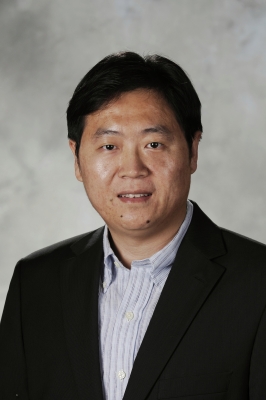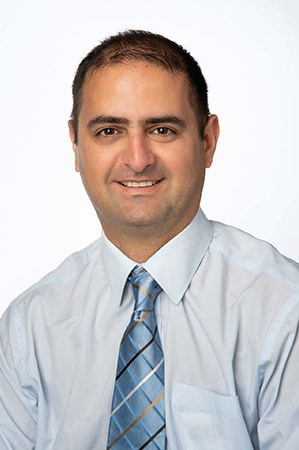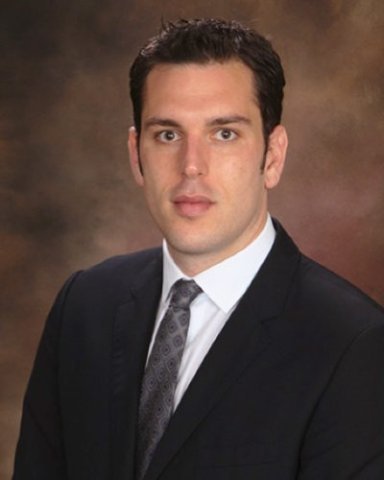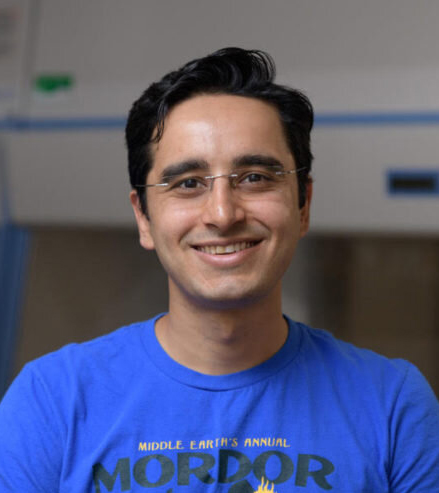
Saad Bhamla

Saad Bhamla
saadb@chbe.gatech.edu
Website

Saad Bhamla studies biomechanics across species to engineer knowledge and tools that inspire curiosity.

Saad Bhamla is an assistant professor of biomolecular engineering at Georgia Tech. A self-proclaimed "tinkerer," his lab is a trove of discoveries and inventions that span biology, physics and engineering. His current projects include studying the hydrodynamics of insect urine, worm blob locomotion and ultra-low-cost devices for global health. His work has appeared in the New York Times, the Economist, CNN, Wired, NPR, the Wall Street Journal and more.

Saad is a prolific inventor and his most notable inventions includes a 20-cent paper centrifuge, a 23-cent electroporator, and the 96-cent hearing aid. Saad's work is recognised by numerous awards including a NIH R35 Outstanding Investigator Award, NSF CAREER Award, CTL/BP Junior Faculty Teaching Excellence Award, and INDEX: Design to Improve Life Award. Saad is also a National Geographic Explorer and a TED speaker. Newsweek recognized Saad as 1 of 10 Innovators disrupting healthcare.

Saad is a co-founder of Piezo Therapeutics.

Outside of the lab, Saad loves to go hiking with his partner and two dogs (Ollie and Bella).

Assistant Professor
Phone
404-894-2856
Office
ES&T L1224
Additional Research
  • Biotechnology
  • Complex Systems
  • Materials and Nanotechnology
Google Scholar
https://scholar.google.com/citations?user=1tRXS9gAAAAJ&hl=en
Related Site
Saad
Bhamla
Show Regular Profile

Julie Champion

Julie Champion
julie.champion@chbe.gatech.edu
Champion Lab

Julie Champion is the William R. McLain Endowed Term Professor in the School of Chemical and Biomolecular Engineering at Georgia Institute of Technology. She earned her B.S.E. in chemical engineering from the University of Michigan and Ph.D. in chemical engineering at the University of California Santa Barbara. She was an NIH postdoctoral fellow at the California Institute of Technology. Champion is a fellow of the American Institute for Medical and Biological Engineering and has received awards including American Chemical Society Women Chemists Committee Rising Star, NSF BRIGE Award, Georgia Tech Women in Engineering Faculty Award for Excellence in Teaching, Georgia Tech BioEngineering Program Outstanding Advisor Award. Professor Champion’s current research focuses on design and self-assembly of functional nanomaterials made from engineered proteins for applications in immunology, cancer, and biocatalysis.

Professor, School Chemical and Biomolecular Engineering
Phone
404.894.2874
Office
EBB 5015
Additional Research

Cellular Materials; Drug Delivery; Self-Assembly; "Developing therapeutic protein materials, where the protein is both the drug and thedelivery system Engineering proteins to control and understand protein particleself-assembly Repurposing and engineering pathogenic proteins for human therapeutics Creating materials that mimic cell-cell interactions to modulate immunologicalfunctions for various applications, including inflammation, cancer, autoimmune disease, and vaccination"

Google Scholar
https://scholar.google.com/citations?hl=en&user=jvuWIW4AAAAJ&view_op=list_works&sortby=pubdate
LinkedIn ChBE Profile Page
Julie
Champion
Show Regular Profile

Wenshan Cai

Wenshan Cai
wcai@gatech.edu
ECE Profile Page

Wenshan Cai joined the faculty of the Georgia Institute of Technology in January 2012 as an associate professor in the School of Electrical and Computer Engineering, with a joint appointment in the School of Materials Science and Engineering. Prior to this, he was a postdoctoral fellow in the Geballe Laboratory for Advanced Materials at Stanford University. His scientific research is in the area of nanophotonic materials and devices, in which he has made a major impact on the evolving field of plasmonics and metamaterials. Cai has published more than 50 papers in peer-reviewed journals, and the total citations of his recent papers have reached approxIMaTely 10,000 within the past 10 years. He authored the book, Optical Metamaterials: Fundamentals and Applications, which is used as a textbook or a major reference at many universities around the world. He received his B.S. and M.S. degrees from Tsinghua University in 2000 and 2002, respectively, and his Ph.D. from Purdue University in 2008, all in electrical/electronic engineering. Cai is the recipient of several national and international distinctions, including the OSA/SPIE Joseph W. Goodman Book Writing Award (2014), the CooperVision Science & Technology Award (2016), and the Office of Naval Research Young Investigator Award (2017).

Professor, School of Electrical and Computer Engineering
Phone
404.894.8911
Office
Pettit 213
Additional Research

Metamaterials; Nonlinear optics; Photovoltaics; Integrated photonics; Plasmonics

Research Focus Areas
Google Scholar
https://scholar.google.com/citations?hl=en&user=P7s-vBQAAAAJ&view_op=list_works&sortby=pubdate
Wenshan
Cai
Show Regular Profile

Michael Filler

Michael Filler
michael.filler@chbe.gatech.edu
ChBE Profile Page

Michael Filler is a professor and the Traylor Faculty Fellow in the School of Chemical and Biomolecular Engineering at the Georgia Institute of Technology. He earned his undergraduate and graduate degrees from Cornell University and Stanford University, respectively, prior to completing postdoctoral studies at the California Institute of Technology. Filler has been recognized for his research and teaching with the National Science Foundation CAREER Award, Georgia Tech Sigma Xi Young Faculty Award, CETL/BP Junior Faculty Teaching Excellence Award, and AVS Dorothy M. and Earl S. Hoffman Award. Filler also heads Nanovation, a forum to address the big questions, big challenges, and big opportunities of nanotechnology.

Professor and Traylor Faculty Fellow, School of Chemical and Biomolecular Engineering
Director, The Filler Lab
Phone
404.894.0430
Office
Marcus 2135
Additional Research

Integrated photonics, carbon nanotubes, nanomanufacturing, thermal management, silicon devices

Google Scholar
https://scholar.google.com/citations?hl=en&user=5nt6qx8AAAAJ&view_op=list_works&sortby=pubdate
The Filler Lab
Michael
Filler
Show Regular Profile

Erin L. Ratcliff

Portrait of Erin L. Ratcliff
eratcliff8@gatech.edu
Departmental Bio

Erin L. Ratcliff is a Full Professor in the School of Materials Science and Engineering and the School of Chemistry and Biochemistry at the Georgia Institute of Technology and holds a joint appointment at the National Renewable Energy Laboratory.  Prof. Ratliff is also the Associate Director of Scientific Continuity for Director of the currently funded Energy Frontier Research Center (EFRC) entitled “Center for Soft PhotoElectroChemical Systems (SPECS)”, a center which she directed at her prior appointment at University of Arizona.  

Her group “Laboratory for Interface Science for Printable Electronic Materials” uses a combination of applications and devices with electrochemistry, spectroscopies, microscopies, and synchrotron-based techniques to understand fundamental structure-property relationships of next-generation materials for energy conversion and storage and biosensing. Materials of interest include metal halide perovskites, π-conjugated materials, colloidal quantum dots, and metal oxides. Current research is focused on mechanisms of electron transfer and transport across interfaces, including semiconductor/electrolyte interfaces and durability of printable electronic materials.

Her research program has been funded by the Department of Energy Basic Energy Sciences, the Solar Energy Technology Office, Office of Naval Research, National Science Foundation, and the Nano Bio Materials Consortium.

Professor, School of Materials Science and Engineering
Professor, School of Chemistry and Biochemistry
Lab Page
Erin
Ratcliff
L
Show Regular Profile

Anna Österholm

Anna Österholm
anna.osterholm@chemistry.gatech.edu
Chemistry Profile

Anna Österholm is a Principal Research Scientist who has been at Georgia Tech since 2012. She earned her Ph.D. in analytical electrochemistry from Åbo Akademi University in Finland and has been active in the area of electroactive polymers for two decades. Her main research interest include probing structure-property relationships of conjugated organic molecules and polymers, organic electronics, electrochromism, solution processing of polymers, and conjugated polymer electrochemistry. Österholm has contributed to over 50 research articles, authored two book chapters on electrochromism, and holds co-inventorship on six patents in the area of electrochromic polymers and small molecules.

Principal Research Scientist
Phone
404.395.7079
Google Scholar
https://scholar.google.com/citations?hl=en&tzom=240&user=-LFspG4AAAAJ&pagesize=80&view_op=list_works&sortby=pubdate
LinkedIn
Anna
Österholm
Show Regular Profile

Nima Ghalichechian

Nima Ghalichechian
nima.1@gatech.edu
Research Group

Dr. Ghalichechian joined the Georgia Institute of Technology as an Assistant Professor in August 2021. Prior to joining Georgia Tech, he was an Assistant Professor at The Ohio State University (OSU), Columbus, from 2017 to 2021. During this period, he established the RF Microsystems Laboratory with research in the area of millimeter-wave antennas and arrays.

Dr. Ghalichechian received his B.S. in Electrical Engineering from Amirkabir University of Technology, Iran in 2001. He received his M.S. and Ph.D. in Electrical Engineering from the University of Maryland-College Park in 2005 and 2007, respectively, with research focused on electrostatic micromotors. From 2007 to 2012, he was with the Research Department of FormFactor, Inc. (Livermore, California) as a Senior Principal Engineer. During this period, he helped design and develop microsprings for advanced probe cards used in testing memory and SoC devices. Dr. Ghalichechian joined the Department of Electrical and Computer Engineering and the ElectroScience Laboratory at OSU as a Research Scientist in 2012. From 2016 to 2017, he held a Research Assistant Professor position at OSU.

Prof. Ghalichechian is currently an Associate Editor of the IEEE Antennas and Wireless Propagation Letters (AWPL). He is a recipient of the 2018 College of Engineering Lumley Research Award at OSU, 2019 NSF CAREER Award, 2019 US Air Force Faculty Summer Fellowship Award, and 2020 ECE Excellence in Teaching Award at OSU.

Assistant Professor, School of Electrical and Computer Engineering
Associate Director, Georgia Electronic Design Center
Phone
404-894-5867
Office
TSRB 534
Additional Research

Millimeter-wave (30-300 GHz) antennas and arrays5G/6G antenna systemsReconfigurable antennas and componentsOn-chip antennas and arraysReflectarrays and phased arraysExploiting non-linear properties of phase-change materials for RF sensors

Georgia Electronic Design Center (GEDC)
Nima
Ghalichechian
Show Regular Profile

Jason Azoulay

Jason Azoulay
Azoulay Group

Jason Azoulay is an organic, organometallic and polymer chemist and internationally recognized leader in developing emerging semiconductor materials and devices. He has made significant contributions to the fields of polymer chemistry and materials science,bridging fundamental chemistry with real-world applications. His work focuses on the design, synthesis and characterization of advanced functional materials across numerous technology platforms, with an emphasis on organic semiconductors and conjugated polymers.

Azoulay co-directs the Center for Organic Photonics and Electronics, and his lab adds great strength to Georgia Tech’s leadership in soft-matter and hybrid optoelectronics. His work also complements numerous efforts at Georgia Tech that develop and apply advanced functional materials. 


Associate Professor, School of Chemistry and Biochemistry
Vasser-Woolley GRA Distinguished Investigator in Sensors and Instrumentation
Jason
Azoulay
Show Regular Profile

Suman Datta

Suman Datta
sdatta68@gatech.edu

Suman Datta is the Joseph M Pettit Chair of Advanced Computing and Georgia Research Alliance (GRA) Eminent Scholar and Professor in the School of Electrical and Computer Engineering at Georgia Tech. He received his B.Tech degree in electrical engineering from the Indian Institute of Technology, Kanpur, India, and his Ph.D. degree in electrical and computer engineering from the University of Cincinnati, Ohio. His research group focuses on semiconductor devices that enable new compute models such as in-memory compute, brain-inspired compute, cryogenic compute, resilient compute etc.

From 2015 to 2022, Datta was the Stinson Endowed Chair Professor of Nanotechnology in the Electrical Engineering Department at the University of Notre Dame, where he was the Director of a multi-university microelectronics research center, ASCENT, funded by the Semiconductor Research Corporation (SRC) and the Defense Advanced Research Projects Agency (DARPA). Datta also served as the Director of a six-university research center for Extremely Energy Efficient Collective Electronics (EXCEL), funded by the SRC and National Science Foundation (NSF) to explore an alternate computing hardware that leverages continuous-time dynamics of emerging devices to execute optimization, learning, and inference tasks.

From 2007 to 2015, he was a Professor of Electrical Engineering at The Pennsylvania State University, where his group pioneered advances in compound semiconductor-based quantum-well field effect transistors and tunneling field effect transistors.

From 1999 to 2007, he was in the Advanced Transistor Group at Intel Corporation, where he led device R&D effort for several generations of high-performance logic transistors such as high-k/metal gate, Tri-gate and strained channel CMOS transistors. He has published over 425 journal and refereed conference papers and holds more than 187 issued patents related to semiconductor devices. In 2013, Datta was named a Fellow of the Institute of Electrical and Electronics Engineers (IEEE) for his contributions to high-performance advanced silicon and compound semiconductor transistor technologies. In 2016, he was named Fellow of the National Academy of Inventors (NAI) in recognition of his inventions that have made a tangible impact on quality of life, economic development, and the welfare of society.

Joseph M. Pettit Chair of Advanced Computing
Professor, School of Electrical and Computer Engineering
Georgia Research Alliance (GRA) Eminent Scholar
Office
Klaus 2360
Additional Research

High-performance heterogenous compute with advanced CMOSBrain-inspired collective state computing with advanced CMOS and beyond-CMOS semiconductorsEmerging semiconductors like ferroelectric field effect transistors, insulator-to-metal phase transition oxides, high mobility semiconducting oxides for near and in-memory compute and storageSemiconductors for cryogenic computing and harsh environment computing

Research Focus Areas
Google Scholar
https://scholar.google.com/citations?user=glw0_RkAAAAJ&hl=en
ECE Profile Page
Suman
Datta
Show Regular Profile

Josh Kacher

Josh Kacher
josh.kacher@mse.gatech.edu
MSE Profile Page

Josh Kacher joined Georgia Tech’s Materials Science and Engineering department as an assistant professor in Fall of 2015. Prior to his appointment, he was a postdoctoral scholar at the University of California, Berkeley. There, he worked in collaboration with General Motors to understand the Portevin-le Chatelier effect in Al-Mg and with the navy to develop novel rhenium-replacement alloys. His research approach centered on applying in situ TEM deformation to understand the influence of local chemistry on the behavior of defects such as dislocations and twins. This was coupled with mesoscale characterization of the defect state using EBSD for multiscale characterization of the deformation processes.

His Ph.D. and Masters work similarly focused on applying multiscale electron microscopy techniques to understanding defect behavior in a variety of systems such as ion-irradiated stainless steels, materials at elevated temperatures, and Mg alloys for light-weight alloy development.

Associate Professor, School of Materials Science and Engineering
Phone
404.894.2781
Office
Love 282
Additional Research

Materials In Extreme Environments; corrosion; deformation and degradation; Advanced Characterization; micro and nanomechanics; fracture and fatigue

Research Focus Areas
Google Scholar
https://scholar.google.com/citations?hl=en&user=SGk3pngAAAAJ&view_op=list_works&sortby=pubdate
Kacher Lab
Josh
Kacher
Show Regular Profile