Julien Meaud

Julien Meaud
julien.meaud@me.gatech.edu
Related Site

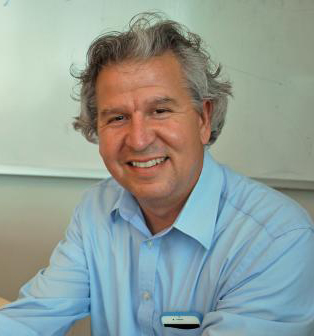
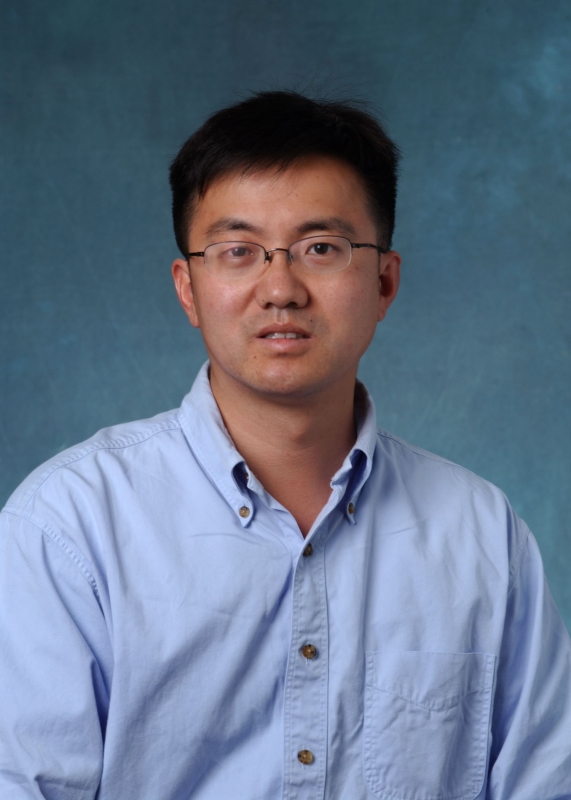
Julien Meaud joined Georgia Tech as an Assistant Professor of Mechanical Engineering in August 2013. Before joining Georgia Tech, he worked as a research fellow in the Vibrations and Acoustics Laboratory and in the Computational Mechanics Laboratory at the University of Michigan, Ann Arbor. 

Dr. Meaud investigates the mechanics and physics of complex biological systems and the mechanics and design of engineering materials using theoretical and computational tools. 

One of his research interests is auditory mechanics. In this research, he develops computational multiphysics models of the mammalian ear based on the finite element method. The mammalian ear is a nonlinear transducer with excellent frequency selectivity, high sensitivity, and good transient capture. The goal of this basic scientific research is to better understand how the mammalian ear achieves these characteristics. This research could have important clinical applications as it could help in the development of better treatment and the improvement of diagnostic tools for hearing loss. It could also have engineering applications, such as the design of biometic sensors. This research is truly interdisciplinary as it includes aspects of computational mechanics, structural acoustics, nonlinear dynamics, biomechanics and biophysics. 

Dr. Meaud is also interested in the mechanics, design and optimization of composite materials, particularly of their response to cyclic loads. Tradtional engineering and natural materials with high damping (such as rubber) tends to have low stiffness. However, the microarchitecture of composite materials that consist of a lossy polymer and a stiff constituent can be designed to simultaneously obtain high stiffness and high damping. Using computational tools such as finite element methods and topology optimization, the goal of Dr. Meaud's research is to design composite materials with these unconventional properties. One of his future goal is to extend the design of these materials to the finite strain regime and high frequency ranges, in order to obtained materials tailored for the targetted application. This research includes aspects of mechanics of materials, computational mechanics and structural dynamics. 

In Dr. Meaud's research group, students will learn theoretical and computational techniques that are used extensively to solve engineering problems in academic research and industry. Students will develop knowledge and expertise in a broad array of mechanical engineering areas. The knowledge that students will gain in computational mechanics, nonlinear and structural dynamics, structural acoustics, dynamics and composite materials could be applied to many domains in their future career.

Associate Professor
Phone
404-385-1301
Office
Love 129
Additional Research

Meaud investigates the mechanics and physics of complex biological systems and the mechanics and design of engineering materials using theoretical and computational tools. One of his research interests is auditory mechanics. In this research, he develops computational multiphysics models of the mammalian ear based on the finite element method. The mammalian ear is a nonlinear transducer with excellent frequency selectivity, high sensitivity, and good transient capture. The goal of this basic scientific research is to better understand how the mammalian ear achieves these characteristics. This research could have important clinical applications as it could help in the development of better treatment and the improvement of diagnostic tools for hearing loss. It could also have engineering applications, such as the design of biometic sensors. This research is truly interdisciplinary as it includes aspects of computational mechanics, structural acoustics, nonlinear dynamics, biomechanics and biophysics. Dr. Meaud is also interested in the mechanics, design and optimization of composite materials, particularly of their response to cyclic loads. Tradtional engineering and natural materials with high damping (such as rubber) tends to have low stiffness. However, the microarchitecture of composite materials that consist of a lossy polymer and a stiff constituent can be designed to simultaneously obtain high stiffness and high damping. Using computational tools such as finite element methods and topology optimization, the goal of Dr. Meaud's research is to design composite materials with these unconventional properties. One of his future goal is to extend the design of these materials to the finite strain regime and high frequency ranges, in order to obtained materials tailored for the targetted application. This research includes aspects of mechanics of materials, computational mechanics and structural dynamics.

Research Focus Areas
Google Scholar
https://scholar.google.com/citations?user=jJTt8i8AAAAJ&hl=en&oi=ao
Julien
Meaud
Show Regular Profile

Yuhang Hu

Yuhang Hu
yuhang.hu@me.gatech.edu
Website

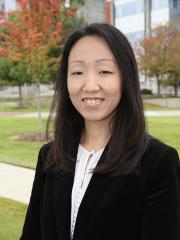
Dr. Yuhang Hu Joined the Woodruff School of Mechanical Engineering and the School of Chemical and Biomolecular Engineering at Georgia Institute of Technology as an assistant professor in August 2018. Prior to that, Dr. Hu was an assistant professor in the Department of Mechanical Science and Engineering at University of Illinois at Urbana-Champaign from 2015 to 2018. She received her Ph.D. from Harvard University in the area of Solid Mechanics. She worked in the area of Materials Chemistry as a post-doctoral fellow at Harvard from 2011 to 2014.

Associate Professor, Mechanical Engineering and Chemical and Biomolecular Engineering
Phone
404-894-2555
Office
MRDC 4107
Additional Research

Our study focuses on Soft Active Materials especially those consisting both solid and liquid, such as gels, cells and soft biological tissues. Our research is at the interface between mechanics and materials chemistry. Our studies span from fundamental mechanics to novel applications.

Google Scholar
https://scholar.google.com/citations?user=U9NeaxUAAAAJ&hl=en
Mechanical Engineering Profile
Yuhang
Hu
Show Regular Profile

Younan Xia

Younan Xia
younan.xia@bme.gatech.edu
ChBE Profile Page

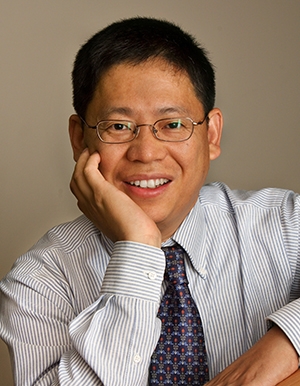
Xia is the Brock Family Chair and Georgia Research Alliance (GRA) Eminent Scholar in Nanomedicine in the Wallace H. Coulter Department of Biomedical Engineering at Georgia Institute of Technology and Emory University, with joint appointments in School of Chemistry and Biochemistry, and School of Chemical and Biomolecular Engineering. Professor Xia received his Ph.D. degree in Physical Chemistry from Harvard University (with Professor George M. Whitesides) in 1996, his M.S. degree in Inorganic Chemistry from University of Pennsylvania (with the late Professor Alan G. MacDiarmid, a Nobel Laureate in Chemistry, 2000) in 1993, and his B.S. degree in Chemical Physics from the University of Science and Technology of China (USTC) in 1987. He came to the United States of America in 1991. Xia has received a number of prestigious awards, including the 2013 Nano Today Award, the ACS National Award in the Chemistry of Materials (2013), Fred Kavli Distinguished Lecture in Nanoscience at the MRS Spring Meeting (2013), AIMBE Fellow (2011), MRS Fellow (2009 ), NIH Director's Pioneer Award (2006), ACS Leo Hendrik Baekeland Award (2005), Camille Dreyfus Teacher Scholar (2002), David and Lucile Packard Fellowship in Science and Engineering (2000), Alfred P. Sloan Research Fellow (2000), NSF Early Career Development Award (2000), ACS Victor K. LaMer Award (1999), and Camille and Henry Dreyfus New Faculty Award (1997). Xia has been an Associate Editor of Nano Letters since 2002, and has served on the Advisory Boards of Particle & Particle Systems Characterization (2013-), Chemical Physics Letters (2013-), Chemistry: A European Journal (2013-), Chinese Journal of Chemistry (2013-), Angewandte Chemie International Edition (2011-), Advanced Healthcare Materials (2011-, inaugural chairman of the advisory board), Accounts of Chemical Research (2010-), Cancer Nanotechnology (2010-), Chemistry: An Asian Journal (2010-), Journal of Biomedical Optics (2010-), Nano Research (2009-), Science of Advanced Materials (2009-), Nano Today (2006-), Chemistry of Materials (2005-2007), Langmuir (2005-2010, 2013-2015), International Journal of Nanotechnology (2004-), and Advanced Functional Materials (2001-). He has also served as a Guest Editor of special issues for Advanced Materials (six times), Advanced Functional Materials (one time), MRS Bulletin (one time), and Accounts of Chemical Research (one time).

GRA Eminent Scholar in Nanomedicine, Wallace H. Coulter Department of Biomedical Engineering
Professor, Wallace H. Coulter Department of Biomedical Engineering
Brock Family Chair, Wallace H. Coulter Department of Biomedical Engineering
Professor, School of Chemistry and Biochemistry, and School of Chemical and Biomolecular Engineering
Phone
404.385.3209
Office
MSE 3100J
Additional Research
Catalysis; Nanomedicine; Bio-Inspired Materials; Tissue Engineering
Google Scholar
https://scholar.google.com/citations?hl=en&user=3gDWh4gAAAAJ&view_op=list_works&sortby=pubdate
Nanocages Lab
Younan
Xia
Show Regular Profile

Minoru Shinohara

Minoru  Shinohara
shinohara@gatech.edu
Departmental Profile Page

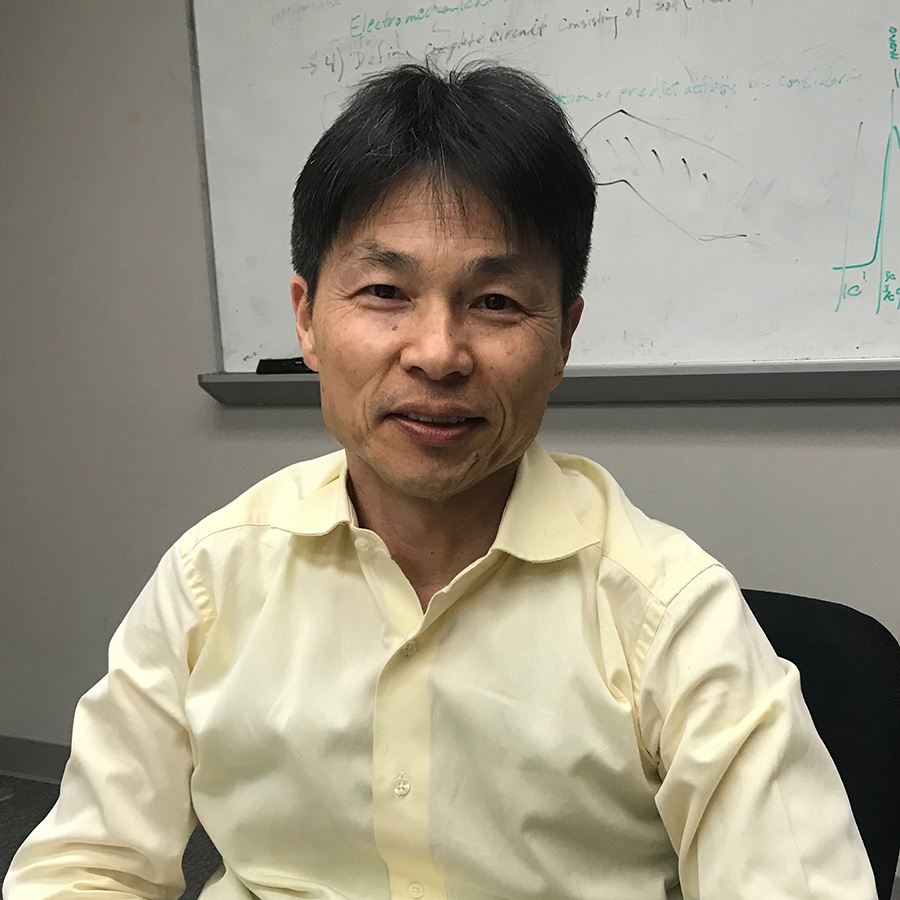
Physiological and biomechanical mechanisms underlying fine motor skills and their adjustments and adaptations to heightened sympathetic nerve activity, aging or inactivity, space flight or microgravity, neuromuscular fatigue, divided attention, and practice in humans. He uses state-of-the-art techniques in neuroscience, physiology, and biomechanics (e.g., TMS, EEG, fMRI, single motor unit recordings, microneurography, mechanomyography, ultrasound elastography, and exoskeleton robot) in identifying these mechanisms.

Associate Professor; School of Biological Sciences
Phone
404.894.1030
Office
555 14th St | Suite 1309C
Additional Research

Neuromuscular Physiology

Google Scholar
https://scholar.google.com/citations?hl=en&user=oIbxZhIAAAAJ&view_op=list_works&sortby=pubdate
LinkedIn Human Neuromuscular Physiology Lab
Minoru
Shinohara
Show Regular Profile

H. Jerry Qi

H. Jerry Qi
qih@me.gatech.edu
Active Materials & Additive Manufacturing Lab

H. Jerry Qi is a professor and the Woodruff Faculty Fellow in the George W. Woodruff School of Mechanical Engineering at Georgia Institute of Technology. He received his bachelor degrees (dual degree), master and Ph.D. degree from Tsinghua University (Beijing, China) and a ScD degree from Massachusetts Institute of Technology (Boston, MA, USA). After one year postdoc at MIT, he joined University of Colorado Boulder as an assistant professor in 2004, and was promoted to associate professor with tenure in 2010. He joined Georgia Tech in 2014 as an associate professor with tenure and was promoted to a full professor in 2016. Qi is a recipient of NSF CAREER award (2007). He is a member of Board of Directors for the Society of Engineering Science. In 2015, he was elected to an ASME Fellow. The research in Qi's group is in the general area of soft active materials, with a focus on 1) 3D printing of soft active materials to enable 4D printing methods; and 2) recycling of thermosetting polymers. The material systems include: shape memory polymers, light activated polymers, vitrimers. On 3D printing, they developed a wide spectrum of 3D printing capability, including: multIMaTerial inkjet 3D printing, digit light process (DLP) 3D printing, direct ink write (DIW) 3D printing, and fused deposition modeling (FDM) 3D printing. These printers allow his group to develop new 3D printing materials to meet the different challenging requirements. For thermosetting polymer recycling, his group developed methods that allow 100% recycling carbon fiber reinforced composites and electronic packaging materials. Although his group develops different novel applications, his work also relies on the understanding and modeling of material structure and properties under environmental stimuli, such as temperature, light, etc, and during material processing, such as 3D printing. Constitutive model developments are typically based on the observations from experiments and are then integrated with finite element through user material subroutines so that these models can be used to solve complicated 3D multiphysics problems involving nonlinear mechanics. A notable example is their recent pioneer work on 4D printing, where soft active materials is integrated with 3D printing to enable shape change (or time in shape forming process). Recently, his developed a state-of-the-art hybrid 3D printing station, which allows his group to integrate different polymers and conduct inks into one system. Currently, his group is working on using this printing station for a variety of applications, including printed 3D electronics, printed soft robots, etc.

Professor, Woodruff School of Mechanical Engineering
Woodruff Faculty Fellow, Woodruff School of Mechanical Engineering
Phone
404.385.2457
Office
MRDC 4104
Additional Research

Additive/Advanced Manufacturing; micro and nanomechanics; Recycling; Soft Materials; Conducting Polymers

Google Scholar
https://scholar.google.com/citations?hl=en&user=JSjlLTgAAAAJ&view_op=list_works&sortby=pubdate
ME Profile Page
H. Jerry
Qi
Show Regular Profile

Mark Prausnitz

Mark Prausnitz
mark.prausnitz@chbe.gatech.edu
Center for Drug Design, Development and Delivery

Professor Mark R. Prausnitz is a Regents' Professor and the Love Family Professor in Chemical and Bimolecular Engineering in the School of Chemical & Bimolecular Engineering. He received his B.S. in 1988 from Stanford University and his Ph.D. in 1994 from the Massachusetts Institute of Technology. Professor Prausnitz and his colleagues carry out research on biophysical methods of drug delivery, which employ microneedles, ultrasound, lasers, electric fields, heat, convective forces and other physical means to control the transport of drugs, proteins, genes and vaccines into and within the body. A major area of focus involves the use of microneedle patches to apply vaccines to the skin in a painless, minimally invasive manner. In collaboration with Emory University, the Centers for Disease Control and Prevention, and other organizations, Professor Prausnitz's group is advancing microneedles from device design and fabrication through pharmaceutical formulation and pre-clinical animal studies through studies in human subjects. In addition to developing a self-administered influenza vaccine using microneedles, Professor Prausnitz is translating microneedle technology especially to make vaccination in developing countries more effective. The Prausnitz group has also developed hollow microneedles for injection into the skin and into the eye in collaboration with Emory University. In the skin, research focuses on insulin administration to human diabetic patients to increase onset of action by targeting insulin delivery to the skin. In the eye, hollow microneedles enable precise targeting of injection to the suprachoroidal space and other intraocular tissues for minimally invasive delivery to treat macular degeneration and other retinal diseases. Professor Prausnitz and colleagues also study novel mechanisms to deliver proteins, DNA and other molecules into cells. Cavitation bubble activity generated by ultrasound and by laser-excitation of carbon nanoparticles breaks open a small section of the cell membrane and thereby enables entry of molecules, which is useful for gene-based therapies and targeted drug delivery. In addition to research activities, Professor Prausnitz teaches an introductory course on engineering calculations, as well as two advanced courses on pharmaceuticals and technical communication, both of which he developed. He also serves the broader scientific and business communities as a frequent consultant, advisory board member and expert witness.

Faces of Research - Profile Article

Regents' Professor, School of Chemical and Bimolecular Engineering
J. Erskine Love Jr. Chair; Chemical and Biomolecular Engineering
Director, Center for Drug Design, Development and Delivery
Phone
404.894.5135
Office
Petit 1312
Additional Research
Micro and Nano Engineering; Nanomedicine; microneedle patches; Microfabrication; nanoparticle drug delivery
Google Scholar
http://scholar.google.com/scholar?hl=en&q=mark+prausnitz&btnG=Search&as_sdt=80001&as_ylo=&as_vis=0
ChBE Profile Page
Mark
Prausnitz
Show Regular Profile

Valeria Milam

Valeria Milam
valeria.milam@mse.gatech.edu
MSE Profile Page

Valeria Tohver Milam joined the School of Materials Science and Engineering at Georgia Institute of Technology as an assistant professor in July 2004. She received her B.S. in Materials Science and Engineering with Honors from the University of Florida in 1993. After completing her M.S. degree (1997) in MSE at the University of Illinois, Urbana-Champaign, she interned at Sandia National Laboratories. She then completed her doctoral work at UIUC studying the phase behavior, structure and properties of nanoparticle-microsphere suspensions. Experimental results suggested a novel colloidal stabilization mechanism known as nanoparticle “haloing” in which otherwise negligibly charged microspheres become effectively charge-stabilized by their surrounding shell of highly charged nanoparticles.

After finishing her Ph.D. in 2001, her postdoctoral studies at the University of Pennsylvania focused on DNA-mediated colloidal assembly. The degree of specific attraction between DNA-grafted microspheres was found to vary with sequence length, sequence concentration and ionic strength. A variety of structures such as colloidal chains, rings and satellites were formed by varying the particle size ratio and suspension composition.

Associate Professor, School of Materials Science and Engineering
Phone
404.894.2845
Office
MoSE 3100L
Additional Research

Bio-Inspired Materials; Polymers; Nanostructured Materials; Colloids; Drug Delivery

Google Scholar
https://scholar.google.com/scholar?as_q=Valeria+T+Milam
LinkedIn Marcus Center for Therapeutic Cell Characterization and Manufacturing
Valeria
Milam
T.
Show Regular Profile

Wilbur Lam

Wilbur Lam
wilbur.lam@bme.gatech.edu
BME Profile Page

Dr. Wilbur Lam received his B.A. from Rice University in 1995, his M.D. from the Baylor College of Medicine in 1999 and his Ph.D. from the University of California,San Francisco/University of California, Berkeley Joint Graduate Group in Bioengineering in 2008. He completed his Residency in Pediatrics from UCSF in 2002 and was a Postdoctoral Fellow at UC Berkeley from 2008-2010. Dr. Lam's research involves integrating microtechnology ,development, experimental hematology and oncology and clinical medicine. His interdisciplinary laboratory, comprising clinicians, engineers, and biologists, is dedicated to applying and developing micro/nanotechnologies to study, diagnose, and treat blood disorders, cancer, and childhood diseases. This unique "basement to bench to bedside" approach to biomedical research is enabled by our lab's dual locations at the Emory University School of Medicine and the Georgia Institute of Technology and our affiliations with the Children's Healthcare of Atlanta hospitals.

Professor, Wallace H. Coulter Department of Biomedical Engineering
Pediatric Hematologist/Oncologist, Children’s Healthcare of Atlanta
Professor of Pediatrics, Emory University School of Medicine
Phone
404.385.5081
Office
Marcus 3135
Additional Research

Cellular mechanics of hematologic processes and disease, microfluidics, microfabrication, BioMEMs, point-of-care diagnostics, pediatric medicine, hematology, oncology. Our interdisciplinary laboratory, comprising clinicians, engineers, and biologists, is dedicated to applying and developing micro/nanotechnologies to study, diagnose, and treat blood disorders, cancer, and childhood diseases. This unique "basement to bench to bedside" approach to biomedical research is enabled by our lab's dual locations at the Emory University School of Medicine and the Georgia Institute of Technology and our affiliations with the Children's Healthcare of Atlanta hospitals.

Google Scholar
https://scholar.google.com/citations?hl=en&user=-C3ZzToAAAAJ&view_op=list_works&sortby=pubdate
LinkedIn Lam Lab
Wilbur
Lam
A.
Show Regular Profile

YongTae (Tony) Kim

YongTae (Tony) Kim
yongtae.kim@me.gatech.edu
Personal Website

Kim joined the Woodruff School of Mechanical Engineering as an Assistant Professor in July 2013. Prior to his current appointment, he was a Postdoctoral Associate in the David H. Koch Institute for Integrative Cancer Research at MIT, where he developed biomimetic microsystems for probing nanoparticle behaviors in the inflamed endothelium and for synthesizing therapeutic and diagnostic nanomaterials. His doctorate research at CMU focused on closed-loop microfluidic control systems for lab-on-a-chip applications to biochemistry and developmental biology. Prior to his Ph.D., he was a researcher in areas of dynamics, controls, and robotics at R&D Divisions of Hyundai-Kia Motors and Samsung Electronics for six years.

Associate Professor, Woodruff School of Mechanical Engineering
Phone
404.385.1478
Office
Marcus 3134
Additional Research

Multifunctional Materials; Biosensors; Bio-MEMS; Tissue Engineering

Google Scholar
https://scholar.google.com/citations?hl=en&user=Q13X9mMAAAAJ&view_op=list_works&sortby=pubdate
Multiscale Biosystems and Multifunctional Nanomaterials Lab
YongTae (Tony)
Kim
Show Regular Profile