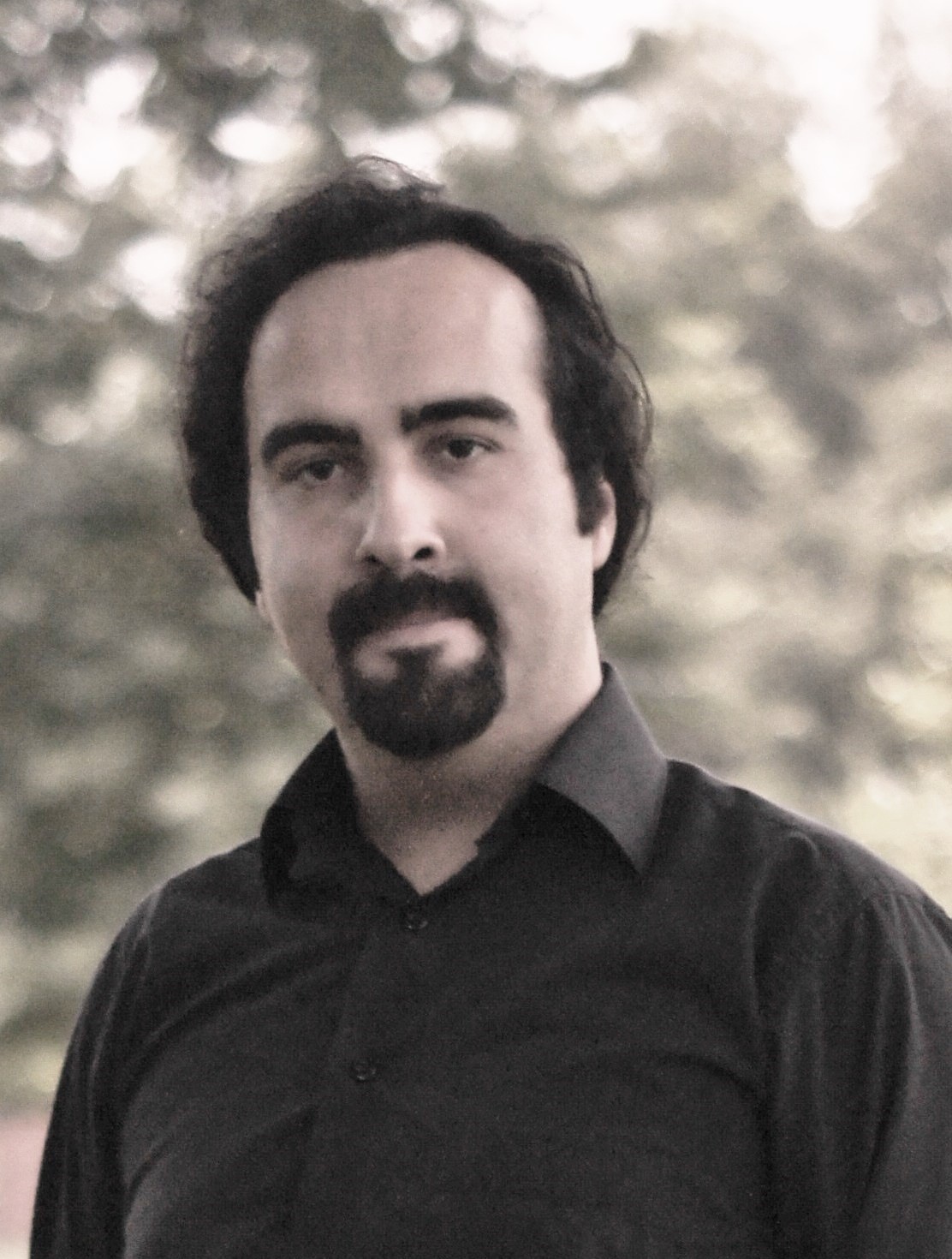
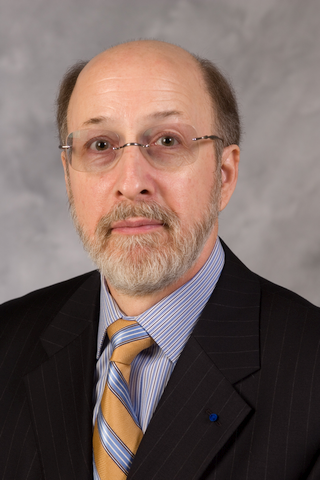
Andreas Bommarius

Andreas Bommarius's profile picture
andreas.bommarius@chbe.gatech.edu
Website

Andreas (Andy) S. Bommarius is a professor of Chemical and Biomolecular Engineering as well of Chemistry and Biochemistry at the Georgia Institute of Technology in Atlanta, GA.  He received his diploma in Chemistry in 1984 at the Technical University of Munich, Germany and his Chemical Engineering B.S. and Ph.D. degrees in 1982 and 1989 at MIT, Cambridge, MA.

From 1990-2000, he led the Laboratory of Enzyme Catalysis at Degussa (now Evonik) in Wolfgang, Germany, where his work ranged from immobilizing homogenous catalysts in membrane reactors to large-scale cofactor-regenerated redox reactions to pharma intermediates.

At Georgia Tech since 2000, his research interests cover green chemistry and biomolecular engineering, specifically biocatalyst development and protein stability studies.  His lab applies data-driven protein engineering to improve protein properties on catalysts ranging from ene and nitro reductases to cellobiohydrolases.  Bommarius has guided the repositioning of the curriculum towards Chemical and Biomolecular Engineering by developing new courses in Process Design, Biocatalysis and Metabolic Engineering, as well as Drug Design, Development, and Delivery (D4), an interdisciplinary course with Mark Prausnitz.

Andy Bommarius in 2008 became a Fellow of the American Institute of Medical and Biological Engineering.  Since 2010, he is Director of the NSF-I/UCR Center for Pharmaceutical Development (CPD), a Center focusing on process development, drug substance and product stability, and novel analytical methods for the characterization of drug substances and excipients.

Professor, School of Chemical and Biomolecular Engineering, School of Chemistry and Biochemistry
RBI Initiative Lead: A Renewables-based Economy from WOOD (ReWOOD)
Phone
404-385-1334
Office
EBB 5018
Additional Research

Biomolecular engineering, especially biocatalysis, biotransformations, and biocatalyst stability. Biofuels. Enzymatic Processing; Biochemicals; Chip Activation.
Google Scholar
https://scholar.google.com/citations?user=rH4O5RQAAAAJ&hl=en&oi=ao
LinkedIn Related Site

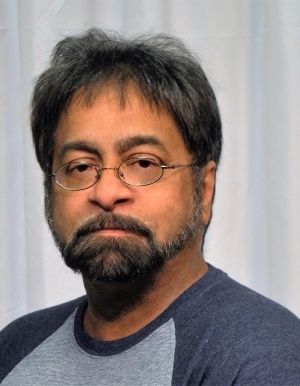
Russell Dupuis

Russell Dupuis's profile picture
dupuis@gatech.edu
ECE Profile Page

Russell D. Dupuis earned all of his academic degrees from the University of Illinois at Urbana-Champaign. He received his bachelor's degree with "Highest Honors-Bronze Tablet" in 1970. He received his master's in electrical engineering in 1971, and his Ph.D. in 1973. His alma mater has honored him with the University of Illinois Alumni Loyalty Award, and the Distinguished Alumnus Award. Dupuis worked at Texas Instruments from 1973 to 1975. In 1975, he joined Rockwell International where he was the first to demonstrate that MOCVD could be used for the growth of high-quality semiconductor thin films and devices. He joined AT&T Bell Laboratories in 1979 where he extended his work to the growth of InP-InGaAsP by MOCVD. In 1989 he became a chaired professor at the University of Texas at Austin. In August 2003, he was appointed Steve W. Chaddick Chair in Electro-Optics at Georgia Tech in ECE. He is currently studying the growth of III-V compound semiconductor devices by MOCVD, including materials in the InAlGaN/GaN, InAlGaAsP/GaAs, InAlGaAsSb, and InAlGaAsP/InP systems.

Professor and Steve W. Chaddick Endowed Chair, School of Electrical and Computer Engineering
Georgia Research Alliance Eminent Scholar
Phone
404.385.6094
Office
BH 201
Additional Research

Optical Materials, III-V semiconductor devices, epitaxial growth, ultra-dense and ultra-fast optical, interconnects

Chaitanya Deo

Chaitanya Deo's profile picture
chaitanya.deo@nre.gatech.edu
Website

Dr. Deo came to Georgia Tech in August 2007 as an Assistant Professor of Nuclear and Radiological Engineering. Prior, he was a postdoctoral research associate in the Materials Science and Technology Division of the Los Alamos National Laboratory. He studied radiation effects in structural materials (iron and ferritic steels) and nuclear fuels (uranium dioxide). He also obtained research experience at Princeton University (Mechanical Engineering), Lawrence Livermore National Laboratory, and Sandia National Laboratories.

Professor, Woodruff School of Mechanical Engineering
Phone
(404) 385.4928
Additional Research

Nuclear; Thermal Systems; Materials In Extreme Environments; computational mechanics; Materials Failure and Reliability; Ferroelectronic Materials; Materials Data Sciences

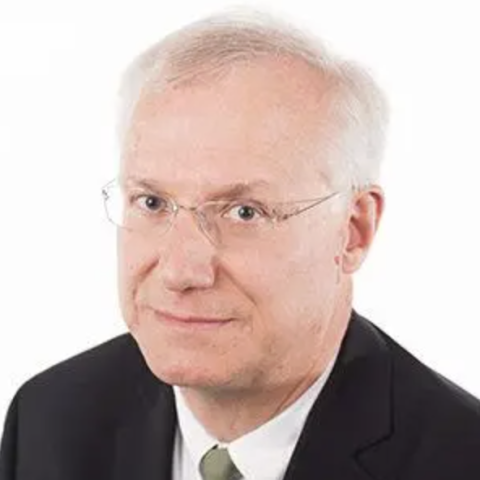
Baratunde (Bara) Cola

Baratunde (Bara) Cola's profile picture
baratunde.cola@me.gatech.edu
Profile Page

Baratunde A. Cola is a professor in the George W. Woodruff School of Mechanical Engineering and the School of Materials Science and Engineering at the Georgia Institute of Technology. He received his degrees from Vanderbilt University and Purdue University, all in mechanical engineering, and was a starting fullback on the Vanderbilt football team as an undergrad. Cola has received a number of prestigious early career research awards including the Presidential Early Career Award for Scientist and Engineers (PECASE) in 2012 from President Obama for his work in nanotechnology, energy, and outreach to high school art and science teachers and students; the AAAS Early Career Award for Public Engagement with Science in 2013; and the 2015 Bergles-Rohsenow Young Investigator Award in Heat Transfer from the American Society of Mechanical Engineers. In addition to research and teaching, Cola is the founder and CEO of Carbice Corporation, which sells a leading thermal management solution for the global electronics industry.

Professor, Woodruff School of Mechanical Engineering
Phone
404.385.8652
Office
Love 316
Additional Research

Carbon Nanotubes; Electronic Materials; Heat Transfer; Integrated Photonics; Nanoelectronics

Google Scholar
https://scholar.google.com/citations?hl=en&user=KsK93bMAAAAJ&view_op=list_works&sortby=pubdate
NEST Lab

Saïd Abdel-Khalik

Saïd Abdel-Khalik's profile picture
said.abdelkhalik@me.gatech.edu
Website

Abdel-Khalik joined the Georgia Tech faculty as the Georgia Power Distinguished Professor in 1987. He was appointed to his current position as the Southern Nuclear Distinguished Professor in 1993. He served as Associate Director of the Woodruff School of Mechanical Engineering between 1990 and 1992 and as the Georgia Tech Secretary of the Faculty between 2002 and 2006. He served as a member of the USNRC Advisory Committee on Reactor Safeguards (ACRS) between 2006 and 2012, including two years as Chairman (2009-2011).  Prior to joining the Georgia Tech faculty, Abdel-Khalik served as a faculty member in the Nuclear Engineering and Engineering Physics Department (1976-1987) and as a Postdoctoral Fellow in Chemical Engineering (1973-1975) at the University of Wisconsin-Madison. Abdel-Khalik also served as a Senior Engineer at Babcock and Wilcox Nuclear Power Generation Division (1975); as a Guest Research Scientist at the Nuclear Research Center in Karlsruhe, Germany (1979); and as an Invited Professor at EPFL, Lausanne, Switzerland (1982).

Abdel-Khalik currently serves as a member of the External Advisory Boards for the School of Nuclear Engineering at Purdue University and the Mechanical Engineering Department of King Saud University in Riyadh, Saudi Arabia. He also serves as a member of the Board of Trustees for Badr University in Cairo, Egypt.

Professor, Woodruff School of Mechanical Engineering
Southern Nuclear Distinguished Professor
Phone
(404) 894-3719
Additional Research

Thermal Systems; Nuclear

University, College, and School/Department

Alexander Alexeev

Alexander Alexeev's profile picture
alexander.alexeev@me.gatech.edu
Website

Dr. Alexeev came to Georgia Tech at the beginning of 2008 as an assistant professor. His research background is in the area of fluid mechanics. He uses computer simulations to solve engineering problems in complex fluids, multiphase flows, fluid-structure interactions, and soft materials. As a part of his graduate research at Technion, he investigated resonance oscillations in gases and probed how periodic shock waves excited at resonance can enhance agglomeration of small airborne particles, a process which is important in air pollution control technology. He also investigated wave propagation in vibrated granular materials and its effect on fluidization of inelastic granules. During postdoctoral studies at TU Darmstadt, he examined how microstructures on heated walls can be harnessed to control thermocapillary flows in thin liquid films and to enhance heat transport in the fluid. That could be beneficial in many practical applications, especially in microgravity. At the University of Pittsburgh, he studied the motion of micrometer-sized, compliant particles on patterned substrates to develop efficient means of controlling movement of such particles in microfluidic devices. Such substrates are needed to facilitate various biological assays and tissue engineering studies dealing with individual cells.

Professor, Woodruff School of Mechanical Engineering
Additional Research
  • Computational Fluid Mechanics
Research Focus Areas

Michael Filler

Michael Filler's profile picture
michael.filler@chbe.gatech.edu
ChBE Profile Page

Michael Filler is a professor and the Traylor Faculty Fellow in the School of Chemical and Biomolecular Engineering at the Georgia Institute of Technology. He earned his undergraduate and graduate degrees from Cornell University and Stanford University, respectively, prior to completing postdoctoral studies at the California Institute of Technology. Filler has been recognized for his research and teaching with the National Science Foundation CAREER Award, Georgia Tech Sigma Xi Young Faculty Award, CETL/BP Junior Faculty Teaching Excellence Award, and AVS Dorothy M. and Earl S. Hoffman Award. Filler also heads Nanovation, a forum to address the big questions, big challenges, and big opportunities of nanotechnology.

Professor and Traylor Faculty Fellow, School of Chemical and Biomolecular Engineering
Director, The Filler Lab
Phone
404.894.0430
Office
Marcus 2135
Additional Research

Integrated photonics, carbon nanotubes, nanomanufacturing, thermal management, silicon devices

Google Scholar
https://scholar.google.com/citations?hl=en&user=5nt6qx8AAAAJ&view_op=list_works&sortby=pubdate
The Filler Lab

Andrei Fedorov

Andrei Fedorov's profile picture
AGF@gatech.edu
Fedorov Lab

Fedorov's background is in thermal/fluid sciences, chemical reaction engineering as well as in applied mathematics. His laboratory works at the intersection between mechanical and chemical engineering and solid state physics and analytical chemistry with the focus on portable/ distributed power generation with synergetic CO2 capture; thermal management of high power dissipation devices and electronics cooling; special surfaces and nanostructured interfaces for catalysis, heat and moisture management; and development of novel bioanalytical instrumentation and chemical sensors. Fedorov joined Georgia Tech in 2000 as an assistant professor after finishing his postdoctoral work at Purdue University.

Professor and Rae S. and Frank H. Neely Chair, Woodruff School Mechanical Engineering
Associate Chair for Graduate Studies, School Mechanical Engineering
Director, Fedorov Lab
Phone
404.385.1356
Office
Love 307
Additional Research

Heat Transfer; power generation; CO2 Capture; Catalysis; fuel cells; "Fedorov's research is at the interface of basic sciences and engineering. His research portfolio is diverse, covering the areas of portable/ distributed power generation with synergetic carbon dioxide management, including hydrogen/CO2 separation/capture and energy storage, novel approaches to nanomanufacturing (see Figure), microdevices (MEMS) and instrumentation for biomedical research, and thermal management of high performance electronics. Fedorov's research includes experimental and theoretical components, as he seeks to develop innovative design solutions for the engineering systems whose optimal operation and enhanced functionality require fundamental understanding of thermal/fluid sciences. Applications of Fedorov's research range from fuel reformation and hydrogen generation for fuel cells to cooling of computer chips, from lab-on-a-chip microarrays for high throughput biomedical analysis to mechanosensing and biochemical imaging of biological membranes on nanoscale. The graduate and undergraduate students working with Fedorov's lab have a unique opportunity to develop skills in a number of disciplines in addition to traditional thermal/fluid sciences because of the highly interdisciplinary nature of their thesis research. Most students take courses and perform experimental and theoretical research in chemical engineering and applied physics. Acquired knowledge and skills are essential to starting and developing a successful career in academia as well as in many industries ranging from automotive, petrochemical and manufacturing to electronics to bioanalytical instrumentation and MEMS."

Google Scholar
https://scholar.google.com/citations?hl=en&user=_X-PrRkAAAAJ&view_op=list_works&sortby=pubdate
LinkedIn ME Profile Page

Alper Erturk

Alper Erturk's profile picture
alper.erturk@me.gatech.edu
Smart Structures & Dynamical Systems Laboratory

Erturk began at Georgia Tech in May 2011 as an Assistant Professor, he was promoted to Associate Professor with tenure in 2016 and became a full Professor in 2019. Prior to joining Georgia Tech, he worked as a Research Scientist in the Center for Intelligent Material Systems and Structures at Virginia Tech (2009-2011). His postdoctoral research interests included theory and experiments of smart structures for applications ranging from aeroelastic energy harvesting to bio-inspired actuation. His Ph.D. dissertation (2009) was centered on experimentally validated electromechanical modeling of piezoelectric energy harvesters using analytical and approxIMaTe analytical techniques. Prior to his Ph.D. studies in Engineering Mechanics at Virginia Tech, Erturk completed his M.S. degree (2006) in Mechanical Engineering at METU with a thesis on analytical and semi-analytical modeling of spindle-tool dynamics in machining centers for predicting chatter stability and identifying interface dynamics between the assembly components.

Woodruff Professor, Woodruff School of Mechanical Engineering
Phone
404.385.1394
Office
Love 126
Additional Research

Structural Dynamics; Vibrations; Smart Materials & Structures; Energy Harvesting; Acoustic Metamaterials; Acoustics and Dynamics; Smart materials; Piezoelectronic Materials; Metamaterials; Energy Harvesting

Research Focus Areas
Google Scholar
https://scholar.google.com/citations?hl=en&user=OwypZqcAAAAJ&view_op=list_works&sortby=pubdate
ME Profile Page

Suresh Menon

Suresh Menon's profile picture
suresh.menon@aerospace.gatech.edu
Website

Professor Menon joined Flow Industries, Kent, Washington, as a research scientist, and in 1988, became a senior scientist and program manager for the computational fluid dynamics group in Quest Integrated, Inc. (formerly called Flow Research, Inc.). At Quest, Menon led research teams in various research projects such as the active control of combustion instability in ramjet engines, supersonic mixing studies, vertical takeoff and landing (VTOL) aircraft fluid dynamics, and hypersonic reentry problems. In 1992, he joined Georgia Institute of Technology as an associate professor and became a professor in 1997. He is currently the Hightower Professor of Engineering in Georgia Tech. Professor Menon is a world renowned expert in large-eddy simulation of turbulent reacting and non-reacting flows and has developed unique simulation capabilities to study pollutant formation, ozone depletion in high-altitude aircraft jet plumes and combustion in gas turbine and ramjet engines. He has been (and is currently) a principal investigator for a wide range of research projects funded by NASA, Department of Energy, Air Force Office of Scientific Research, Office of Naval Research, Defense Threat Reduction Agency. His work has been (and is also) supported by many industries including General Electric, Pratt & Whitney, Solar Turbines, Boeing, Safran (France), Hyundai (S. Korea), JAXA (Japan), IHI (Japan) and Rocketdyne-Aerojet. He has published and/or presented over 395 papers. Professor Menon is a Fellow of AAAS, Associate Fellow of AIAA, and a member of the American Physical Society, the American Society of Mechanical Engineers, the Combustion Institute and the Sigma Xi. He is a peer reviewer for numerous archival journals, NASA, NSF, DoD and DOE research proposals.

Professor, Guggenheim School of Aerospace Engineering
Phone
(404) 894-9126
Additional Research
  • Combustion
  • Data Driven Discovery
  • Energy Generation
  • Energy Storage, and Distribution