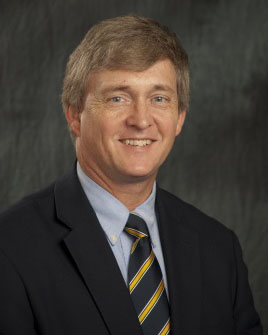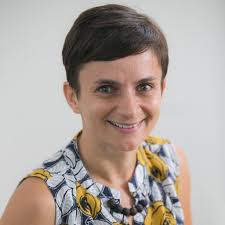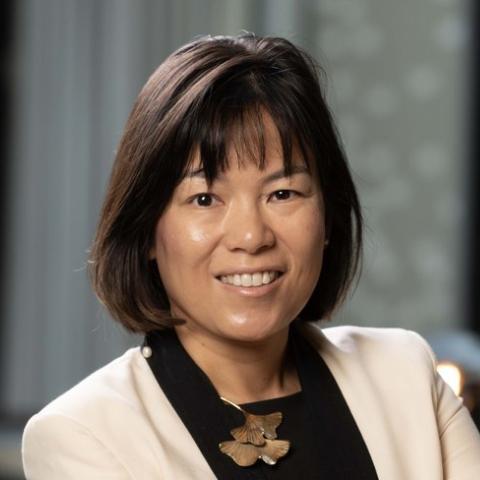
Gregory Abowd

Gregory Abowd's profile picture
dean@coe.northeastern.edu
Website

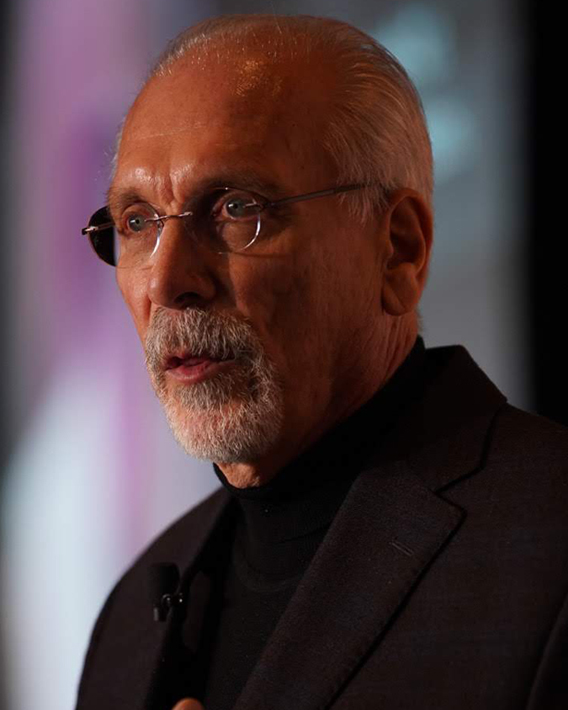
Gregory D. Abowd is Dean of the College of Engineering and Professor of Electrical and Computer Engineering at Northeastern University. Prior to joining Northeastern in March 2021, he was a Regents’ Professor and held the J.Z. Liang Chair in the School of Interactive Computing at the Georgia Institute of Technology, where he also served as Associate Dean of Research and Space for the College of Computing. Abowd is an internationally renowned and highly cited scientist, well known for his contributions in the general area of Human-Computer Interaction (HCI) and specifically for his groundbreaking research in ubiquitous computing.

In more than 26 years at Georgia Tech, Dr. Abowd initiated bold and innovative research efforts, such as Classroom 2000 and the Aware Home, as well as pioneering innovations in autism and technology, health systems, CampusLife, and a joint initiative with engineering in computational materials. He was on the founding editorial board of IEEE Pervasive Computing Magazine, and was founding Editor-in-Chief of Foundations and Trends in HCI and The Proceedings of the ACM in Interactive, Mobile, Wearable, and Ubiquitous Technologies. He also founded the non-profit Atlanta Autism Consortium in 2008 to serve and unite the various stakeholder communities in Atlanta connected to autism research and services.

Dean Abowd’s contributions to the fields of Human-Computer Interaction and Ubiquitous Computing have been recognized through numerous awards. In 2008, he was named a Fellow of the Association for Computing Machinery. That same year, he was inducted into the ACM CHI Academy, the most prestigious honor for researchers in HCI. In 2009, he received the ACM Eugene Lawler Humanitarian Award for his work in autism and technology. As of 2020, he graduated 30 Ph.D. students, 20 of whom have gone on to successful careers at top universities around the world.

Dr. Abowd received the degree of B.S. in Honors Mathematics in 1986 from the University of Notre Dame. He then attended the University of Oxford in the United Kingdom on a Rhodes Scholarship, earning the degrees of M.Sc. (1987) and D.Phil. (1991) in Computation from the Programming Research Group in the Computing Laboratory. From 1989-1992 he was a Research Associate/Postdoc with the Human-Computer Interaction Group in the Department of Computer Science at the University of York in England. From 1992-1994, he was a Postdoctoral Research Associate with the Software Engineering Institute and the Computer Science Department at Carnegie Mellon University.

Dean of the College of Engineering, Northeastern University
Additional Research
Data Security & Privacy; Healthcare Security; Human-Computer Interaction; Ubiquitous Computing; Software Engineering
IRI And Role

Carl DiSalvo

Carl DiSalvo's profile picture
carl.disalvo@lmc.gatech.edu
Website

Carl DiSalvo is an Associate Professor in the Digital Media Program in the School of Literature, Media, and Communication at the Georgia Institute of Technology. At Georgia Tech he directs the Public Design Workshop: a design research studio that explores socially engaged design and civic media. 

DiSalvo is also co-director of the Digital Interdisciplinary Liberal Arts Center and its Digital Civics initiative, funded by the Mellon Foundation, and he leads the Serve-Learn-Sustain Fellows program, which brings together faculty, staff, students, and community partners to explore pressing social research themes (the 2016-2017 themes are Smart Cities and Food, Energy, Water, Systems). He has a courtesy appointment in the School of Interactive Computing and is an affiliate of the GVU Center and the Center for Urban Innovation.  DiSalvo also coordinates the Digital Media track of the interdisciplinary M.S. in Human-Computer Interaction. 

DiSalvo’s scholarship draws together theories and methods from design research and design studies, the social sciences, and the humanities, to analyze the social and political qualities of design, and to prototype experimental systems and services. Current research domains include civics, smart cities, the Internet of Things, food systems, and environmental monitoring. Across these domains, DiSalvo is interested in how practices of participatory and public design work to articulate issues and provide resources for new forms of collective action.  

Areas of Expertise:

  • Civic Media
  • Design
  • Design Studies
  • Digital Civics
  • Food Systems
  • Public And Civic IoT
  • Smart Cities
Associate Professor, School of Literature, Media, and Communication
Director, Public Design Workshop
Office
TSRB 328
Additional Research

Design; Sustainability and Design; Design and the Humanities; New Media Art/Art and Technology; Public Enagagement with Technology; Participatory Media/Participatory Culture; Design and Culture/Society
Google Scholar
https://scholar.google.com/citations?hl=en&user=YR1EmaAAAAAJ&view_op=list_works&sortby=pubdate
Public Design Workshop

Rich DeMillo

Rich DeMillo's profile picture
rad@gatech.edu
www.demillo.com

Richard DeMillo is the Charlotte B. and Roger C. Warren Professor of Computing at Georgia Tech. He was formerly the John P. Imlay Dean of Computing. Positions he has held prior to joining Georgia Tech include: Chief Technology Officer for Hewlett-Packard, Vice President of Computing Research for Bell Communications Research, Director of the Computer Research Division for the National Science Foundation, and Director of the Software Test and Evaluation Project for the Office of the US Secretary of Defense. He has also held faculty positions at the University of Wisconsin, Purdue University and the University of Padua, Italy. His research includes over 100 articles, books and patents in algorithms, software and computer engineering, cryptography, and cyber security. In 1982, he wrote the first policy for testing software intensive systems for the US Department of Defense. DeMillo and his collaborators launched and developed the field of program mutation for software testing. He is a co-inventor of Differential Fault Cryptanalysis and holds what is believed to be the only patent on breaking public key cryptosystems. He currently works in the area of election and voting system security. His work has been cited in court cases, including a 2019 Federal Court decision declaring unconstitutional the use of paperless voting machines. He has served as a foreign election observer for the Carter Center and is a member of the State of Michigan Election Security Commission. He has served on boards of public and private cybersecurity and privacy companies, including RSA Security and SecureWorks. He has served on many non-profit and philanthropic boards including the Exploratorium and the Campus Community Partnership Foundation (formerly the Rosalind and Jimmy Carter Foundation). He is a fellow of both the Association for Computing Machinery and the American Association for the Advancement of Science. In 2010, he founded the Center for 21st Century Universities, Georgia Tech’s living laboratory for fundamental change in higher education. He served as Executive Director for ten years. He was named Lumina Foundation Fellow for his work in higher education. His 2015 book Revolution in Higher Education, published by MIT Press, won the Best Education Book award from the American Association of Publishers and helped spark a national conversation about online education.  He co-chaired Georgia Tech’s Commission on Creating the Next in Education.  The Commission’s report was released in 2018. He received the ANAK Society’s Outstanding Faculty Member Award.

Professor
Phone
404-385-4273
Office
CODA 0962B
Additional Research
Algorithms; Computer Engineering; Architecture & Design; Data Security & Privacy; Encryption; Network Security; Software & Applications
University, College, and School/Department

W. Hong Yeo

W. Hong Yeo's profile picture
woonhong.yeo@me.gatech.edu
ME Profile Page

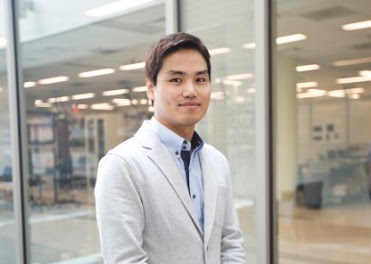
Dr. Yeo holds the titles of G.P. "Bud" Peterson and Valerie H. Peterson Endowed Professor, as well as Harris Saunders Jr. Endowed Professor, in the Woodruff School of Mechanical Engineering and the Coulter Department of Biomedical Engineering at Georgia Tech. He is also the director of the Wearable Intelligent Systems and Healthcare Center (WISH Center) and the KIAT-Georgia Tech Semiconductor Electronics Center (K-GTSEC). Dr. Yeo's research focuses on understanding the fundamentals of soft materials, deformable mechanics, interfacial physics, manufacturing, and the integration of hard and soft materials for the development of biomedical systems. He earned his Ph.D. in mechanical engineering and genome sciences from the University of Washington in Seattle and subsequently worked as a postdoctoral research fellow at the University of Illinois at Urbana-Champaign. With over 180 peer-reviewed publications, Dr. Yeo has contributed to many prestigious journals, including Nature Materials, Nature Machine Intelligence, Nature Communications, and Science Advances. He is an IEEE Senior Member and has received numerous awards, including the Visiting Professorship from the Institute Jean Lamour at the Université de Lorraine in France, the Lucy G. Moses Lectureship Award at the Mount Sinai School of Medicine, the NIH Trailblazer Young Investigator Award, the IEEE Outstanding Engineer Award, the Emory School of Medicine Research Award, the Imlay Innovation Award, the American Heart Association Innovative Project Award, the Sensors Young Investigator Award, the Med-X Young Investigator Award, and the Outstanding Service Award from the Korea Institute for Advancement of Technology, as well as the Outstanding Yonsei Scholar Award. Dr. Yeo is also the founder of two startup companies: Huxley Medical, Inc. and WisMedical, Inc.

Professor, Woodruff School of Mechanical Engineering
Faculty, Wallace H. Coulter Department of Biomedical Engineering
Director, WISH Center
Phone
404.894.9425
Office
Marcus Nano 4133
Additional Research

Human-machine interface; hybrid materials; bio-MEMS; Soft robotics. Flexible Electronics; Human-machine interface; hybrid materials; Electronic Systems, Devices, Components, & Packaging; bio-MEMS; Soft robotics. Yeo's research in the field of biomedical science and bioengineering focuses on the fundamental and applied aspects of biomolecular interactions, soft materials, and nano-microfabrication for the development of nano-biosensors and soft bioelectronics.

Google Scholar
https://scholar.google.com/citations?hl=en&user=ryhsv18AAAAJ&view_op=list_works&sortby=pubdate
Bio-Interfaced Translational Nanoengineering Group Wearable Intelligent Systems and Healthcare Center (WISH Center)

Jeff Evans

Jeff Evans's profile picture
jeff.evans@gtri.gatech.edu

Jeff Evans is a researcher with the Information Communication Laboratory (ICL) at the Georgia Tech Research Institute (GTRI), where researchers work to solve complex problems in computer science, information technology, communications, networking and sociotechnical systems. Customers have included those in the Department of Defense (DoD), emergency response and health care systems spaces. Evans’ research has focused primarily on modes of communications in emerging technologies, particularly wireless systems, and he is involved as a project director for several advanced network and multimedia communications programs. One of his main research foci involves ensuring applications’ performance as they migrate across different networks for legacy systems and emerging, high-bandwidth access technologies. His early work developed into the Network Applications Integration Lab (NAIL) research testbed, which led to his working with campus and other labs across GTRI. After running some of ICL’s research programs in both the DoD and commercial spaces, he was asked to help launch up the first multi-disciplinary unit, the Institute for People and Technology (IPaT) at Georgia Tech in order to integrate theoretical research, basic research and to conduct applied science about the emerging technologies that directly impact people: health care, education, humanitarian systems and media. He has helped build numerous international and industry partnerships, as well as multidisciplinary “living lab” test beds. Evans helped co-found GTRI’s Foundations for the Future (F3) program, which helps to bring Georgia Tech’s expertise into the state’s K-12 classrooms. ICL also has nationally recognized initiatives that includes the FalconView™ Program, the National Information Exchange Model (NIEM) information exchange standards; communications research and antenna networks, both for troops and for evaluating IED countermeasures; emergency management technologies; and are developing a comprehensive approach to the Internet of Things.

Principal Research Engineer
Phone
404-407-8245
Additional Research
Communication Systems; Healthcare Security; Mobile & Wireless Communications
GTRI
Geogia Tech Research Institute > Cybersecurity, Information Protection, and Hardware Evaluation Research Laboratory

Brian Magerko

Brian Magerko's profile picture
magerko@gatech.edu
Website
Professor and Director of Graduate Studies in Digital Media
Additional Research
  • Artificial Intelligence
  • Interactive Narrative
  • Serious Game Design Development
  • Cognitive Architechtures
  • Intelligent Agents
  • Human-Computer Interaction
  • Educational Media
  • Improvisation
  • Cognitive Science
University, College, and School/Department

Agata Rozga

Agata Rozga's profile picture
agata@gatech.edu
Website

Agata Rozga is a psychologist with expertise and 13 years of experience forging a new interdisciplinary research area at the intersection of computing and psychology called computational behavioral science. The research vision is to transform the measurement, analysis, and understanding of health-related behaviors by leveraging advances in sensing, wearable and mobile technologies, and computational analysis methods. The ultimate goal is to develop tools that can lead to better detection, monitoring, and treatment of a variety of chronic health conditions.

One key area Dr. Rozga’s research has focused on is understanding early trajectories and predictors of social communication in children diagnosed with Autism Spectrum Disorder. In her most recent work, she is applying novel computational methods to longitudinal measures of communication behavior to understand different pathways to language in autism, including failure to acquire spoken language by age 5. Dr. Rozga’s research has recently expanded to include a focus on Mild Cognitive Impairment, with an eye toward developing novel AI-based systems to help monitor cognitive and functional decline in everyday activities, to deliver appropriate in-situ supports, and to support care networks.

Dr. Rozga serves as the Director of Translational Research for the Georgia Tech-led NSF National AI Institute for Collaborative Assistance and Responsive Interaction for Networked Groups (AI-CARING), and as the Programs and Research Director for the Technology Core of the Cognitive Empowerment Program at the Emory Brain-Health Center. She was previously the Head of Product for Diligent Robotics, https://www.diligentrobots.com/.

Research Scientist II
Phone
404-894-2304
Additional Research
  • Computational Behavioral Science
  • Health & Life Sciences
  • Machine Learning for Developmental Health

Peter Swire

Peter Swire's profile picture
peter.swire@scheller.gatech.edu
Website

Peter Swire, J.D., is Associate Director of Policy for the Institute for Information Security & Privacy. Swire has been a privacy and cyberlaw scholar, government leader, and practitioner since the rise of the Internet in the 1990's. In 2013, he became the Nancy J. and Lawrence P. Huang Professor of Law and Ethics at the Georgia institute of Technology. Swire teaches in the Scheller College of Business, with appointments by courtesy with the College of Computing and School of Public Policy. He is senior counsel with the law firm of Alston & Bird LLP. Swire served as one of five members of President Obama's Review Group on Intelligence and Communications Technology. Prior to that, he was co-chair of the global Do Not Track process for the World Wide Web Consortium. He is a senior fellow with the Future of Privacy Forum, and a policy fellow with the Center for Democracy and Technology. Under President Clinton, Swire was the chief counselor for privacy in the U.S. Office of Management and Budget -- the only person to date to have U.S. government-wide responsibility for privacy policy. In that role, his activities included being White House coordinator for the HIPAA medical privacy rule, chairing a White House task force on how to update wiretap laws for the Internet age, and helping negotiate the U.S.-E.U. Safe Harbor agreement for trans-border data flows.Under President Obama, he was special assistant to the President for economic policy. Swire is author of five books and numerous scholarly papers. He has testified often before the Congress, and been quoted regularly in the press. He has served on privacy and security advisory boards for companies including Google, IBM, Intel, and Microsoft, as well as a number of start-ups. Swire graduated from Princeton University, summa cum laude, and the Yale Law School, where he was an editor of the Yale Law Journal.

Associate Director, Policy
Phone
404-385-3279
Office
Scheller 4163
Additional Research
Data Security & Privacy
Research Focus Areas
University, College, and School/Department

Nicoleta Serban

Nicoleta Serban's profile picture
nicoleta.serban@isye.gatech.edu
Departmental Bio

Nicoleta Serban is the Peterson Professor of Pediatric Research in the H. Milton Stewart School of Industrial and Systems Engineering at Georgia Tech.

Dr. Serban's most recent research focuses on model-based data mining for functional data, spatio-temporal data with applications to industrial economics with a focus on service distribution and nonparametric statistical methods motivated by recent applications from proteomics and genomics. 

She received her B.S. in Mathematics and an M.S. in Theoretical Statistics and Stochastic Processes from the University of Bucharest. She went on to earn her Ph.D. in Statistics at Carnegie Mellon University.

Dr. Serban's research interests on Health Analytics span various dimensions including large-scale data representation with a focus on processing patient-level health information into data features dictated by various considerations, such as data-generation process and data sparsity; machine learning and statistical modeling to acquire knowledge from a compilation of health-related datasets with a focus on geographic and temporal variations; and integration of statistical estIMaTes into informed decision making in healthcare delivery and into managing the complexity of the healthcare system.

Professor
Virginia C. and Joseph C. Mello Professor
Phone
404-385-7255
Office
Groseclose 438
Additional Research
  • Data Mining
  • Health Analytics
  • Health Systems
  • Platforms and Services
  • Statistics
LinkedIn Laboratory Site

Alain Louchez

Alain Louchez's profile picture
alain.louchez@gatech.edu
Website

Alain Louchez is the Managing Director of the Center for the Development and Application of Internet of Things Technologies (CDAIT pronounced sedate) in charge of directing the Internet of Things (IoT)-related development efforts across the Georgia Institute of Technology (Georgia Tech).  He is a member of the Advisory Council of the Georgia Tech Center for International Business Education and Research (CIBER) and the Georgia Tech Lorraine (European campus) Advisory Board.

Prior to joining Georgia Tech, he held various executive positions including Vice President for BellSouth (now AT&T) Europe; Executive Director of BellSouth France, and General Manager of GTE/Verizon Media Ventures’ wireless video operations in Hawaii. Most recently, he was Vice President of Strategic Management at Numerex, a company focused on machine-to-machine communications (M2M). He was instrumental in the development of the M2M Standardization Task Force at the Global Standards Collaboration.

Alain served on the board of directors of France Telecom Mobiles Data (France Telecom’s wireless data subsidiary); Cofira (Videndi’s founding parent of SFR, France’s second largest telecommunications operator); Com-Dev (a subsidiary of the Caisse des Dépôts et Consignations group in charge of cable TV), SINEDI/Com-Dev Images (a holding company dedicated to investments in some French thematic TV channels such as Canal J, Planète, CinéCinéma, etc.) and Datech (BellSouth’s French direct marketing subsidiary).

Principal Research Associate
Additional Research

Internet of Things

GTRI
Geogia Tech Research Institute