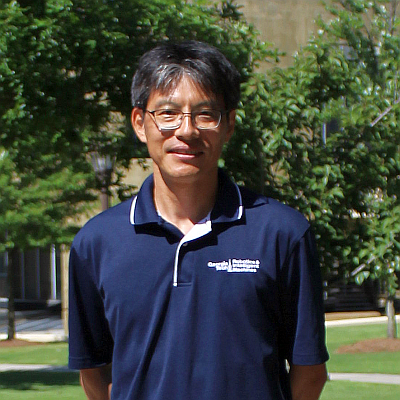
Omer Inan

Omer Inan
omer.inan@ece.gatech.edu
INAN RESEARCH LAB

Omer T. Inan received his B.S., M.S., and Ph.D. degrees in Electrical Engineering from Stanford University in 2004, 2005, and 2009, respectively.

He worked at ALZA Corporation in 2006 in the Drug Device Research and Development Group. From 2007-2013, he was chief engineer at Countryman Associates, Inc., designing and developing several high-end professional audio products. From 2009-2013, he was a visiting scholar in the Department of Electrical Engineering at Stanford. In 2013, he joined the School of ECE at Georgia Tech as an assistant professor.

Inan is generally interested in designing clinically relevant medical devices and systems, and translating them from the lab to patient care applications. One strong focus of his research is in developing new technologies for monitoring chronic diseases at home, such as heart failure.

He and his wife were both varsity athletes at Stanford, competing in the discus and javelin throw events respectively.

Professor, School of Electrical and Computer Engineering
Linda J. and Mark C. Smith Chair, School of Electrical and Computer Engineering
Phone
404.385.1724
Office
TSRB 417
Additional Research

Medical devices for clinically-relevant applicationsNon-invasive physiological monitoringHome monitoring of chronic diseaseCardiomechanical signalsMedical instrumentation
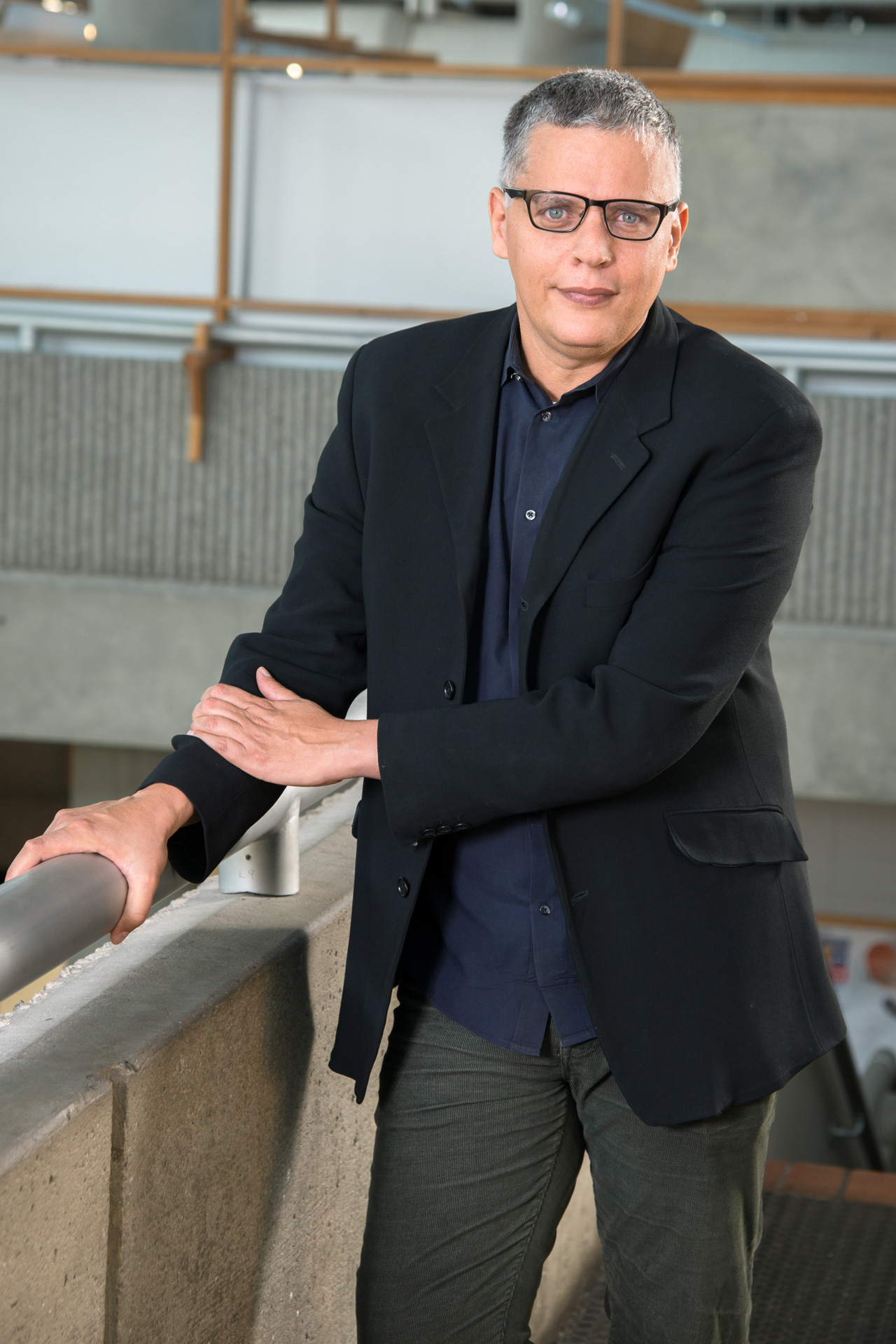

Google Scholar
https://scholar.google.com/citations?hl=en&user=CURXz5UAAAAJ&view_op=list_works&sortby=pubdate
LinkedIn ECE Profile Page
Omer
Inan
T.
Show Regular Profile

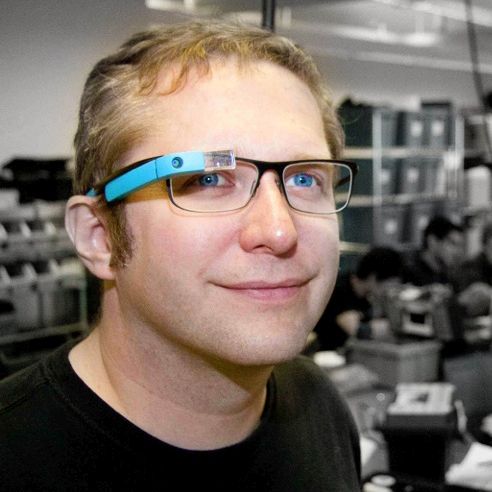
Gil Weinberg

Gil Weinberg
gilw@gatech.edu
School of Music Profile Page

Gil Weinberg is a professor and the founding director of Georgia Tech Center for Music Technology, where he leads the Robotic Musicianship group. His research focuses on developing artificial creativity and musical expression for robots and augmented humans. Among his projects are a marimba playing robotic musician called Shimon that uses machine learning for Jazz improvisation, and a prosthetic robotic arm for amputees that restores and enhances human drumming abilities. Weinberg presented his work worldwide in venues such as The Kennedy Center, The World Economic Forum, Ars Electronica, Smithsonian Cooper-Hewitt Museum, SIGGRAPH, TED-Ed, DLD and others. His music was performed with Orchestras such as Deutsches Symphonie-Orchester Berlin, the National Irish Symphony Orchestra, and the Scottish BBC Symphony while his research has been disseminated through numerous journal articles and patents. Dr. Weinberg received his MS and Ph.D. degrees in Media Arts and Sciences from MIT and his BA from the interdisciplinary program for fostering excellence in Tel Aviv University.

Professor; School of Music
Coordinator | M.S. & Ph.D. Programs; School of Music
Director; Center for Music Technology
Phone
404.894.8939
Additional Research

Music Technology; Computer Music; Robotics; Developing Artificial Creativity and Musical Expression for Robots and Augmented Humans

University, College, and School/Department
Google Scholar
https://scholar.google.com/citations?hl=en&user=-fyk-8UAAAAJ&view_op=list_works&sortby=pubdate
LinkedIn Georgia Tech Center for Music Technology
Gil
Weinberg
Show Regular Profile

Kinsey Herrin

Kinsey  Herrin
kinsey.herrin@me.gatech.edu
ME Page

Kinsey Herrin is a Senior Research Scientist in the Woodruff George W. Woodruff School of Mechanical Engineering. She supports a number of wearable robotics research efforts across Georgia Tech's campus and holds the ABC credential for a Certified Prosthetist/Orthotist. Kinsey is passionate about advancing state of the art technology available to individuals with physical challenges and amputations as well as the exploration of wearable technology to augment and enhance human performance. She was the former Clinical Liaison & Coordinator and academic faculty within the Georgia Tech MSPO program. She completed her residency training in orthotics and prosthetics at Children's Healthcare of Atlanta and the University of Michigan, respectively, and has over 10 years of experience working with and treating a wide variety of patients in clinical and research settings.

Principal Research Scientist; School of Mechanical Engineering
Phone
404.894.6269
Office
555 14th St Building
Additional Research

wearable technology to augment and enhance human performance.

Research Focus Areas
IRI And Role
Kinsey
Herrin
Show Regular Profile

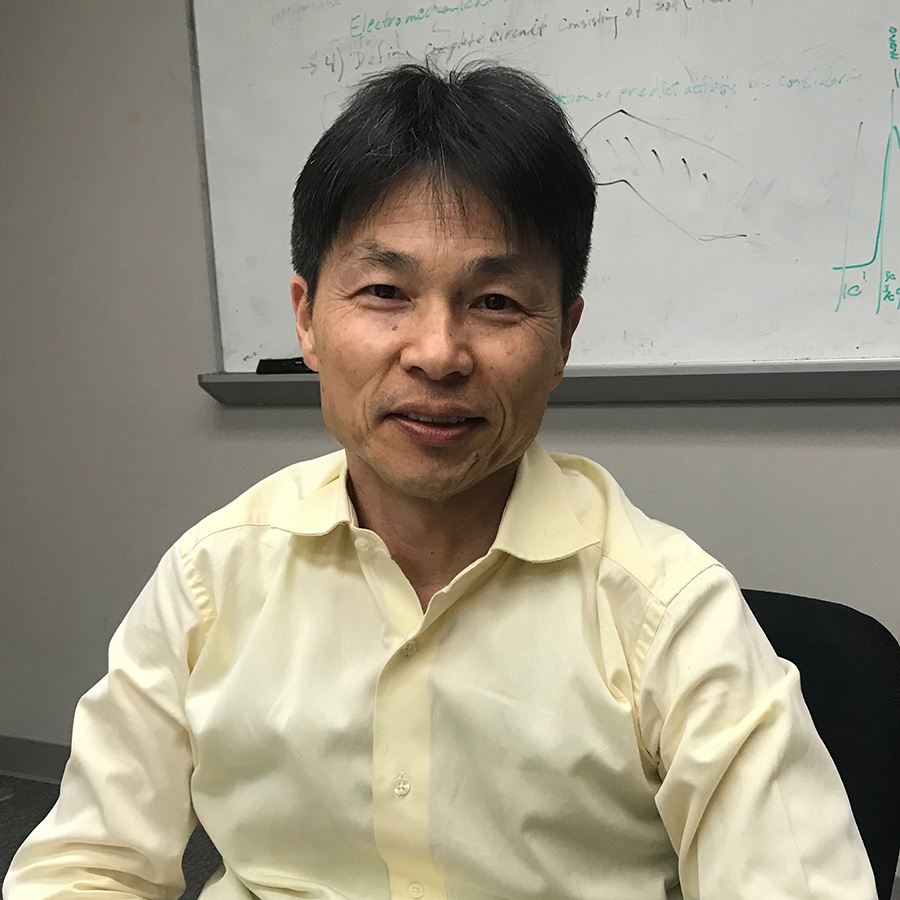
Jun Ueda

Jun Ueda
jun.ueda@me.gatech.edu
Biorobotics & Human Modeling Lab

Jun Ueda joined Georgia Tech in May 2008 as Assistant Professor. Before Georgia Tech, he was a Visiting Scholar and Lecturer at MIT, where he worked on the development and control of cellular actuators inspired by biological muscle. He developed compliant, large strain piezoelectric actuators and a robust control method called stochastic broadcast feedback. From 2002-2008 he was Assistant Professor at Nara Institute of Science and Technology in Japan, where he led a research group dedicated to dynamics and control in robotics, such as robot hand manipulation, tactile sensing, and power-assisting. From 1996 to 2002 and prior to obtaining his Ph.D, he worked at the Advanced Technology R&D Center of Mitsubishi Electric Corporation in Japan. Here he was involved in a variety of activities including disk drives, machine tools, and satellite tracking antennas. His Ph.D. work at Kyoto University was on the end-point control of a robot manipulator mounted on a non-rigid base. He studied feedback control robustness in terms of the coupling of the arm and base dynamics.

Professor, George W. Woodruff School of Mechanical Engineering
Director, Biorobotics & Human Modeling Lab
Phone
404.385.3900
Office
Love 219
Additional Research

Automation & Mechatronics; Bioengineering

IRI And Role
Google Scholar
https://scholar.google.com/citations?hl=en&user=vVdRxtUAAAAJ&view_op=list_works&sortby=pubdate
Jun
Ueda
Show Regular Profile

Maegan Tucker

Maegan Tucker
mtucker@gatech.edu
Personal Website

Maegan received her Ph.D. in Mechanical Engineering (ME) from the California Institute of Technology (Caltech) in May 2023. Prior, she also received a M.S. in ME from Caltech in 2019 and a B.S. in ME from Georgia Tech in 2017. After graduating with her Ph.D., Maegan conducted a brief postdoc at Caltech (May–August 2023), followed by a brief research position at Disney Research (September–December 2023). Generally speaking, her research interests lie at the intersection of control theory and human-robot interaction, with specific applications towards lower-limb assistive devices. Much of her research is centered around the question: “What is the right way to walk?”. In her free time, Maegan enjoys puzzles, playing video games, and the piano.

Maegan Tucker joined Georgia Tech as an assistant professor with joint appointments in the School of Electrical & Computer Engineering and the School of Mechanical Engineering in January 2024.

Assistant Professor
Additional Research

Lower-Body Assistive Devices Bipedal Locomotion Nonlinear Control Theory Human-Robot Interaction Preference-Based Learning Human Biomechanics

IRI And Role
Google Scholar
https://scholar.google.com/citations?hl=en&user=mgQTjk0AAAAJ&view_op=list_works&sortby=pubdate
LinkedIn ECE Profile Page
Maegan
Tucker
Show Regular Profile

Thad Starner

Thad Starner
thad.starner@cc.gatech.edu
Interactive Computing Profile Page

Thad Starner is a Professor at the Georgia Institute of Technology's School of Interactive Computing. Thad was perhaps the first to integrate a wearable computer into his everyday life as an intelligent personal assistant. Starner's work as a Ph.D. student would help found the field of Wearable Computing. His group's prototypes and patents on mobile MP3 players, mobile instant messaging and e-mail, gesture-based interfaces, and mobile context-based search foreshadowed now commonplace devices and services. Thad has authored over 100 scientific publications with over 100 co-authors on mobile Human Computer Interaction (HCI), pattern discovery, human power generation for mobile devices, and gesture recognition, and he is a founder and current co-chair of the IEEE Technical Committee on Wearable Information Systems. His work is discussed in public forums such as CNN, NPR, the BBC, CBS's 60 Minutes, The New York Times, Nikkei Science, The London Independent, The Bangkok Post, and The Wall Street Journal.

Professor; School of Interactive Computing
Additional Research

Wearable Computing; Artificial Intelligence; Augmented Reality; Human Computer Interaction; Ubiquitous Computing

Google Scholar
https://scholar.google.com/citations?hl=en&user=qr8Vo9IAAAAJ&view_op=list_works&sortby=pubdate
Thad
Starner
Show Regular Profile

Aaron Young

Aaron Young
aaron.young@me.gatech.edu
Exoskeleton and Prosthetic Intelligent Controls (EPIC) Lab

Aaron Young is an Associate Professor in Mechanical Engineering and is interested in designing and improving powered orthotic and prosthetic control systems for persons with stroke, neurological injury or amputation. His previous experience includes a post-doctoral fellowship at the University of Michigan in the Human Neuromechanics Lab working with exoskeletons and powered orthoses to augment human performance. He has also worked on the control of upper and lower limb prostheses at the Center for Bionic Medicine (CBM) at the Rehabilitation Institute of Chicago. His master's work at CBM focused on the use of pattern recognition systems using myoelectric (EMG) signals to control upper limb prostheses. His dissertation work at CBM focused on sensory fusion of mechanical and EMG signals to enable an intent recognition system for powered lower limb prostheses for use by persons with a transfemoral amputation.

Associate Professor, George W. Woodruff School of Mechanical Engineering
Director, EPIC Lab
Phone
404.385.5306
Office
GTMI 433
Additional Research

Powered prosthesis; EMG signal processing. Young's research is focused on developing control systems to improve prosthetic and orthotic systems. His research is aimed at developing clinically translatable research that can be deployed on research and commercial systems in the near future. Some of the interesting research questions are how to successfully extract user intent from human subjects and how to use these signals to allow for accurate intent identification. Once the user intent is identified, smart control systems are needed to maximally enable individuals to accomplish useful tasks. For lower limb devices, these tasks might include standing from a seated position, walking, or climbing a stair. We hope to improve clinically relevant measures with powered mechatronic devices, including reducing metabolic cost, improving biomechanics and decreasing the time required to perform daily tasks of living.

Google Scholar
https://scholar.google.com/citations?hl=en&user=NkM21vEAAAAJ&view_op=list_works&sortby=pubdate
ME Profile Page
Aaron
Young
J
Show Regular Profile

Minoru Shinohara

Minoru  Shinohara
shinohara@gatech.edu
Departmental Profile Page

Physiological and biomechanical mechanisms underlying fine motor skills and their adjustments and adaptations to heightened sympathetic nerve activity, aging or inactivity, space flight or microgravity, neuromuscular fatigue, divided attention, and practice in humans. He uses state-of-the-art techniques in neuroscience, physiology, and biomechanics (e.g., TMS, EEG, fMRI, single motor unit recordings, microneurography, mechanomyography, ultrasound elastography, and exoskeleton robot) in identifying these mechanisms.

Associate Professor; School of Biological Sciences
Phone
404.894.1030
Office
555 14th St | Suite 1309C
Additional Research

Neuromuscular Physiology

Google Scholar
https://scholar.google.com/citations?hl=en&user=oIbxZhIAAAAJ&view_op=list_works&sortby=pubdate
LinkedIn Human Neuromuscular Physiology Lab
Minoru
Shinohara
Show Regular Profile

Maegan Tucker

Headshot of Maegan Tucker, Assistant Professor, GT ECE

Maegan received her Ph.D. in Mechanical Engineering (ME) from the California Institute of Technology (Caltech) in May 2023. Prior, she also received a M.S. in ME from Caltech in 2019 and a B.S. in ME from Georgia Tech in 2017. After graduating with her Ph.D., Maegan conducted a brief postdoc at Caltech (May–August 2023), followed by a brief research position at Disney Research (September–December 2023). Generally speaking, her research interests lie at the intersection of control theory and human-robot interaction, with specific applications towards lower-limb assistive devices.

Nathan Damen

Nate Damen

Nate Damen is a Research Engineer I with Aerospace, Transportation and Advanced Systems Laboratory of Georgia Tech Research Institute. Damen’s work at ATAS has focused on Mixed Reality applications, robotics, the automation of CAR-T cellular expansions, and bioreactor design. Before joining GTRI, Damen conducted research into the manipulation of textiles with Softwear Automation and the design of deformable parcel manipulation systems with Dorabot.