
Helping Patients See Again: How One Doctor Uses Georgia Tech Research to Treat Eye Disease With Precision
The tiniest breakthrough can make the biggest difference.
At a care home for blind people in Kingston, Jamaica, a young teen stood frozen in doubt. On his first day as a volunteer, he had been asked to do something he had never done before: shave. Even more daunting, it was someone else’s face.
“It was one of those old-fashioned straight blades,” recalled David Chin Yee, now an ophthalmologist and retinal surgeon in Atlanta, Georgia. “I was nervous and didn’t know where to start.”
Sensing his uneasiness, the blind man calmly told him that if Chin Yee didn’t do it, no one would.
“Trust is something you usually have to earn,” Chin Yee said. “He gave that to me in a second.”
In that moment, Chin Yee understood how deeply people with vision loss depend on others, and how meaningful even small acts of help can be.
Chin Yee first began volunteering after his father experienced a glaucoma scare in Jamaica, where the disease remains one of the leading causes of blindness. After his experience at the care home, he became determined to learn everything he could about vision loss — a pursuit that eventually led him into clinical research and retinal surgery.
“If you understand the challenges visually disabled or blind people face, you really empathize and want to make a difference,” he said. “Maybe you can’t fix everything, but if there are ways you can help prevent people from going blind, you want to do it.”
Living in the Dark
A fair amount of Chin Yee’s work centers on patients with uveitis, a condition where the body’s immune system attacks tissue inside the eye, leading to inflammation. It can be brought on by autoimmune disorders, diabetes, and even surgery. Patients experience a vicious cycle of debilitating pain and vision loss.
“The eye is one of the most sensitive organs in the body,” Chin Yee said. “When there’s inflammation, even moving your eyes can cause significant pain.” For these patients, sunlight becomes torture. They stay in dark rooms and hide behind sunglasses.
“You’re taking someone who was completely functional, and now they can’t drive, they can’t read, they can’t watch TV, they can’t see their loved ones,” Chin Yee said.
For years, treatment for the condition has been deeply imperfect.
Steroid eye drops are often used as a first-line treatment for uveitis, but they do not effectively reach inflammation in the back of the eye. Patients with more severe disease often require repeated steroid injections into the eye every four to six weeks as the medication wears off.
Patients leave appointments feeling better but still have to plan their lives around injections, pain management, and the fear of another flare-up.
“Can you imagine wanting to go on a trip or attend a wedding and worrying the medication is going to wear off?” Chin Yee said. “That’s the burden these patients live with.”
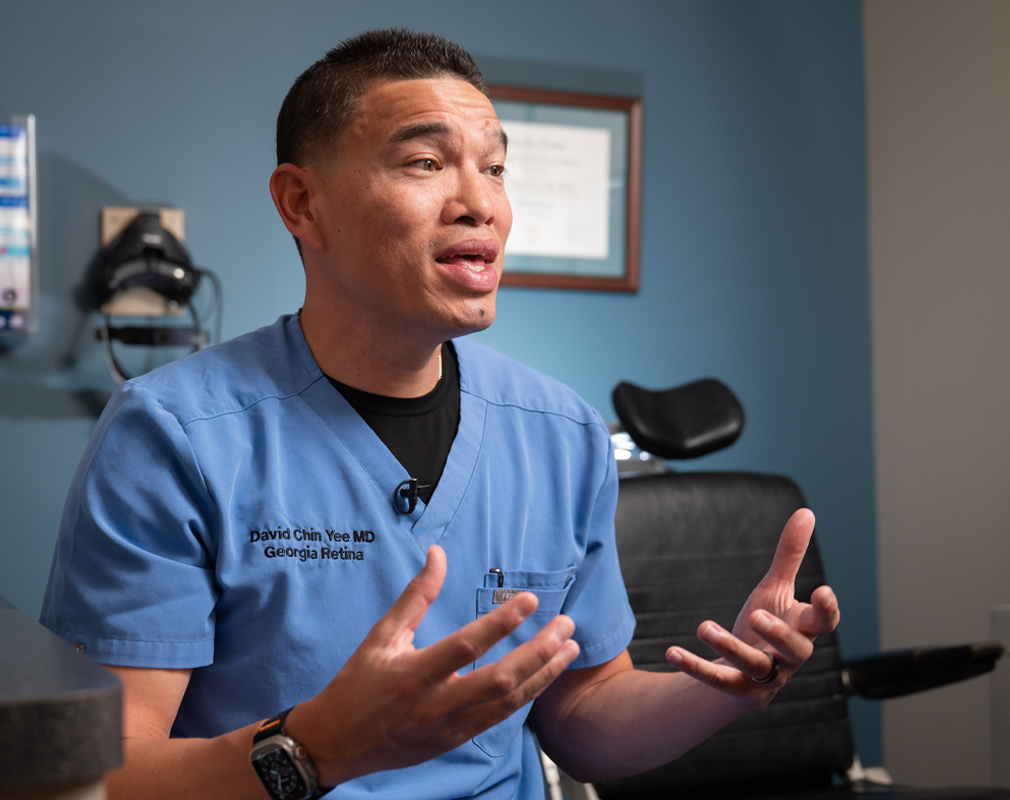
“If you understand the challenges visually disabled or blind people face, you really empathize and want to make a difference. Maybe you can’t fix everything, but if there are ways you can help prevent people from going blind, you want to do it.”
— David Chin Yee
From Research to Real Life
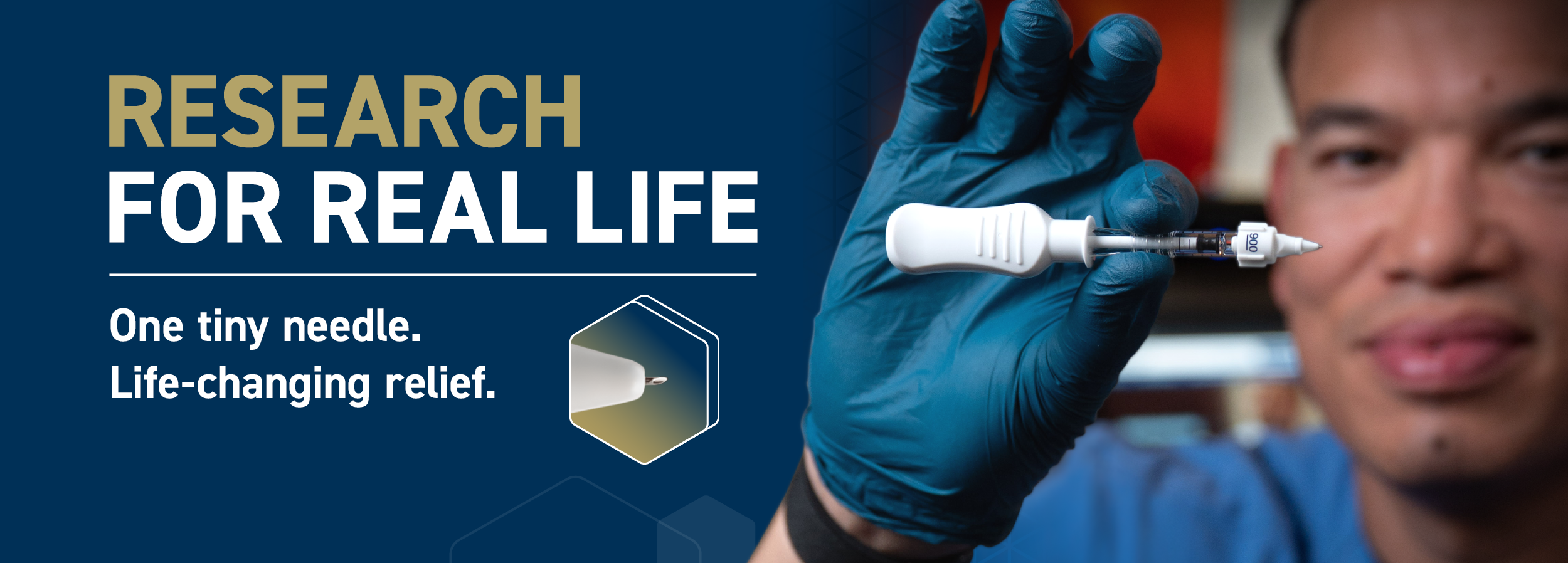
Now, Chin Yee uses a Georgia Tech-developed technology that helps restore vision and reduce debilitating pain for patients with inflammatory eye disease.
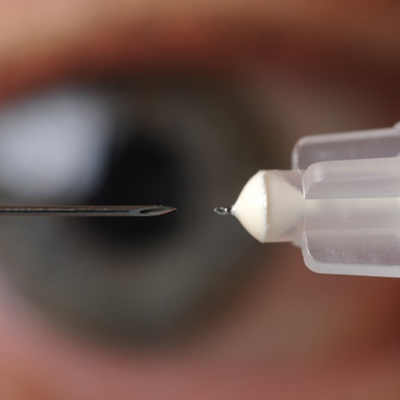
The technology is a tiny hollow microneedle about 1 millimeter long — roughly as long as a traditional injection needle is wide. It delivers medication into an extremely thin space within the eye wall that researchers had long struggled to access.
The difference is not the medication itself, but where it can now be delivered. Instead of injecting medicine into the eye’s center, where it spreads throughout the entire eye and dissipates relatively quickly, the microneedle delivers medication directly to the back of the eye, where inflammation occurs.
The medication stays where it’s needed, releasing slowly over time instead of spreading to the rest of the eye. The medicine lasts longer and has fewer side effects.
“As a physician, I want to treat the actual area,” Chin Yee said. “Until now, there was no reliable way to do that.”
The technology emerged from nearly two decades of research led by Georgia Tech researcher Mark Prausnitz and collaborators. During early experiments, graduate student Samir Patel unexpectedly accessed the suprachoroidal space — the thin layer surrounding the eye that researchers had long considered difficult to use for drug delivery. The discovery helped open a new pathway for drug delivery.
Supported by funding from the National Eye Institute and the Georgia Research Alliance, the work eventually led to the treatment Chin Yee now uses to help patients preserve their vision.
“It’s the first technology that’s allowed us to reliably target this part of the eye,” he said. “It’s truly a game-changer.”
Chin Yee saw the technology’s potential firsthand. As Georgia Retina’s director of clinical trials, he worked with patients using the microneedle-based therapy before it reached the market. “After seeing the results patients were able to achieve, I knew this was going to be something unique and different,” he said.
Many patients noticed improvement within hours instead of days. Also, instead of returning every month for injections, patients treated with the microneedle injector can go for six months to a full year between treatments.
For some patients, that means maintaining the independence to drive, work, travel, or help care for grandchildren without constantly worrying about pain or vision loss returning.
The mission Chin Yee discovered as a teenager still shapes the way he approaches both medicine and research.
“Every patient is unique,” Chin Yee said. “But there’s one way to make an impact on millions, and that’s through research. We still have not met the goal we’ve always wanted, which is to reverse blindness. That is why research matters.”
Note: As a state institution, Georgia Tech does not endorse companies, products, or services. The Institute was not involved in the clinical trials referenced in this story.
Research for Real Life
Research comes to life in the people and communities it touches. Research for Real Life tells the stories of people whose lives are enriched by Georgia Tech research and discovery. Their experiences are a reminder of why this work matters.
 Mark Prausnitz Receives Class of 1934 Distinguished Professor Award
 Under Pressure: Georgia Tech Researchers Discover a Potential New Way to Treat Glaucoma
 Hydrogel Could Open New Path for Glaucoma Treatment Without Drugs or Surgery


