
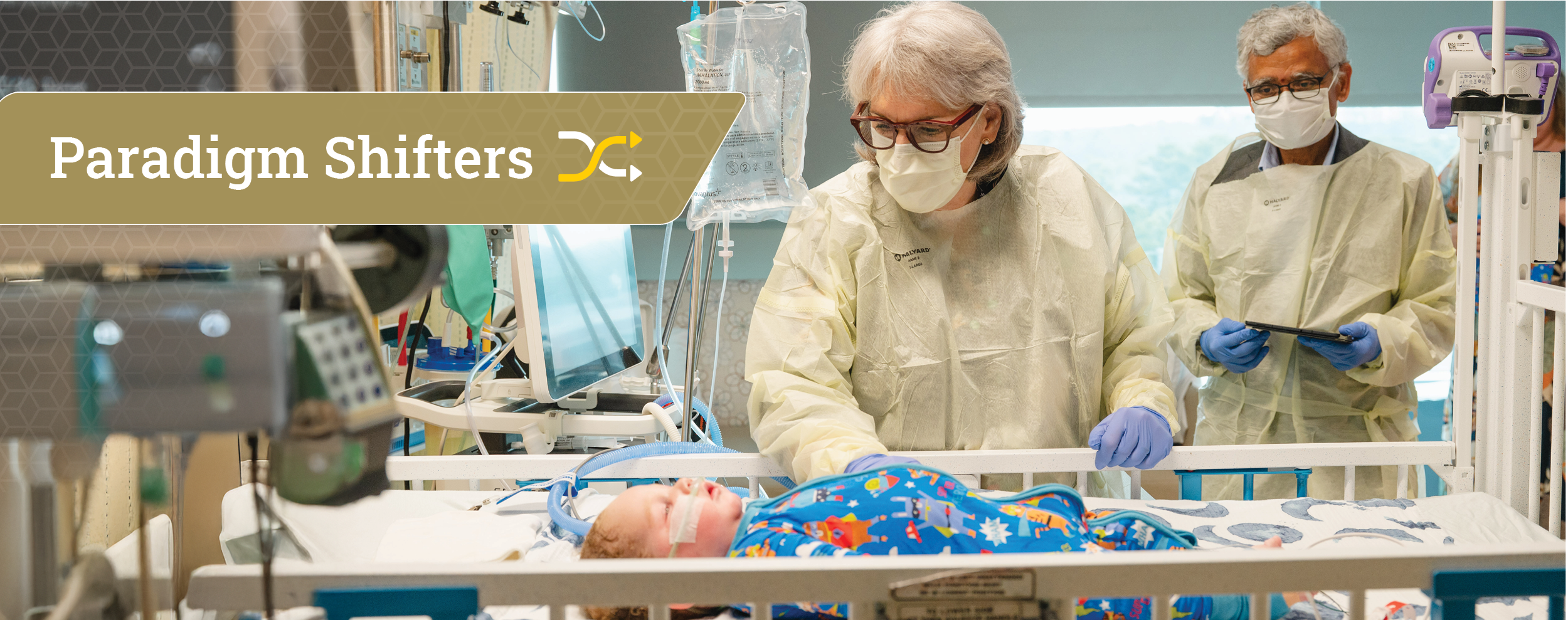
The Penicillin of Pressure Injuries: Researchers Develop New Sensor System to Prevent a Common Hospital Complication
These sensors, embedded in fabric, can monitor patients’ physical condition and alert healthcare workers before pressure sores form.
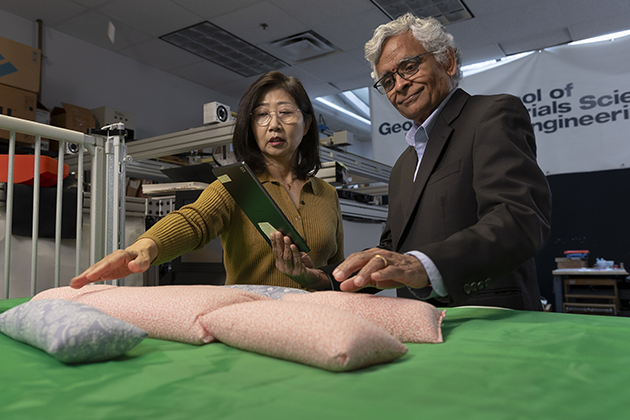
Researchers Sungmee Park and Sundaresan Jayaraman show a prototype of the pressure‑sensing fabric in the lab.
Hospital stays can be long and arduous; they can also cause serious complications. When a person lies in one position too long and begins to sweat, painful sores called pressure injuries (PIs) can form on the body, leading to infection or even death. A patient can develop a PI in a few days — or even a few hours. And once present, a PI is hard to treat.
Previously known as pressure ulcers, PIs affect 2.5 million patients and result in 60,000 deaths a year, from veterans in wheelchairs to premature babies requiring life-support devices in the Neonatal Intensive Care Unit. Even physicians wearing respirator masks for hours can be prone to PIs.
Another complication of PIs is that no one knows exactly how long it takes for them to form. Currently, the only way medical staff can prevent PIs is by manually turning bedridden or critically ill patients every few hours.
One missed turn can lead to more medical complications. The U.S. spends nearly $27 billion annually on PI medical care. Given the country’s ongoing nursing shortage, a more automated PI monitoring method needs to be implemented. This could ensure that patients leave the hospital better than when they arrived.
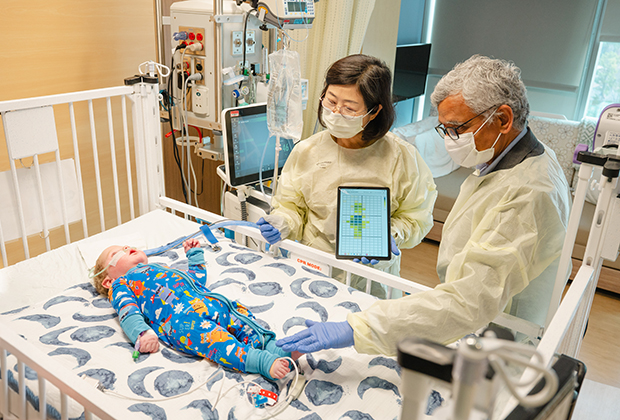
Georgia Tech’s flexible, sensor‑embedded fabric — designed to detect pressure injury risk and alert care teams when a patient needs repositioning — is now being tested on cribs in the Pediatric Intensive Care Unit at Children’s Healthcare of Atlanta’s Arthur M. Blank Hospital.
To address this issue, researchers at Georgia Tech have developed a new, flexible, sensor-filled fabric to monitor areas at risk of PIs and alert hospital staff when a patient needs to be turned.
“I call this technology a paradigm shift,” said Sundaresan Jayaraman, a professor in the School of Materials Science and Engineering (MSE). “We’re using a fabric that acts like a bedsheet under the patient. It collects pressure and moisture data unobtrusively — whether you're lying in bed or sitting in a wheelchair. From this, we can predict when a PI is likely to occur and, more importantly, understand how long it takes to form.”
This technology is currently being piloted on four cribs in the Children’s Healthcare of Atlanta Arthur M. Blank Hospital Pediatric Intensive Care Unit (PICU), with the eventual goal of deploying it in 50 beds. The researchers hope their device becomes universal across healthcare systems, making PIs a thing of the past.
“I call this technology a paradigm shift. We’re using a fabric that acts like a bedsheet under the patient. It collects pressure and moisture data unobtrusively — whether you're lying in bed or sitting in a wheelchair. From this, we can predict when a PI is likely to occur and, more importantly, understand how long it takes to form.” —Sundaresan Jayaraman
Sensor Scope

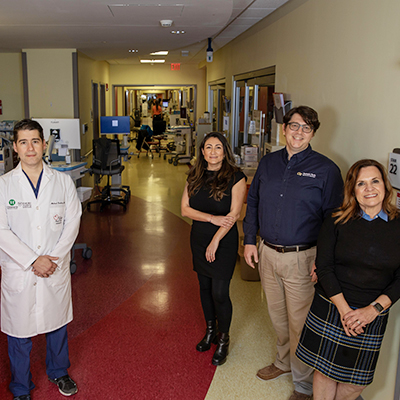
Sungmee Park (left) and Sundaresan Jayaraman (right) stand with Jana Stockwell, M.D. (center), a pediatric critical care physician at Children’s Healthcare of Atlanta who collaborates with the team on pressure‑injury prevention technology.
Jayaraman and collaborator Sungmee Park, a principal research scientist in MSE, have been working on this project since 2017, which culminated in the successful proof-of-concept testing of the first version at Children’s in 2019. Their next breakthrough managed PIs for individuals in wheelchairs with spinal cord injuries, such as veterans. The researchers collaborated with doctors at Children’s to deploy the enhanced system in a clinical setting to help PICU patients. The research for this priority issue is funded by the Pediatric Technology Center (PTC) – a joint partnership between Children’s Healthcare of Atlanta and Georgia Tech, including funds from the Imlay Foundation's Imlay Innovation Fund.
“In the PICU, we have many kids who are critically ill or injured, sedated, lying in bed with lots of devices on them, and all these things lead to a higher incidence of PI,” said Jana Stockwell, M.D., a pediatric critical care physician at Children’s. Stockwell collaborates with the researchers.
“PI occurs in about 10% of kids in PICUs, and it’s even higher in the neonatal intensive care units,” she explained. “Even something as minor as a folded sheet or misplaced IV tubing can lead to a pressure injury in a child.”
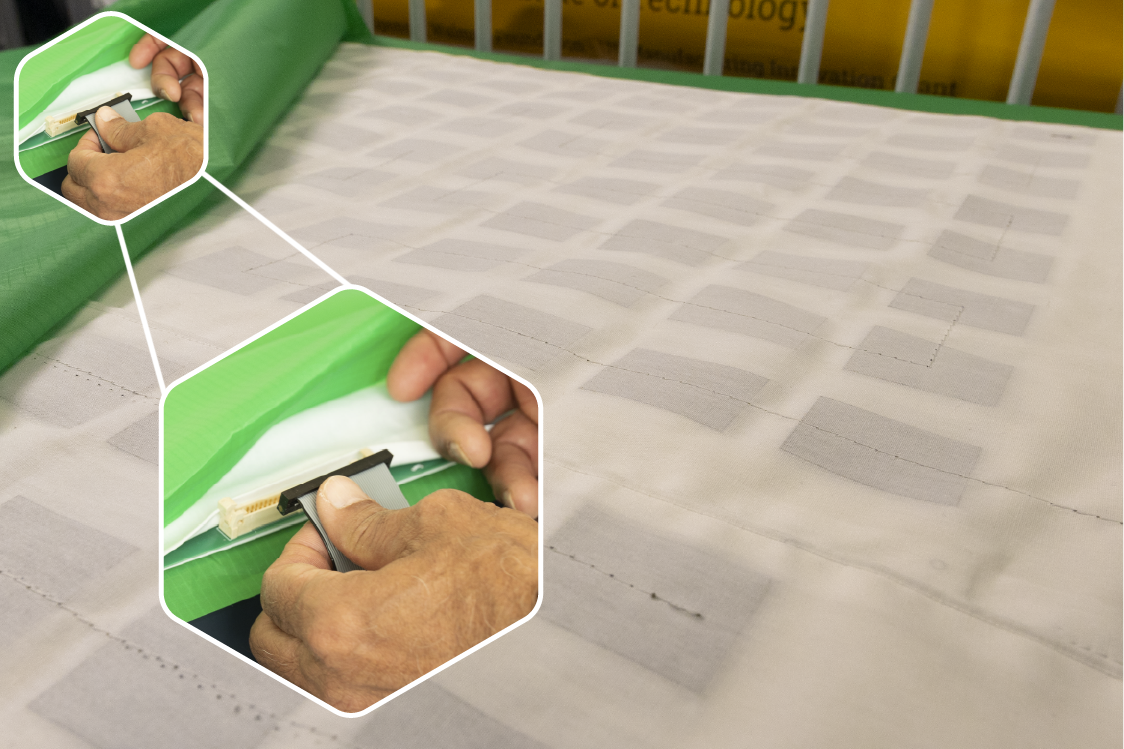
Earlier prototypes required dozens of connectors that slowed setup. The latest version uses a single cable to link the fabric that sits under the patient.
Creating a flexible, washable sensor was a challenge. But making sure it wasn’t intrusive —especially for tiny, medically fragile, premature babies — was even harder.
“We needed to make sure all the sensor data was streaming correctly and integrated into the bed, so the sensors don’t disturb either the physicians’ treatment or the baby's movement,” Park said.
While earlier prototypes had dozens of connecting cables that increased how long it took to deploy the system on the crib, the current device uses just one cable. This simplicity makes the sensor fabric easier for medical staff to implement and feels more natural for the patient and less like a “device” for family members and caregivers.
“The idea that these sensors even exist, let alone be in fabric that isn’t as hard as a board under a patient, is pretty incredible,” Stockwell said.
“In the PICU, we have many kids who are critically ill or injured, sedated, lying in bed with lots of devices on them, and all these things lead to a higher incidence of PI. Even something as minor as a folded sheet or misplaced IV tubing can lead to a pressure injury in a child.” –Jana Stockwell
Machine Learning Medicine
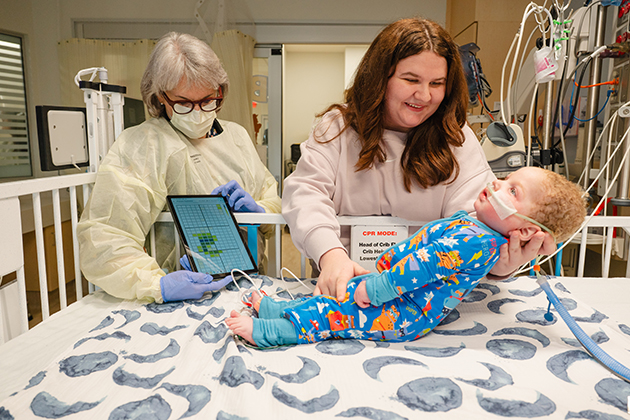
Jana Stockwell, M.D., shows a parent how the sensor‑filled fabric tracks pressure injury data and signals when a baby needs repositioning.
Machine learning is key to the device’s next evolution. Researchers are using predictive analytics to study data patterns and automate care recommendations.
“The beauty of this system is that it adapts to the patient’s weight and condition,” Jayaraman said. “We are monitoring how long the pressure has not changed and how much moisture is there, so we can customize the response to it.”
Healthcare workers will be able to use an app connected to the device that will tell them when to move a patient. In the future, this data will also be automatically integrated into electronic medical records, turning a once laborious manual treatment into something efficient and digitized.
Marketing a Medical Marvel
The researchers are collaborating with Children’s to test and enhance the technology to create the right product. They’re also working with Georgia Tech’s Georgia Manufacturing Extension Partnership to understand the regulatory requirements. Widespread adoption of this sensor fabric could be game-changing for hospitals.
“Penicillin revolutionized how we treat infections, and we want our technology to be similarly revolutionary. Just like penicillin made certain infections obsolete, we hope our sensors can make PIs a preventable relic of the past,” Jayaraman said. “That's why we believe commercialization is very, very critical.”
If successful, this sensor could transform patient care — and actually make pressure injuries a preventable relic of the past.

Writer and Media Contact: Tess Malone | tess.malone@gatech.edu
Photos: Joya Chapman and Christopher McKenney
Copy Editor: Stacy Braukman
Design: Josie Giles
Series Design: Stephanie Stephens

About Georgia Tech Commercialization
Georgia Tech Commercialization provides a foundation for faculty seeking to translate the Institute's leading-edge research into real-world applications. Commercialization encompasses four pivotal units: CREATE-X, VentureLab, Quadrant-i, and Technology Licensing. These units empower students and faculty to launch startups, provide comprehensive commercialization support, manage intellectual property, and facilitate the transformation of research into viable businesses. The Office of Commercialization’s mission is to provide world-class commercialization services, catalyzing research and innovation to improve the human condition, and enhancing Georgia Tech's position as a leader in technology and entrepreneurial impact.
Pediatric Technology Center
The Pediatric Technology Center (PTC) brings Children’s Healthcare of Atlanta clinical experts together with Georgia Tech scientists and engineers to develop technological solutions to problems in the health and care of children, providing extraordinary opportunities for interdisciplinary collaboration in pediatrics. These collaborations allow us to bring discoveries to the clinic and the bedside, thereby enhancing the lives of children and young adults.
Paradigm Shifters
At Georgia Tech, cutting-edge research is a constant — it fuels discovery, challenges norms, and inspires progress every day. And occasionally, technologies emerge with the power to fundamentally change life for the better.
These breakthroughs transform how we live, how we work, and even how we heal. Many years and minds in the making, these technologies are the culmination of collaboration, persistence, and ingenuity. These are the paradigm shifters.
Discover these extraordinary innovations as they begin to make their mark on the world. The future is taking shape right here at Georgia Tech.
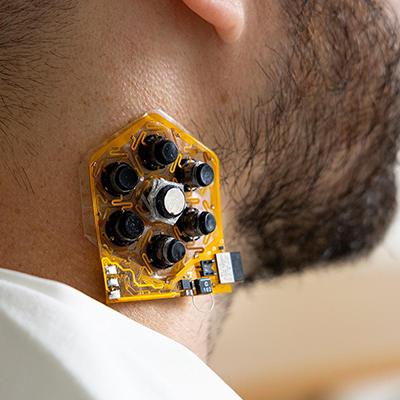 Wearing the Future
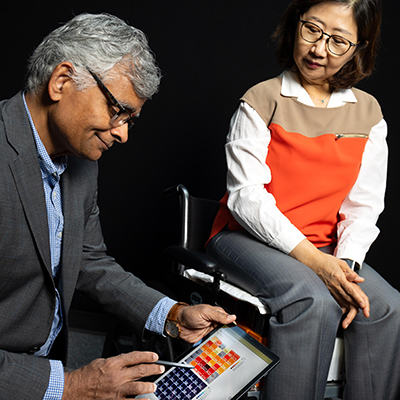 Sensor Fabric, Big Data Could Help End Pressure Injuries for Wheelchair Users
 GTRI, Children’s Healthcare of Atlanta and Emory Use Wearable Sensors to Address Healthcare Worker Burnout


