
Georgia Tech Collaborates With Japanese Space Agency on Asteroid Flyby
Jul 10, 2026 —
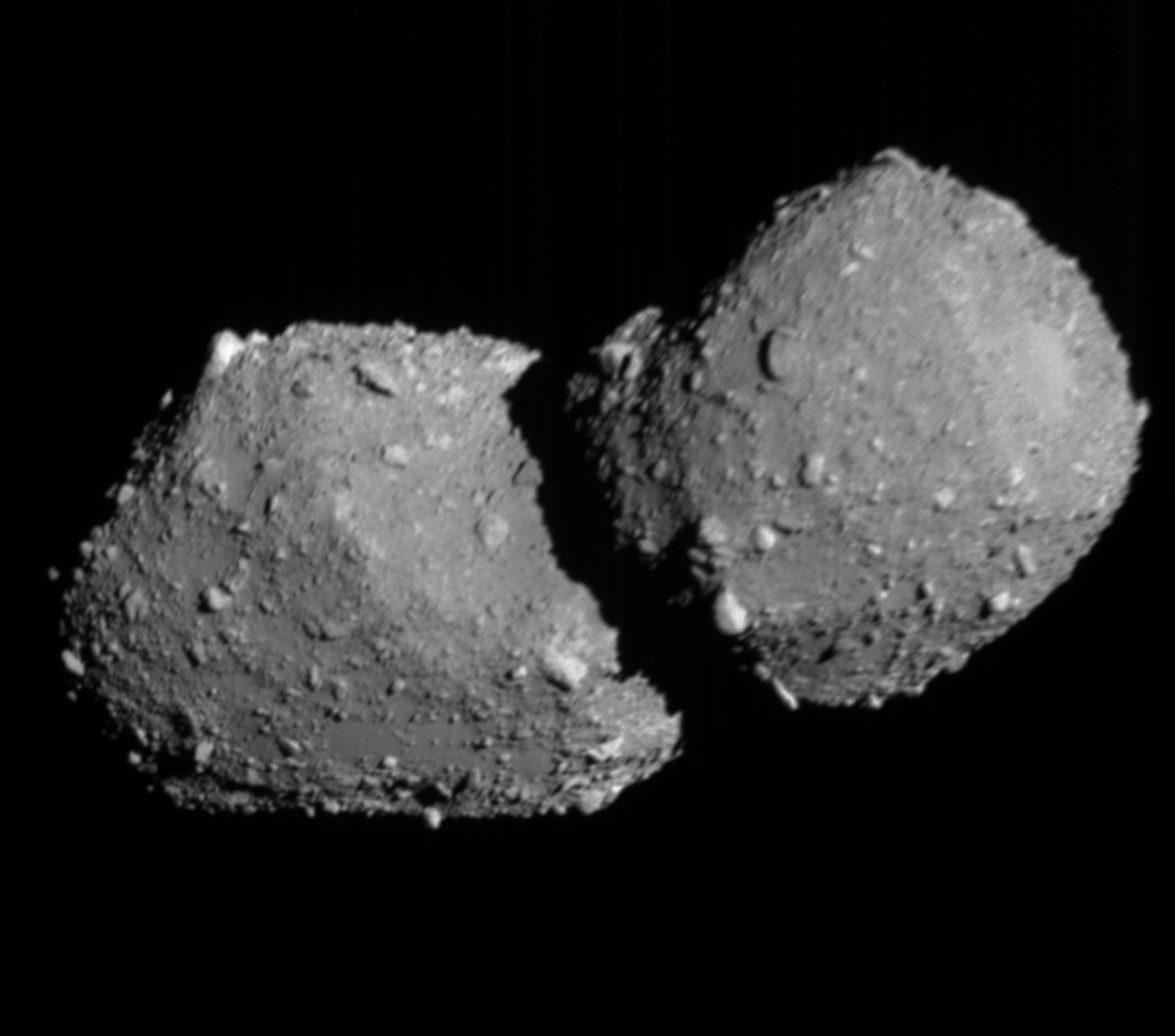
©JAXA, The University of Tokyo, Chiba Institute of Technology, Institute of Science Tokyo, AIST, Paris Observatory, IAC. ONC-T image details: Capture date & time: 2026/07/05 at 18:29:59 JST (preliminary estimate).
On July 5, a Japanese spacecraft soared past an asteroid containing some of the oldest known materials in the solar system. A Georgia Tech researcher helped guide the mission.
The Japan Aerospace Exploration Agency’s (JAXA) Hayabusa2 Extended Mission conducted a flyby of the asteroid Torifune. Toshi Hirabayashi, associate professor in the Daniel Guggenheim School of Aerospace Engineering and a member of the Space Research Institute, helped select the target asteroid and developed the spacecraft’s final orientation and trajectory for the encounter. The mission marked the world’s first successful use of a laser altimeter during a high-speed flyby of a small celestial body. Hirabayashi was in Japan for the operation.
Traveling at nearly 5 kilometers per second, the spacecraft captured visible and infrared images of Torifune, documenting its unique shape and surface and revealing evidence of geological diversity. The asteroid resembles a dumbbell, with two chunks connected by a neck obscured in shadow.
The spacecraft also detected data signals from the laser altimeter and the near-infrared spectrometer. The laser altimeter received two data points, and the near-infrared spectrometer detected multiple points during a narrow observation window. Researchers hope the observations will help them better determine the flyby conditions at high accuracy and understand how asteroids evolve and what they can reveal about the earliest days of the solar system.
Hirabayashi previously contributed to JAXA’s landmark mission that returned asteroid samples to Earth. But the Torifune flyby presented a different set of challenges.
“The spacecraft was not designed for flyby operations, so there are many constraints,” he said. “It was necessary to develop a new strategy to maximize science data acquisition.”
The knowledge gained from the mission could strengthen international planetary defense efforts. The data will help scientists better understand how asteroids move through space and how to observe them effectively. The researchers hope Torifune will offer insights not only into the origins of planets but also into how humanity can better prepare for future asteroid threats.
"Planetary defense is a critical aspect for the public," Hirabayashi said. "Georgia experienced an airburst [when a meteoroid bursts mid-air] event in 2025. While the event was small, a larger event may get people hurt. Hayabusa2's flyby experience will be critical for acquiring the knowledge and skills needed to better observe such a potential threat.”
This research is funded by the Space Research Institute.
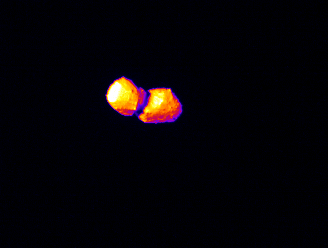
©JAXA, Maebashi Institute of Technology, Chiba Institute of Technology, The University of Aizu, Hokkaido University of Education, AIST TIR image details: Capture date & time: 2026/07/05 at 18:29:58 JST (preliminary estimate), Distance to Torifune: approximately 10 km.
Tess Malone, Senior Research Writer/Editor
tess.malone@gatech.edu


