Saurabh Sinha, Ph.D.

Saurabh Sinha, Ph.D.

Lab

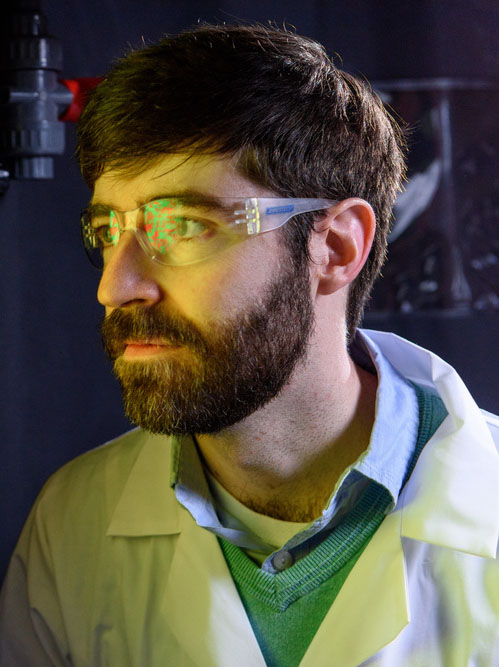
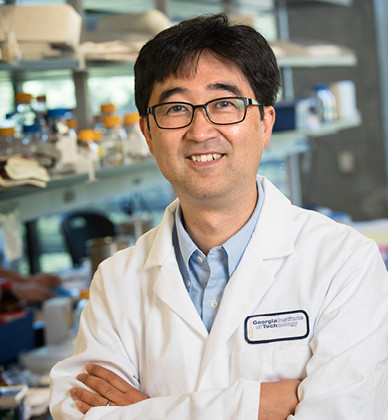
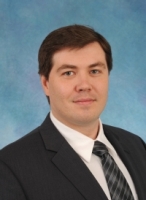
Saurabh Sinha received his Ph.D. in Computer Science from the University of Washington, Seattle, in 2002, and after post-doctoral work at the Rockefeller University with Eric Siggia, he joined the faculty of the University of Illinois, Urbana-Champaign, in 2005, where he held the positions of Founder Professor in Computer Science and Director of Computational Genomics in the Carl R. Woese Institute for Genomic Biology until 2022. He joined Georgia Institute of Technology in 2022, as Wallace H. Coulter Distinguished Chair in Biomedical Engineering, with joint appointments in Biomedical Engineering and Industrial & Systems Engineering. Sinha’s research is in the area of bioinformatics, with a focus on regulatory genomics and systems biology. Sinha is an NSF CAREER award recipient and has been funded by NIH, NSF and USDA. He co-directed an NIH BD2K Center of Excellence and was a thrust lead in the NSF AI Institute at UIUC. He led the educational program of the Mayo Clinic-University of Illinois Alliance, and co-led data science education for the Carle Illinois College of Medicine. Sinha has served as Program co-Chair of the annual RECOMB Regulatory and Systems Genomics conference and served on the Board of Directors for the International Society for Computational Biology (2018-2021). He was a recipient of the University Scholar award of the University of Illinois, and selected as a Fellow of the AIMBE in 2018.

Wallace H. Coulter Distinguished Chair in Biomedical Engineering
Professor
Office
3108 UAW
Saurabh
Sinha
Show Regular Profile

Eberhard O. Voit

Eberhard O. Voit
eberhard.voit@bme.gatech.edu
Website

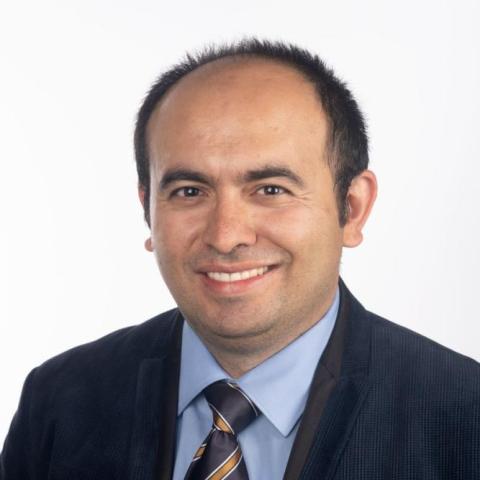
Eberhard Voit’s research interests are in the area of complex biomedical systems. Work in his lab focuses on genomic, metabolic, and signaling systems with applications reaching from microbial and plant systems to human diseases. Voit has authored or co-authored about two hundred fifty scientific articles and book chapters as well as several books. Voit is an elected a fellow in the American Institute for Medical and Biological Engineering (AIMBE) and the American Association for the Advancement of Science (AAAS).

Professor
David D. Flanagan Chair
Georgia Research Alliance Eminent Scholar in Systems Biology
Phone
404-385-5057
Office
EBB 2115B
Google Scholar
https://scholar.google.com/citations?user=usBmHhIAAAAJ&hl=en&oi=sra
Coulter Department of Biomedical Engineering
Eberhard
Voit
O.
Show Regular Profile

Denis V. Tsygankov

Denis V. Tsygankov
denis.tsygankov@bme.gatech.edu
Website

Denis Tsygankov, PhD, is Assistant Professor in the Wallace H. Coulter Department of Biomedical Engineering at Georgia Tech School of Engineering and Emory University School of Medicine. 

Dr. Tsygankov is interested in developing and applying computational methods, including mathematical modeling, simulations, and computer vision approaches to understand complex multi-scale physiological processes including vasculogenesis, morphogenesis, and cancer. 

He is a member of the Cell and Molecular Biology Research Program at Winship Cancer Institute.

Associate Professor
Phone
404-385-4747
Office
UAW 1212
Google Scholar
https://scholar.google.com/citations?user=1oYYvS0AAAAJ&hl=en
Coulter Department of Biomedical Engineering
Denis
Tsygankov
V.
Show Regular Profile

Peter Yunker

Peter Yunker
peter.yunker@gatech.edu
Website

Dr. Yunker joined Georgia Tech’s School of Physics in 2014 after finishing his biophysics postdoc at Harvard University & New England Biolabs in 2014. Before that, he earned his Ph.D. in Physics from the University of Pennsylvania in 2012 after earning a B.S. in Physics from Texas A&M University in 2005. He has won the Burstein Prize and the Denenstein Award both from UPenn along with the Eric R. Immel Memorial award for Excellence in Teaching at GT. 

Peter’s interests are biophysics, soft matter, and golden retrievers.

Associate Professor
Phone
404-385-8642
Office
Boggs B20
Additional Research
Nonequilibrium systems, densely packed active matter with life and death events, microbial physics, structural mechanics, fracture mechanics, evolution.
University, College, and School/Department
Google Scholar
https://scholar.google.com/citations?user=va75ptIAAAAJ&hl=en
Related Site
Peter
Yunker
J.
Show Regular Profile

Annalise Paaby

Annalise Paaby
paaby@gatech.edu
Website

After studying ecology as a biology major at Swarthmore College, Annalise Paaby learned fly pushing as a technician for Steve DiNardo and then discovered evolutionary genetics as a tech for Paul Schmidt. She joined Paul’s lab as a graduate student and earned her Ph.D. from the University of Pennsylvania in 2009. In 2015, Paaby completed her postdoctoral training with Matt Rockman at New York University and began her appointment at Georgia Tech.

Assistant Professor
Phone
404-385-4588
Office
EBB 3011
Additional Research
Our lab explores major questions in evolution and quantitative genetics. We work with the nematode wormC. elegansand relatedCaenorhabditisspecies. Current projects include exploring how cryptic alleles in embryogenesis depend on genetic background, how development evolves over time, and the role of molecular mechanisms in trait determination and evolution. We are also interested in how the environment influences trait expression and imposes selection in natural populations, and are conducting field collection trips in the nearby Appalachian foothills.
Research Focus Areas
Google Scholar
https://scholar.google.com/citations?user=Ft1eQWUAAAAJ&hl=en
http://www.biology.gatech.edu/people/annalise-paaby
Annalise
Paaby
B.
Show Regular Profile

Patrick McGrath

Patrick McGrath
patrick.mcgrath@biology.gatech.edu
Website

Patrick McGrath's research group is interested in understanding the genetic basis of heritable behavioral variation. In the current age, it has become cheap and easy to catalog the set of genetic differences between two individuals. But which genetic differences are responsible for generating differences in innate behaviors, including liability to neurological diseases such as autism, bipolar disease, and schizophrenia? How do these causative genetic variants modify a nervous system? Besides their role in disease, genetic variation is the substrate for natural selection. To understand how behavior evolves, we must understand how it varies.

Associate Professor
Phone
404-385-0071
Office
EBB 3013
Additional Research
Mostbiological traits have a strong genetic, or heritable, component. Understanding how genetic variation influences these phenotypes will be important for understanding common, heritable diseases like autism.However, the genetic architecture controlling most biological traits is incredibly complex - hundreds of interacting genes and variants combine in unknown ways to create phenotype.The McGrath lab is interested in using fundamentalmechanistic studies inC. elegansto identify, predict, and understand how genetic variation impacts the function of the nervous system.We are studying laboratory adapted strains and harnessing directed evolution experiments to understand how genetic changes affect development, reproduction, and lifespan. We combine quantitative genetics, CRISPR/Cas9, genomics, and computational approaches to address these questions.We believe this work will lead to insights into evolution, multigenic disease, and systems biology.
Google Scholar
https://scholar.google.com/citations?user=tbbfR50AAAAJ&hl=en
http://biosciences.gatech.edu/people/patrick-mcgrath
Patrick
McGrath
T.
Show Regular Profile

Ahmet Coskun

Ahmet Coskun
acoskun7@gatech.edu
Website

Ahmet Coskun is a Bernie-Marcus Early-Career Professor of Biomedical Engineering at Georgia Institute of Technology and Emory University. Coskun is a systems biotechnologist and bioengineer, working at the nexus of multiplexed cell imaging and quantitative tissue biology. He directs an interdisciplinary research team at the Single Cell Biotechnology and Spatial Omics Laboratory, an interdisciplinary program strategically positioned for multiparameter imaging one cell at a time by spatial context and function. Coskun holds five issued patents and is also the co-author of more than 50 peer-reviewed publications in major scientific journals. He is a recipient of the NSF CAREER Award 2024, NIH R35 MIRA Award 2023, Sigma Xi Young Faculty Award 2025, CMBE Young Innovator Award 2024, BMES-CMBE Rising Star Award 2023, American Lung Association Innovation Award 2022, Burroughs Welcome Fund CASI Award 2016, and Student Recognition of Excellence in Teaching: Class of 1934 CIOS Award, among other research and teaching awards. Previously, Coskun was an instructor at Stanford University. He received his postdoctoral training from the California Institute of Technology. He holds a Ph.D. from the University of California, Los Angeles. His research has been supported by federal and private grants, including the National Institutes of Health (NIGMS, NIA, NIAID, NCI, NIDCR, OD, and ORIP), Wellcome LEAP, Burroughs Wellcome Fund (CASI), NSF CMaT, American Cancer Society IRG, Multi-cellular engineered living systems (M-CELS), and Regenerative Medicine Center. In addition, he leads outreach programs to engage K-12 students and undergraduate students through BioCrowd Studio, an innovative crowd-sourcing program bringing together interactive virtual media, distributed biokits, and collaborative spatial discovery.

Associate Professor of Biomedical Engineering
Phone
404.894.3866
Office
Petit Biotechnology Building, Office 1311
Additional Research

The Single Cell Biotechnology Lab aims to study spatial biology in health and disease. Our research lies at the nexus of multiplex bioimaging, microfluidic biodynamics, and big data biocomputation. Using high-dimensional nanoscale imaging datasets, we address fundamental challenges in immuno-engineering, cancers, and pediatric diseases. Our lab pursues a transformative multi-omics technology to integrate spatially resolved epigenetics and spatial genomics, proteomics, and metabolomics, all in the same platform. We uniquely benefit from super-resolution microscopy, imaging mass spectrometry, combinatorial molecular barcoding, and machine learning to enhance the information capacity of our cellular data. Variability of single cell images can be used to understand differences in therapeutic responses, as well as satisfy our curiosity on understanding how cells are spatially organized in nature.

University, College, and School/Department
Google Scholar
https://scholar.google.com/citations?user=4MR2wSIAAAAJ&hl=en
LinkedIn Related Site
Ahmet
Coskun
Show Regular Profile

Shuichi Takayama

Shuichi Takayama
takayama@gatech.edu
Takayama lab

Shu Takayama earned his BS and MS in Agricultural Chemistry at the University of Tokyo. He earned a Ph.D. in Chemistry at The Scripps Research Institute in La Jolla, California studying bio-organic synthesis with Dr. Chi‐Huey Wong. He then worked as a postdoc with Dr. George Whitesides at Harvard University where he focused on applying microfluidics to studying cell and molecular biology.

Takayama began his career at the University of Michigan, where led his lab in the Department of Biomedical Engineering and Macromolecular Science & Engineering for over 17 years. In 2017, the lab moved to Georgia Tech where Shu became the Georgia Research Alliance Price Gilbert Chair Professor of Biomedical Engineering in the Wallace H. Coulter Department of Biomedical Engineering.

Takayama’s research interests are diverse and motivated by clinical and biotechnology needs. He is always interested in hearing from stakeholders in these areas who are seeking engineering collaboration.

Professor, Wallace H. Coulter Department of Biomedical Engineering
GRA Eminent Scholar, Wallace H. Coulter Department of Biomedical Engineering
Price Gilbert, Jr. Chair in Regenerative Engineering andMedicine
Phone
404.385.5722
Office
EBB 4018
Additional Research

Use of micro/nanofluidics for cell analysis; diagnostics; and chromatin analysis; High throughput 3D cell cultures; Organs-on-a-chip construction and design; Role of rhythm in cell signaling; Self-switching fluidic circuits; Fracture fabrication

Google Scholar
https://scholar.google.com/citations?hl=en&user=IkhTUu4AAAAJ&view_op=list_works&sortby=pubdate
LinkedIn BME Profile Page
Shuichi
Takayama
Show Regular Profile

Greg Gibson

Greg Gibson
greg.gibson@biology.gatech.edu
Website

Greg Gibson is Professor of Biology and Director of the Center for Integrative Genomics at Georgia Tech. He received his BSc majoring in Genetics from the University of Sydney (Australia) and PhD in Developmental Genetics from the University of Basel. After transitioning to quantitative genetic research as a Helen Hay Whitney post-doctoral fellow at Stanford University, he initiated a program of genomic research as a David and Lucille Packard Foundation Fellow at the University of Michigan. He joined the faculty at Georgia Tech in Fall of 2009, after ten years at North Carolina State University where he developed tools for quantitative gene expression profiling and genetic dissection of development in the fruitfly Drosophila. He is now collaborating with the Center for Health Discovery and Well Being on integrative genomic analyses of the cohort. Dr Gibson is an elected Fellow of the American Association for the Advancement of Science, and serves as Section Editor for Natural Variation for PLoS Genetics. He has authored a prominent text-book, a "Primer of Genome Science" as well as a popular book about genetics and human health, "It Takes a Genome".

Professor
Director, Center for Integrative Genomics
Adjunct Professor, School of Medicine, Emory University
Phone
404-385-2343
Office
EBB 2115A
Additional Research
Quantitative Evolutionary Genetics. After 15 years working on genomic approaches to complex traits in Drosophila, my group has spent much of the past 10 years focusing on human quantitative genetics. We start with the conviction that genotype-by-environment and genotype-by-genotype interactions are important influences at the individual level (even though they are almost impossible to detect at the population level). We use a combination of simulation studies and integrative genomics approaches to study phenomena such as cryptic genetic variation (context-dependent genetic effects) and canalization (evolved robustness) with the main focus currently on disease susceptibility.​ Immuno-Transcriptomics.As one of the early developers of statistical approaches to analysis of gene expression data, we have a long-term interest in applications of transcriptomics in ecology, evolution, and lately disease progression. Since blood is the mostaccessible human tissue, we've examined how variation is distributed within and among populations, across inflammatory and auto-immune states, and asked how it relates to variation in immune cell types. Our axes-of-variation framework provides a new way of monitoring lymphocyte, neutrophil, monocyte and reticulocyte profiles from whole peripheral blood. Most recently we have also been collaborating on numerous studies of specific tissues or purified cell types in relation to such diseases as malaria, inflammatory bowel disease, juvenile arthritis, lupus, and coronary artery disease. Predictive Health Genomics. Personalized genomic medicine can be divided into two domains: precision medicine and predictive health. We have been particularly interested in the latter, asking how environmental exposures and gene expression, metabolomic and microbial metagenomics profiles can be integrated with genomesequencing or genotyping to generate health risk assessments. A future direction is incorporation of electronic health records into genomic analyses of predictive health. Right now it is easier to predict the weather ten years in advance than loss of well-being, but we presume that preventative medicine is a big part of the future of healthcare.​
Google Scholar
https://scholar.google.com/citations?user=e4_ZXcwAAAAJ&hl=en&oi=ao
http://www.biology.gatech.edu/people/gregory-gibson
Greg
Gibson
Show Regular Profile

Yuhong Fan

Yuhong Fan
yuhong.fan@biology.gatech.edu
Associate Professor
Georgia Research Alliance Distinguished Scholar
Phone
404-385-1312
Office
Petit Biotechnology Building, Office 2313
Additional Research
  • Bioinformatics
  • Chromatin
  • Epigenetics,  Epigenomics & Epidrugs
  • Gene Expression
  • Stem Cell Biology
  • Stem Cell Differentiation
Google Scholar
http://scholar.google.com/citations?hl=en&user=ESfeLxQAAAAJ&view_op=list_works&pagesize=100
LinkedIn Biological Sciences Profile
Yuhong
Fan
Show Regular Profile