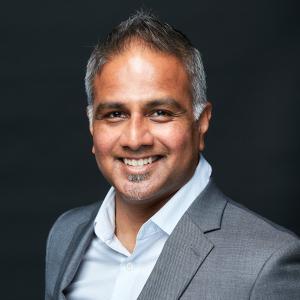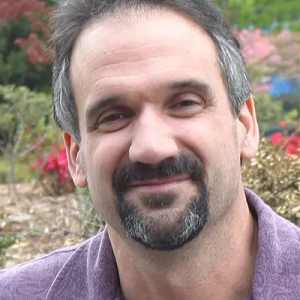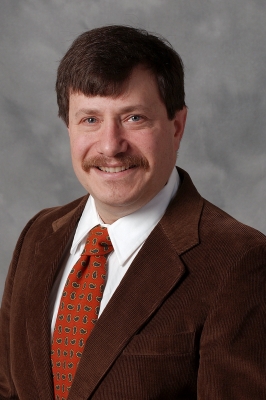
David S. Citrin

David S. Citrin
david.citrin@ece.gatech.edu
Website

Professor Citrin earned a B.A. from Williams College (1985) and a M.S. (1987) and a Ph.D. (1991) from the University of Illinois, all in physics, where his dissertation was on the optical properties of semiconductor quantum wires. Subsequently, he was a post-doctoral research fellow at the Max Planck Institute for Solid State Research, Stuttgart, Germany (1992-1993) and Center Fellow at the Center for Ultrafast Optical Science at the University of Michigan (1993-1995). Dr. Citrin was an assistant professor of physics and materials science at Washington State University (1995 to 2001).

Professor Citrin joined the faculty at Georgia Tech in 2001 where his work focuses on terahertz technology and nanotechnology. He is a recipient of a Presidential Early Career Award for Scientists and Engineers and of a Friedrich Bessel Award from the Alexander Von Humboldt Stiftung. In addition, he is Project Coordinator on Nonlinear Optics and Dynamics at Georgia Tech-CNRS UMI 2958 located at Georgia Tech-Lorraine. Professor Citrin’s research in terahertz imaging is featured in the Georgia Tech press release, ”Imaging Technique Unlocks the Secrets of 17th Century Artists"; a list of some media placements from the press release may be found at http://photonics.georgiatech-metz.fr/node/33.

Research interests: 

  • Terahertz nondestructive testing of materials
  • Terahertz characterization of art and cultural heritage
  • Chaos and nonlinear dynamics in external-cavity semiconductor lasers
  • Nanophotonics
  • High-speed electronic, photonic, and optoelectronic devices
  • Nonlinear optical properties of semiconductor materials and devices
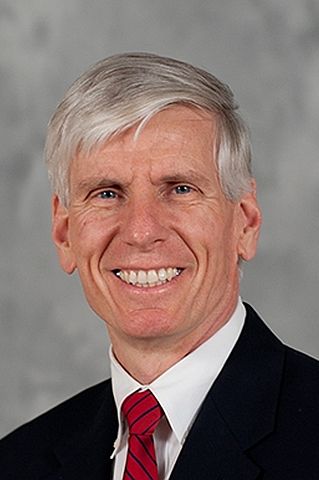
Professor
Phone
404.894.2000
Office
MIRC 211
David
Citrin
S.
Show Regular Profile

Paul Kohl

Paul Kohl
paul.kohl@chbe.gatech.edu
ChBE Profile Page

Paul Kohl received a B.S. degree from Bethany College in 1974 and Ph.D. from The University of Texas, both in Chemistry. After graduation, Kohl was employed at AT&T Bell Laboratories in Murray Hill, NJ from 1978 to 1989. During that time, he was involved in the design and processing of electronic packages for Bell system components. He created new chemical processes for silicon, compound semiconductor, and MEMS devices. In 1989, he joined the faculty of the Georgia Institute of Technology in the School of Chemical and Biomolecular Engineering, where he is currently a Regents' Professor and holder of the Thomas L. Gossage/Hercules Inc. Chair. He is the President of The Electrochemical Society and past Editor of Journal of The Electrochemical Society and past founding editor of Electrochemical and Solid-State Letters. Kohl's research interests include the design of new materials, processes, and packages for advanced interconnect for integrated circuits and MEMS devices. He is the past Director of the Semiconductor Research Corporation/DARPA Interconnect Focus Center. The goal of this center was to create new technological solutions for future electronic devices. Current projects include creation of new photosensitive dielectric materials for electronic packaging and the design and fabrication of MEMS packages. He also has programs in new approaches to fuel cells and lithium batteries. The new direct methanol alkaline fuel cells and hybrid alkaline/acid fuel cells have the potential reduced water management and platinum free usage. The integration of high energy density lithium batteries for self-powered integrated circuits and sensors is of interest. Many of these electrochemical devices use ionic liquids as the electrolytes, including the all-sodium battery. Ionic liquids are also being used as the absorber in a new absorption refrigeration cycle. The first ever ionic liquid/fluorocarbon absorption refrigeration cycle has been demonstrated and modeled.

Regents' Professor and Fellow, School of Chemical and Biomolecular Engineering
Thomas L. Gossage Chair, School of Chemical and Biomolecular Engineering
Phone
404.894.2893
Office
B-H 386
Additional Research

Interconnect and Electronic Packaging; MEMS; Electronic Systems, Devices, Components, & Packaging; Fuel Cells; Separation Membranes

The Kohl Group
Paul
Kohl
A.
Show Regular Profile

Alexander Adams

Alex Adams

Alex Adams’s research focuses on designing, fabricating, and implementing new ubiquitous and wearable sensing systems. In particular, he is interested in how to develop these systems using equity-driven design principles for healthcare. Alex leverages sensing, signal processing, and fabrication techniques to design, deploy, and evaluate novel sensing technologies.

Mijin Kim

Mijin Kim

Mijin Kim is an assistant professor in the School of Chemistry and Biochemistry at Georgia Tech.

Chandra Raman

Professor Chandra Raman

The Raman Group has two main thrusts.  The team utilizes sophisticated tools to cool atoms to temperatures less than one millionth of a degree above absolute zero. Using these tools, they explore topics ranging from superfluidity in Bose-Einstein condensates (BECs) to quantum antiferromagnetism in a spinor condensate.  In another effort the team partners with engineers to build cutting edge atomic quantum sensors on-chip that can one day be mass-produced.

David S. Citrin

David S Citrin

Professor Citrin earned a B.A. from Williams College (1985) and a M.S. (1987) and a Ph.D. (1991) from the University of Illinois, all in physics, where his dissertation was on the optical properties of semiconductor quantum wires. Subsequently, he was a post-doctoral research fellow at the Max Planck Institute for Solid State Research, Stuttgart, Germany (1992-1993) and Center Fellow at the Center for Ultrafast Optical Science at the University of Michigan (1993-1995). Dr. Citrin was an assistant professor of physics and materials science at Washington State University (1995 to 2001).

Ali Adibi

Ali Adibi

Ali Adibi is the director for the Center for Advanced Processing-tools for Electromagnetic/acoustics Xtals (APEX) at the Georgia Institute of Technology. He received his B.S.E.E. from Shiraz University (Iran) in 1990, and received his M.S.E.E. and Ph.D. degrees from the Georgia Institute of Technology (1994) and the California Institute of Technology (2000), respectively. His Ph.D.

T. Robert Harris

T. Robert Harris

Robert Harris' background is in semiconductors and microelectronics. He serves as research faculty at the Georgia Tech Research Institute in the Electro-Optical Systems Laboratory and teach in the School of Electrical and Computer Engineering at Georgia Tech. His research focus is on photonic integrated circuits, heterogeneous integration, electronic warfare, and RF electronics.