Hang Lu

Hang Lu
hang.lu@gatech.edu
Lµ Fluidics Group

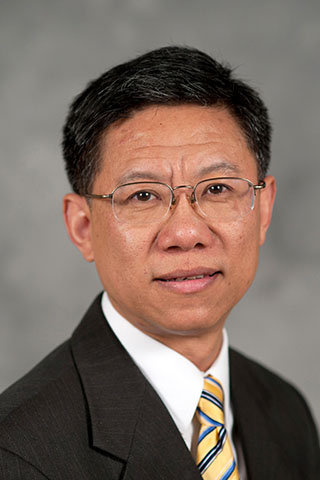
Hang Lu received her B.S. from the University of Illinois, Urbana-Champaign and her M.S.C.E.P and Ph.D. from the Massachusetts Institute of Technology. She is currently the Associate Dean for Research and Innovation in the College of Engineering and C. J. "Pete" Silas Chair, School of Chemical & Biomolecular Engineering at the Georgia Institute of Technology. Lu's research interests involve the interface of engineering and biology and her lab, the Lu Fluidics Group, is conducting research at these interface levels. The Lu Fluidics Group engineers BioMEMS (Bio Micro-Electro-Mechanical System) and microfluidic devices to address questions in neuroscience, cell biology, and biotechnology that are difficult to answer using conventional techniques.

Faces of Research - Profile Article

Associate Dean for Research and Innovation, College of Engineering
C. J. "Pete" Silas Chair, School of Chemical and Biomolecular Engineering
Phone
404.894.8473
Office
EBB 3017
Additional Research

Microfluidic systems for high-throughput screens and image-based genetics and genomicsSystems biology: large-scale experimentation and data miningMicrotechnologies for optical stimulation and optical recordingBig data, machine vision, automationDevelopmental neurobiology, behavioral neurobiology, systems neuroscienceCancer, immunology, embryonic development, stem cells
Google Scholar
https://scholar.google.com/citations?hl=en&user=DDKNuYgAAAAJ&view_op=list_works&sortby=pubdate
LinkedIn ChBE Profile Page
Hang
Lu
Show Regular Profile

Chuck Zhang

Chuck Zhang
chuck.zhang@isye.gatech.edu
ISyE Profile Page

Chuck Zhang is the Harold E. Smalley Professor in the H. Milton Stewart School of Industrial and Systems Engineering at Georgia Tech.

Zhang's research interests include scalable nanomanufacturing, modeling, simulation, and optimal design of advanced composite and nanomaterials manufacturing processes, multifunctional materials development, geometric dimensioning and tolerancing, and metrology. Most recently, he has initiated new research and education programs in advanced materials and manufacturing engineering for orthotics and prosthetics (O&P) applications. His research projects have been sponsored by a number of organizations, including the Air Force Office of Scientific Research, Army Research Laboratory, National Institute of Standards and Technology, National Science Foundation, Office of Naval Research, and Society of Manufacturing Engineers, as well as industrial companies such as ATK Launch Systems, Cummins, General Dynamics, GKN Aerospace Services, Lockheed Martin, and Siemens Power Generation.

Zhang received his Ph.D. degree in Industrial Engineering from the University of Iowa, an M.S. degree in Industrial Engineering from the State University of New York at Buffalo, and B.S. and M.S. degrees in Mechanical Engineering from Nanjing University of Aeronautics and Astronautics in China. Prior to joining ISyE, Zhang served as a professor and chairman of the Department of Industrial and Manufacturing Engineering at the Florida A&M University - Florida State University College of Engineering.

Harold E. Smalley Professor, H. Milton Stewart School of Industrial and Systems Engineering
Phone
404.894.4321
Office
Groseclose 0205 334
Additional Research

CompositesManufacturingNanomanufacturing

Google Scholar
https://scholar.google.com/citations?hl=en&user=8FCK0CIAAAAJ&view_op=list_works&sortby=pubdate
LinkedIn System Informatics and Control Group
Chuck
Zhang
Show Regular Profile

Shannon Yee

Shannon Yee
shannon.yee@me.gatech.edu
ME Profile Page

Shannon Yee began as an Assistant Professor in the George W. Woodruff School of Mechanical Engineering in January 2014. He completed his Ph.D. at the University of California - Berkeley under the supervision of Prof. Arun Majumdar, Prof. Chris Dames, and Prof. Rachel Segalman. In 2010, he was named the first fellow to the U.S. Dept. of Energy 's Advanced Research Project Agency - Energy (ARPA-E) assisting to form the agency in its inaugural year. In 2008 he was awarded the prestigious Hertz Fellowship to support his graduate studies and research in energy. Yee received his Master 's degree in Nuclear Engineering in 2008 from The Ohio State University where he was a U.S. Dept. of Energy Advanced Fuel Cycle Initiative Fellow. He received his Bachelor 's degree in Mechanical Engineering in 2007, also from The Ohio State University.

Professor, George W. Woodruff School of Mechanical Engineering
Phone
404.385.2176
Office
Love 307
Additional Research

Heat Transfer; Combustion and Energy Systems; Micro and Nano Engineering; Nuclear & Radiological Engineering

Google Scholar
https://scholar.google.com/citations?hl=en&user=GSDT2XYAAAAJ&view_op=list_works&sortby=pubdate
The Scalable Thermal Engineering Lab (STEEL)
Shannon
Yee
Show Regular Profile

Seung Woo Lee

Seung Woo Lee
seung.lee@me.gatech.edu
ME Profile Page

Seung Woo Lee joined the Woodruff School of Mechanical Engineering at the Georgia Institute of Technology as an assistant professor in January of 2013. Lee received his Ph.D. in chemical engineering at MIT, focusing on designing high-energy and high-power density nanostructured electrodes for electrochemical energy storage devices, and synthesizing catalysts for electrochemical energy conversion of small molecules such as methanol oxidation and O2 reduction. He conducted his postdoctoral research in designing electrodes for lithium rechargeable batteries and catalysts for solar energy storage in the Department of Mechanical Engineering and the Department of Chemistry at MIT.

Assistant Professor, Woodruff School of Mechanical Engineering
Director, Energy Storage and Conversion Lab
Phone
404.385.0764
Office
Love 137
Additional Research

Heat Transfer; Micro and Nano Engineering; Energy Conversion; Energy Storage; Batteries; Supercapacitors; Catalysis; Fuel Cells; Self-Assembly; Nanostructured Materials

Google Scholar
https://scholar.google.com/citations?hl=en&user=nGYeKpIAAAAJ&view_op=list_works&sortby=pubdate
Energy Storage and Conversion Lab
Seung Woo
Lee
Show Regular Profile

Younan Xia

Younan Xia
younan.xia@bme.gatech.edu
ChBE Profile Page

Xia is the Brock Family Chair and Georgia Research Alliance (GRA) Eminent Scholar in Nanomedicine in the Wallace H. Coulter Department of Biomedical Engineering at Georgia Institute of Technology and Emory University, with joint appointments in School of Chemistry and Biochemistry, and School of Chemical and Biomolecular Engineering. Professor Xia received his Ph.D. degree in Physical Chemistry from Harvard University (with Professor George M. Whitesides) in 1996, his M.S. degree in Inorganic Chemistry from University of Pennsylvania (with the late Professor Alan G. MacDiarmid, a Nobel Laureate in Chemistry, 2000) in 1993, and his B.S. degree in Chemical Physics from the University of Science and Technology of China (USTC) in 1987. He came to the United States of America in 1991. Xia has received a number of prestigious awards, including the 2013 Nano Today Award, the ACS National Award in the Chemistry of Materials (2013), Fred Kavli Distinguished Lecture in Nanoscience at the MRS Spring Meeting (2013), AIMBE Fellow (2011), MRS Fellow (2009 ), NIH Director's Pioneer Award (2006), ACS Leo Hendrik Baekeland Award (2005), Camille Dreyfus Teacher Scholar (2002), David and Lucile Packard Fellowship in Science and Engineering (2000), Alfred P. Sloan Research Fellow (2000), NSF Early Career Development Award (2000), ACS Victor K. LaMer Award (1999), and Camille and Henry Dreyfus New Faculty Award (1997). Xia has been an Associate Editor of Nano Letters since 2002, and has served on the Advisory Boards of Particle & Particle Systems Characterization (2013-), Chemical Physics Letters (2013-), Chemistry: A European Journal (2013-), Chinese Journal of Chemistry (2013-), Angewandte Chemie International Edition (2011-), Advanced Healthcare Materials (2011-, inaugural chairman of the advisory board), Accounts of Chemical Research (2010-), Cancer Nanotechnology (2010-), Chemistry: An Asian Journal (2010-), Journal of Biomedical Optics (2010-), Nano Research (2009-), Science of Advanced Materials (2009-), Nano Today (2006-), Chemistry of Materials (2005-2007), Langmuir (2005-2010, 2013-2015), International Journal of Nanotechnology (2004-), and Advanced Functional Materials (2001-). He has also served as a Guest Editor of special issues for Advanced Materials (six times), Advanced Functional Materials (one time), MRS Bulletin (one time), and Accounts of Chemical Research (one time).

GRA Eminent Scholar in Nanomedicine, Wallace H. Coulter Department of Biomedical Engineering
Professor, Wallace H. Coulter Department of Biomedical Engineering
Brock Family Chair, Wallace H. Coulter Department of Biomedical Engineering
Professor, School of Chemistry and Biochemistry, and School of Chemical and Biomolecular Engineering
Phone
404.385.3209
Office
MSE 3100J
Additional Research
Catalysis; Nanomedicine; Bio-Inspired Materials; Tissue Engineering
Google Scholar
https://scholar.google.com/citations?hl=en&user=3gDWh4gAAAAJ&view_op=list_works&sortby=pubdate
Nanocages Lab
Younan
Xia
Show Regular Profile

Todd Sulchek

Todd Sulchek
todd.sulchek@me.gatech.edu
Sulchek Lab

Todd Sulchek is an associate professor in Mechanical Engineering at Georgia Tech where he conducts fundamental and applied research in the field of biophysics. His research program focuses on the mechanical and adhesive properties of cell and biological systems and the development of microsystems to aid in their study. His research employs tools, including, MEMS, microfluidics, imaging, and patterning to understand or enable biological systems. His interests include cancer diagnostics, stem cell biomanufacturing, novel therapeutics, and ultracheap engineering tools. He is a member of the interdisciplinary Institute for Bioengineering and Bioscience. Dr. Sulchek also holds program faculty positions in Bioengineering and Biomedical Engineering and has a courtesy appointment in the School of Biology. He received his Ph.D. from Stanford in Applied Physics under Calvin Quate and received a bachelors in math and physics from Johns Hopkins. He was a postdoc and staff scientist at Lawrence Livermore National Lab. He joined Georgia Tech in 2008 as an Assistant Professor of Mechanical Engineering. He is a recipient of the NSF CAREER award, the BP Junior Faculty Teaching Excellence Award, the Lockheed Inspirational Young Faculty award, and the 2012 Petit Institute Above and Beyond Award. To date he has published 42 journal papers and has filed or been issued 7 patents. Prof. Sulchek is a strong supporter of undergraduate research, and he participates in a variety of undergraduate education activities including the Undergraduate Research Opportunities Program (UROP) and includes over 8 undergraduate authors in the past year.

Professor, Woodruff School of Mechanical Engineering
Appointments in Bioengineering, Biomedical Engineering, and Biology
Phone
404.385.1887
Office
Petit 2309
Additional Research

Biomedical Devices; bio-MEMS; biosensors; Drug Delivery; Advanced Characterization. Dr. Sulchek's research focuses primarily on the measurement and prediction of how multiple individual biological bonds produce a coordinated function within molecular and cellular systems. There are two complementary goals. The first is to understand the kinetics of multivalent pharmaceuticals during their targeting of disease markers; the second is to quantify the host cell signal transduction resulting from pathogen invasion. Several tools are developed and employed to accomplish these goals. The primary platform for study is the atomic force microscope (AFM), which controls the 3-D positioning of biologically functionalized micro- and nanoscale mechanical probes. Interactions between biological molecules are quantified in a technique called force spectroscopy. Membrane protein solubilized nanolipoprotein particles (NLPs) are also used to functionalize micro/nano-scale probes with relevant biological mediators. This scientific program requires the development of enabling instrumentation and techniques, which include the following: Advanced microscopy and MEMs; Nanomechanical linkers, which provide a convenient platform to control biomolecular interactions and study multivalent molecular kinetics; Biological mimetics, which provide a simple system to study cell membranes and pathogens. UltIMaTely, this work is used to optimize molecular drug targeting, improve chem/bio sensors, and develop more efficient pathogen countermeasures.

Google Scholar
https://scholar.google.com/citations?hl=en&user=J2TW91AAAAAJ&view_op=list_works&sortby=pubdate
ME Profile Page
Todd
Sulchek
Show Regular Profile

Mark Prausnitz

Mark Prausnitz
mark.prausnitz@chbe.gatech.edu
Center for Drug Design, Development and Delivery

Professor Mark R. Prausnitz is a Regents' Professor and the Love Family Professor in Chemical and Bimolecular Engineering in the School of Chemical & Bimolecular Engineering. He received his B.S. in 1988 from Stanford University and his Ph.D. in 1994 from the Massachusetts Institute of Technology. Professor Prausnitz and his colleagues carry out research on biophysical methods of drug delivery, which employ microneedles, ultrasound, lasers, electric fields, heat, convective forces and other physical means to control the transport of drugs, proteins, genes and vaccines into and within the body. A major area of focus involves the use of microneedle patches to apply vaccines to the skin in a painless, minimally invasive manner. In collaboration with Emory University, the Centers for Disease Control and Prevention, and other organizations, Professor Prausnitz's group is advancing microneedles from device design and fabrication through pharmaceutical formulation and pre-clinical animal studies through studies in human subjects. In addition to developing a self-administered influenza vaccine using microneedles, Professor Prausnitz is translating microneedle technology especially to make vaccination in developing countries more effective. The Prausnitz group has also developed hollow microneedles for injection into the skin and into the eye in collaboration with Emory University. In the skin, research focuses on insulin administration to human diabetic patients to increase onset of action by targeting insulin delivery to the skin. In the eye, hollow microneedles enable precise targeting of injection to the suprachoroidal space and other intraocular tissues for minimally invasive delivery to treat macular degeneration and other retinal diseases. Professor Prausnitz and colleagues also study novel mechanisms to deliver proteins, DNA and other molecules into cells. Cavitation bubble activity generated by ultrasound and by laser-excitation of carbon nanoparticles breaks open a small section of the cell membrane and thereby enables entry of molecules, which is useful for gene-based therapies and targeted drug delivery. In addition to research activities, Professor Prausnitz teaches an introductory course on engineering calculations, as well as two advanced courses on pharmaceuticals and technical communication, both of which he developed. He also serves the broader scientific and business communities as a frequent consultant, advisory board member and expert witness.

Faces of Research - Profile Article

Regents' Professor, School of Chemical and Bimolecular Engineering
J. Erskine Love Jr. Chair; Chemical and Biomolecular Engineering
Director, Center for Drug Design, Development and Delivery
Phone
404.894.5135
Office
Petit 1312
Additional Research
Micro and Nano Engineering; Nanomedicine; microneedle patches; Microfabrication; nanoparticle drug delivery
Google Scholar
http://scholar.google.com/scholar?hl=en&q=mark+prausnitz&btnG=Search&as_sdt=80001&as_ylo=&as_vis=0
ChBE Profile Page
Mark
Prausnitz
Show Regular Profile

Wilbur Lam

Wilbur Lam
wilbur.lam@bme.gatech.edu
BME Profile Page

Dr. Wilbur Lam received his B.A. from Rice University in 1995, his M.D. from the Baylor College of Medicine in 1999 and his Ph.D. from the University of California,San Francisco/University of California, Berkeley Joint Graduate Group in Bioengineering in 2008. He completed his Residency in Pediatrics from UCSF in 2002 and was a Postdoctoral Fellow at UC Berkeley from 2008-2010. Dr. Lam's research involves integrating microtechnology ,development, experimental hematology and oncology and clinical medicine. His interdisciplinary laboratory, comprising clinicians, engineers, and biologists, is dedicated to applying and developing micro/nanotechnologies to study, diagnose, and treat blood disorders, cancer, and childhood diseases. This unique "basement to bench to bedside" approach to biomedical research is enabled by our lab's dual locations at the Emory University School of Medicine and the Georgia Institute of Technology and our affiliations with the Children's Healthcare of Atlanta hospitals.

Professor, Wallace H. Coulter Department of Biomedical Engineering
Pediatric Hematologist/Oncologist, Children’s Healthcare of Atlanta
Professor of Pediatrics, Emory University School of Medicine
Phone
404.385.5081
Office
Marcus 3135
Additional Research

Cellular mechanics of hematologic processes and disease, microfluidics, microfabrication, BioMEMs, point-of-care diagnostics, pediatric medicine, hematology, oncology. Our interdisciplinary laboratory, comprising clinicians, engineers, and biologists, is dedicated to applying and developing micro/nanotechnologies to study, diagnose, and treat blood disorders, cancer, and childhood diseases. This unique "basement to bench to bedside" approach to biomedical research is enabled by our lab's dual locations at the Emory University School of Medicine and the Georgia Institute of Technology and our affiliations with the Children's Healthcare of Atlanta hospitals.

Google Scholar
https://scholar.google.com/citations?hl=en&user=-C3ZzToAAAAJ&view_op=list_works&sortby=pubdate
LinkedIn Lam Lab
Wilbur
Lam
A.
Show Regular Profile

YongTae (Tony) Kim

YongTae (Tony) Kim
yongtae.kim@me.gatech.edu
Personal Website

Kim joined the Woodruff School of Mechanical Engineering as an Assistant Professor in July 2013. Prior to his current appointment, he was a Postdoctoral Associate in the David H. Koch Institute for Integrative Cancer Research at MIT, where he developed biomimetic microsystems for probing nanoparticle behaviors in the inflamed endothelium and for synthesizing therapeutic and diagnostic nanomaterials. His doctorate research at CMU focused on closed-loop microfluidic control systems for lab-on-a-chip applications to biochemistry and developmental biology. Prior to his Ph.D., he was a researcher in areas of dynamics, controls, and robotics at R&D Divisions of Hyundai-Kia Motors and Samsung Electronics for six years.

Associate Professor, Woodruff School of Mechanical Engineering
Phone
404.385.1478
Office
Marcus 3134
Additional Research

Multifunctional Materials; Biosensors; Bio-MEMS; Tissue Engineering

Google Scholar
https://scholar.google.com/citations?hl=en&user=Q13X9mMAAAAJ&view_op=list_works&sortby=pubdate
Multiscale Biosystems and Multifunctional Nanomaterials Lab
YongTae (Tony)
Kim
Show Regular Profile

Mijin Kim

Mijin Kim

Mijin Kim is an assistant professor in the School of Chemistry and Biochemistry at Georgia Tech.