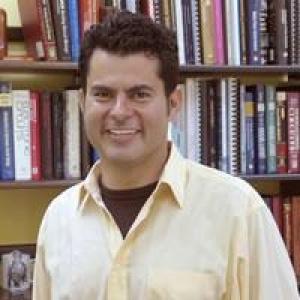
Spyros Pavlostathis
Energy Storage; Biofuels
Seymour E. Goodman, Ph.D., joined the Georgia Tech faculty in 2000 as Professor of International Affairs and Computing and Co-Director of the Georgia Tech Information Security Center, jointly in the Sam Nunn School of International Affairs and the College of Computing. Prof. Goodman's research interests include international developments in the information technologies (IT), technology diffusion, IT and national security, critical infrastructure protection, and related public policy issues. Areas of geographic interest include the former Soviet Union and Eastern Europe, Latin America, the Middle East, South and East Asia, and parts of Africa. Earlier research had been in areas of statistical and continuum physics, combinatorial algorithms, and software engineering. He is the author or co-author of about 150 publications in these subjects, and serves in various editorial capacities for several academic journals, including contributing editor for International Perspectives for the Communications of the ACM since 1990. He has served on numerous study and advisory committees for the ACM, the Departments of Commerce, Defense, and State, the US Congress, and the National Research Council. Prof. Goodman's work has been supported by almost three dozen funding sources, most recently by multi-year grants from the National Science Foundation and the MacArthur Foundation. He teaches several undergraduate and graduate courses in science and technology and national and international security. In 2010, he was appointed to the Computer Science and Telecommunications Board of the National Research Council of the National Academies. Secondary research interests include the impact of S&T on the American Civil War, World War II, and the Cold War. Prof. Goodman was an undergraduate at Columbia University and obtained his Ph.D. from the California Institute of Technology.
Software & Applications; Algorithms; Defense / National Security; Cyber Technology
Maryam Saeedifard received the B.S. and M.S. degrees from Isfahan University of Technology, Isfahan, Iran, in 1998 and 2002, respectively, and the Ph.D. degree from the University of Toronto, Canada, in 2008, all in electrical engineering.
From 2007 to 2008, she was with ABB Corporate Research Center, Dattwil-Baden, Switzerland, working in the power electronic systems group. She joined Purdue University in January 2010, where she served as an assistant professor in the School of Electrical and Computer Engineering. Since January 2014, she has been on the ECE faculty at the Georgia Institute of Technology.
Her main research focus has been in the area of Power Electronics and Applications of Power Electronics in Power Systems and Transportation Systems. She has served on the technical program committees of the IEEE Power Electronics Society, IEEE Applied Power Electronics Conference and Exposition (APEC), and IEEE Industrial Electronics Conference (IECON). She is an editor for IEEE Trans. on Sustainable Energy, IEEE Trans. on Power Delivery, and IEEE Trans. on Power Electronics.
Electric Vehicles; Electrical Grid; Electronics
Tequila A. L. Harris is a Professor in the George W. Woodruff School of Mechanical Engineering, and is the director of the Highly Advanced Roll-to-Roll iManufacturing Systems (HARRiS) group. Her research focuses on investigating the fundamental science associated with manufacture of polymer thin films from fluids (e.g., solutions, dispersions, slurries, etc.) as they are coated onto permeable or impermeable surfaces to make components or devices. She explores the connectivity between thin film functionality, based on their manufacture or structure, and their life expectancy, to elucidate mechanisms by which performance or durability can be predicted. In addition to conducting computational analysis, developing analytical models and running experiments, Harris also develops new manufacturing technologies to fabricate thin films, in wide area or discrete patterns. Target applications are well-suited for a variety of industries including food, energy, electronic, and environmental systems to name a few. In conjunction with her research activities, she is committed to the education, mentoring, and advisement of students towards scholarly achievements. She has published over fifty peer-reviewed articles. Harris has several awards including the National Science Foundation's young investigator CAREER Award and the Lockheed Inspirational Young Faculty Award.
Additive/Advanced Manufacturing; Flexible Electronics; Polymers; micro and nanomechanics; Thin Films; Electronics; Energy Storage; Thermal Systems; Manufacturing and Fluid Mechanics; Polymer processing; mechanical system design; fluid flow; mechanical and physical property characterization of thin film
Seung Woo Lee joined the Woodruff School of Mechanical Engineering at the Georgia Institute of Technology as an assistant professor in January of 2013. Lee received his Ph.D. in chemical engineering at MIT, focusing on designing high-energy and high-power density nanostructured electrodes for electrochemical energy storage devices, and synthesizing catalysts for electrochemical energy conversion of small molecules such as methanol oxidation and O2 reduction. He conducted his postdoctoral research in designing electrodes for lithium rechargeable batteries and catalysts for solar energy storage in the Department of Mechanical Engineering and the Department of Chemistry at MIT.
Heat Transfer; Micro and Nano Engineering; Energy Conversion; Energy Storage; Batteries; Supercapacitors; Catalysis; Fuel Cells; Self-Assembly; Nanostructured Materials
Edmond Chow is a Professor in the School of Computati
Youjiang Wang joined Georgia Tech faculty in 1989. His research interests include mechanics of composites, yarns, fabrics, and geotextiles; manufacturing processes and characterization of fibers, textiles and textile structural composites; and fiber recycling. Wang is a registered Professional Engineer in the State of Georgia, and a Fellow of ASME.
Maryam Saeedifard received the B.S. and M.S. degrees from Isfahan University of Technology, Isfahan, Iran, in 1998 and 2002, respectively, and the Ph.D. degree from the University of Toronto, Canada, in 2008, all in electrical engineering.
Rusty Roberts is the Director of the Aerospace, Transportation and Advanced Systems (ATAS) Laboratory at the Georgia Tech Research Institute (GTRI). ATAS develops advanced systems concepts, builds system prototypes, and performs research on technologies related to aerospace, transportation, power and energy, threat systems, and food processing. A nationally recognized expert in test and evaluation, Roberts has held the position of the President of the International Test and Evaluation Association (ITEA).