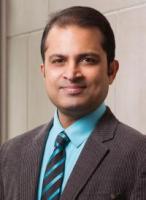
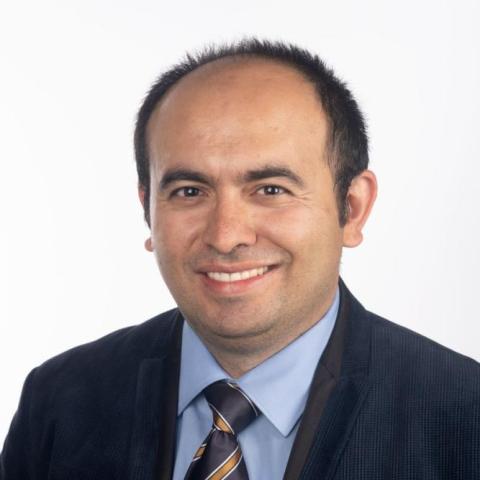
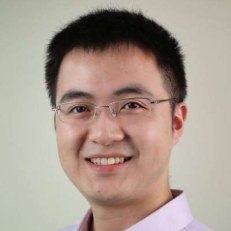
Amirali Aghazadeh

Amirali Aghazadeh
aaghazadeh3@gatech.edu
Profile Page

Amirali Aghazadeh is an Assistant Professor in the School of Electrical and Computer Engineering and also program faculty of Machine Learning, Bioinformatics, and Bioengineering Ph.D. programs. He has affiliations with the Institute for Data Engineering and Science (IDEAS) and Institute for Bioengineering and Biosciences. Before joining Georgia Tech, Aghazaeh was a postdoc at Stanford and UC Berkeley and completed his Ph.D. at Rice University. His research focuses on developing machine learning and deep learning solutions for protein and small molecular design and engineering.
 

Assistant Professor
Phone
713-257-5758
Office
CODA S1209
Google Scholar
https://scholar.google.com/citations?hl=en&user=87wBxzUAAAAJ&view_op=list_works&sortby=pubdate
Amirali
Aghazadeh
Show Regular Profile

Saurabh Sinha, Ph.D.

Saurabh Sinha, Ph.D.
Lab

Saurabh Sinha received his Ph.D. in Computer Science from the University of Washington, Seattle, in 2002, and after post-doctoral work at the Rockefeller University with Eric Siggia, he joined the faculty of the University of Illinois, Urbana-Champaign, in 2005, where he held the positions of Founder Professor in Computer Science and Director of Computational Genomics in the Carl R. Woese Institute for Genomic Biology until 2022. He joined Georgia Institute of Technology in 2022, as Wallace H. Coulter Distinguished Chair in Biomedical Engineering, with joint appointments in Biomedical Engineering and Industrial & Systems Engineering. Sinha’s research is in the area of bioinformatics, with a focus on regulatory genomics and systems biology. Sinha is an NSF CAREER award recipient and has been funded by NIH, NSF and USDA. He co-directed an NIH BD2K Center of Excellence and was a thrust lead in the NSF AI Institute at UIUC. He led the educational program of the Mayo Clinic-University of Illinois Alliance, and co-led data science education for the Carle Illinois College of Medicine. Sinha has served as Program co-Chair of the annual RECOMB Regulatory and Systems Genomics conference and served on the Board of Directors for the International Society for Computational Biology (2018-2021). He was a recipient of the University Scholar award of the University of Illinois, and selected as a Fellow of the AIMBE in 2018.

Wallace H. Coulter Distinguished Chair in Biomedical Engineering
Professor
Office
3108 UAW
Saurabh
Sinha
Show Regular Profile

Ahmet Coskun

Ahmet Coskun
acoskun7@gatech.edu
Website

Ahmet Coskun is a Bernie-Marcus Early-Career Professor of Biomedical Engineering at Georgia Institute of Technology and Emory University. Coskun is a systems biotechnologist and bioengineer, working at the nexus of multiplexed cell imaging and quantitative tissue biology. He directs an interdisciplinary research team at the Single Cell Biotechnology and Spatial Omics Laboratory, an interdisciplinary program strategically positioned for multiparameter imaging one cell at a time by spatial context and function. Coskun holds five issued patents and is also the co-author of more than 50 peer-reviewed publications in major scientific journals. He is a recipient of the NSF CAREER Award 2024, NIH R35 MIRA Award 2023, Sigma Xi Young Faculty Award 2025, CMBE Young Innovator Award 2024, BMES-CMBE Rising Star Award 2023, American Lung Association Innovation Award 2022, Burroughs Welcome Fund CASI Award 2016, and Student Recognition of Excellence in Teaching: Class of 1934 CIOS Award, among other research and teaching awards. Previously, Coskun was an instructor at Stanford University. He received his postdoctoral training from the California Institute of Technology. He holds a Ph.D. from the University of California, Los Angeles. His research has been supported by federal and private grants, including the National Institutes of Health (NIGMS, NIA, NIAID, NCI, NIDCR, OD, and ORIP), Wellcome LEAP, Burroughs Wellcome Fund (CASI), NSF CMaT, American Cancer Society IRG, Multi-cellular engineered living systems (M-CELS), and Regenerative Medicine Center. In addition, he leads outreach programs to engage K-12 students and undergraduate students through BioCrowd Studio, an innovative crowd-sourcing program bringing together interactive virtual media, distributed biokits, and collaborative spatial discovery.

Associate Professor of Biomedical Engineering
Phone
404.894.3866
Office
Petit Biotechnology Building, Office 1311
Additional Research

The Single Cell Biotechnology Lab aims to study spatial biology in health and disease. Our research lies at the nexus of multiplex bioimaging, microfluidic biodynamics, and big data biocomputation. Using high-dimensional nanoscale imaging datasets, we address fundamental challenges in immuno-engineering, cancers, and pediatric diseases. Our lab pursues a transformative multi-omics technology to integrate spatially resolved epigenetics and spatial genomics, proteomics, and metabolomics, all in the same platform. We uniquely benefit from super-resolution microscopy, imaging mass spectrometry, combinatorial molecular barcoding, and machine learning to enhance the information capacity of our cellular data. Variability of single cell images can be used to understand differences in therapeutic responses, as well as satisfy our curiosity on understanding how cells are spatially organized in nature.

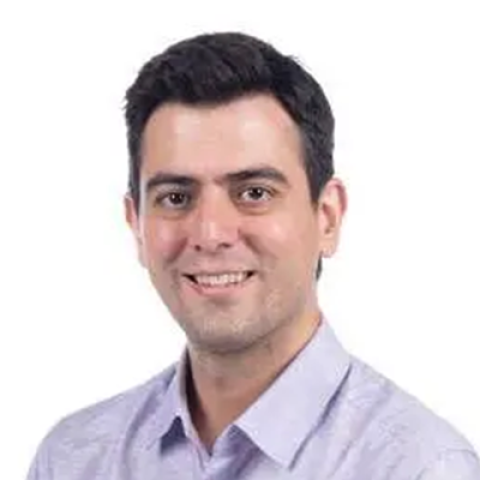
University, College, and School/Department
Google Scholar
https://scholar.google.com/citations?user=4MR2wSIAAAAJ&hl=en
LinkedIn Related Site
Ahmet
Coskun
Show Regular Profile

King Jordan

King Jordan
king.jordan@biology.gatech.edu
Website

King Jordan is Professor in the School of Biological Sciences and Director of the Bioinformatics Graduate Program at the Georgia Institute of Technology. He has a computational laboratory and his group works on a wide variety of research and development projects related to: (1) human clinical & population genomics, (2) computational genomics for public health, and (3) computational approaches to functional genomics. He is particularly interested in the relationship between human genetic ancestry and health. His lab is also actively engaged in capacity building efforts in genomics and bioinformatics in Latin America. 

Professor
Director, Bioinformatics Graduate Program
Phone
404-385-2224
Office
EBB 2109
Additional Research
Epigenetics ; Computational genomics for public health. We are broadly interested in the relationship between genome sequence variation and health outcomes. We study this relationship through two main lines of investigation - human and microbial.Human:we study how genetic ancestry and population structure impact disease prevalence and drug response. Our human genomics research is focused primarily on complex common disease and aims to characterize the genetic architecture of health disparities, in pursuit of their elimination.Microbial:we develop and apply genome-enabled approaches to molecular typing and functional profiling of microbial pathogens that cause infectious disease. The goal of our microbial genomics research is to empower public health agencies to more effectively monitor and counter infectious disease agents.
Google Scholar
https://scholar.google.com/citations?user=v1hVGqgAAAAJ&hl=en
LinkedIn http://biosciences.gatech.edu/people/king-jordan
King
Jordan
Show Regular Profile

Manoj Bhasin

Manoj Bhasin
manoj.bhasin@bme.gatech.edu
Research Lab Page

Dr. Bhasin's laboratory has developed strategies for analysis of transcriptome, epigenome, and proteomics data to perform multi-scale modeling of interaction among different cells molecular level and to identify novel biomarkers. He and his team are currently focusing on developing novel single-cell omics approaches to understand disease heterogeneity and the impact of treatments at single-cell resolution. He is involved in developing approaches for the analysis of multi-dimensional single-cell data by developing innovative approaches for single-cell sparsity, batch correction, annotation, and integration. Using these approaches, his group is working toward understanding: 1. Understanding heterogeneity and relapse mechanisms in pediatric hematological malignancies 2. Understanding heterogeneity and progression in multiple myeloma. 3. Development of molecular diagnostics platforms for cancer diagnosis and prognosis 4. Identification of biomarkers for early detection of pancreatic cancer, glioblastoma, and colon cancer 5. Artificial intelligence-based histopathology and radiology cancer image analysis approaches 6. Single-cell Atlas for Pediatric Cancers Additionally, our group is also developing Biomarkers associated with impaired healing of Diabetic Foot Ulcers using single-cell profiling and deep learning-driven wound image analysis. We are working collaboratively to develop innovative genomics and clinical data-driven drug repurposing approaches.

Associate Professor
Office
101 Woodruff Circle, 4th Floor East
Additional Research
Approaches for the analysis of multi-dimensional single-cell data
Google Scholar
https://scholar.google.com/citations?hl=en&user=o6Mm3S4AAAAJ&view_op=list_works&sortby=pubdate
BME Profile Page
Manoj
Bhasin
Show Regular Profile

Yunan Luo

Yunan Luo
yunan@gatech.edu
CoC Faculty Profile Page

I am an Assistant Professor in the School of Computational Science and Engineering (CSE), Georgia Institute of Technology since January 2022. I received my PhD from the Department of Computer Science at the University of Illinois Urbana-Champaign, advised by Prof. Jian Peng. Prior to that, I received my bachelor’s degree in Computer Science from Yao Class at Tsinghua University in 2016.

I am broadly interested in computational biology and machine learning, with a focus on developing AI and data science methods to reveals core scientific insights into biology and medicine. Recent interests include deep learning, transfer learning, sequence and graph representation learning, network and system biology, functional genomics, cancer genomics, drug repositioning and discovery, and AI-guided biological design and discovery.

Assistant Professor, Computational Science and Engineering
Additional Research
  • Artificial Intelligence
  • Bioengineering
  • Bioinformatics
  • Biomaterials
  • Cancer Biology
  • Drug Discovery
  • Machine Learning
  • Protein Engineering
Google Scholar
https://scholar.google.com/citations?hl=en&user=N8RBFoAAAAAJ&view_op=list_works&sortby=pubdate
Yunan
Luo
Show Regular Profile

Manoj Bhasin

Manoj Bhasin

Dr. Bhasin's laboratory has developed strategies for analysis of transcriptome, epigenome, and proteomics data to perform multi-scale modeling of interaction among different cells molecular level and to identify novel biomarkers. He and his team are currently focusing on developing novel single-cell omics approaches to understand disease heterogeneity and the impact of treatments at single-cell resolution.

Amirali Aghazadeh

Amirali Aghazadeh Mohandesi

Amirali Aghazadeh is an Assistant Professor in the School of Electrical and Computer Engineering and also program faculty of Machine Learning, Bioinformatics, and Bioengineering Ph.D. programs. He has affiliations with the Institute for Data Engineering and Science (IDEAS) and Institute for Bioengineering and Biosciences. Before joining Georgia Tech, Aghazaeh was a postdoc at Stanford and UC Berkeley and completed his Ph.D. at Rice University.

Yunan Luo

Yunan Luo

I am an Assistant Professor in the School of Computational Science and Engineering (CSE), Georgia Institute of Technology since January 2022. I received my PhD from the Department of Computer Science at the University of Illinois Urbana-Champaign, advised by Prof. Jian Peng. Prior to that, I received my bachelor’s degree in Computer Science from Yao Class at Tsinghua University in 2016.

Saurabh Sinha, Ph.D.


Saurabh Sinha received his Ph.D. in Computer Science from the University of Washington, Seattle, in 2002, and after post-doctoral work at the Rockefeller University with Eric Siggia, he joined the faculty of the University of Illinois, Urbana-Champaign, in 2005, where he held the positions of Founder Professor in Computer Science and Director of Computational Genomics in the Carl R. Woese Institute for Genomic Biology until 2022. He joined Georgia Institute of Technology in 2022, as Wallace H.