Jeffery Hsieh
The Gutekunst Lab is interested in pushing the limits of complexity in macromolecular systems using innovative concepts from synthetic organic chemistry.
Specific projects in the lab will explore the design of novel monomers for the construction of functional polyamides, the development of small molecule reagents for the dynamic modulation of branched polymer architectures, and the investigation of new concepts for creating covalent bonds in challenging contexts. Each of these research projects will enable the generation of new functional materials with structures or assemblies that were previously inaccessible for study.
Prospective students will obtain extensive training in synthetic organic chemistry, as well as polymer synthesis and characterization.
John R. Reynolds is a Professor of Chemistry and Biochemistry, and Materials Science and Engineering at the Georgia Institute of Technology with expertise in polymer chemistry and serves as a member of the Center for Organic Photonics and Electronics (COPE). His research interests have involved electrically conducting and electroactive conjugated polymers for over 30 years with work focused to the development of new polymers by manipulating their fundamental organic structure in order to control their optoelectronic and redox properties. His group has been heavily involved in developing new polyheterocycles, visible and infrared light electrochromism, along with light emission from polymer and composite LEDs (both visible and near-infrared) and light emitting electrochemical cells (LECs). Further work is directed to using organic polymers and oligomers in photovoltaic cells. Reynolds obtained his M.S. (1982) and Ph.D. (1984) degrees from the University of Massachusetts in Polymer Science and Engineering, he has published over 300 peer-reviewed scientific papers, has 15 patents issued and ~25 patents pending, and served as co-editor of the “Handbook of Conducting Polymers” which was published in 2007. He was awarded the ACS Award in Applied Polymer Science in 2012. He serves on the editorial board for the journals ACS Applied Materials and Interfaces, Macromolecular Rapid Communications, Polymers for Advanced Technologies, and the Journal of Macromolecular Science, Chemistry.
Organic and Inorganic Photonics and Electronics; Conducting Polymers; LEDs & OLEDs; Materials Synthesis and Processing; Materials discovery; Chemistry; Polymers; Biomaterials
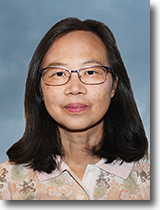
In May 2000, Dr. Yang earned his doctorate degree in environmental and resource engineering from the College of environmental science and forestry, State University of New York. He also held M.S. degree and B.Sc. degree in pulping and paper. He first joined IPST, the former of RBI at Georgia Tech, in 2000 as a post doctor fellow. Soon he was hired as research scientist I. In 2006, he was promoted to be research scientist II. In 2013, he was appointed to be the manager of pulping and bleaching lab. Beginning from 2016, Dr. Yang has been teaching Pulp & Bleaching Lab (ChBE4873). In 2019, he was assigned additional duty in managing chemical analysis lab. With strong educational background in wood chemistry, coupled with the acquired skills and experience in chemical analysis., Dr. Yang’s main area of interest was utilizations of natural resources, especially biomass, in a sustainable way. He also interested in the development of novel online detection and monitoring in chemical process, and providing technical services to the industries and research communities.
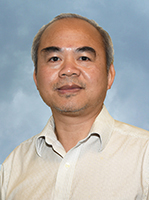
Jamshad Mahmood has over 23 years of experience in corrosion testing and manufacturing of recovery boilers and pressure vessels. He is a Mechanical/Research Engineer with expertise in the design, manufacturing of industrial equipments and conducting lab corrosion testing e.g., slow strain rate corrosion testing, electrochemical corrosion testing, high-temperature aqueous corrosion testing and molten salts corrosion testing. In addition to laboratory experimentation, Jamshad conducted several field studies evaluating in-situ corrosion of pulp mill equipments e.g., digesters, paper machines, storage tanks and recovery boiler tubes. He manages the corrosion laboratories and chemical inventories for the corrosion group. Prior to joining the Institute of Paper Science and Technology in 1997, he worked as Manager Production for 8 years with Descon Engineering Works – one of the large boiler manufactures.
- - - - - - - - - - - - - - - - - - - - -
Professor of the Practice
School of Chemical and Biomolecular Engineering
College of Engineering, Georgia Institute of Technology
Associate Director, Pulp, Paper, Packaging and Tissue, Renewable Bioproducts Institute, an Interdisciplinary Research Institute at GT
Director, GT Pulp and Paper Engineering Undergraduate Certificate Program and Foundation
Brief Biography:
Luettgen has 25 plus years of industry experience, with Scott Paper and Kimberly-Clark Corp., where he most recently served as head of North American Innovation the Kimberly-Clark Professional business sector. He has held positions in product development and innovation as well as in capital project management and manufacturing facility leadership.
For several years, Luettgen has served on the Georgia Tech Renewable Bioproducts Institute Industry Board of Advisors, and as the Chairman of the Board of the Technical Association of the Pulp & Paper Industry (TAPPI). He earned his bachelor's degree in Paper Engineering at Western Michigan University (’85), his master’s degree at the Institute of Paper Chemistry, Appleton, WI (’87), and his Ph.D. in Surface Chemistry at the Institute of Paper Science and Technology - now the Renewable Bioproducts Institute at Georgia Tech (’91).
He rejoined Georgia Tech in November 2014 as a Professor of the Practice in the School of Chemical and Biomolecular Engineering, and Associate Director of Pulp, Paper, Tissue and Packaging at RBI. He also serves as the Director of the undergraduate Pulp and Paper Certificate Program and its Foundation.
Areas of research interest include: Recycling; renewable cellulosic feedstocks; replacing fossil-based products with bio-based materials; commercialization of nanocellulosic materials in consumer and packaging products; Smart Manufacturing and Industry 4.0; tissue/towel manufacturing and converting; and manufacturing leadership / operational excellence.
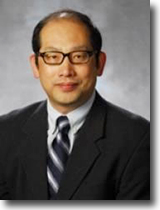
Jianxin (Roger) Jiao (M’01) received the Bachelor's degree in mechanical engineering from Tianjin University of Science and Technology, Tianjin, China, the Master's degree in manufacturing engineering from Tianjin University, Tianjin, China, and the Ph.D. degree in industrial engineering from Hong Kong University of Science and Technology, Kowloon, Hong Kong, in 1998.,He is currently an Associate Professor of enterprise systems engineering in the G. W. Woodruff School of Mechanical Engineering, Georgia Institute of Technology, Atlanta. He was an Assistant Professor and Associate Professor in the School of Mechanical and Aerospace Engineering, Nanyang Technological University, Singapore. His research interests include engineering design, manufacturing systems and logistics, affective computing, and engineering management.