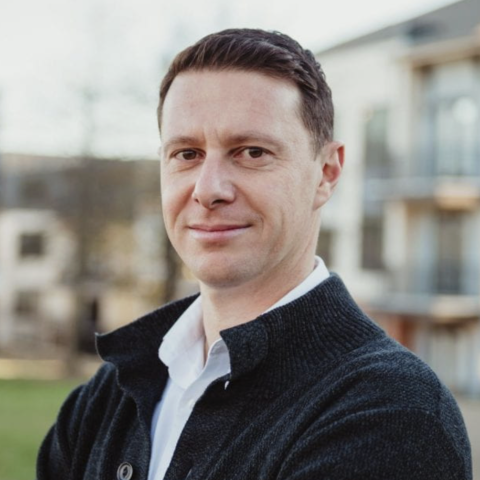
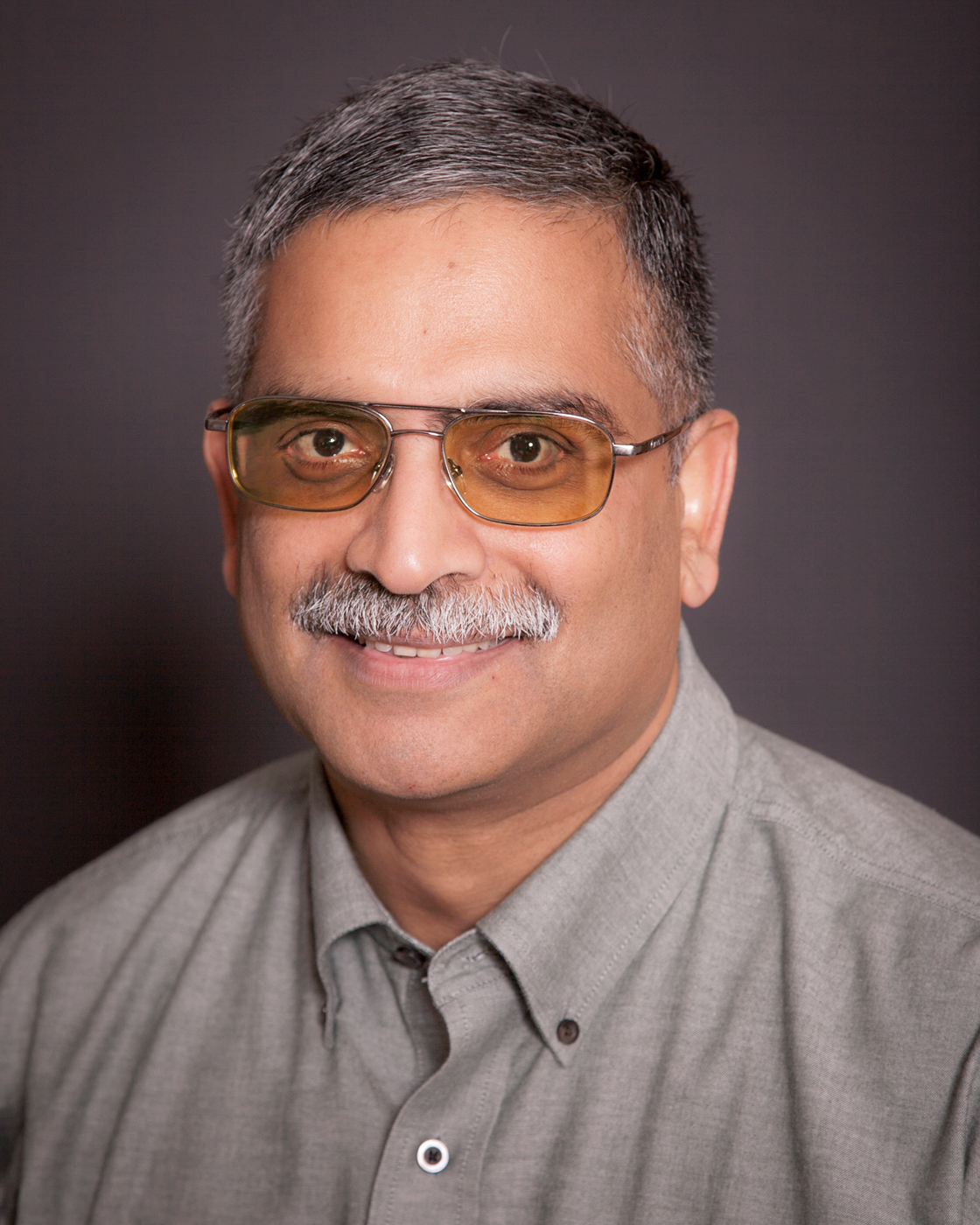
Nolan Hertel
Nuclear
Nuclear
Prior to joining MSE in July 2003 Professor Singh was a faculty member in Corrosion and Materials Engineering Group at The Institute of Paper Science and Technology (IPST) since 1996. While in IPST Singh worked on fundamental as well as applied research projects related to the corrosion problems in the pulp and paper industry. From 1990 to 1996, he was a Senior Research Associate at Case Western Reserve University, Cleveland, Ohio, working on various materials and corrosion related research projects, including damage accumulation in metal matrix composites (MMCs), Environmental sensitive fracture of Al-alloys MMCs, and High temperature oxidation of Nb/Nb5Si3 composites. He received the Alcan International's Fellowship in 1988-90 to work on "Effects of Low Melting Point Impurities on Slow Crack Growth in Al Alloys," He has published over 50 papers in reputed scientific journals and conference proceedings. He is active member of NACE, TMS, TAPPI and has co-organized a number of international symposiums.
Reliable performance of the materials is very important for any industrial process and especially for the chemical process industry for the manufacture of a high quality product. Material selection is generally based on the required material properties, low initial capital investment, and minimum maintenance. Changes in the process parameters to improve products can often lead to higher corrosion susceptibilities of the plant materials. Moreover, with increase in capital cost, there is pressure to extend the life of existing plant equipment beyond its original design life. Corrosion and Materials Engineers are also playing a key role in selecting, maintaining, and modifying materials for changing needs for every industry. Corrosion Science and Engineering research includes understanding the basic mechanisms involved in material degradation in given environments and using that knowledge to develop a mitigation strategy against environment-induced failures
Composites; fracture and fatigue; stress corrosion; Materials Failure and Reliability; Biofuels; Chemical Recovery; Environmental Processes; Sustainable Manufacturing; Energy & Water; Corrosion & Reliability
Steven Biegalski is the Chair of Nuclear and Radiological Engineering and Medical Physics Program at Georgia Institute of Technology. He has three degrees in nuclear engineering from University of Maryland, University of Florida, and University of Illinois, respectively. Early in his career Dr. Biegalski was the Director of Radionuclide Operations at the Center for Monitoring Research. In this position Dr. Biegalski led international efforts to develop and implement radionuclide effluent monitoring technologies. This work supported both US national capabilities and international treaties. Dr. Biegalski was a faculty member at The University of Texas at Austin for 15 years and held the position of Reactor Director for The University of Texas at Austin TRIGA reactor for over a decade. He has advised 25 Ph.D. students to graduation and holds Professional Engineering licenses in the states of Texas and Virginia.
Nuclear
Phanish Suryanarayana joined the School of Civil and Environmental Engineering at the Georgia Institute of Technology in August 2011. He received his B.Tech. from Indian Institute of Technology, Madras, India in 2005. He obtained his M.S. in Aeronautics from California Institute of Technology in 2006. Subsequently, he received his Ph.D. in Aeronautics from California Institute of Technology in 2011 for his thesis titled "Coarse-graining Kohn-Sham Density Functional Theory". His research interests are in the areas of multiscale modeling, ab-initio calculations, density functional theory, continuum mechanics and smart materials. Overall, he is interested in developing efficient numerical methods for solving problems arising in a variety of fields. On a personal level, Dr. Suryanarayana is a sports enthusiast. He plays badminton, cricket, waterpolo, and ultimate frisbee. He also is an avid gamer (PC) and enjoys playing bridge and other board game
Nuclear
Richard joined Georgia Tech in 2023 and focuses on energy and cleantech company formation, market strategy, funding, and partnerships in support of faculty led research and resulting startups. His domain expertise is in regulated and competitive energy markets, energy infrastructure development, project finance, go-to-market strategies, energy policy, multi-stakeholder negotiations and process improvement.
Prior to joining Georgia Tech, Richard co-founded several successful startups including Merit Sustainable Infrastructure, served as VP of Project Development for First Solar, and held leadership positions with power grid operator ERCOT, Energy Management Associates, Electronic Data Systems and Tenneco. Since 2007, Richard has led project development resulting in over 4,000 megawatts (nominally $4 billion) of operating solar and wind projects across the US. Most recently he has spearheaded development of ATL Cleantech Connect, a partnership between the Strategic Energy Institute at GT and the Metro Atlanta Chamber of Commerce to grow the clean energy and sustainability startup ecosystem in and around Atlanta.
Richard holds an MBA from the University of St. Thomas, a BA in Economics from Southern Methodist University and attend the Advance Management Program (AMP) at the Harvard Business School.
Dr. Realff’s broad research interests are in the areas of process design, simulation, and scheduling. His current research is focused on the design and operation of processes that minimize waste production by recovery of useful products from waste streams, and the design of processes based on biomass inputs. In particular, he is interested in carbon capture processes both from flue gas and dilute capture from air as well as the analysis and design of processes that use biomass.
Biofuels; Carbon Capture; Separations Technology; System Design & Optimization; SMART Manufacturing; Energy & Water; Separation Technologies; Biochemicals; Chemical Feedstocks; Sugars; Lignin & Hemicellulose; Biofuels
Bojan Petrovic joined Georgia Tech in 2007 as a Professor. Prior to that he acquired industrial experience as a Fellow Scientist in Westinghouse Science and Technology where his primary responsibility was as the project Deputy Director on the development of the advanced, modular IRIS reactor.
Dr. Petrovic's current research focuses on advanced reactor design, nuclear fuel cycle and waste management, and related modeling and simulation methods.
Over the past ten years, he has been involved in the development of the IRIS Reactor, within an international team of 19 organizations from ten countries. IRIS is an advanced medium power (335 MWe) integral-type PWR, based on proven light-water technology, but incorporating many innovative solutions that improve its operation, safety, security, and economics. Advanced reactors have the potential to offer full benefit in synergy with advanced fuel cycles. Recently, the focus of this research is shifting to judicious selection of fuel cycle, reprocessing, and partition and transmutation options, which may significantly reduce the radiotoxicity of spent nuclear fuel and enable its safe and economical ultimate disposal.
Novel reactor designs and advanced fuel cycles pose new challenges and require improved, more accurate methods of modeling and simulations. Dr. Petrovic's interest is in developing approaches for using Monte Carlo and hybrid deterministic-Monte Carlo methods (for eigenvalue as well as shielding applications) in a way that will be practical and relevant for analysis of complex nuclear systems.
Dr. Petrovic has a strong interest in interdisciplinary areas, and his research projects have included collaboration related to industrial and medical applications of nuclear technology. His recent research in computational medical physics focuses on proton therapy. His research has been sponsored by the Department of Energy, industry and utilities.
Nuclear
Dr. Dan Kotlyar is an Assistant Professor in the Nuclear and Radiological Engineering, G.W.W. School of Mechanical Engineering. He received his B.Sc. in Engineering in 2008, MSc in Nuclear Engineering in 2010, and PhD in Nuclear Engineering in 2013 from Ben-Gurion University, Israel. In 2014, he joined the University of Cambridge as a Research Associate in the Engineering Design Center. In 2014, he was elected as a Research Fellow at Jesus College. He is the recipient of the NRC Faculty Development Fellowship. Dr. Kotlyar’s research interests include development of numerical methods and algorithms for coupled Monte Carlo, fuel depletion and thermal hydraulic codes. In particular, he specializes in applying these methods to the analysis of advanced reactor systems. Dr. Kotlyar’s research also focuses on optimizing the performance of various fuel cycles in terms of fuel utilization, proliferation, and cost. Dr. Kotlyar profoundly believes in education through research and thus integrates practical reactor system design into his lectures.
Nuclear
Dr. Garimella began at Tech in August 2003 as an Associate Professor and Director of the Sustainable Thermal Systems Laboratory. Prior, he was an Associate Professor at Iowa State University, an Assistant and Associate Professor at Western Michigan University, a Research Scientist at Battelle Memorial Institute, and a Senior Engineer at General Motors.
Thermal Systems