Preet Singh

Preet Singh
preet.singh@mse.gatech.edu
Corrosion and Materials Lab

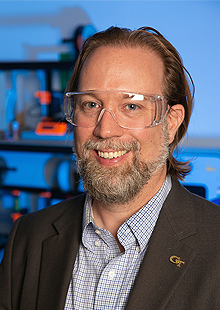
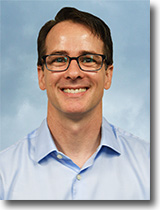
Prior to joining MSE in July 2003 Professor Singh was a faculty member in Corrosion and Materials Engineering Group at The Institute of Paper Science and Technology (IPST) since 1996.  While in IPST Singh worked on fundamental as well as applied research projects related to the corrosion problems in the pulp and paper industry. From 1990 to 1996, he was a Senior Research Associate at Case Western Reserve University, Cleveland, Ohio, working on various materials and corrosion related research projects, including damage accumulation in metal matrix composites (MMCs), Environmental sensitive fracture of Al-alloys MMCs, and High temperature oxidation of Nb/Nb5Si3 composites. He received the Alcan International's Fellowship in 1988-90 to work on "Effects of Low Melting Point Impurities on Slow Crack Growth in Al Alloys,"  He has published over 50 papers in reputed scientific journals and conference proceedings. He is active member of NACE, TMS, TAPPI and has co-organized a number of international symposiums.

Reliable performance of the materials is very important for any industrial process and especially for the chemical process industry for the manufacture of a high quality product. Material selection is generally based on the required material properties, low initial capital investment, and minimum maintenance. Changes in the process parameters to improve products can often lead to higher corrosion susceptibilities of the plant materials. Moreover, with increase in capital cost, there is pressure to extend the life of existing plant equipment beyond its original design life. Corrosion and Materials Engineers are also playing a key role in selecting, maintaining, and modifying materials for changing needs for every industry. Corrosion Science and Engineering research includes understanding the basic mechanisms involved in material degradation in given environments and using that knowledge to develop a mitigation strategy against environment-induced failures

Professor, School of Materials Science and Engineering
Associate Chair of Graduate Studies, School of Materials Science and Engineering
Phone
404.894.6641
Office
IPST 246
Additional Research

Composites; fracture and fatigue; stress corrosion; Materials Failure and Reliability; Biofuels; Chemical Recovery; Environmental Processes; Sustainable Manufacturing; Energy & Water; Corrosion & Reliability

Google Scholar
https://scholar.google.com/citations?hl=en&user=AqrDFI8AAAAJ&view_op=list_works&sortby=pubdate
MSE Profile Page
Preet
Singh
Show Regular Profile

Dennis Hess

Dennis Hess
dennis.hess@chbe.gatech.edu
ChBE Profile Page

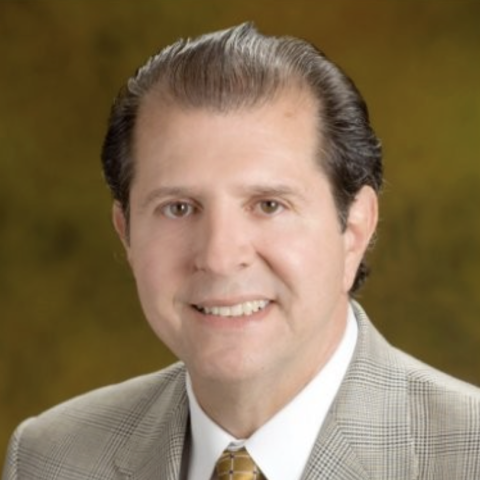
Dennis Hess’s research interests are in thin film science and technology, surface and interface modification and characterization, microelectronics processing and electronic materials. His group focuses on the establishment of fundamental structure-property relationships and their connection to chemical process sequences used in the fabrication of novel films, electronic materials, devices, and nanostructures. Control of the surface properties of materials such as dielectrics, semiconductors, metals, and paper or paper board by film deposition or surface modification allows the design of such surfaces for a variety of applications in microelectronics, packaging, sensors, microfluidics, and separation processes.

Professor Emeritus, School of Chemical and Biomolecular Engineering
Phone
(404) 894-5922
Additional Research

Electronics; Thin Films; Surfaces and Interfaces; plasma processing; Papermaking; Coatings & Barriers; Films & Coatings; Biomaterials

University, College, and School/Department
Hess Group
Dennis
Hess
W.
Show Regular Profile

Mark Losego

Mark Losego
losego@gatech.edu
Research Website

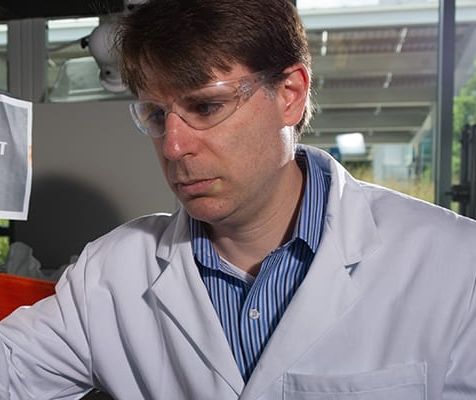
Mark D. Losego is a professor in the School of Materials Science and Engineering at Georgia Tech. The Losego research lab focuses on materials processing to develop novel organic-inorganic hybrid materials and interfaces for microelectronics, sustainable energy devices, national security technologies, and advanced textiles. The Losego Lab combines a unique set of solution and vapor phase processing methods to convert organic polymers into organic-inorganic hybrid materials, including developing the science to scale these processes for manufacturing.  Prof. Losego’s work is primarily experimental, and researchers in his lab gain expertise in the vapor phase processing of materials (atomic layer deposition, physical vapor deposition, vapor phase infiltration, etc.), the design and construction of vacuum equipment, interfacial and surface science, and materials and surface characterization. Depending on the project, Losego Lab researchers explore a variety of properties ranging from electrical to electrochemical to optical to thermal to sorptive to catalytic and more.

Professor, MSE Faculty Fellow, and Dean’s Education Innovation Professor
Phone
404.385.3630
Additional Research

Catalysis; Cellulose Nanomaterials; Coatings; Coatings and Barriers; Corrosion & Materials Engineering; Corrosion and Reliability; Energy; Films and Coatings; Microporous Materials; Nanocellulose Applications; Nanomaterials; New Materials; Polymers; Vapor Phase Processing

Related Site
Mark
Losego
Show Regular Profile

Zhiqun Lin

Zhiqun Lin
zhiqun.lin@mse.gatech.edu
MSE Profile Page

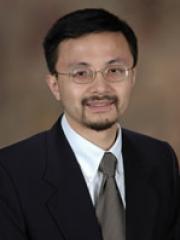
Zhiqun Lin is currently Professor of Materials Science and Engineering at the Georgia Institute of Technology. His research focuses on nanostructured functional materials (NanoFM). An extensive list of materials currently under investigation in his group includes polymer-based nanocomposites, block copolymers, polymer blends, conjugated polymers, quantum dots (rods, tetrapods, wires), magnetic nanocrystals, metallic nanocrystals, semiconductor metal oxide nanocrystals, ferroelectric nanocrystals, multiferroic nanocrystals, upconversion nanocrystals, thermoelectric nancrystals, core/shell nanoparticles (nanorods), hollow nanocrystals, Janus nanocrystals, nanopores, nanotubes, hierarchically structured and assembled materials, and semiconductor organic-inorganic nanohybrids.

The goal of his research is to understand the fundamentals of these nanostructured materials. His group intends to create these nanostructures in a precisely controllable manner and to exploit the structure-property relationships in the development of multifunctional materials for potential use in energy conversion (e.g., solar cells, photocatalysis, and hydrogen generation) and storage (e.g., batteries), electronics, optics, optoelectronics, magnetic materials and devices, nanotechnology, and biotechnology.

Professor, Materials Science and Engineering
Phone
404.385.4404
Office
MOSE 3100K
Additional Research

Nanocomposites; Polymeric Composites; Polymers; Nanocrystals; Self-Assembly; Solar Cells; Batteries; Composites; Nanostructures; Electronics; Energy Storage

Google Scholar
https://scholar.google.com/citations?hl=en&user=7NT8lAEAAAAJ&view_op=list_works&sortby=pubdate
Nanosctructure Functional Materials Group
Zhiqun
Lin
Show Regular Profile

Natalie Stingelin

Natalie  Stingelin
natalie.stingelin@mse.gatech.edu
ChBE Profile Page

Previously a professor of organic functional materials at the Department of Materials, Imperial College of London, Natalie Stingelin joined Georgia Tech in 2016. She focuses her research on the broad field of organic functional materials, including organic electronics; multifunctional inorganic/organic hybrids; smart, advanced optical systems based on organic matter; and bioelectronics. Associate Editor of the Journal of Materials Chemistry, she has published more than 130 papers and 6 issued patents. She is a co-investigator of the newly established EPSRC Centre for Innovative Manufacturing in Large Area Electronics, and she leads the EC Marie-Curie Training Network 'INFORM' that involves 11 European partners. She was awarded the Institute of Materials, Minerals & Mining's Rosenhain Medal and Prize (2014) and the Chinese Academy of Sciences (CAS) President's International Fellowship Initiative (PIFI) Award for Visiting Scientists (2015).

Professor, School of Chemical and Biomolecular Engineering
Phone
404.894.5192
Office
ES&T L1220
Additional Research

Organic electronics; Bioelectronics

Research Focus Areas
University, College, and School/Department
Google Scholar
https://scholar.google.com/citations?hl=en&user=ZILIcOwAAAAJ&view_op=list_works&sortby=pubdate
Stingelin Lab
Natalie
Stingelin
Show Regular Profile

Joseph Perry

Joseph Perry
joe.perry@chemistry.gatech.edu
Research Website
Professor, School of Chemistry and Biochemistry
Phone
(404) 385-6046
Additional Research

Analytical Chemistry; Characterization; Energy; Sustainability; Materials Chemistry; Molecular Biophysics; Nanoscience and Technology; Physical Chemistry; Polymer Chemistry; Spectroscopy; Surface and Interfacial Chemistry; Theory and Modeling

http://www.chemistry.gatech.edu/faculty/perry/
Joseph
Perry
Show Regular Profile

Christopher Jones

Christopher Jones
cjones@chbe.gatech.edu
ChBE Profile Page

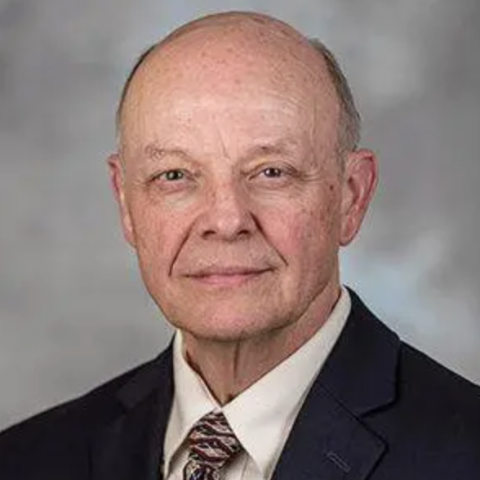
Chris Jones was born in suburban Detroit, Michigan in July of 1973. After his primary and secondary schooling and 14 years living Troy, Michigan, he enrolled as a chemical engineering student at the University of Michigan. In route to earning a BSE in chemical engineering, Chris carried out research on transition metal carbide and nitride catalytic materials under the direction of Levi Thompson. After graduating in 1995, Chris moved to Pasadena, California, to study inorganic materials chemistry and catalysis under Mark E. Davis at Caltech. There he earned M.S. and Ph.D. degrees in chemical engineering in 1997 and 1999, respectively. Subsequently, he studied organometallic chemistry and olefin polymerization under the direction of both Davis and John E Bercaw at Caltech. He started as an assistant professor at Georgia Tech in the summer of 2000 and was promoted to associate professor in July 2005. In May, 2005, he was appointed the J. Carl and Sheila Pirkle Faculty Fellow, followed by a promotion to professor in July 2008. He was named New-Vision Professor of Chemical and Biomolecular Engineering in July 2011. In 2015, he became the Love Family Professor of Chemical and Biomolecular Engineering, and in 2019 the William R. McLain Chair. Chris was named the associate vice president for research at Georgia Tech in November 2013. In this role, he directed 50% of his time on campus-wide research administration with a primary focus on interdisciplinary research efforts and policy related to research institutes, centers and research core facilities. In 2018, he served as the interim executive vice-president for research, before returning full time to his research and teaching roles in chemical and biomolecular engineering in 2019.

Jones directs a research program focused primarily on catalysis and CO2 separation, sequestration and utilization. A major focus of his laboratory is the development of materials and processes for the removal of CO2 from air, or “direct air capture” (DAC). In 2010 he was honored with the Ipatieff Prize from the American Chemical Society for his work on palladium catalyzed Heck and Suzuki coupling reactions. That same year, he was selected as the founding Editor-in-Chief of ACS Catalysis, a new multi-disciplinary catalysis journal published by the American Chemical Society. In 2013, Chris was recognized by the North American Catalysis Society with the Paul E. Emmett Award in Fundamental Catalysis and by the American Society of Engineering Education with the Curtis W. McGraw Research Award. In 2016 he was recognized by the American Institute of Chemical Engineers with the Andreas Acrivos Award for Professional Progress in Chemical Engineering, distinguishing him as one of the top academic chemical engineers under 45. In 2020, after ten years building and leading ACS Catalysis, he was selected as the founding Editor-in-Chief of JACS Au by an international editorial search committee commissioned by the ACS. Dr. Jones has been PI or co-PI on over $72M in sponsored research in the last seventeen years, and as of December 2020, has published over 300 papers that have been cited >28,000 times. He has an H-Index of 82 (Google Scholar).

Professor and John F. Brock III School Chair, School of Chemical and Biomolecular Engineering
Phone
404.385.1683
Office
ES&T 2202
Additional Research

CO2 capture, catalysis, membrane and separations, separations technology, catalysis, carbon capture, biofuels

Google Scholar
https://scholar.google.com/citations?hl=en&user=ltWKpYgAAAAJ&view_op=list_works&sortby=pubdate
Jones Group Website
Christopher
Jones
Show Regular Profile

Yan Wang

Yan Wang
yan.wang@me.gatech.edu
ME Profile Page

Wang's research is in the areas of design, manufacturing, and Integrated computational materials engineering. He is interested in computer-aided design, geometric modeling and processing, computer-aided manufacturing, multiscale simulation, and uncertainty quantification.

Currently, Wang studies integrated product-materials design and manufacturing process design, where process-structure-property relationships are established with physics-based data-driven approaches for design optimization. The Multiscale Systems Engineering research group led by him develops new methodologies and computational schemes to solve the technical challenges of high dimensionality, high complexity, and uncertainty associated with product, process, and systems design at multiple length and time scales.

Computational design tools for multiscale systems with sizes ranging from nanometers to kilometers will be indispensable for engineers' daily work in the near future. The research mission of the Multiscale Systems Engineering group is to create new modeling and simulation mechanisms and tools with underlying scientific rigor that are suitable for multiscale systems engineering for better and faster product innovation. Our education mission is to train engineers of the future to gain necessary knowledge as well as analytical, computational, communication, and self-learning skills for future work in a collaborative environment as knowledge creators and integrators. 

Professor, Woodruff School of Mechanical Engineering
Phone
404.894.4714
Office
Callaway 472
Additional Research

Computer-aided engineering and design and manufacturing, modeling and simulation, nanoscale cad/cam/cae, product lifecycle management, applied algorithms, uncertainty modeling, multiscale modeling, materials design

Google Scholar
https://scholar.google.com/citations?hl=en&user=rK2ow1kAAAAJ&view_op=list_works&sortby=pubdate
Yan
Wang
Show Regular Profile

Trisha Sisk

Trisha Sisk
trisha.sisk@gatech.edu

As Director of Activities for three of Tech's Interdisciplinary Research Institutes: the Strategic Energy Institute, the Renewable Bioproducts Institute, and the Brook Byers Institute for Sustainable Systems, I'll help bring together researchers from different disciplines to address topics of strategic importance. Each interdisciplinary research group mobilizes faculty to address the needs of external stakeholders (federal, state, and local entities, corporations, foundations, and communities) by fostering an Institute-wide innovation ecosystem around a specific focus.

Director of Activities & Engagement, BBISS, RBI, and SEI
University, College, and School/Department
LinkedIn
Trisha
Sisk
Show Regular Profile