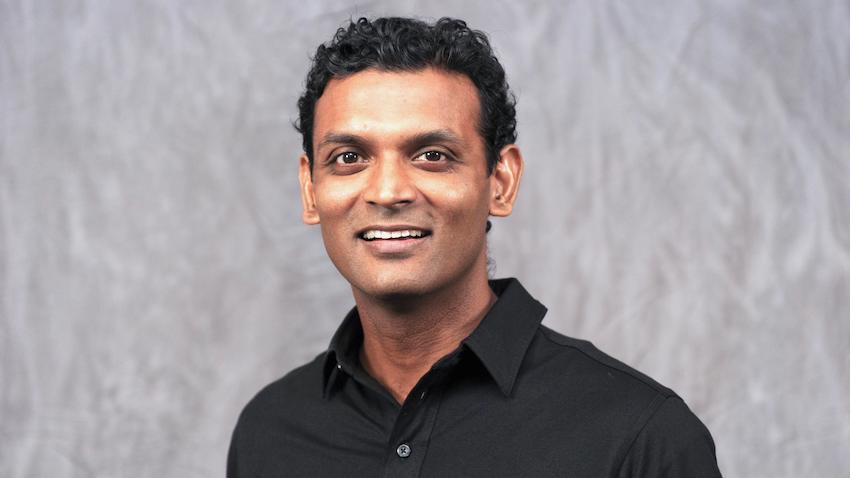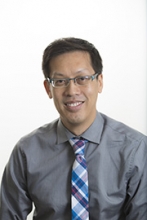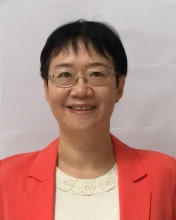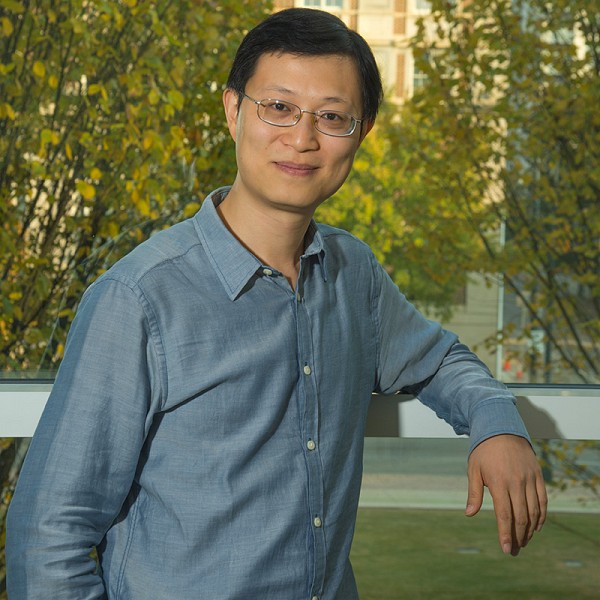
Sung Ha Kang
Since the fall of 2000, Robert has taught several courses in the College of Management at the Bachelors, Masters and Executive Masters levels. Quantitative course experience includes Analytic Tools (statistics, regression analysis and simulation) and Management Science (linear programming, network models, decision analysis, queuing models, project scheduling and simulation). Experience teaching qualitative (case-based) courses include Operations Management, Service Operations Management and Management of Technology. He has won several student-elected teaching awards including College of Management Undergraduate Professor of the Year (2001, 2004 and 2007), MBA Elective Professor or the Year (Service Operations – 2003), MBA Core Professor of the Year (Analytic Tools – 2008) and Evening MBA Elective Professor or the Year (Management of Technology – 2011).
Prior teaching experience includes four years at the Georgia State University Robinson College of Business where he taught MBA-level courses in Operations Management, Project Management, Operations Strategy, Global Operations Management and Applications of Simulation in Management.
Current research interests include empirical research in Service industries, outsourcing in both manufacturing and service industries, and applications of evidence based management techniques. He is a co-author of two published papers and a case study and has several working papers in various stages of completion. He has made 22 technical presentations at academic conferences since 1994.
Educational background includes a BS in Engineering Science from the University of Tennessee – Knoxville, an MBA from Lynchburg College (Virginia) and he has completed three of four parts of a PhD in Operations Management from Georgia Tech College of Management (ABD-All but Dissertation).
Eight years of professional experience prior to academics includes jet engine structural design engineer at Pratt & Whitney Aircraft (West Palm Beach, FL) and as a product engineer and then an engineering manager at Babcock & Wilcox – Naval Nuclear Fuel Division (Lynchburg, VA).
Dr. Felix J. Herrmann is Georgia Research Alliance Eminent Scholar in Energy and a professor at the Georgia Institute of Technology with appointments in the Schools of Earth and Atmospheric Sciences, Computational Science and Engineering, and Electrical and Computer Engineering. Dr. Herrmann will be the 2019 Distinguished Lecturer of the Society of Exploration Geophysicists (SEG).
Dr. Herrmann holds a M.Sc. and Ph.D. in Engineering Physics from the Delft University of Technology. He completed his postdoctoral studies at Stanford University and MIT before becoming a professor at the University of British Columbia's Department of Earth, Ocean, and Atmospheric Sciences. He joined the faculty of the Georgia Institute of Technology in October 2017.
During his career, Dr. Herrmann has worked on the development of the next-generation of industrial acquisition and computational imaging technologies designed to improve the image quality in complex geological areas at vastly reduced costs and environmental impact. Aside from driving innovations, by leveraging recent developments in the mathematical and computational sciences, Dr. Herrmann has extensive experience working with industry. At the University of British Columbia, he was the founder and director of the Seismic Laboratory for Imaging and Modelling (SLIM), which hosted the industry Consortium SINBAD. Under his guidance, SLIM became a world leader in the successful integration of transformative scientific developments, such as compressive sensing, randomized linear algebra, and machine learning, into innovative approaches that tackle the most challenging imaging problems. With his move to the Georgia Institute of Technology, Dr. Herrmann plans to broaden his research program to include other imaging modalities. Dr. Herrmann was a long program participant at UCLA's Institute for Pure and Applied Mathematics in the Fall of 2004 and has been involved in public-private partnerships around the world. He serves on the editorial board of Geophysical Prospecting and on the SEG Research Committee.
Elizabeth Cherry is an Associate Professor in the School of Computational Science and Engineering. Her research involves modeling and simulation, high-performance computing, and numerical methods. In particular, her group is focused on computational modeling of cardiac arrhythmias, including model development, validation, and parameter estimation; design and implementation of efficient solution methods; implementations on traditional parallel and GPGPU architectures; integration with experiments through data assimilation; and applications to understand the mechanisms responsible for particular complex dynamical states. She is a member of the editorial board of Chaos and a review editor for Frontiers in Physiology. She has served on the organizing committees of the SIAM Conference on Applications of Dynamical Systems in 2017, Dynamics Days 2020, and the Biology and Medicine Through Mathematics Conference 2018 and 2019 and on the program committees for the International Workshop on Hybrid Systems 2019 and 2020 and the International Congress on Electrocardiology 2018 and 2019. She received a BS in Mathematics from Georgetown University and a PhD in Computer Science from Duke University focusing on efficient computational methods for solving partial-differential-equations models of electrical signals in the heart. Her research is supported by the National Science Foundation and the National Institutes of Health
Chris Gu is an Assistant Professor of Marketing in the Scheller College of Business at Georgia Institute of Technology. His research focuses on the quantitative study of the behaviors of individuals and organizations under various types of information constraints and economic structures, with the goal of improving their well-being. His current work focuses on understanding how consumers search for products under partially revealed information, how consumers adopt sustainable technologies under the influence of government policies, how companies decide about internal technology adoption and upgrade, and how social network connections influence individual crowdsourcing behaviors. He is an AMS Mary Kay Foundation Doctoral Dissertation Competition Finalist, and his research has received the ISMS Doctoral Dissertation Award.
Business Analytics
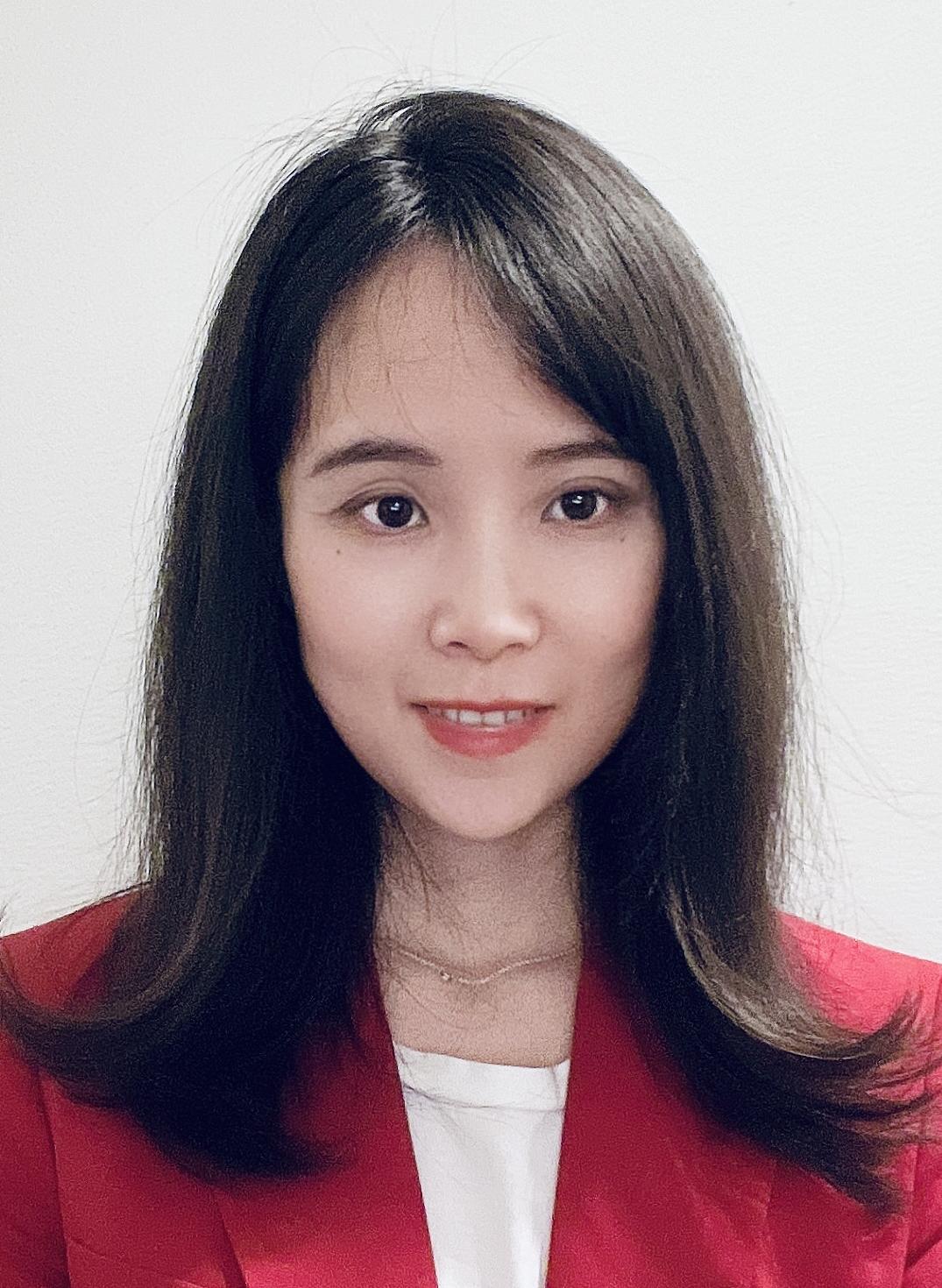
Yao Xie is a Coca-Cola Foundation Chair and Professor in the H. Milton Stewart School of Industrial and Systems Engineering at Georgia Tech, which she joined in 2013 as an Assistant Professor. She also serves as Associate Director of Machine Learning and Data Science of the Center for Machine Learning. From September 2017 until March 2023 she was the Harold R. and Mary Anne Nash Early Career Professor. She was a Research Scientist at Duke University from 2012 to 2013.
Her research lies at the intersection of statistics, machine learning, and optimization in providing theoretical guarantees and developing computationally efficient and statistically powerful methods for problems motivated by real-world applications.
She is currently an Associate Editor for IEEE Transactions on Information Theory, IEEE Transactions on Signal Processing, Journal of the American Statistical Association: Theory and Methods, Sequential Analysis: Design Methods and Applications, INFORMS Journal on Data Science, and an Area Chair of NeurIPS and ICML.
Signal Processing
Xiuwei Zhang is an Assistant Professor and J. Z. Liang Early Career Assistant Professor in the School of Computational Science and Engineering at the Georgia Institute of Technology. Her research group works on applying machine learning and optimization skills in method development and data analysis for single-cell RNA-Seq data and other types of data on single cell level. The goal is to study cellular mechanisms during differentiation, development of cells and disease progression.
Zhang was a postdoc researcher in Prof. Nir Yosef‘s group at UC Berkeley. She obtained a Ph.D. in computer science under the supervision of Prof. Bernard Moret in the Laboratory for Computational Biology and Bioinformatics, EPFL (École Polytechnique Fédérale de Lausanne), Switzerland.
Before moving to the United States, she was a postdoc researcher in Dr. Sarah Teichmann’s group at the European Bioinformatics Institute (EBI) and Wellcome Trust Sanger Institute in Cambridge, UK. Zhang was supported by a Fellowship for Prospective Researchers and an Advanced Postdoc Mobility Fellowship from Swiss National Science Foundation (SNSF) from Aug. 2012 to Jul. 2015. She was a research fellow in the 2016 Simons Institute program on Algorithmic Challenges in Genomics. Her Erdös number is 3.
Ümit V. Çatalyürek is currently a Professor and the Associate Chair of the School of Computational Science and Engineering in the College of Computing at the Georgia Institute of Technology. Prior joining Georgia Institute of Technology, he was a Professor and Vice Chair of the Department of Biomedical Informatics, and Professor in the Departments of Electrical & Computer Engineering, and Computer Science & Engineering at the Ohio State University. He received his Ph.D., M.S. and B.S. in Computer Engineering and Information Science from Bilkent University, Turkey, in 2000, 1994 and 1992, respectively.
Dr. Çatalyürek is a Fellow of IEEE and SIAM. He was the elected Chair for IEEE TCPP for 2016-2019, and currently serves as Vice-Chair for ACM SIGBio for 2015-2021 terms. He also serves as the member of Board of Trustees of Bilkent University.
He currently serves as the Editor-in-Chief for Parallel Computing. In the past, he also served on the editorial boards of the IEEE Transactions on Parallel and Distributed Computing Systems, the SIAM Journal of Scientific Computing, Journal of Parallel and Distributed Computing, and Network Modeling and Analysis in Health Informatics and Bioinformatics. He also serves on the program committees and organizing committees of numerous international conferences.
A recipient of an NSF CAREER award, Dr. Çatalyürek is the primary investigator of several awards from the Department of Energy, the National Institute of Health, and the National Science Foundation. He has co-authored more than 200 peer-reviewed articles, invited book chapters and papers. His main research areas are in parallel computing, combinatorial scientific computing and biomedical informatics.
Tuo Zhao is an assistant professor in the H. Milton Stewart School of Industrial and Systems Engineering and the school of Computational Science and Engineering (By Courtesy) at Georgia Tech.
His research focuses on developing principled methodologies, nonconvex optimization algorithms and practical theories for machine learning (especially deep learning). He is also interested in natural language processing and actively contributing to open source software development for scientific computing.
Tuo Zhao received his Ph.D. degree in Computer Science at Johns Hopkins University in 2016. He was a visiting scholar in the Department of Biostatistics at Johns Hopkins Bloomberg School of Public Health from 2010 to 2012, and the Department of Operations Research and Financial Engineering at Princeton University from 2014 to 2016.
He was the core member of the JHU team winning the INDI ADHD 200 global competition on fMRI imaging-based diagnosis classification in 2011. He received the Google summer of code awards from 2011 to 2014. He received the Siebel scholarship in 2014, the Baidu Fellowship in 2015-2016 and Google Faculty Research Award in 2020. He was the co-recipient of the 2016 ASA Best Student Paper Award on Statistical Computing and the 2016 INFORMS SAS Best Paper Award on Data Mining.