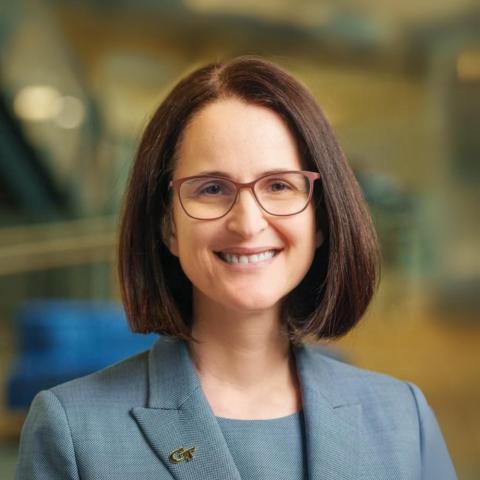
Kristina Chatfield

Portrait of Kristina Chatfield
kchatfield30@gatech.edu

At first glance, Kristina Chatfield wasn’t a typical sustainability hire at Georgia Tech.

She was a business management consultant for a law firm who had also helped a national survey data firm with their data crunching. Higher ed was “like a different planet,” she recalls.

Chatfield realized early on that she could apply her management and operations background to any field. “You can’t run any successful organization unless you have operational efficiency and program and project management.” Without them, she says, “Things don’t work properly.”

But equally important was her commitment to learning about academia and sustainability, areas that were not in her wheelhouse a decade ago. With support from Jennifer Hirsch, senior director of SCoRE (and formerly of SLS), Chatfield embraced both with gusto.

“I’ve learned to approach sustainability from a holistic standpoint,” Chatfield explains, noting that sustainability isn’t just about the environment or systems — it’s primarily about the people.

“If you have a passion for community engagement and sustainability, there’s a lot of commonality you can find with people from all different persuasions. As human beings, we mostly care about the same things.”

“Kris is a master at setting up and managing complex operational and financial systems, and she is passionate about sustainability, communities, and Georgia Tech. This combination, together with her decade of management experience in SLS and SCoRE, makes her perfect for her new leadership role,” says BBISS Executive Director Beril Toktay.

Chatfield says a key highlight of her work in sustainability has been connecting community organizations and nonprofit partners with the Institute through the SCoRE summer internship program. Georgia Tech students are partnered with community organizations throughout Atlanta. Now in its eighth year, the program allows students “to learn about the social aspects of sustainability, innovation, and the UN Sustainable Development Goals in the context of actual work that’s being done in the Atlanta area,” Chatfield says. “Partners benefit tremendously because the program expands their capacity by having these amazing Georgia Tech students working for them.”

Chatfield says the internship program often serves as the first interaction partners have with Georgia Tech. “It opens the door to a much broader and deeper relationship.”

In her free time, Kris enjoys her family life with five adult children, and soon she will welcome her third grandchild. “Being a grandparent is the best thing ever,” she says.

She also enjoys playing pickleball with her husband and traveling. With one of her sons about to be stationed in Germany with the Army, she hopes to combine her passions of travel and family time.

Director of Business Administration
IRI And Role
University, College, and School/Department
Kristina
Chatfield
Show Regular Profile

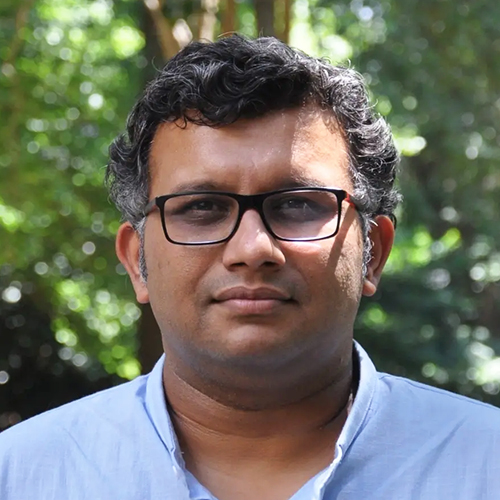
Josiah Hester

Josiah Hester
josiah@gatech.edu
Personal Site

Josiah Hester works broadly in computer engineering, with a special focus on wearable devices, edge computing, and cyber-physical systems. His Ph.D. work focused on energy harvesting and battery-free devices that failed intermittentently. He now focuses on sustainable approaches to computing, via designing health wearables, interactive devices, and large-scale sensing for conservation. 
   
His work in health is focused on increasing accessibility and lowering the burden of getting preventive and acute healthcare. In both situations, he designs low-burden, high-fidelity wearable devices that monitor aspects of physiology and behavior, and use machine learning techniques to suggest or deliver adaptive and in-situ interventions ranging from pharmacological to behavioral. 
   
His work is supported by multiple grants from the NSF, NIH, and DARPA. He was named a Sloan Fellow in Computer Science and won his NSF CAREER in 2022. He was named one of Popular Science's Brilliant Ten, won the American Indian Science and Engineering Society Most Promising Scientist/Engineer Award, and the 3M Non-tenured Faculty Award in 2021. His work has been featured in the Wall Street Journal, Scientific American, BBC, Popular Science, Communications of the ACM, and the Guinness Book of World Records, among many others.

Interim Associate Director for Community-Engaged Research
Catherine M. and James E. Allchin Early Career Professor
Professor
Director, Ka Moamoa – Ubiquitous and Mobile Computing Lab
Office
TSRB 246
Ka Moamoa BBISS Initiative Lead Project—Computational Sustainability
Josiah
Hester
Show Regular Profile

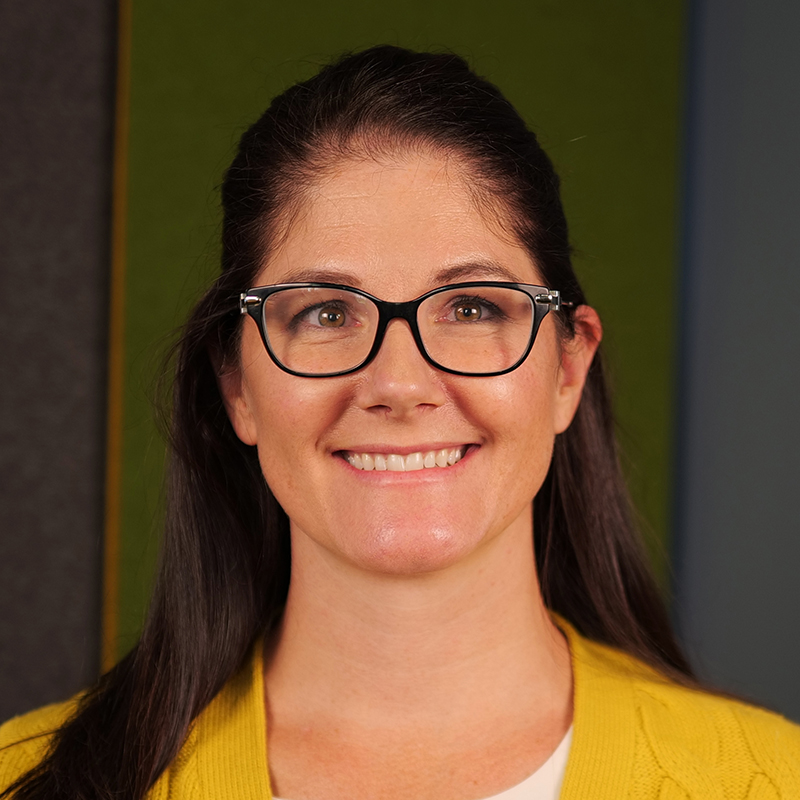
Trisha Sisk

Trisha Sisk
trisha.sisk@gatech.edu

As Director of Activities for three of Tech's Interdisciplinary Research Institutes: the Strategic Energy Institute, the Renewable Bioproducts Institute, and the Brook Byers Institute for Sustainable Systems, I'll help bring together researchers from different disciplines to address topics of strategic importance. Each interdisciplinary research group mobilizes faculty to address the needs of external stakeholders (federal, state, and local entities, corporations, foundations, and communities) by fostering an Institute-wide innovation ecosystem around a specific focus.

Director of Activities & Engagement, BBISS, RBI, and SEI
University, College, and School/Department
LinkedIn
Trisha
Sisk
Show Regular Profile

Beril Toktay

Beril Toktay
beril.toktay@scheller.gatech.edu
Website

Dr. Beril Toktay is Regents' Professor and the Brady Family Chairholder in the Scheller College of Business. She serves as Executive Director of the Brook Byers Institute for Sustainable Systems. A globally recognized leader in sustainable operations management, Dr. Toktay has dedicated her career to bridging academic excellence with real-world impact in sustainability research and education.

Since joining Georgia Tech in 2005, Dr. Toktay has established herself as an influential leader in sustainability scholarship and cross-institute initiatives. She founded the Ray C. Anderson Center for Sustainable Business and co-created the Center for Serve-Learn-Sustain (SLS). Under her leadership as Executive Faculty Co-Director, the SLS team expanded sustainability-focused academic community engagement across Georgia Tech until its 2024 institutionalization as the Center for Sustainable Communities Research and Education within BBISS. Most recently, she co-chaired Georgia Tech's Sustainability Next Strategic Plan Implementation Team, under which Georgia Tech recommitted to growing BBISS, elevated and restructured the Office of Sustainability, and launched the Sustain-X startup accelerator, educational innovation and transdisciplinary research seed grant programs, the Climate Action Plan, and the Sustainability Education Curriculum Committee.

A Distinguished Fellow of the INFORMS Manufacturing and Service Operations Management Society, Dr. Toktay is internationally recognized for her research in sustainable operations management spanning circular economy models and climate mitigation strategies. Her circular economy research includes developing improved Extended Producer Responsibility cost allocation mechanisms recommended for adoption by the UK government. Her climate mitigation work features in a multi-university project that identified Georgia's top twenty decarbonization solutions, catalyzing the creation of the 70-member Drawdown Georgia Business Compact facilitated by the Ray C. Anderson Center.

Dr. Toktay serves on the boards of the New York Climate ExchangeGeorgia Cleantech Innovation Hub, and Alliance for Research on Corporate Sustainability. Her former professional service includes VP for Marketing, Communications and Advocacy at INFORMS, Department Co-Editor for "Health, Environment, and Society" at Manufacturing & Service Operations Management and Area Editor for "Environment, Energy, and Sustainability" at Operations Research. She served as the Scheller College of Business ADVANCE Professor from 2012-2020.

Dr. Toktay’s research has earned recognition including being named among the World's Top Business and Management Scientists (Research.com, 2024),the  M&SOM Best Paper Award (2021), the M&SOM Responsible Research Award (2019), and the Management Science Best Paper in Operations Management Award (2015).

Her commitment to developing the next generation of sustainability leaders earned her Georgia Tech's Outstanding Doctoral Thesis Advisor Award (2018) and recognition as a E3 Impact Award Finalist (2019) by the Metro Atlanta Chamber of Commerce for Serve-Learn-Sustain's impact on Atlanta communities. She co-developed the Carbon Reduction Challenge, an interdisciplinary program that engages undergraduate students in climate intrapreneurship and which earned top ten finalist recognition from Reimagine Education among 1,184 projects from 39 countries.

Dr. Toktay holds a Ph.D. in Operations Research from MIT, an M.S. in Industrial Engineering from Purdue University, and B.S. degrees in Industrial Engineering and Mathematics from Bogazici University.

Executive Director, Brook Byers Institute for Sustainable Systems
Professor of Operations Management and Brady Family Chair
Regents' Professor
Phone
404.385.0104
Office
800 West Peachtree Street, N.W., Room 4426
Additional Research

Sustainable operations; closed-loop supply chains; supply chain management; Strategic Planning

University, College, and School/Department
Beril
Toktay
Show Regular Profile

Nicole Kennard

Nicole Kennard
kennard3@gatech.edu

Dr. Nicole Kennard is a Research Scientist II within BBISS and serves as the Assistant Director for Community-Engaged Research. She supports faculty across the university in building meaningful and co-creative research partnerships with local communities to address pressing sustainability and societal challenges. She works closely with the Center for Sustainable Communities Research & Education (SCoRE) to provide trainings for GT researchers to work with communities in research partnerships.

Kennard also leads her own community-engaged research in sustainable food systems. Her work focuses on building resilient, community-focused food systems and uplifting local agriculture, agroecology, and food sovereignty as solutions to the complex, intertwined challenges of food insecurity, climate change, and land degradation. She uses a combination of quantitative methods (lifecycle assessment, mapping, soil health and ecosystem service assessments) and qualitative methods (in-depth interviews) to support this systems-level research. She is currently working with local partners to build a food systems map for the City of Atlanta.

Kennard holds a PhD in Chemistry and Biosciences from the University of Sheffield (Grantham Centre for Sustainable Futures); an MSc in Sustainable Agriculture and Food Security from Newcastle University (U.S. Fulbright Scholar); and a B.S. in Materials Science and Engineering from the Georgia Institute of Technology.

Assistant Director for Community-Engaged Research
Additional Research
  • community-engaged research
  • sustainable food systems
  • local food systems
  • sustainable agriculture
  • urban agriculture
  • agroecology
  • food sovereignty
  • food security
  • food access
University, College, and School/Department
Nicole
Kennard
Show Regular Profile

Ameet Pinto

Ameet Pinto
ameet.pinto@ce.gatech.edu
Pinto Lab Website

Dr. Ameet Pinto is an Environmental Engineer and Carlton S. Wilder Associate Professor in Civil and Environmental Engineering at Georgia Institute of Technology (Georgia Tech). Ameet is a Chemical Engineer from the Institute of Chemical Technology (University of Mumbai) with post-graduate degrees in Environmental Engineering from the University of Alaska (2005) and Virginia Tech, USA (2009). Before joining Georgia Tech in 2021, he was an Assistant Professor at Northeastern University (2016-2021) and Lecturer/Senior Lecturer (2012-2015) at the University of Glasgow. Ameet’s research focuses on microbial ecosystems at the interface of infrastructure and public/environmental health with a focus on the engineered water cycle. The overall research goal is to characterize and manipulate microbial communities to (1) protect and improve public and environmental health and (2) improve functional reliability and economic feasibility of water infrastructure. To do this, his research group develops and applies state-of-the-art microbial molecular and sensing tools and modelling approaches to monitor and manage the microbiology of the engineered water cycle. Ameet also serves as the Editor for Water Research (the premier journal for the engineering, science, and technology for water quality management) and as the Secretary of the Microbial Ecology and Water Engineering (MEWE) Specialist Group of the International Water Association.

Associate Director of Interdisciplinary Research and Collaboration
Carlton S. Wilder Associate Professor
Additional Research

Drinking waterWastewaterMicrobiomeMicrobial ecologyComputational biologyPublic health

Google Scholar
https://scholar.google.com/citations?user=gj-0rtMAAAAJ&hl=en
Ameet
Pinto
Show Regular Profile