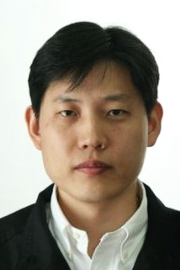
David Anderson

David Anderson
david.anderson@ece.gatech.edu
ECE Profile Page

David V. Anderson received the B.S and M.S. degrees from Brigham Young University and the Ph.D. degree from Georgia Institute of Technology (Georgia Tech) in 1993, 1994, and 1999, respectively. He is currently a professor in the School of Electrical and Computer Engineering at Georgia Tech. Anderson's research interests include audio and psycho-acoustics, machine learning and signal processing in the context of human auditory characteristics, and the real-time application of such techniques. His research has included the development of a digital hearing aid algorithm that has now been made into a successful commercial product. Anderson was awarded the National Science Foundation CAREER Award for excellence as a young educator and researcher in 2004 and the Presidential Early Career Award for Scientists and Engineers in the same year. He has over 150 technical publications and 8 patents/patents pending. Anderson is a senior member of the IEEE, and a member the Acoustical Society of America, and Tau Beta Pi. He has been actively involved in the

Professor, School of Electrical and Computer Engineering
Phone
404.385.4979
Office
TSRB 543
Additional Research

Audio and Psycho-AcousticsBio-DevicesDigital Signal ProcessingLow-Power Analog/Digital/Mixed-Mode Integrated Circuits 

Google Scholar
https://scholar.google.com/citations?hl=en&user=b9_uwfcAAAAJ&view_op=list_works&sortby=pubdate
LinkedIn
David
Anderson
Show Regular Profile

Seung-Joon Paik

Seung-Joon Paik
seung.paik@ien.gatech.edu

Seung-Joon Paik received his B.S. degree at the School of Electrical Engineering in 1999 and the M.S. and Ph.D. degrees at the Electrical Engineering and Computer Science from Seoul National University, Seoul, Korea, in 2001 and 2005, respectively. His doctorate research focused on the design, microfabrication and testing of silicon microneedles for neurophysiologic applications, including microfluidic channels and microelectrodes. He was with Automation and Systems Research Institute in Seoul National University, as a postdoctoral associate from 2005 to 2007, where he developed sensors and systems of Inertial Measurement Unit (IMU) for localization and locomotion of robots. After joining a spin-off company from the research lab, SML Electronics, Inc., in 2007, he led the process team for the 8-inch wafer-level packaging process and foundry manufacturing process of MEMS accelerometers and gyroscopes for mobile applications as a senior research engineer. In 2008, he joined the MicroSensors and MicroActuators Laboratory (MSMA Lab.) in Georgia Institute of Technology, Atlanta, Georgia. He has led the BioMEMS research group at the MSMA Lab as a postdoctoral fellow. The BioMEMS research group is dedicated to developing micro/nano needles and biosensors for drug delivery and electrochemical sensing. In 2013, as a research engineer II at the Institute for Electronics and Nanotechnology (IEN) in Georgia Tech, he oversees and coordinates lab sections for College of Engineering courses within IEN which provides instructions to students about CMOS transistor fabrication and MEMS fabrication. He has been teaching and mentoring junior-level research engineers and graduate students on design, analysis, micromachining processes, and technical writing and presentation at Seoul National University, SML Electronics, and Georgia Institute of Technology. In 2014, he also worked in Southern Polytechnic State University (currently, Kennesaw State University) as an adjunct professor and taught a course of Microelectronic Engineering and its labs.

He has published 65+ reviewed journal and conference papers, and invented 13+ patents in USA and Korea, and has been a reviewer for the following Journals – IEEE Journal of Microelectromechanical Systems (JMEMS); IOP Journals of Micromechanics and Microengineering, Nanotechnology, Material Science and Technology, Journal of Physics D, and Smart Materials and Structures; and Sensors and Actuators A: Physics. His current interests are in research and development for the micromachining of silicon and polymer materials and in biomedical applications of micromachined devices and also in inertial sensors, 3-D multi-chip packaging of MEMS devices, energy storage/conversion devices and nano-scale structures.


Teaching Lab Coordinator
Research Engineer II
Phone
404.894.8807
Office
Pettit 205
University, College, and School/Department
Seung-Joon
Paik
Show Regular Profile

Shyh-Chiang Shen

Shyh-Chiang Shen
shyh.shen@ece.gatech.edu
ECE Profile Page

Shyh-Chiang Shen received his Ph.D. degree in electrical engineering at the University of Illinois at Urbana-Champaign (UIUC) in 2001. He was a key contributor of high-cycle low-voltage radio-frequency (RF) microelectromechanical system (MEMS) switches and GaAs metal-semiconductor field effect transistors (MESFETs) millimeter-wave integrated circuits (MMICs) during his tenure at UIUC. At Xindium Technologies (2000-2004), he developed a proprietary commercial-grade InP single-heterojunction bipolar transistor (SHBT) technology that led to the first demonstration of monolithically integrated 40Gb/s PIN+TIA differential-output optical receivers.

Shen joined the Georgia Institute of Technology in 2005 as an Assistant Professor and was promoted a Full Professor in 2018. His research has yielded 8 awarded U.S. patents, 5 book chapters, 170+ publications in refereed journals and conferences, and many invited seminar talks to date. He is also an editor of a book entitled Nitride Semiconductor LEDs (2nd Ed., October 2017.) His current research is focused on wide bandgap semiconductor (WBG) microelectronics and optoelectronic devices with emphasis on physical device study, fabrication processing technique development, and device characterizations.

Professor, School of Electrical and Computer Engineering
Phone
404.894.1884
Office
BH 307
Additional Research

High sensitivity, III-nitride-based UV photodetectorsAdvanced III-nitride coherent light emittersIII-nitride transistor technologies (unipolar and bipolar transistors)WBG high power electronicsCompound-semiconductor Integrated circuit technologiesSustainable, “green” technologies

Google Scholar
https://scholar.google.com/citations?hl=en&user=qFL4GfcAAAAJ&view_op=list_works&sortby=pubdate
Semiconductor Research Lab (SRL) at Georgia Tech
Shyh-Chiang
Shen
Show Regular Profile

Sung Kyu Lim

Sung Kyu Lim
limsk@ece.gatech.edu
ECE Profile Page

Sung Kyu Lim was born and grew up in Seoul, Korea, and moved to Los Angeles with his family at the age of 19. He received B.S. (1994), M.S. (1997), and Ph.D. (2000) degrees all from the Computer Science Department of University of California at Los Angeles (UCLA). During 2000-2001, he was a post-doctoral scholar at UCLA, and a senior engineer at Aplus Design Technologies, Inc. In August 2001, he joined the School of Electrical and Computer Engineering at Georgia Institute of Technology an assistant professor. He is currently the director of the GTCAD (Georgia Tech Computer Aided Design) Laboratory at the School. He recently released a CD with his rock band in Los Angeles and spends his leisure time writing/recording music

Professor, School of Electrical and Computer Engineering
Phone
404.894.0373
Office
Klaus 2360
Additional Research

Physical design automation for VLSI circuits3D circuit/packaging layout automationQuantum circuit layout automationMicro-architecture design space explorationLayout automation for reconfigurable circuitsGraph theory and combinatorial optimization

Google Scholar
https://scholar.google.com/citations?hl=en&user=kEh-m1sAAAAJ&view_op=list_works&sortby=pubdate
LinkedIn Georgia Tech Computer-Aided Design Laboratory
Sung Kyu
Lim
Show Regular Profile

Benjamin Kein

Benjamin Kein
bklein@gatech.edu
Kennesaw University Profile Page

Benjamin Klein received his B.S. and M.S. in Electrical Engineering from the University of Wisconsin-Madison in 1994 and 1995, respectively. He received his Ph.D. in Electrical Engineering from the University of Illinois – Urbana-Champaign in 2000. The subject of his doctoral dissertation was the theory and modeling of vertical-cavity surface-emitting lasers (VCSELs), which are a class of semiconductor laser used for telecommunications applications.

From 2000-2003, Klein worked as a postdoctoral researcher at the National Institute of Standards and Technology in Boulder, Colorado, working on the modeling and design of semiconductor quantum-dot based devices, including single photon emitters and single electron transistors. From 2003-2020 he was a faculty member at the Georgia Institute of Technology, first on the Savannah campus, and later in Atlanta. At the time of his departure from Georgia Tech, he was an Associate Professor and the Associate Chair for Graduate Affairs in the School of Electrical and Computer Engineering.

Adjunct Associate Professor, School of Electrical and Computer Engineering
Professor and Chair, Department of Electrical and Computer Engineering, Kennesaw State University
Phone
404.385.4826
Office
TSRB 438
Additional Research

Nanowire semiconductor devicesQuantum nanostructuresSemiconductor radiation detectorsPhotonic structures

Google Scholar
https://scholar.google.com/citations?hl=en&user=z5r5l3IAAAAJ&view_op=list_works&sortby=pubdate
LinkedIn
Benjamin
Kein
Show Regular Profile

Jennifer Hasler

Jennifer Hasler
jennifer.hasler@ece.gatech.edu
ECE Profile Page

Jennifer Hasler received her B.S.E. and M.S. degrees in electrical engineering from Arizona State University in August 1991. She received her Ph.D. in computation and neural systems from California Institute of Technology in February 1997. Hasler is a professor at the Georgia Institute of Technology in the School of Electrical and Computer Engineering; Atlanta is the coldest climate in which Hasler has lived. Hasler founded the Integrated Computational Electronics (ICE) laboratory at Georgia Tech, a laboratory affiliated with the Laboratories for Neural Engineering. Hasler is a member of Tau Beta P, Eta Kappa Nu, and the IEEE.

Professor, School of Electrical and Computer Engineering
Phone
404.894.2984
Office
TSRB 405
Additional Research

Analog-Digital Signal Processing / Mixed Signal integrated circuits (Systems on a chip)Scaling of deep submicron devicesFloating-gate devices, circuits, and systemsThe use of floating-gate MOS transistors to build "smart" interfaces for MEMS sensorsLow power electronicsAnalog VLSI models of on on-chip learning and Sensory processing in Neurobiology

LinkedIn Integrated Computational Electronics Laboratory
Jennifer
Hasler
Show Regular Profile

Muhannad S. Bakir

Muhannad S. Bakir
muhannad.bakir@mirc.gatech.edu
Integrated 3D Systems Group @ GT

Muhannad S. Bakir is the Dan Fielder Professor in the School of Electrical and Computer Engineering at Georgia Tech. He and his research group have received more than thirty paper and presentation awards including six from the IEEE Electronic Components and Technology Conference (ECTC), four from the IEEE International Interconnect Technology Conference (IITC), and one from the IEEE Custom Integrated Circuits Conference (CICC). Bakir’s group was awarded 2014 and 2017 Best Papers of the IEEE Transactions on Components Packaging and Manufacturing Technology (TCPMT). He is the recipient of the 2013 Intel Early Career Faculty Honor Award, 2012 DARPA Young Faculty Award, 2011 IEEE CPMT Society Outstanding Young Engineer Award, and was an Invited Participant in the 2012 National Academy of Engineering Frontiers of Engineering Symposium. Bakir is the co-recipient of the 2018 IEEE Electronics Packaging Society (EPS) Exceptional Technical Achievement Award "for contributions to 2.5D and 3D IC heterogeneous integration, with focus on interconnect technologies." He is also the co-recipient of the 2018 McKnight Foundation Technological Innovations in Neuroscience Awards. In 2020, Bakir was the recipient of the Georgia Tech Outstanding Doctoral Thesis Advisor Award.  
 
Bakir serves on the editorial board of IEEE Transactions on Components, Packaging and Manufacturing Technology (TCPMT) and IEEE Transactions on Electron Devices (TED). Dr. Bakir serves as a Distinguished Lecturer for IEEE EPS. 

Dan Fielder Professor, School of Electrical and Computer Engineering
Director, 3D Systems Packaging Research Center
Phone
404.385.6276
Office
Marcus 4135
Additional Research

Advanced cooling and power delivery for emerging system architecturesBiosensor technologies and their integration with CMOSElectrical and photonic interconnect technologiesHeterogeneous microsystem design and integration, including 2.5D and 3D ICs and packagingNanofabrication technologies

LinkedIn ECE Profile Page
Muhannad S.
Bakir
S.
Show Regular Profile

Satish Kumar

Satish Kumar
satish.kumar@me.gatech.edu
MSE Profile Page

Satish Kumar is currently an Associate professor in the George W. Woodruff School of Mechanical Engineering at Georgia Tech. He joined Georgia Tech in 2009 as an Assistant Professor. Prior, he worked at IBM Corporation where he was responsible for the thermal management of electronic devices. Kumar received his Ph.D. in Mechanical Engineering and M.S. degree in Electrical and Computer Engineering from Purdue University, West Lafayette in 2007. He received his M.S. degree in Mechanical Engineering from Louisiana State University, Baton Rouge in 2003 and B.Tech. degree in Mechanical Engineering from the Indian Institute of Technology, Guwahati in 2001. His research interests are in electro-thermal transport in carbon nanotube, graphene, and 2D materials based electronic devices, AlGaN/GaN transistors, thermal management, and thermo-electric coolers. He is author or co-author of over 70 journal or conference publications. His contributions to his research field have been recognized by Purdue Research Foundation Fellowship in 2005, 1969 Teaching Fellow from Center for the Enhancement of Teaching and Learning Center at Georgia Tech, 2012 Summer Faculty Fellow from Air Force Research Lab, 2014 Sigma Xi Young Faculty Award, and 2014 DARPA Young Faculty Award.

Professor Emeritus, George W. Woodruff School of Mechanical Engineering
Professor Emeritus, School of Materials Science and Engineering
Phone
404.385.6640
Office
Love 123
Additional Research

Compund SemiconductorsComputational mechanicsCarbon NanotubesBio-Devices

Google Scholar
https://scholar.google.com/citations?hl=en&user=lb7RF0oAAAAJ&view_op=list_works&sortby=pubdate
Satish
Kumar
Show Regular Profile

Lauren Garten

Lauren Garten
lauren.garten@mse.gatech.edu

Lauren Garten joined the School of Materials Science and Engineering as an assistant professor in Fall 2021. Her group focuses on developing new materials for energy and electronic applications, particularly at the nexus between ferroelectricity, ferromagnetism, electronics, and photovoltaics. 

Lauren received her B.S. in ceramic engineering from the Missouri University of Science and Technology. She then went on to earn a Ph.D. in material science from the Pennsylvania State University for her work on ferroelectric, piezoelectric, and dielectric synthesis and characterization with Prof. Susan Trolier-McKinstry. She then became a post-doc at the National Renewable Energy Laboratory working on metastable materials for energy applications. After a very short stint as a material scientist at Sandia National Laboratory, she won the NRC Research Associateship from the National Academies of Science, Engineering, and Math which was hosted at the U.S. Naval Research Lab (NRL). She then received the Jerome and Isabella Karle Distinguished Scholar Fellowship from NRL to work on lead-free multiferroic materials and devices.

Assistant Professor, School of Materials Science and Engineering
Phone
404-894-5748
Office
Pettit 210
Additional Research

Electronics, Energy Harvesting, Energy Storage, Solar

University, College, and School/Department
Departmental Bio
Lauren
Garten
Show Regular Profile