Joe Oefelein
Conventional Energy
Conventional Energy
Satish Kumar is currently an Associate professor in the George W. Woodruff School of Mechanical Engineering at Georgia Tech. He joined Georgia Tech in 2009 as an Assistant Professor. Prior, he worked at IBM Corporation where he was responsible for the thermal management of electronic devices. Kumar received his Ph.D. in Mechanical Engineering and M.S. degree in Electrical and Computer Engineering from Purdue University, West Lafayette in 2007. He received his M.S. degree in Mechanical Engineering from Louisiana State University, Baton Rouge in 2003 and B.Tech. degree in Mechanical Engineering from the Indian Institute of Technology, Guwahati in 2001. His research interests are in electro-thermal transport in carbon nanotube, graphene, and 2D materials based electronic devices, AlGaN/GaN transistors, thermal management, and thermo-electric coolers. He is author or co-author of over 70 journal or conference publications. His contributions to his research field have been recognized by Purdue Research Foundation Fellowship in 2005, 1969 Teaching Fellow from Center for the Enhancement of Teaching and Learning Center at Georgia Tech, 2012 Summer Faculty Fellow from Air Force Research Lab, 2014 Sigma Xi Young Faculty Award, and 2014 DARPA Young Faculty Award.
Compund SemiconductorsComputational mechanicsCarbon NanotubesBio-Devices
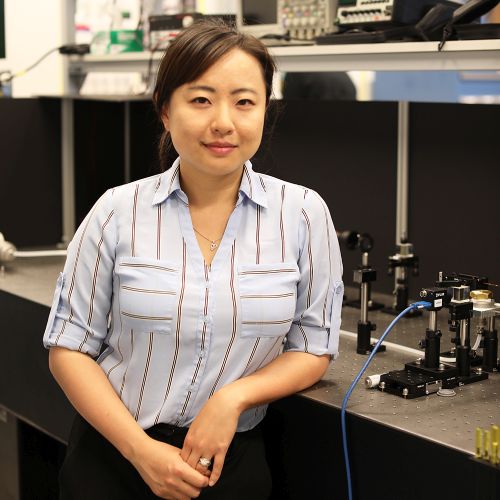
Dr. Akanksha Menon is an Assistant Professor in the Woodruff School of Mechanical Engineering at Georgia Tech. Prior to this, she was a Rosenfeld Postdoctoral Fellow at Lawrence Berkeley National Laboratory, where she performed research on hybrid membrane-thermal desalination processes using solar energy, and she also contributed to the development of thermal energy storage materials. Dr. Menon completed her Ph.D. at Georgia Tech, where she focused on developing semiconducting polymers and new device architectures for thermoelectric energy harvesting. She holds a bachelor's degree from Texas A&M University at Qatar, as well as a master’s degree in Mechanical Engineering from Georgia Tech.
Her research group at Georgia Tech is working on technologies for the water-energy nexus.
Dr. Mazumdar started at the Woodruff School of Mechanical Engineering at Georgia Tech in January of 2019 and currently has a courtesy appointment with the Guggenheim School of Aerospace Engineering. She graduated with her Ph.D. from Massachusetts Institute of Technology and completed a postdoctoral appointment at Sandia National Laboratories in the Diagnostic Science and Engineering group. Her research interests include the design of new diagnostic techniques and sensor systems for studying combustion, multiphase flows, hypersonic flows, and energetic materials. Her group utilizes new composite sensing materials, optical diagnostics, magnetostatics, and system identification methods to study these complex physical phenomena.
new sensor systems diagnostic techniques; robotic; biomedical; hypersonics
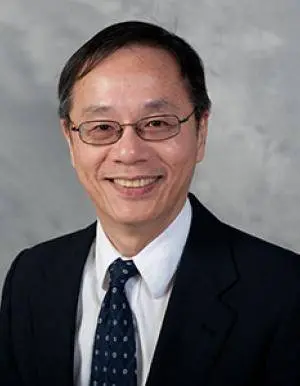
Vigor Yang earned his Ph.D. from the California Institute of Technology in 1984. After serving for one year as a research fellow in Jet Propulsion at Caltech, he joined the Pennsylvania State University in August 1985, becoming the John L. and Genevieve H. McCain Chair in Engineering in 2006. In 2009, he began his tenure as the William R.T. Oakes Professor Chair at the Daniel Guggenheim School of Aerospace Engineering at the Georgia Tech. He retired from the chair position and returned to teaching and research in August of 2018
Yang’s research encompasses a wide spectrum of topics, including (1) data-enabled design and data science; (2) combustion dynamics in propulsion and power-generation systems;(3) multi-fidelity modeling and simulations of fluid flows and combustion; (4) combustion of energetic materials; (5) high-pressure transport phenomena, thermodynamics and combustion, and (6) nano technologies for propulsion and energetic applications. He has established, as the principal or co-principal investigator, more than 70 research projects, including nine (9) DoD-MURI projects. He has published 10 comprehensive volumes and numerous technical papers on combustion, propulsion, energetics, and data science. He was the recipient of the Air-Breathing Propulsion Award (2005), the Pendray Aerospace Literature Award (2008), the Propellants and Combustion Award (2009), and the von Karman Lectureship in Astronautics Award (2016) from the American Institute of Aeronautics and Astronautics (AIAA); the Worcester Reed Warner Medal (2014) from the American Society of Mechanical Engineers (ASME); and the Lifetime Achievement Award (2014) from the Joint Army, Navy, NASA, and Air Force (JANNAF) Interagency Propulsion Committee.
Yang was the editor-in-chief of the AIAA Journal of Propulsion and Power (2001-2009) and the JANNAF Journal of Propulsion and Energetics (2009-2012). He is currently a co-editor of the Aerospace Book Series of the Cambridge University Press (2010-). He serves, or has served, on a large number of steering committees and review/advisory boards for government agencies and universities in the U.S. and abroad. A member of the U.S. National Academy of Engineering and an academician of Academia Sinica, Dr. Yang is a fellow of the AIAA, ASME, and Royal Aeronautical Society (RAeS).
Ben Emerson completed his Ph. D. in Aerospace Engineering from Georgia Tech in August, 2013. Since then, Ben has worked as a Research Engineer at the Ben T. Zinn Combustion Lab at Georgia Tech. Ben’s research portfolio includes projects on combustion instabilities, alternative fuels, and combustion system R&D with a core focus and motivation of cleaner combustion. Ben’s research primarily consists of three core competencies, which are experimental combustion system development, combustor diagnostics, and combustion theory and modeling. Ben’s combustion system development work spans a wide variety of applications, from small lab-scale burners to combustor rigs that test full-scale gas turbine combustor hardware. His combustor diagnostics work encompasses the state of the art optical diagnostic techniques for reacting flow field measurements and imaging, and aims to implement those techniques in both laboratory-scale and large-scale rig tests. Finally, Ben’s combustion theory and modeling work is geared towards analysis of experimental datasets, development of reduced-order engineering tools, and the development of a suite of hydrodynamic stability analysis tools. Together, these core competencies form the pillars of Ben’s research, which facilitates the design of cleaner-burning combustion systems.
Hydrogen Utilization, Hydrogen combustion in gas turbines, combustion instabilities, alternative fuels, cleaner combustion system R&D, experimental combustion system development, combustor diagnostics, and combustion theory and modeling
Marta Hatzell is a professor of mechanical engineering at Georgia Institute of Technology. Prior to starting at Georgia Tech in August of 2015, she was a post-doctoral researcher in the Department of Material Science and Engineering at the University of Illinois - Urbana-Champaign. During her post doc, she worked in the Braun Research Group on research at the interface between colloid science and electrochemistry. She completed her Ph.D. at Penn state University in the Logan Research Group. Her Ph.D. explored environmental technology for energy generation and water treatment. During graduate school she was an NSF and PEO Graduate Research Fellow.
Currently her research group focuses on exploring the sustainable catalysis and separations, with applications spanning from solar energy conversion to desalination. She is an active member of the American Chemical Society, the Electrochemical Society, ASEEP, and ASME. Hatzell was awarded the NSF Early CAREER award in 2019 for her work on distributed solar-fertilizers, attended the 2019 US Frontiers of Engineering Symposium through the National Academy of Engineering, and was awarded the 2020 Sloan Research Fellowships in Chemistry.
Catalysis; Energy Storage; Smart Infrastructure; Thermal Systems; Water
Dr. Akanksha Menon is an Assistant Professor in the Woodruff School of Mechanical Engineering at Georgia Tech. Prior to this, she was a Rosenfeld Postdoctoral Fellow at Lawrence Berkeley National Laboratory, where she performed research on hybrid membrane-thermal desalination processes using solar energy, and she also contributed to the development of thermal energy storage materials. Dr. Menon completed her Ph.D. at Georgia Tech, where she focused on developing semiconducting polymers and new device architectures for thermoelectric energy harvesting.
Ben Emerson completed his Ph. D. in Aerospace Engineering from Georgia Tech in August, 2013. Since then, Ben has worked as a Research Engineer at the Ben T. Zinn Combustion Lab at Georgia Tech. Ben’s research portfolio includes projects on combustion instabilities, alternative fuels, and combustion system R&D with a core focus and motivation of cleaner combustion. Ben’s research primarily consists of three core competencies, which are experimental combustion system development, combustor diagnostics, and combustion theory and modeling.
Vigor Yang earned his Ph.D. from the California Institute of Technology in 1984. After serving for one year as a research fellow in Jet Propulsion at Caltech, he joined the Pennsylvania State University in August 1985, becoming the John L. and Genevieve H. McCain Chair in Engineering in 2006. In 2009, he began his tenure as the William R.T. Oakes Professor Chair at the Daniel Guggenheim School of Aerospace Engineering at the Georgia Tech. He retired from the chair position and returned to teaching and research in August of 2018