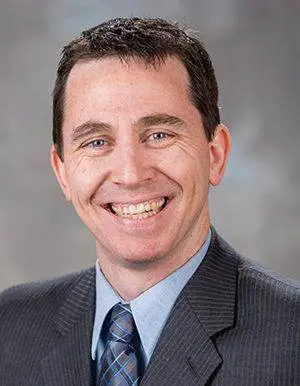
Mark Styczynski

Mark Styczynski
mark.styczynski@chbe.gatech.edu
Website

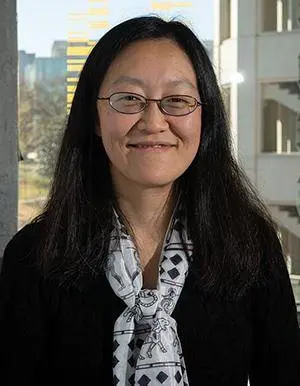
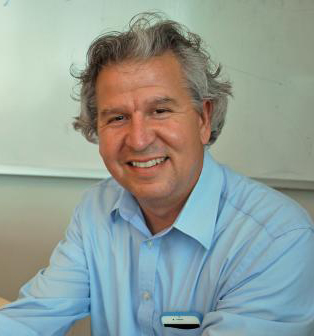
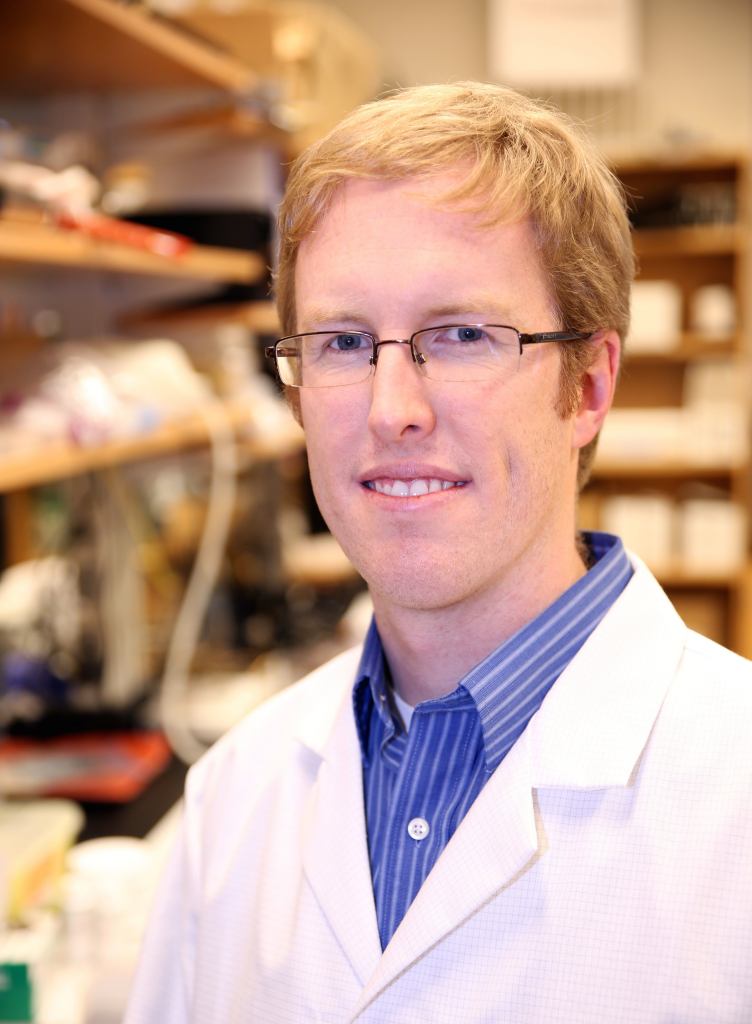
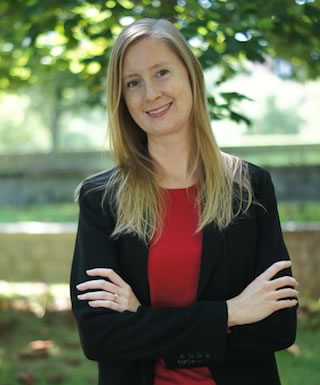
Mark Styczynski is an Associate Professor in the School of Chemical & Biomolecular Engineering at the Georgia Institute of Technology (Georgia Tech), doing research at the interface of synthetic and systems biology as applied to metabolic systems. His synthetic biology work focuses on the development of low-cost, minimal-equipment biosensors for the diagnosis of nutritional deficiencies in the developing world. His systems biology work uses computational and experimental methods to characterize metabolic dynamics and regulation using metabolomics data. He has received young investigator awards from the NSF, DARPA, and ORAU. He has won multiple department-and institute-level teaching awards at Georgia Tech. He founded and was the first president of the Metabolomics Association of North America (MANA), and is a Council Member in the Engineering BiologyResearch Consortium.

Professor
Phone
404-894-2825
Office
EBB 4013
Additional Research
Modelling and controlling metabolic dynamics and regulation (metabolic engineering). Biofuels. Systems biology-based experimental and bioinformatics analysis of metabolism Synthetic biology for the development of biosensors and diagnostics The main focus of theStyczynski groupis the experimental and computational study of the dynamics and regulation of metabolism, with ultIMaTe applications in metabolic engineering, biotechnology, and biosensors/diagnostics.
Google Scholar
https://scholar.google.com/scholar?q=Mark+P+Styczynski&hl=en
Related Site
Mark
Styczynski
Show Regular Profile

Aaron Levine

Aaron Levine
aaron.levine@pubpolicy.gatech.edu
Website

Aaron D. Levine is Associate Dean for Research and Outreach in the Ivan Allen College of Liberal Arts and Professor in the School of Public Policy at Georgia Tech. He also holds an appointment as a Guest Researcher in the Division of Reproductive Health at the Centers for Disease Control and Prevention. He is a member of the leadership team for the NSF Engineering Research Center for Cell Manufacturing Technologies (CMaT), leading ethics and policy research for the center. He seved as Co-Director for CMaT's Engineering Workforce Development activities from 2017 to 2022. His research focuses on the intersection between public policy and bioethics. Much of his work has examined the development of stem cell science, particularly research using human embryonic stem cells, and the translation of novel cell therapies. He also writes extensively on the oversight of contentious areas of medicine, such as assisted reproductive technology. In 2012, he received a NSF CAREER award to examine the impact of ethical controversy on graduate science education and the development of scientific careers.  He serves as Vice-Chair for Bioethics on the International Society for Cell & Genel Therapy’s Committee on the Ethics of Cell and Gene Therapy and recently completed a three-year term as an elected member of the Board of Directors of the American Society for Bioethics and Humanities. He is also a long-time member of the International Society for Stem Cell Research, the Association for Public Policy Analysis and Management, and the American Association for the Advancement of Science.

Aaron has a long-standing interest in science communication and is the author of Cloning: A Beginner's Guide (Oneworld Publications, 2007), an accessible introduction to the science of cloning and embryonic stem cells and the ethical and policy controversies this science inspires. He was an AAAS Leshner Leadership Institute Public Engagement Fellow for 2019-2020. You can follow Aaron on twitter at @aarondlevine.

He completed his Ph.D. in Public Affairs at Princeton University, where his dissertation research examined the impact of public policy on the development of human embryonic stem cell science.  He also holds an M. Phil. from the University of Cambridge, where, as a Churchill Scholar, he studied computational biology at the Sanger Centre and developed algorithms to help analyze the human genome sequence, and a B.S. in Biology from the University of North Carolina at Chapel Hill, where he was a Morehead Scholar.

Associate Professor, School of Public Policy
Guest Researcher, Division of Reproductive Health at the Centers for Disease Control and Prevention
Phone
404-385-3329
Office
DM Smith 216
Additional Research

The impact of ethical controversy on scientific research, with a particular emphasis on emerging biomedical technologies.Recent work has focused on a range of issues related to stem cell policy (including state-level science policy and the rise of unproven stem cell therapies) as well as the oversight of assisted reproduction.

Google Scholar
http://scholar.google.com/citations?user=PPRGxBgAAAAJ&hl=en
LinkedIn Related Site
Aaron
Levine
D.
Show Regular Profile

Hang Lu

Hang Lu
hang.lu@gatech.edu
Lµ Fluidics Group

Hang Lu received her B.S. from the University of Illinois, Urbana-Champaign and her M.S.C.E.P and Ph.D. from the Massachusetts Institute of Technology. She is currently the Associate Dean for Research and Innovation in the College of Engineering and C. J. "Pete" Silas Chair, School of Chemical & Biomolecular Engineering at the Georgia Institute of Technology. Lu's research interests involve the interface of engineering and biology and her lab, the Lu Fluidics Group, is conducting research at these interface levels. The Lu Fluidics Group engineers BioMEMS (Bio Micro-Electro-Mechanical System) and microfluidic devices to address questions in neuroscience, cell biology, and biotechnology that are difficult to answer using conventional techniques.

Faces of Research - Profile Article

Associate Dean for Research and Innovation, College of Engineering
C. J. "Pete" Silas Chair, School of Chemical and Biomolecular Engineering
Phone
404.894.8473
Office
EBB 3017
Additional Research

Microfluidic systems for high-throughput screens and image-based genetics and genomicsSystems biology: large-scale experimentation and data miningMicrotechnologies for optical stimulation and optical recordingBig data, machine vision, automationDevelopmental neurobiology, behavioral neurobiology, systems neuroscienceCancer, immunology, embryonic development, stem cells

Google Scholar
https://scholar.google.com/citations?hl=en&user=DDKNuYgAAAAJ&view_op=list_works&sortby=pubdate
LinkedIn ChBE Profile Page
Hang
Lu
Show Regular Profile

Rudolph Gleason

Rudolph Gleason
rudy.gleason@me.gatech.edu

Rudolph (Rudy) L. Gleason began at Tech in Fall 2005 as an assistant professor. Prior, he was a postdoctoral fellow at Texas A&M University. He is currently a professor in the School of Mechanical Engineering and the School of Biomedical Engineering in the College of Engineering. Gleason’s research program has two key and distinct research aims. The first research aim is to quantify the link between biomechanics, mechanobiology, and tissue growth and remodeling in diseases of the vasculature and other soft tissues. The second research aim is to translate engineering innovation to combat global health disparities and foster sustainable development in low-resource settings around the world. Gleason serves as a Georgia Tech Institute for People and Technology initiative lead for research activities related to global health and well-being.

Professor, Mechanical Engineering and Biomedical Engineering
Joint Appointment in the School of Biomedical Engineering
Phone
404-385-7218
Office
TEP 205
Additional Research

Cardiovascular mechanics, soft tissue growth and remodeling, and tissue engineering

Google Scholar
https://scholar.google.com/scholar?hl=en&as_sdt=0,11&q=rl+gleason+jr&oq=RL+Gleason
LinkedIn Related Site
Rudolph
Gleason
L.
Show Regular Profile

J. Brandon Dixon

J. Brandon Dixon
dixon@gatech.edu
Website

Dr. Dixon began at Georgia Tech in August 2009 as an Assistant Professor. Prior to his current appointment, he was a staff scientist at Ecole Polytechnique Federal de Lausanne (Swiss Federal Institute of Technology - Lausanne) doing research on tissue-engineered models of the lymphatic system. Dr. Dixon received his Ph.D. in biomedical engineering while working in the Optical Biosensing Laboratory, where he developed an imaging system for measuring lymphatic flow and estimating wall shear stress in contracting lymphatic vessels. 

Dr. Dixon's research focuses on elucidating and quantifying the molecular aspects that control lymphatic function as they respond to the dynamically changing mechanical environment they encounter in the body. Through the use of tissue-engineered model systems and animal models, our research is shedding light on key functions of lymphatic transport, and the consequence of disease on these functions. One such function is the lymphatic transport of dietary lipid from the intestine to the circulation. Recent evidence from our lab suggests that this process involves active uptake into lymphatics by the lymphatic endothelial cells. There are currently no efficacious cures for people suffering from lymphedema, and the molecular details connecting lymphedema severity with clinically observed obesity and lipid accumulation are unknown. Knowledge of these mechanisms will provide insight for planning treatment and prevention strategies for people facing lipid-lymphatic related diseases. 

Intrinsic to the lymphatic system are the varying mechanical forces (i.e., stretch, fluid shear stress) that the vessels encounter as they seek to maintain interstitial fluid balance and promote crucial transport functions, such as lipid transport and immune cell trafficking. Thus, we are also interested in understanding the nature of these forces in both healthy and disease states, such as lymphedema, in order to probe the biological response of the lymphatic system to mechanical forces. The complexity of these questions requires the development of new tools and technologies in tissue engineering and imaging. In the context of exploring lymphatic physiology, students in Dr. Dixon's laboratory learn to weave together techniques in molecular and cell biology, biomechanics, imaging, computer programming, and image and signal processing to provide insight into the regulation of lymphatic physiology. Students in the lab also have the opportunity to work in an interdisciplinary environment, as we collaborate with clinicians, life scientists, and other engineers, thus preparing the student for a career in academia and basic science research, or a career in industry.

Professor
Phone
404-385-3915
Office
Petit Biotechnology Building, Office 2312
Google Scholar
https://scholar.google.com/citations?user=mPmRwdkAAAAJ&hl=en
LinkedIn Related Site
J. Brandon
Dixon
Show Regular Profile

Susan Thomas

Susan Thomas
susan.thomas@gatech.edu
Website

Susan Napier Thomas holds the Woodruff Professorship and is a Professor (full) with tenure of Mechanical Engineering in the Parker H. Petit Institute of Bioengineering and Bioscience at the Georgia Institute of Technology where she holds adjunct appointments in Biomedical Engineering and Biological Science and is a member of the Winship Cancer Institute of Emory University. Prior to this appointment, she was a Whitaker postdoctoral scholar at École Polytechnique Fédérale de Lausanne (one of the Swiss Federal Institutes of Technology) and received her B.S. in Chemical Engineering with an emphasis in Bioengineering cum laude from the University of California Los Angeles and her Ph.D. in Chemical & Biomolecular Engineering Department as a NSF Graduate Research Fellow from The Johns Hopkins University. For her contributions to the emerging field of immunoengineering, she has been honored with the 2022 Award for Young Investigator from Elsevier's journal Biomaterials for "outstanding contributions to the field" of biomaterials science, the 2018 Young Investigator Award from the Society for Biomaterials for "outstanding achievements in the field of biomaterials research" and the 2013 Rita Schaffer Young Investigator Award from the Biomedical Engineering Society "in recognition of high level of originality and ingenuity in a scientific work in biomedical engineering." Her interdisciplinary research program is supported by multiple awards on which she serves as PI from the National Cancer Institute, the Department of Defense, the National Science Foundation, and the Susan G. Komen Foundation, amongst others.

Professor
Associate Director, Integrated Cancer Research Center
Co-Director, Regenerative Engineering and Medicine Research Center
Phone
404-385-1126
Office
Petit Biotechnology Building, Office 2315
Additional Research
Thomas's research focuses on the role of biological transport phenomena in physiological and pathophysiological processes. Her laboratory specializes in incorporating mechanics with cell engineering, biochemistry, biomaterials, and immunology in order to 1) elucidate the role mechanical forces play in regulating seemingly unrelated aspects of tumor progression such as metastasis and immune suppression as well as 2) develop novel immunotherapeutics to treat cancer. Cancer progression is tightly linked to the ability of malignant cells to exploit the immune system to promote survival. Insight into immune function can therefore be gained from understanding how tumors exploit immunity. Conversely, this interplay makes the concept of harnessing the immune system to combat cancer an intriguing approach. Using an interdisciplinary approach, we aim to develop a novel systems-oriented framework to quantitatively analyze immune function in cancer. This multifaceted methodology to study tumor immunity will not only contribute to fundamental questions regarding how to harness immune response, but will also pave the way for novel engineering approaches to treat cancer such as with vaccines and cell- or molecular-based therapies.
Google Scholar
http://scholar.google.com/citations?user=wYgPYC8AAAAJ&hl=en&oi=sra
Related Site
Susan
Thomas
Show Regular Profile

Yuhang Hu

Yuhang Hu
yuhang.hu@me.gatech.edu
Website

Dr. Yuhang Hu Joined the Woodruff School of Mechanical Engineering and the School of Chemical and Biomolecular Engineering at Georgia Institute of Technology as an assistant professor in August 2018. Prior to that, Dr. Hu was an assistant professor in the Department of Mechanical Science and Engineering at University of Illinois at Urbana-Champaign from 2015 to 2018. She received her Ph.D. from Harvard University in the area of Solid Mechanics. She worked in the area of Materials Chemistry as a post-doctoral fellow at Harvard from 2011 to 2014.

Associate Professor, Mechanical Engineering and Chemical and Biomolecular Engineering
Phone
404-894-2555
Office
MRDC 4107
Additional Research

Our study focuses on Soft Active Materials especially those consisting both solid and liquid, such as gels, cells and soft biological tissues. Our research is at the interface between mechanics and materials chemistry. Our studies span from fundamental mechanics to novel applications.

Google Scholar
https://scholar.google.com/citations?user=U9NeaxUAAAAJ&hl=en
Mechanical Engineering Profile
Yuhang
Hu
Show Regular Profile

Young-sup Yoon

Young-sup Yoon
yyoon5@emory.edu
Website

The Yoon Lab has been working on stem cell research in various cardiovascular diseases. Our major research interest is to use stem cell technology to treat various cardiovascular diseases, and we have been developing and using different bone marrow-derived stem sell or progenitor cells for cardiovascular repair.

Professor of Medicine
Director of Stem Cell Biology
Phone
404-727-8176
Office
Emory WMRB 3309
University, College, and School/Department
LinkedIn
Young-sup
Yoon
Show Regular Profile

Rebecca Levit

Rebecca Levit
rlevit@emory.edu
Website

Dr. Levit came to Emory in 2007 after graduating from the University Of Pennsylvania School Of Medicine. She spent 7 years doing research and clinical training in cardiovascular disease. In 2014 she joined the faculty in the Division of Cardiology and is continuing her work on clinically translatable stem cell therapies for cardiovascular disease.

Associate Professor of Medicine
Associate Director, Basic Science Track, Cardiovascular Disease Fellowship Program
Phone
404-778-5299
Office
Emory Heart & Vascular Center at Clifton
Additional Research
Cardiovascular diseases are the leading causes of death and disability worldwide. We are dedicated to developing new therapies to help cardiac patients by identifying, testing, and moving new therapies towards clinical use. We study stem cell therapies to prevent heart damage and promote repair. We use biomaterials to increase cell retention, increase efficacy, and target activity.
Research Focus Areas
University, College, and School/Department
Google Scholar
https://scholar.google.com/citations?user=vtFkOqoAAAAJ&hl=en
LinkedIn Related Site
Rebecca
Levit
D.
Show Regular Profile

Michael Borich

Michael Borich
michael.borich@emory.edu
Website

I am a rehabilitation neuroscientist keenly interested in the brain's capacity for change in response to rehabilitation after injury or in the context of disease. My work incorporates multimodal neuroimaging and neurostimulation approaches to investigate brain structure and function. The overarching aim of this work is to uncover the key neural substrates supporting motor control and motor learning to enable the design of optimal rehabilitation strategies to maximize recovery of function following neurologic injury.

Associate Professor
Adjunct Assistant Professor, Department of Biomedical Engineering, Georgia Tech
Training Faculty, Neuroscience Graduate Program, Emory University
Phone
404-712-0612
Office
Emory Rehabilitation Hospital, R228
Additional Research
My primary research focus is to understand the neural substrates of motor learning and experience-dependent plasticity in healthy individuals and individuals after stroke. This work utilizes cutting-edge neuroimaging and neurostimulation techniques to evaluate both human brain anatomy (structure) and physiology (function). It remains unclear how the brain recovers from neurologic insult and, therefore, rehabilitation strategies aimed at ameliorating functional impairments following injury are currently suboptimal. My work aims to understand how best to measure brain recovery after injury and how best to stimulate optimal restoration of function.
Research Focus Areas
University, College, and School/Department
Google Scholar
https://scholar.google.com/scholar?hl=en&as_sdt=0,11&q=Borich M OR Borich MR
LinkedIn Related Site
Michael
Borich
R.
Show Regular Profile