Denis V. Tsygankov

Denis V. Tsygankov
denis.tsygankov@bme.gatech.edu
Website

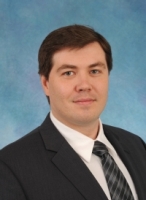
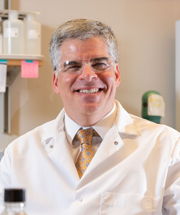
Denis Tsygankov, PhD, is Assistant Professor in the Wallace H. Coulter Department of Biomedical Engineering at Georgia Tech School of Engineering and Emory University School of Medicine. 

Dr. Tsygankov is interested in developing and applying computational methods, including mathematical modeling, simulations, and computer vision approaches to understand complex multi-scale physiological processes including vasculogenesis, morphogenesis, and cancer. 

He is a member of the Cell and Molecular Biology Research Program at Winship Cancer Institute.

Associate Professor
Phone
404-385-4747
Office
UAW 1212
Google Scholar
https://scholar.google.com/citations?user=1oYYvS0AAAAJ&hl=en
Coulter Department of Biomedical Engineering
Denis
Tsygankov
V.
Show Regular Profile

Scott Hollister

Scott Hollister
scott.hollister@bme.gatech.edu
Website

I am the Patsy and Alan Dorris Chair of Pediatric Technology and Professor of Biomedical Engineering at the Georgia Institute of Technology. I also direct the Center for 3D Medical Fabrication (3DMedFab) and the Tissue Engineering and Mechanics Laboratory at Georgia Tech. We develop a range of 3D printed medical devices. We have over 25 devices implanted in patients for treatment of trachecobronchomalacia.

Professor and Patsy and Alan Dorris Chair in Pediatric Technology
Phone
404-385-5506
Office
UAW 2102
Additional Research
My research interests focus on image-based computational design and 3D biomaterial printing for patient specific devices and regenerative medicine, with specific interests in pediatric applications.Clinical application interests include airway reconstruction and tissue engineering, structural heart defects, craniofacial and facial plastics, orthopaedics, and gastrointestinal reconstruction.We specifically utilize patient image data as a foundation to for multiscale design of devices, reconstructive implants and regenerative medicine porous scaffolds.We are also interested in multiscale computational simulation of how devices and implants mechanically interact with patient designs, combining these simulations with experimental measures of tissue mechanics.We then transfer these designs to both laser sintering and nozzle based platforms to build devices from a wide range of biomaterials. Subsequently, we are interested in combining these 3D printed biomaterial platforms with biologics for patient specific regenerative medicine solutions to tissue reconstruction. 
Google Scholar
https://scholar.google.com/citations?user=npoM6pUAAAAJ&hl=en
Related Site
Scott
Hollister
J.
Show Regular Profile

Peter Yunker

Peter Yunker
peter.yunker@gatech.edu
Website

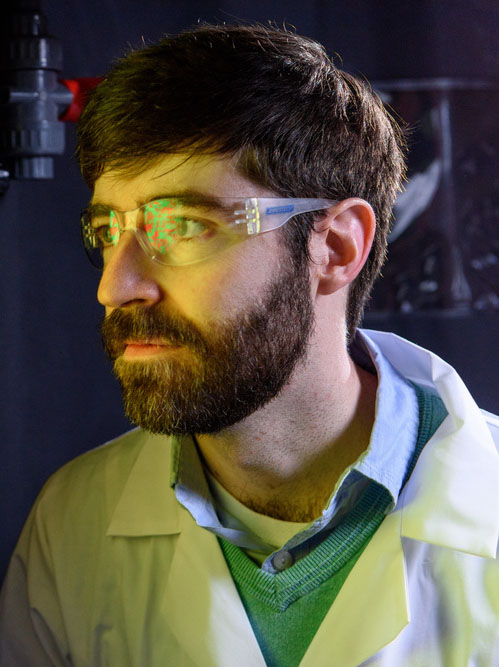
Dr. Yunker joined Georgia Tech’s School of Physics in 2014 after finishing his biophysics postdoc at Harvard University & New England Biolabs in 2014. Before that, he earned his Ph.D. in Physics from the University of Pennsylvania in 2012 after earning a B.S. in Physics from Texas A&M University in 2005. He has won the Burstein Prize and the Denenstein Award both from UPenn along with the Eric R. Immel Memorial award for Excellence in Teaching at GT. 

Peter’s interests are biophysics, soft matter, and golden retrievers.

Associate Professor
Phone
404-385-8642
Office
Boggs B20
Additional Research
Nonequilibrium systems, densely packed active matter with life and death events, microbial physics, structural mechanics, fracture mechanics, evolution.
University, College, and School/Department
Google Scholar
https://scholar.google.com/citations?user=va75ptIAAAAJ&hl=en
Related Site
Peter
Yunker
J.
Show Regular Profile

Shuichi Takayama

Shuichi Takayama
takayama@gatech.edu
Takayama lab

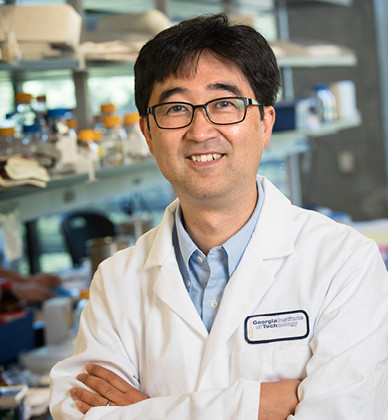
Shu Takayama earned his BS and MS in Agricultural Chemistry at the University of Tokyo. He earned a Ph.D. in Chemistry at The Scripps Research Institute in La Jolla, California studying bio-organic synthesis with Dr. Chi‐Huey Wong. He then worked as a postdoc with Dr. George Whitesides at Harvard University where he focused on applying microfluidics to studying cell and molecular biology.

Takayama began his career at the University of Michigan, where led his lab in the Department of Biomedical Engineering and Macromolecular Science & Engineering for over 17 years. In 2017, the lab moved to Georgia Tech where Shu became the Georgia Research Alliance Price Gilbert Chair Professor of Biomedical Engineering in the Wallace H. Coulter Department of Biomedical Engineering.

Takayama’s research interests are diverse and motivated by clinical and biotechnology needs. He is always interested in hearing from stakeholders in these areas who are seeking engineering collaboration.

Professor, Wallace H. Coulter Department of Biomedical Engineering
GRA Eminent Scholar, Wallace H. Coulter Department of Biomedical Engineering
Price Gilbert, Jr. Chair in Regenerative Engineering andMedicine
Phone
404.385.5722
Office
EBB 4018
Additional Research

Use of micro/nanofluidics for cell analysis; diagnostics; and chromatin analysis; High throughput 3D cell cultures; Organs-on-a-chip construction and design; Role of rhythm in cell signaling; Self-switching fluidic circuits; Fracture fabrication

Google Scholar
https://scholar.google.com/citations?hl=en&user=IkhTUu4AAAAJ&view_op=list_works&sortby=pubdate
LinkedIn BME Profile Page
Shuichi
Takayama
Show Regular Profile

Young-Hui Chang

Young-Hui Chang
yh.chang@ap.gatech.edu
Comparative Neuromechanics Laboratory

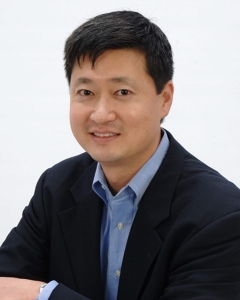
Young-Hui Chang is a professor in the School of Biological Sciences, Associate Dean of Faculty for College of Sciences, and director of research in the Georgia Tech Comparative Neuromechanics Lab where he studies the neuromechanics of movement in humans and other animals. Chang’s aim is to understand fundamental principles by which we control our movements as we move through our physical environment. This requires knowledge of the neural control of movement, the biomechanics of our musculoskeletal system, and the physics of our environmental interactions. The team also studies how our body adapts to acute and chronic changes. This involves processes of motor learning that are involved in everything from clinical rehabilitation to elite sports performance.

Professor
Phone
404-894-9993
Office
1309 B
Additional Research

Biomechanics

Neural signaling

Neuromechanics

Google Scholar
https://scholar.google.com/citations?user=97Xv4U4AAAAJ&hl=en&oi=ao
LinkedIn http://biosci.gatech.edu/people/young-chang
Young-Hui
Chang
Show Regular Profile

Andrés J. García

Andrés J. García
andres.garcia@me.gatech.edu
Website
Executive Director, Parker H. Petit Institute for Bioengineering and Bioscience
The Petit Director’s Chair in Bioengineering and Bioscience
Regents’ Professor, George Woodruff School of Mechanical Engineering
Phone
404-894-9384
Office
Petit Biotechnology Building, Office 2310
Additional Research

Dr. Garcia's research centers on cellular and tissue engineering, areas which integrate engineering and biological principles to control cell function in order to restore and/or enhance function in injured or diseased organs. Specifically, his research focuses on fundamental structure-function relationships governing cell-biomaterials interactions for bone and muscle applications. Current projects involve the analysis and manipulation of cell adhesion receptors and their extracellular matrix ligands. For example, a mechanochemical system has been developed to analyze the contributions of receptor binding, clustering, and interactions with other cellular structural proteins to cell adhesion strength. In another research thrust, bio-inspired surfaces, including micropatterned substrates, are engineered to control cell adhesion in order to direct signaling and cell function. For instance, biomolecular surfaces have been engineered to target specific adhesion receptors to modulate cell signaling and differentiation. These biomolecular strategies are applicable to the development of 3D hybrid scaffolds for enhanced tissue reconstruction,"smart" biomaterials, and cell growth supports. Finally, genetic engineering approaches have been applied to engineer cells that form bone tissue for use in the development of mineralized templates for enhanced bone repair.

Google Scholar
https://scholar.google.com/citations?user=px6Z53IAAAAJ&hl=en&oi=sra
LinkedIn Related Site Faces of Research Profile
Andrés
García
J.
Show Regular Profile

Wei Sun

Wei Sun
wei.sun@bme.gatech.edu
Sutra Medical
Adjunct Associate Professor
Chief Executive Officer, Sutra Medical Inc.
Phone
404-385-1245
Office
TEP 206
Additional Research
Heart Valve Biomechanics, Engineering Analysis, and Medical Device R&D 
Google Scholar
https://scholar.google.com/citations?user=C5skj5gAAAAJ&hl=en
LinkedIn
Wei
Sun
Show Regular Profile

C. Ross Ethier

C. Ross Ethier
ross.ethier@bme.gatech.edu
Website

Prof. Ethier was originally trained as a mechanical engineer, receiving his Ph.D. from MIT in 1986 working in the lab of Roger D. Kamm. He then joined the University of Toronto, where he was a Professor of Bioengineering, Mechanical Engineering and Ophthalmology, and latterly the Director of the Institute of Biomaterials and Biomedical Engineering. Prior to joining Georgia Tech/Emory, Professor Ethier was the Head of the Department of Bioengineering at Imperial College, London from 2007-12. 

His research is in the biomechanics of cells and whole organs. His specific research topics include glaucoma (biomechanics of aqueous humour drainage in the normal and glaucomatous eye, and the mechanical and cellular response of optic nerve tissues to intraocular pressure), study of hemodynamic basis of arterial disease.

Professor
Georgia Research Alliance Lawrence L. Gellerstedt, Jr. Eminent Scholar in Bioengineering
Phone
404-385-0100
Office
Petit Biotechnology Building, Office 2306
Additional Research
"Biomechanics and mechanobiology, glaucoma, osteoarthritis, regenerative medicine, intraocular pressure control, optic nerve head biomechanics. We work at the boundaries between mechanics, cell biology and physiology to better understand the role of mechanics in disease, to repair diseased tissues, and to prevent mechanically-triggered damage to tissues and organs. Glaucoma is the second most common cause of blindness. We carry out a range of studies to understand and treat this disease. For example, we are developing a new, mechanically-based, strategy to protect fragile neural cells that, if successful, will prevent blindness. We are developing protocols for stem-cell based control of intraocular pressure. We study the mechanobiology and biomechanics of neurons and glial cells in the optic nerve head. We also study VIIP, a major ocular health concern in astronauts. Osteoarthritis is the most common cause of joint pain. We are developing paradigms based on magneto-mechanical stimulation to promote the differentiation and (appropriate) proliferation of mesenchymal stem cells."
Google Scholar
http://scholar.google.com/citations?user=YdRM39wAAAAJ
LinkedIn Related Site
C. Ross
Ethier
Show Regular Profile

Susan Margulies

Susan Margulies
susan.margulies@gatech.edu

Dr. Susan S. Margulies leads the U.S. National Science Foundation’s Directorate for Engineering in its mission to transform our world for a better tomorrow by driving discovery, inspiring innovation, enriching education, and accelerating access. With an annual budget of nearly $800 million, the NSF’s Engineering Directorate provides over 40 percent of federal funding for fundamental research in engineering at academic institutions, and it distributes more than 1500 awards supporting research and education each year. Projects funded by the Engineering Directorate span frontier research to generate new knowledge, problem-driven research to identify new solutions to societal challenges, and application-driven research to translate discoveries to uses that benefit society.

In partnership with industry and communities across the nation, the NSF’s investments in engineering research and education lead to innovative technologies and sustainable impacts in health, agriculture, clean energy and water, resilient infrastructure, advanced manufacturing and communication systems, and many other areas. NSF support also builds the Nation’s workforce capacity in engineering and supports the diversity and inclusion of engineers at all career stages. Together, the NSF’s investments in engineering research and education enhance prosperity, equity and quality of life for all Americans.

Margulies joined the NSF as the assistant director for the Directorate for Engineering in August 2021 after leading the Wallace H. Coulter Department of Biomedical Engineering at the Georgia Institute of Technology and Emory University. While on detail at the NSF, she is a professor and Georgia Research Alliance Eminent Scholar at Georgia Tech and Emory. She received her B.S.E. in mechanical and aerospace engineering at Princeton University, her Ph.D. in bioengineering from the University of Pennsylvania, and post-doctoral training at the Mayo Clinic. She joined the faculty at the University of Pennsylvania in 1993 as an assistant professor, rising through the ranks to professor. In 2017 she became the first faculty member tenured in both the Georgia Institute of Technology and Emory University, and she was a department chair in both the college of engineering at Georgia Tech and Emory’s school of medicine. 

Margulies is internationally recognized for pioneering studies spanning the micro-to-macro scales and across species to identify mechanisms underlying brain injuries in children and adolescents and lung injuries associated with mechanical ventilation, leading to improved injury prevention, diagnosis and treatments. She has launched numerous training and mentorship programs for students and faculty, created institute-wide initiatives to enhance diversity and inclusion, and led innovative projects in engineering education. 

Margulies’ transdisciplinary scholarly impact has been recognized by her election as fellow of the American Society of Mechanical Engineers, the Biomedical Engineering Society, and the American Institute for Medical and Biological Engineering, and as a member of the National Academy of Engineering and the National Academy of Medicine.  

Professor
National Science Foundation Engineering Directorate
Phone
404-385-5038
Office
UAW 2116
Additional Research
Biomechanics of brain injury, pediatric head injury, soft tissue mechanics, ventilator-induced lung injury, lung mechanics, pathways of cellular mechanotransduction, and tissue injury thresholds.My research in head injury will continue to focus on how and why head injuries occur in adults and children and to improve detection and treatment strategies. At Georgia Tech, I will be continuing that research, looking at innovative biomarkers and new devices to detect mild traumatic brain injuries. At Emory, my research will be focused on animal models for diffuse as well as focal brain injuries—incorporating developments at Georgia Tech into our preclinical model. I also look forward to close collaborations with Children's Healthcare of Atlanta and Emory University faculty to improve the outcomes after traumatic brain injuries.
Google Scholar
https://scholar.google.com/citations?user=tLrQhzIAAAAJ&hl=en
Related Site
Susan
Margulies
S.
Show Regular Profile

Shuyi Nie

Shuyi Nie
shuyi.nie@biology.gatech.edu
Lab Website

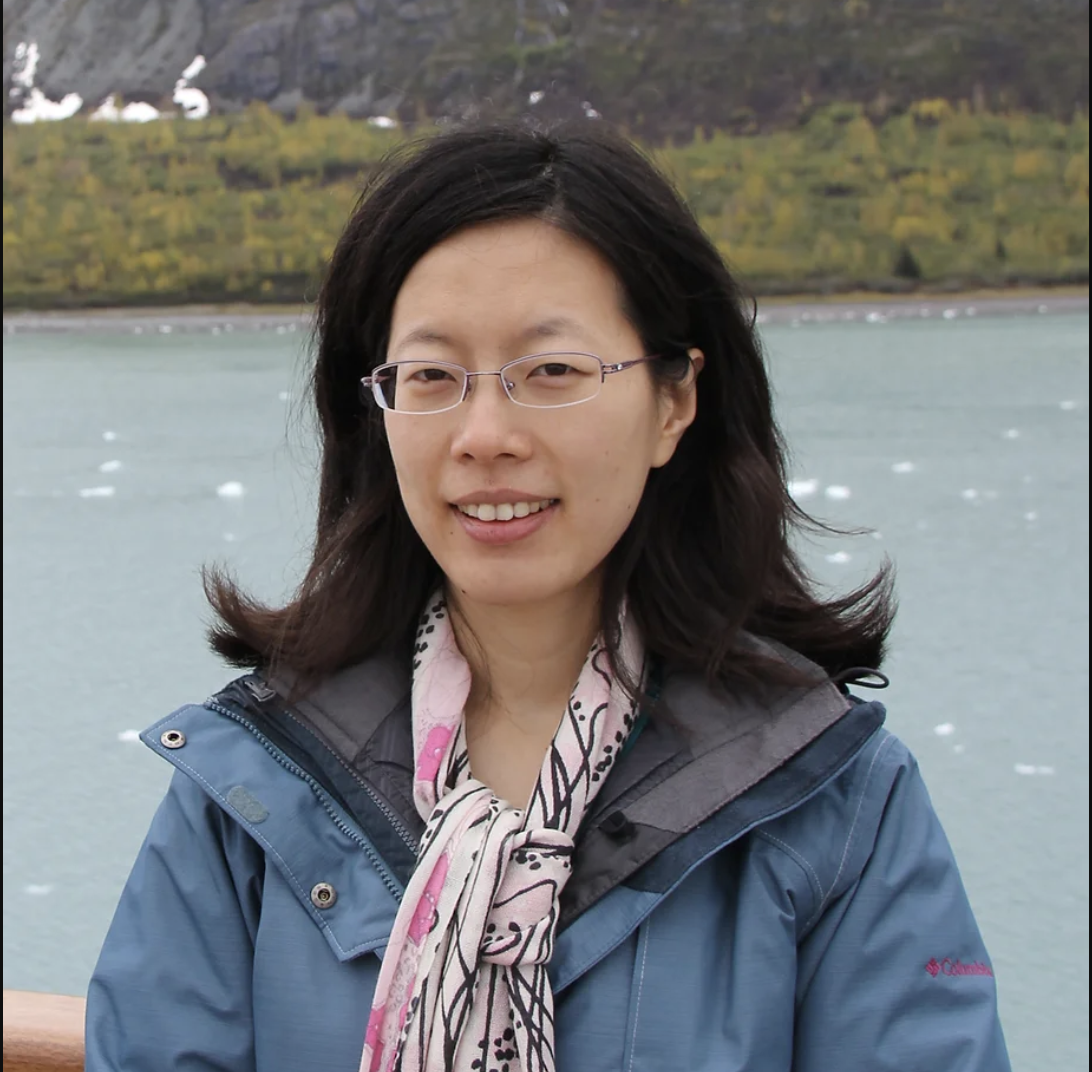
Dr. Nie received her B.S. degree in Biology from Peking University in China in 2002. In 2007, she received her Ph.D. in Cell Biology from the University of Alabama at Birmingham, where she worked on elucidating signaling pathways in vertebrate gastrulation movements. Thereafter, she conducted postdoctoral research in the laboratory of Marianne Bronner at California Institute of Technology. She joined Georgia Tech in Fall 2014.

Assistant Professor
Phone
404-385-3694
Office
EBB 3009
Additional Research
The fundamental question we are trying to answer is how the coordinated cell movements are regulated during animal development. Different groups of cells move to different locations in a growing embryo to give rise to specific tissue and structures. It is a very complex process since the "ground" cells travel on is also undergoing constant rearrangement and growth. We use neural crest as a model to study the mechanisms of cell migration during embryonic development. The neural crest is a vertebrate innovation, comprised of highly migratory stem-like cells that give rise to multiple tissue and structures, including craniofacial bones and cartilages, connective tissue in the heart, enteric nervous system in the gut, and pigment cells all over the skin. Defects in their proliferation, migration, differentiation, or survival lead to numerous diseases and birth defects, including craniofacial and heart malformations as well as different types of cancer. Ongoing studies aim to uncover how their migration is regulated and how do they achieve such extraordinary migratory abilities.
Google Scholar
https://scholar.google.com/citations?hl=en&user=NMKiMdMAAAAJ&view_op=list_works
LinkedIn http://biosciences.gatech.edu/people/shuyi-nie
Shuyi
Nie
Show Regular Profile