Stanislav Emelianov

Stanislav Emelianov
stas@gatech.edu
Website

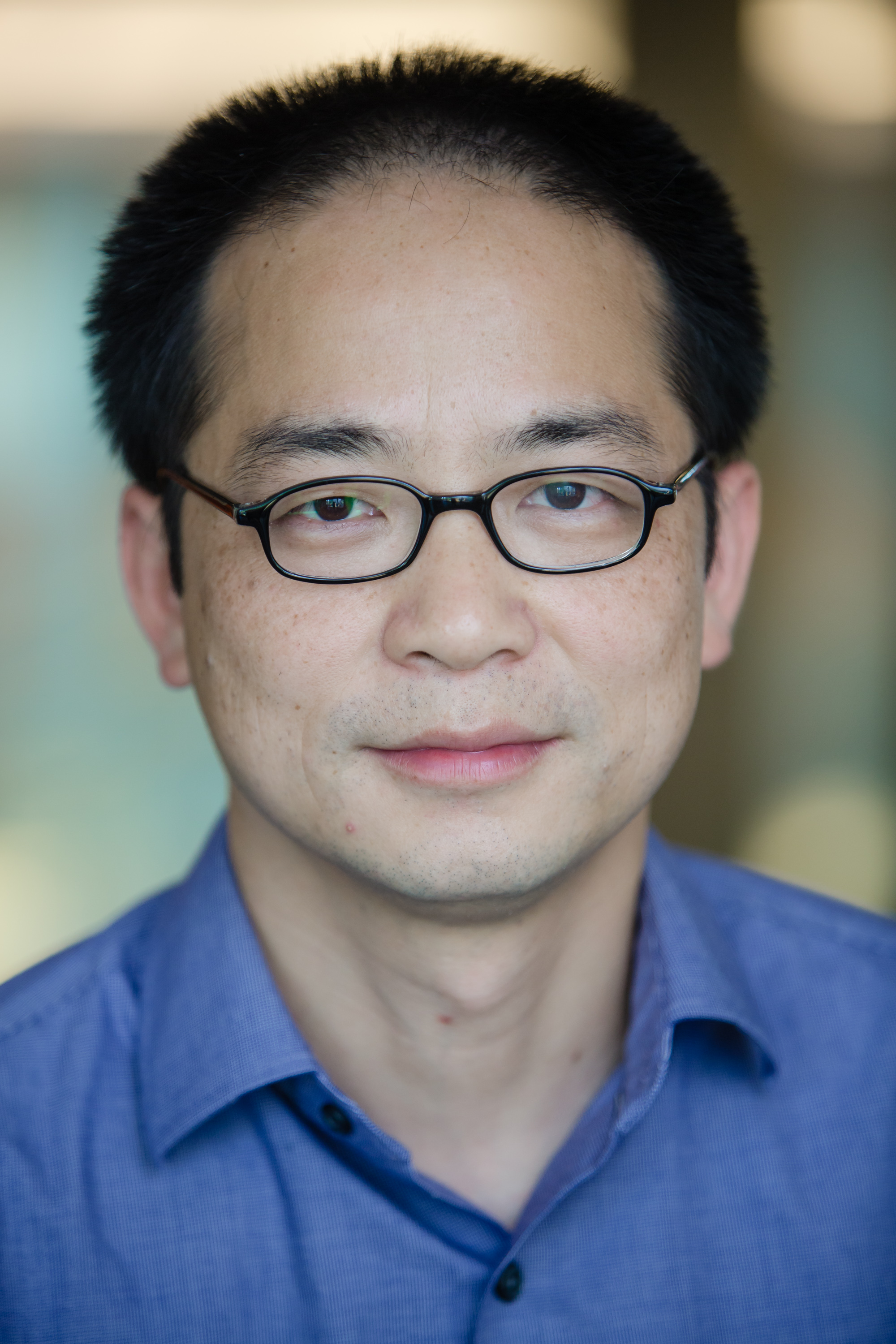
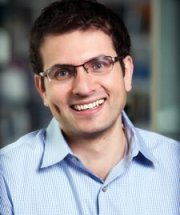
Dr. Stanislav Emelianov is a Joseph M. Pettit Endowed Chair, Georgia Research Alliance Eminent Scholar, and Professor of Electrical & Computer Engineering and Biomedical Engineering at the Georgia Institute of Technology. He is also appointed at the Emory University School of Medicine, where he is affiliated with Winship Cancer Institute, Department of Radiology, and other clinical units. Furthermore, Dr. Emelianov is Director of the Ultrasound Imaging and Therapeutics Research Laboratory at the Georgia Institute of Technology focused on the translation of diagnostic imaging & therapeutic instrumentation, and nanobiotechnology for clinical applications. 

Throughout his career, Dr. Emelianov has been devoted to the development of advanced imaging methods capable of detecting and diagnosing cancer and other pathologies, assisting treatment planning, and enhancing image-guided therapy and monitoring of the treatment outcome. He is specifically interested in intelligent biomedical imaging and sensing ranging from molecular imaging to small animal imaging to clinical applications. Furthermore, Dr. Emelianov develops approaches for image-guided molecular therapy and therapeutic applications of ultrasound and electromagnetic energy. Finally, nanobiotechnology plays a critical role in his research. In the course of his work, Dr. Emelianov has pioneered several ultrasound-based imaging techniques, including shear wave elasticity imaging and molecular photoacoustic imaging. Overall, projects in Dr. Emelianov's laboratory, which focuses on cancer and other diseases, range from molecular imaging to functional imaging and tissue differentiation, from drug delivery and release to image-guided surgery and intervention.

Joseph M. Pettit Chair
Georgia Research Alliance Eminent Scholar
Professor
Phone
404-385-0373
Office
MoSE 4100M
Additional Research
Diagnostic imaging and patient-specific image-guided therapeutics including cancer imaging and diagnosis. Emelianov's research interests are in the areas of intelligent diagnostic imaging and patient-specific image-guided therapeutics including cancer imaging and diagnosis, the detection and treatment of atherosclerosis, the development of imaging and therapeutic nanoagents, guided drug delivery and controlled release, simultaneous anatomical, functional, cellular and molecular imaging, multi-modal imaging, and image-guided therapy.
University, College, and School/Department
Google Scholar
https://scholar.google.com/citations?user=MYCK3VYAAAAJ&hl=en
Related Site
Stanislav
Emelianov
Show Regular Profile

Amit Reddi

Amit Reddi
amit.reddi@chemistry.gatech.edu

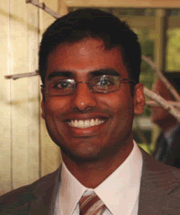
Metalloproteins constitute one of the largest classes of proteins in the proteome and are involved in virtually every metabolic and signaling pathway of consequence to human health and disease. Broadly speaking, the Reddi laboratory is interested in determining the cellular, molecular, and chemical mechanisms by which metalloproteins are activated by cells, and once activated, how they communicate with other biomolecules to promote normal metabolism and physiology, placing an emphasis on systems relevant to cancer, neurodegenerative disorders, and infectious diseases. Current projects in the lab are focused on elucidating heme trafficking pathways and the role of Cu/Zn Superoxide Dismutase (SOD1) in redox signaling. Prospective students will get broad training in disciplines that span modern biochemistry, bioinorganic chemistry, biophysics, chemical biology, molecular genetics, and cell biology.      

Associate Professor
Phone
404-385-1428
Office
Petit Biotechnology Building, Office 3313
Additional Research
Metalloproteins constitute one of the largest classes of proteins in the proteome and are involved in virtually every metabolic and signaling pathway of consequence to human health and disease. Broadly speaking, the Reddi laboratory is interested in determining the cellular, molecular, and chemical mechanisms by which metalloproteins are activated by cells, and once activated, how they communicate with other biomolecules to promote normal metabolism and physiology, placing an emphasis on systems relevant to cancer, neurodegenerative disorders, and infectious diseases. Current projects in the lab are focused on elucidating heme trafficking pathways and the role of Cu/Zn Superoxide Dismutase (SOD1) in redox signaling. Prospective students will get broad training in disciplines that span modern biochemistry, bioinorganic chemistry, biophysics, chemical biology, molecular genetics, and cell biology.
Google Scholar
https://scholar.google.com/citations?user=5c8uJMAAAAAJ&hl=en&oi=ao
Amit
Reddi
R.
Show Regular Profile

Roman Mezencev

Roman Mezencev
roman.mezencev@biosci.gatech.edu
https://orcid.org/0000-0003-4361-7628

Roman Mezencev is an adjunct associate professor in the School of Biological Sciences at Georgia Tech and a scientist at the U.S. EPA’s National Center of Public Health and Environmental Assessment. His areas of research interest include cancer biology, pharmacology, toxicogenomics, protein misfolding diseases, and public health. In cancer biology, his main research focuses on using omics data to identify new cancer subtypes through molecular profiling, which can help enhance their diagnosis and treatment. Additionally, Mezencev explores the use of omics data to predict and understand chemically-induced cancer and other adverse outcomes to protect public health. He is also investigating the intriguing epidemiological associations and mechanistic connections between cancer and Alzheimer’s disease (AD), as well as other protein-misfolding diseases. By understanding these associations, we can identify shared risk factors and molecular mechanisms that can lead to the development of new anti-cancer and anti-AD drugs and enhance our understanding of these complex diseases.
 

Adjunct Associate Professor, School of Biological Sciences
Phone
404-992-0151
Roman
Mezencev
Show Regular Profile

Yonggang Ke

Yonggang Ke
yonggang.ke@emory.edu
Ke Lab for Biomolecular Nanoengineering

Yonggang Ke's research is highly interdisciplinary combining chemistry, biology, physics, material science, and engineering. The overall mission of his research is to use interdisciplinary research tools to program nucleic-acid-based "beautiful structures and smart devices" at nanoscale, and use them for scientific exploration and technological applications. Specifically, his team focuses on (1) developing new DNA self-assembly paradigms for constructing DNA nanostructures with greater structural complexity, and with controllable sizes and shapes; (2) developing new imaging or drug delivery systems based on DNA nanostructuresl; (3) exploring design of novel DNA-based nanodevices for understanding basic biological questions at molecular level; (4) developing DNA-templated protein devices for constructing artificial bio-reactors.

For cancer-related research/application, Ke will focus on using DNA/RNA nanostructures as drug delivery vehicles. He is also interested in using DNA/RNA nanostructures to study cancer cell biology at molecular level.

Assistant Professor, Wallace H. Coulter Department of Biomedical Engineering
Phone
404.712.2712
Office
Emory HSRB E186
Additional Research

Molecular engineeringNucleic acid self-assemblyTargeted imaging and delivery

Google Scholar
https://scholar.google.com/citations?user=jNXJdQ4AAAAJ&hl=en
LinkedIn BME Profile Page
Yonggang
Ke
Show Regular Profile

Mark Styczynski

Mark Styczynski
mark.styczynski@chbe.gatech.edu
Website

Mark Styczynski is an Associate Professor in the School of Chemical & Biomolecular Engineering at the Georgia Institute of Technology (Georgia Tech), doing research at the interface of synthetic and systems biology as applied to metabolic systems. His synthetic biology work focuses on the development of low-cost, minimal-equipment biosensors for the diagnosis of nutritional deficiencies in the developing world. His systems biology work uses computational and experimental methods to characterize metabolic dynamics and regulation using metabolomics data. He has received young investigator awards from the NSF, DARPA, and ORAU. He has won multiple department-and institute-level teaching awards at Georgia Tech. He founded and was the first president of the Metabolomics Association of North America (MANA), and is a Council Member in the Engineering BiologyResearch Consortium.

Professor
Phone
404-894-2825
Office
EBB 4013
Additional Research
Modelling and controlling metabolic dynamics and regulation (metabolic engineering). Biofuels. Systems biology-based experimental and bioinformatics analysis of metabolism Synthetic biology for the development of biosensors and diagnostics The main focus of theStyczynski groupis the experimental and computational study of the dynamics and regulation of metabolism, with ultIMaTe applications in metabolic engineering, biotechnology, and biosensors/diagnostics.
Google Scholar
https://scholar.google.com/scholar?q=Mark+P+Styczynski&hl=en
Related Site
Mark
Styczynski
Show Regular Profile

Yunan Luo

Yunan Luo
yunan@gatech.edu
CoC Faculty Profile Page

I am an Assistant Professor in the School of Computational Science and Engineering (CSE), Georgia Institute of Technology since January 2022. I received my PhD from the Department of Computer Science at the University of Illinois Urbana-Champaign, advised by Prof. Jian Peng. Prior to that, I received my bachelor’s degree in Computer Science from Yao Class at Tsinghua University in 2016.

I am broadly interested in computational biology and machine learning, with a focus on developing AI and data science methods to reveals core scientific insights into biology and medicine. Recent interests include deep learning, transfer learning, sequence and graph representation learning, network and system biology, functional genomics, cancer genomics, drug repositioning and discovery, and AI-guided biological design and discovery.

Assistant Professor, Computational Science and Engineering
Additional Research
  • Artificial Intelligence
  • Bioengineering
  • Bioinformatics
  • Biomaterials
  • Cancer Biology
  • Drug Discovery
  • Machine Learning
  • Protein Engineering
Google Scholar
https://scholar.google.com/citations?hl=en&user=N8RBFoAAAAAJ&view_op=list_works&sortby=pubdate
Yunan
Luo
Show Regular Profile

Hang Lu

Hang Lu
hang.lu@gatech.edu
Lµ Fluidics Group

Hang Lu received her B.S. from the University of Illinois, Urbana-Champaign and her M.S.C.E.P and Ph.D. from the Massachusetts Institute of Technology. She is currently the Associate Dean for Research and Innovation in the College of Engineering and C. J. "Pete" Silas Chair, School of Chemical & Biomolecular Engineering at the Georgia Institute of Technology. Lu's research interests involve the interface of engineering and biology and her lab, the Lu Fluidics Group, is conducting research at these interface levels. The Lu Fluidics Group engineers BioMEMS (Bio Micro-Electro-Mechanical System) and microfluidic devices to address questions in neuroscience, cell biology, and biotechnology that are difficult to answer using conventional techniques.

Faces of Research - Profile Article

Associate Dean for Research and Innovation, College of Engineering
C. J. "Pete" Silas Chair, School of Chemical and Biomolecular Engineering
Phone
404.894.8473
Office
EBB 3017
Additional Research

Microfluidic systems for high-throughput screens and image-based genetics and genomicsSystems biology: large-scale experimentation and data miningMicrotechnologies for optical stimulation and optical recordingBig data, machine vision, automationDevelopmental neurobiology, behavioral neurobiology, systems neuroscienceCancer, immunology, embryonic development, stem cells

Google Scholar
https://scholar.google.com/citations?hl=en&user=DDKNuYgAAAAJ&view_op=list_works&sortby=pubdate
LinkedIn ChBE Profile Page
Hang
Lu
Show Regular Profile

Susan Thomas

Susan Thomas
susan.thomas@gatech.edu
Website

Susan Napier Thomas holds the Woodruff Professorship and is a Professor (full) with tenure of Mechanical Engineering in the Parker H. Petit Institute of Bioengineering and Bioscience at the Georgia Institute of Technology where she holds adjunct appointments in Biomedical Engineering and Biological Science and is a member of the Winship Cancer Institute of Emory University. Prior to this appointment, she was a Whitaker postdoctoral scholar at École Polytechnique Fédérale de Lausanne (one of the Swiss Federal Institutes of Technology) and received her B.S. in Chemical Engineering with an emphasis in Bioengineering cum laude from the University of California Los Angeles and her Ph.D. in Chemical & Biomolecular Engineering Department as a NSF Graduate Research Fellow from The Johns Hopkins University. For her contributions to the emerging field of immunoengineering, she has been honored with the 2022 Award for Young Investigator from Elsevier's journal Biomaterials for "outstanding contributions to the field" of biomaterials science, the 2018 Young Investigator Award from the Society for Biomaterials for "outstanding achievements in the field of biomaterials research" and the 2013 Rita Schaffer Young Investigator Award from the Biomedical Engineering Society "in recognition of high level of originality and ingenuity in a scientific work in biomedical engineering." Her interdisciplinary research program is supported by multiple awards on which she serves as PI from the National Cancer Institute, the Department of Defense, the National Science Foundation, and the Susan G. Komen Foundation, amongst others.

Professor
Associate Director, Integrated Cancer Research Center
Co-Director, Regenerative Engineering and Medicine Research Center
Phone
404-385-1126
Office
Petit Biotechnology Building, Office 2315
Additional Research
Thomas's research focuses on the role of biological transport phenomena in physiological and pathophysiological processes. Her laboratory specializes in incorporating mechanics with cell engineering, biochemistry, biomaterials, and immunology in order to 1) elucidate the role mechanical forces play in regulating seemingly unrelated aspects of tumor progression such as metastasis and immune suppression as well as 2) develop novel immunotherapeutics to treat cancer. Cancer progression is tightly linked to the ability of malignant cells to exploit the immune system to promote survival. Insight into immune function can therefore be gained from understanding how tumors exploit immunity. Conversely, this interplay makes the concept of harnessing the immune system to combat cancer an intriguing approach. Using an interdisciplinary approach, we aim to develop a novel systems-oriented framework to quantitatively analyze immune function in cancer. This multifaceted methodology to study tumor immunity will not only contribute to fundamental questions regarding how to harness immune response, but will also pave the way for novel engineering approaches to treat cancer such as with vaccines and cell- or molecular-based therapies.
Google Scholar
http://scholar.google.com/citations?user=wYgPYC8AAAAJ&hl=en&oi=sra
Related Site
Susan
Thomas
Show Regular Profile

Christopher Porter

Christopher Porter
ccport2@emory.edu
Website

The goal of Christopher Porter's lab is to develop novel therapeutic strategies for leukemia through better understanding of molecular mechanisms of leukemogenesis and treatment resistance. We employ a wide variety of techniques, in vitro and in vivo, for discovery and validation of molecular vulnerabilities in cancer cells. For example, using a genome-scale shRNA screen, we identified WEE1 as a chemosensitizing target in acute myeloid leukemia (AML) cells. Subsequent studies funded by the NCI have validated this finding and supported the development of a clinical trials a WEE1 inhibitor in subjects with AML. More recently, we have discovered a novel function for the transcription factor ETV6 in regulating normal hematopoiesis and are testing whether and how Etv6 mutation promotes leukemogenesis using a new mouse model with a point mutation in Etv6. Another project in the lab is directed at understanding mechanisms of immune evasion during leukemogenesis, as well as enhancing immune cells’ response to leukemia cells.

Associate Professor
Phone
720-232-9003
Office
HSRB, Emory University
Additional Research
The goal of the Porter lab is to develop novel therapeutic strategies for leukemia through better understanding of molecular mechanisms of leukemogenesis and treatment resistance. We employ a wide variety of techniques, in vitro and in vivo, for discovery and validation of molecular vulnerabilities in cancer cells. For example, using a genome-scale shRNA screen, we identified WEE1 as a chemosensitizing target in AML cells. Subsequent studies funded by the NCI have validated this finding and supported the development of a clinical trial testing a WEE1 inhibitor in children with relapsed/refractory AML. More recently, we have discovered a novel function for the transcription factor ETV6 in regulating normal B cell development, and will test whether and how Etv6 mutation promotes leukemogenesis using a new mouse model with a point mutation in Etv6. A third project in the lab is directed at understanding mechanisms of immune evasion during leukemogenesis.
Research Focus Areas
University, College, and School/Department
Related Site
Christopher
Porter
C.
Show Regular Profile

Khalid Salaita

Khalid Salaita
k.salaita@emory.edu
Website

Khalid Salaita is the Samuel Candler Dobbs Professor of Chemistry, and Director for Graduate Studies in the Chemistry Department at Emory University in Atlanta, Georgia (USA). Khalid grew up in Jordan and moved to the US in 1997 to pursue his undergraduate studies at Old Dominion University in Norfolk, Virginia (USA). He worked under the mentorship of Prof. Nancy Xu studying the spectroscopic properties of plasmonic nanoparticles. He then obtained his Ph.D. with Prof. Chad Mirkin at Northwestern University (Evanston, IL) in 2006. 

During that time, he studied the electrochemical properties of organic adsorbates patterned onto gold films and developed massively parallel scanning probe lithography approaches. From 2006-2009, Khalid was a postdoctoral scholar with Prof. Jay T. Groves at the University of California at Berkeley (USA) where he investigated the role of receptor clustering in modulating cell signaling. In 2009, Khalid started his own lab at Emory University, where he is currently investigating the use of nucleic acids as molecular force sensors, smart drugs, and synthetic motors. 

In recognition of his independent work, Khalid has received a number of awards, most notably: the Alfred P. Sloan Research Fellowship, the Camille-Dreyfus Teacher Scholar award, the National Science Foundation Early CAREER award, the Kavli Fellowship, and Merck Future Insight Prize. Khalid is currently the director of the Center on Probes for Molecular Mechanotechnology, and an Associate Editor of SmartMat. Khalid’s program has been supported by NSF, NIH, and DARPA.

Associate Professor
Samuel Candler Dobbs Professor of Chemistry
Director for Graduate Studies in the Chemistry Department
Program Faculty in the Department of Biomedical Engineering at Emory University and Georgia Institute of Technology
Phone
404-727-7522
Office
506 Atwood
Additional Research
In 2009, Khalid started his own lab at Emory University, where he currently investigates biophysical aspects of receptor-mediated cell signaling. To achieve this goal, his group has pioneered the development of molecular force probes and nano-mechanical actuators that are integrated with living cells. These materials are used to investigate the molecular mechanisms of a number of pathways where piconewton forces are thought to be important. These pathways include the Notch-Delta pathway, T cell receptor activation and the integrin-based focal adhesion pathway.
University, College, and School/Department
Google Scholar
https://scholar.google.com/citations?user=ZNhXzgIAAAAJ&hl=en
LinkedIn
Khalid
Salaita
Show Regular Profile