A. Fatih Sarioglu

A. Fatih Sarioglu
sarioglu@gatech.edu
Biomedical Microsystems Lab

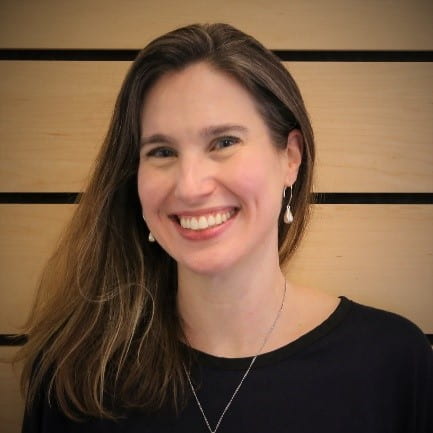
A. Fatih Sarioglu received the B.Sc. degree from Bilkent University, Ankara, Turkey in 2003, and the M.S. and Ph.D. degrees from Stanford University in 2005 and 2010, respectively, all in Electrical Engineering.

Sarioglu worked as a postdoctoral research associate at the Center for Nanoscale Science and Engineering at Stanford University from 2010 to 2012. From 2012-2014, he was a research fellow at the Center for Engineering in Medicine, Massachusetts General Hospital and Harvard Medical School. In October 2014, he joined the School of Electrical and Computer Engineering at the Georgia Institute of Technology as an assistant professor.

Sarioglu's research interests are at the interface of nano-/micro-engineering and biomedicine. He is particularly interested in developing N/MEMS-based technologies for biomedical applications.

Professor, School of Electrical and Computer Engineering
Phone
404.894.5032
Office
Pettit/MiRC 217
Additional Research

Nano- and Micro-systems for bio-molecular sensing and imagingMicrofluidic devices for cell sorting and disease detectionHigh-throughput bio-analytical instrumentation for cellular and molecular characterizationIntegrated platforms for point-of care diagnosticsImplantable medical devices for minimally-invasive health monitoring
Google Scholar
https://scholar.google.com/scholar?hl=en&q=Ali+Fatih+Sarioglu&btnG=&as_sdt=1,11&as_sdtp=
LinkedIn ECE Profile Page
A. Fatih
Sarioglu
Show Regular Profile

Melissa Kemp

Melissa Kemp
melissa.kemp@bme.gatech.edu
Website

Melissa Lambeth Kemp received her B.S. in Nuclear Engineering from MIT and her Ph.D. in Bioengineering from University of Washington. Dr. Kemp joined the faculty at Georgia Tech in 2006 after completing postdoctoral training at MIT. Her expertise is in computational modeling of metabolism and signal transduction, as well as developing statistical modeling tools to examine network relationships in high-dimension datasets. One major aspect of her research program linking ROS – the byproducts of aerobic metabolism – to the fundamental way that cells interpret instructions from their environment, their neighbors, and their own genetic blueprint. Specific applications of her diverse work include systems modeling of transient phosphatase oxidation of kinase cascades, patient-specific differences in cytotoxicity to redox-cycled chemotherapeutics and radiation, and the coordination of oxidative metabolism with epithelial-to-mesenchymal transition. Her research program also includes a component of developing high-throughput screening methods for assaying cue-signal-response relationships in cells and analytical tools for single cell gene expression. 

Dr. Kemp currently serves as the Research Director of the multi-site NSF Engineering Research Center “Cell Manufacturing Technologies”. In her former role as Associate Director of the NSF Science and Technology Center “Emergent Behavior of Integrated Cellular Systems”, she spearheaded the multi-site center’s computational activities by developing agent-based models of context-dependent cellular decisions to generate new hypotheses of intercellular communication in pluripotent stem cell differentiation and emergent patterning; this work continues currently in quantifying organizational principles and spatial relationships in iPSC-derived tissues from multi-omics data. Dr. Kemp’s career honors include a Whitaker Graduate Fellowship, Merck/CSBi postdoctoral fellowship, Georgia Cancer Coalition Distinguished Scholar, NIH New Innovator Award, and the CSB2 Prize for Innovative Measurement Methods from the Council for Systems Biology in Boston.

Professor
Georgia Cancer Coalition Distinguished Cancer Scholar
Phone
404-385-6341
Office
EBB 3019
Additional Research
Systems biology, computational modeling, redox metabolism and signal tranduction.The Kemp Lab is focused on understanding how metabolism influences the decisions that cells make. Aging, stem cell differentiation, cancer metastasis, and inflammation rely on progressive changes in metabolism resulting in increased levels of reactive oxygen species. Collectively, the accumulation of these molecules is known as cellular oxidation, and pathological levels are referred to as oxidative stress. Our lab develops systems biology tools for investigating how cellular oxidation influences cellular fate and interpretation of cues from the extracellular environment. We are interested in the collective behavior that arises during stem cell differentiation, immune cell responses, or drug treatments from metabolic diversity in individual cells. Because of the numerous biochemical reactions involved, we develop computational models and analytical approaches to understand how complex protein network properties are influenced by redox-sensitive proteins; these proteins typically have reactive thiol groups that are post-translationally regulated in the presence of reactive oxygen species to alter activity and/or function. Experimentally, we develop novel high-throughput single cell techniques for the detection and quantification of intracellular oxidation.
Google Scholar
https://scholar.google.com/citations?user=WUN5ok8AAAAJ&hl=en
Related Site
Melissa
Kemp
L.
Show Regular Profile

Alfred H. Merrill

Alfred H. Merrill
al.merrill@biology.gatech.edu

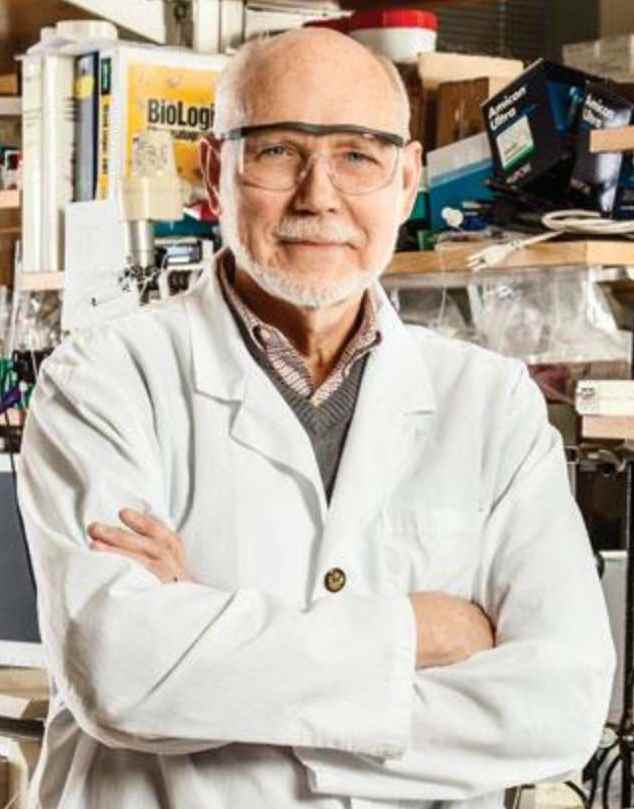
Throughout my career, my laboratory has studied sphingolipids, a category of lipids that are important in cell structure, signal transduction and cell-cell communication. For more information about what we found, please refer to the Google Scholar or PubMed links below. 

As an Emeritus Professor, I am working on a project that has interested me for a long time--the fact that the active agent in the venom of the brown recluse spider is a sphingomyelinase D that produces a novel product, ceramide 1,3-cyclic phosphate. This activity has also been found in other spiders, bacteria and fungi. With the help of collaborators, I hope to learn more about the organisms that produce and degrade this novel sphingolipid, and possibly find ways to reduce the injury caused by the enzyme when humans encounter it in the environment.

Professor
Smithgall Chair in Molecular Cell Biology
Phone
404-385-2842
Office
Petit Biotechnology Building, Office 3309
Additional Research
My laboratory studies a category of lipids, termed sphingolipids, that are important in cell structure, cell-cell communication and signal transduction. This research concerns both complex sphingolipids (sphingomyelins and glycosphingolipids) and the lipid backbones (ceramide, sphingosine, sphingosine 1-phosphate and others) that regulate diverse cell behaviors, including growth, differentiation, autophagy and programmed cell death. The major tool that we use to identify and quantify these compounds is tandem mass spectrometry, which we employ in combination with liquid chromatography for "lipidomic" analysis and in other mass spectrometry platforms (e.g., MALDI) for "tissue imaging" mass spectrometry. To assist interpretation of the mass spectrometry results, and to predict where interesting changes in sphingolipid metabolism might occur, we use tools for visualization of gene expression data in a pathway context (e.g., a "SphingoMAP"). These methods are used to characterize how sphingolipids are made, act, and turned over under both normal conditions and diseases where sphingolipids are involved, such as cancer, and where disruption of these pathways can cause disease, as occurs upon consumption of fumonisins. Since sphingolipids are also components of food, we determine how dietary sphingolipids are digested and taken up, and become part of the body's "sphingolipidome."
Google Scholar
https://scholar.google.com/citations?user=55EGhvAAAAAJ&hl=en&oi=sra
http://www.biology.gatech.edu/people/al-merrill
Alfred
Merrill
Show Regular Profile

Shaheen Dewji, Ph.D.

Shaheen Dewji, Ph.D.
shaheen.dewji@gatech.edu

Shaheen Azim Dewji, Ph.D., (she/her/hers) is an Assistant Professor in the Nuclear & Radiological Engineering and Medical Physics Programs at the Georgia Institute of Technology, where she leads the Radiological Engineering, Detection, and Dosimetry (RED²) research group. Dewji joined Georgia Tech following three years as faculty at Texas A&M University in the Department of Nuclear Engineering, and as a Faculty Fellow of the Center for Nuclear Security Science and Policy Initiatives (NSSPI). In her prior role at Oak Ridge National Laboratory, where she remained for almost 9 years, Dewji was Radiological Scientist in the Center for Radiation Protection Knowledge. Her research interests include development of dose coefficients, shielding design, and nuclear material detection assay using gamma-ray spectroscopy. Her recent work has focused on associated challenges in uncertainty quantification in dose estimation/reconstruction associated with the external exposure and internal uptake of radionuclides associated with applications of emergency response, defense, nuclear medicine, and occupational/public safety using Monte Carlo radiation transport codes and internal dose modeling. Dewji completed her Masters and Ph.D. degrees in Nuclear and Radiological Engineering at the Georgia Institute of Technology in Atlanta, GA and was a fellow of the Sam Nunn Security Program. She received her Bachelor of Science in Physics from the University of British Columbia. Dewji currently serves on the National Academies of Science, Engineering, and Medicine – Nuclear and Radiation Studies Board and is a member of the Board of Directors for both the American Nuclear Society and Health Physics Society.
   

Assistant Professor
Phone
404.894.5800
Office
Boggs 3-15
Lab
Shaheen
Dewji
Azim
Show Regular Profile

Francisco Robles

Francisco Robles
francisco.robles@bme.gatech.edu
Website

Dr. Francisco Robles is currently an adjunct assistant professor in the School of ECE and an assistant professor in the Wallace H. Coulter Department of Biomedical Engineering at the Georgia Institute of Technology and Emory University. He runs the Optical Imaging and Spectroscopy (OIS) Lab which focuses on advancing optical technologies to help improve the understanding of biological processes and the ability to identify and stage disease. The team develops and applies novel label-free linear and nonlinear spectroscopic methods, along with advanced signal processing methods, to gain access to novel forms of functional and molecular contrast for a variety of applications, including cancer detection, tumor margin assessment, and hematology. 

Dr. Robles completed a Postdoctoral Fellowship in the Department of Chemistry at Duke University (2016), earned his Ph.D. in Medical Physics at Duke University (2011), and earned a B.S. in Physics and in Nuclear Engineering from North Carolina State University (2007).

Associate Professor
Phone
404-385-2989
Office
UAW 3110
Research Focus Areas
Google Scholar
https://scholar.google.com/citations?user=8P-BCE8AAAAJ&hl=en
Coulter Department of Biomedical Engineering
Francisco
Robles
Show Regular Profile

Brooks Lindsey

Brooks Lindsey
brooks.lindsey@bme.gatech.edu
Website

Dr. Lindsey previously developed matrix array transducers, adaptive beamforming strategies, and interventional devices in Stephen Smith’s lab at Duke University, where he received a Ph.D. for his work in 3D transcranial ultrasound.  While at Duke, he was the recipient of a pre-doctoral fellowship from the National Institutes of Health (NIH) as part of the Duke Medical Imaging Training Program.  He also completed postdoctoral training in the labs of Paul Dayton and Xiaoning Jiang at the University of North Carolina and North Carolina State University in contrast-enhanced ultrasound imaging and in the design and fabrication of high frequency, interventional ultrasound transducers.  During this time, he was awarded the Ruth L. Kirschstein National Research Service Award from the NIH to develop endoscopic transducers for contrast-specific imaging in pancreatic cancer.  Dr. Lindsey recently joined the Wallace H. Coulter Department of Biomedical Engineering at Georgia Tech-Emory, where he leads the Ultrasonic Imaging and Instrumentation Laboratory.  Dr. Lindsey is an active member of the IEEE Ultrasonics, Ferroelectrics, and Frequency Control Society, the Biomedical Engineering Society and the American Institute of Ultrasound in Medicine and is a member of the Technical Program Committee for the IEEE International Ultrasonics Symposium.  In 2022, Dr. Lindsey received the New Investigator award from the American Institute of Ultrasound in Medicine. At Georgia Tech, Dr. Lindsey holds a primary appointment in Biomedical Engineering.  He is also a faculty member for the Interdisciplinary Bioengineering Graduate Program and holds an adjunct appointment in the School of Electrical and Computer Engineering. Lab members have received best paper, best poster, and best student pitch awards from the IEEE UFFC Society. Research activities in the lab are currently funded by the National Institutes of Health and the National Science Foundation.

Assistant Professor
Phone
404-385-6647
Office
UAW 2107
Additional Research
Dr. Lindsey is interested in developing new imaging technologies for understanding biological processes and for clinical use.In the Ultrasonic Imaging and Instrumentation lab, we develop transducers, contrast agents, and systems for ultrasound imaging and image-guidance of therapy and drug delivery. Our aim is to develop quantitative, functional imaging techniques to better understand the physiological processes underlying diseases, particularly cardiovascular diseases and tumor progression.
Related Site
Brooks
Lindsey
Show Regular Profile

Pamela Bhatti

Pamela Bhatti
pamela.bhatti@ece.gatech.edu

Dr. Pamela Bhatti is Professor and Associate Chair for Strategic Initiatives and Innovation at the School of Electrical and Computer Engineering, Georgia Tech. Her research is dedicated to overcoming sensory loss in human hearing through focused neural stimulation, and novel implantable sensors. Dr. Bhatti also conducts research in cardiac imaging to assess and monitor cardiovascular disease. She received her B.S. in Bioengineering from the University of California, Berkeley (1989), her M.S. in Electrical Engineering from the University of Washington (1993), and her Ph.D. in Electrical Engineering from the University of Michigan, Ann Arbor (2006). In 2013, she earned an M.S. in Clinical Research from Emory University, and co-founded a startup company (Camerad Technologies) based on her research in detecting wrong-patient errors in radiology. Dr. Bhatti is the IEEE Journal of Translational Engineering in Health and Medicine, Editor-in-Chief; and, in 2017, received the Georgia Tech Class of 1934 Outstanding Interdisciplinary Activities Award.

Assistant Professor
Phone
404-894-7467
Office
MiRC 225
Additional Research

Biomedical sensors and subsystems including bioMEMS Neural prostheses: cochlear and vestibular Vestibular rehabilitation

Google Scholar
https://scholar.google.com/scholar?q=PT+Bhatti&btnG=&hl=en&as_sdt=0,11
Related Site
Pamela
Bhatti
T.
Show Regular Profile

Ronghu Wu

Ronghu Wu
ronghu.wu@chemistry.gatech.edu
Website

Research in the Wu lab is mainly focused on mass spectrometry (MS)-based proteomics. They are developing innovative methods to globally identify and quantify proteins and their post-translational modifications (PTMs), including glycosylation and phosphorylation, and applying them for biomedical research. Protein PTMs plays essential roles in biological systems, and aberrant protein expression and modification are directly related to various human diseases, including cystic fibrosis, cancer and infectious diseases. Novel analytical methods will profoundly advance our understanding of protein function, which will lead to the identification of proteins or modified proteins as effective drug targets and the discovery of biomarkers for early disease detection.

Associate Professor
Phone
404-385-1515
Office
EBB 4011
Google Scholar
https://scholar.google.com/citations?user=sL3sQmwAAAAJ&hl=en&oi=ao
Related Site
Ronghu
Wu
Show Regular Profile

Adegboyega “Yomi” Oyelere

Adegboyega “Yomi” Oyelere
adegboyega.oyelere@chemistry.gatech.edu
Website

Dr. Adegboyega “Yomi” Oyelere has received PhD from Brown University in 1998. Currently, he works as an associate professor in the School of Chemistry and Biochemistry at the Georgia Institute of Technology.

Associate Professor
Phone
404-894-4047
Office
Petit Biotechnology Building, Office 3305
Additional Research
Bioorganic Chemistry, Biochemistry and Drug Design, RNA-Small Molecule Interaction, Targeted Histone Deacetylase (HDAC) Inhibition, Design and Synthesis of Novel Bioconjugates for Molecular Delivery Applications
Google Scholar
http://scholar.google.com/scholar?q=adegboyega+k+oyelere&hl=en&btnG=Search&as_sdt=80001&as_sdtp=on
Related Site
Adegboyega “Yomi” Oyelere
Oyelere
Show Regular Profile

Kirill Lobachev

Kirill Lobachev
kirill.lobachev@biology.gatech.edu

My laboratory investigates molecular mechanisms underlying eukaryotic genome stability. Chromosomal rearrangements create genetic variation that can have deleterious or advantageous consequences. Karyotypic abnormalities are a hallmark of many tumors and hereditary diseases in humans. Chromosome rearrangements can also be a part of the programmed genetic modifications during cellular differentiation and development. In addition, gross DNA rearrangements play a major role in the chromosome evolution of eukaryotic organisms. Therefore, elucidation of molecular mechanisms leading to chromosome instability is important for studying human pathology and also for our understanding of the fundamental processes that determine the architecture and dynamics of eukaryotic genomes. 

My overall contribution to the field of genome instability has been the demonstration of the phenomenon that repeats often found in eukaryotic genomes are potent sources of genome instability. Specifically, I have been investigating one of the most fundamental and enigmatic processes as to how repetitive sequences that adopt non-canonical DNA secondary structures, such as hairpins and cruciforms, cause replication arrest, double-strand breaks, and gross chromosomal rearrangements. Using molecular biology approaches, we investigate the instability of secondary structure-forming repeats in Saccharomyces cerevisiae, Schizosaccharomyces pombe, and human fibroblasts.

Associate Professor
Phone
404-385-6197
Office
Petit Biotechnology Building, Office 2303
Additional Research
Using yeastSaccharomyces cerevisiaeas a model, my laboratory investigates molecular mechanisms underlying eukaryotic genome stability. Chromosomal rearrangements create genetic variation that can have deleterious or advantageous consequences. Karyotypic abnormalities are a hallmark of many tumors and hereditary diseases in humans. Chromosome rearrangements can also be a part of the programmed genetic modifications during cellular differentiation and development. In addition, gross DNA rearrangements play a major role in chromosome evolution of eukaryotic organisms. Therefore, elucidation of molecular mechanisms leading to chromosome instability is important for studying the human pathology and also for our understanding of the fundamental processes that determine the architecture and dynamics of eukaryotic genomes. Myoverall contributionto the field of genome instability has been the demonstration of the phenomenon that repeats often found in higher eukaryotic genomes including the human genome are potent sources of double-strand breaks (DSB) and gross chromosomal rearrangements (GCR). Specifically, my lab, is investigating how repetitive sequences that can adopt non-B DNA secondary structures pose a threat to chromosomal integrity dictated by their size and arrangement. Currently three sequence motifs are studied in my laboratory: inverted repeats; Friedreich's ataxia GAA/TTC trinucleotide repeats and G-quadruplex-forming tracts. We also are collaborating with Dr. Malkova lab, University of Iowa, to study one of the outcomes of the DSB formation at unstable repeats - break-induced replication.
Research Focus Areas
Google Scholar
https://scholar.google.com/citations?user=SagVxawAAAAJ&hl=en
http://biosciences.gatech.edu/people/kirill-lobachev
Kirill
Lobachev
S.
Show Regular Profile