Nolan Hertel
Nuclear
Nuclear
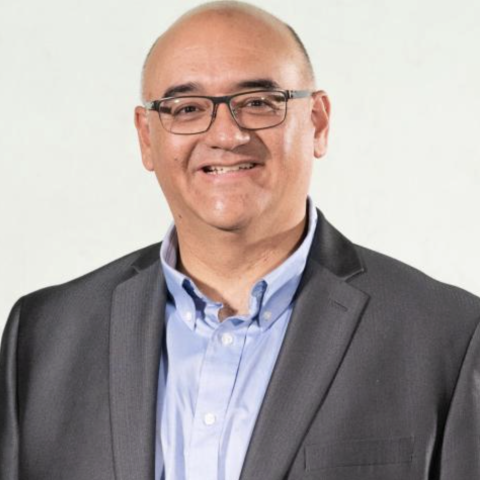
Dr. Mayor is a distinguished expert in thermal sciences, electro-mechanical machine design, and micro-manufacturing. As the inventor of the DwHX cooling technology for electric machines, he specializes in the research and development of advanced power electronics cooling, electric machine design, micro-power generation, and sustainable energy systems. Alongside his technical pursuits, Dr. Mayor has a rich entrepreneurial backdrop, having navigated product-oriented tech startups and led multiple advanced research and development programs. His expertise is sought in IP litigation, where he serves as a technical authority.
He has presented keynotes and seminars on diverse topics, from micro-manufacturing and electric machines to energy systems. He teaches courses in mechanical engineering courses at Georgia Tech, including machine design, manufacturing processes, design thinking and internal combustion engines, including H2ICE, and has taught courses as a visiting lecturer in China, France, Saudi Arabia, and South Africa. He has a substantial academic contribution with over 120 publications in leading archival journals and conferences and is a member of ASME and IEEE and SME.
Dr. Mayor's commitment goes beyond teaching and research as he engages in service as the Secretary of the Faculty. He strives to build on the learnings from the pandemic to expand the resourcefulness, understanding, and trust in shared governance. Moreover, Dr. Mayor serves as the faculty advisor for the Student Competition Center, further highlighting his commitment to student mentoring and leadership development. He looks forward to implementing AI in a robust manner in institute learnings, as a core capability in education.
Manufacturing and Heat Transfer; Combustion and Energy Systems; Micro-factories; micro/meso-scale manufacturing processes; integrated micro-mechatronics; micro-engines; micro-power generation
Zhiqun Lin is currently Professor of Materials Science and Engineering at the Georgia Institute of Technology. His research focuses on nanostructured functional materials (NanoFM). An extensive list of materials currently under investigation in his group includes polymer-based nanocomposites, block copolymers, polymer blends, conjugated polymers, quantum dots (rods, tetrapods, wires), magnetic nanocrystals, metallic nanocrystals, semiconductor metal oxide nanocrystals, ferroelectric nanocrystals, multiferroic nanocrystals, upconversion nanocrystals, thermoelectric nancrystals, core/shell nanoparticles (nanorods), hollow nanocrystals, Janus nanocrystals, nanopores, nanotubes, hierarchically structured and assembled materials, and semiconductor organic-inorganic nanohybrids.
The goal of his research is to understand the fundamentals of these nanostructured materials. His group intends to create these nanostructures in a precisely controllable manner and to exploit the structure-property relationships in the development of multifunctional materials for potential use in energy conversion (e.g., solar cells, photocatalysis, and hydrogen generation) and storage (e.g., batteries), electronics, optics, optoelectronics, magnetic materials and devices, nanotechnology, and biotechnology.
Nanocomposites; Polymeric Composites; Polymers; Nanocrystals; Self-Assembly; Solar Cells; Batteries; Composites; Nanostructures; Electronics; Energy Storage
Energy Storage; Gasification; Hydrogen; Solar
Building Technologies; Smart Infrastructure
Electric Vehicles; Smart Infrastructure
Electrical Grid
Steven Biegalski is the Chair of Nuclear and Radiological Engineering and Medical Physics Program at Georgia Institute of Technology. He has three degrees in nuclear engineering from University of Maryland, University of Florida, and University of Illinois, respectively. Early in his career Dr. Biegalski was the Director of Radionuclide Operations at the Center for Monitoring Research. In this position Dr. Biegalski led international efforts to develop and implement radionuclide effluent monitoring technologies. This work supported both US national capabilities and international treaties. Dr. Biegalski was a faculty member at The University of Texas at Austin for 15 years and held the position of Reactor Director for The University of Texas at Austin TRIGA reactor for over a decade. He has advised 25 Ph.D. students to graduation and holds Professional Engineering licenses in the states of Texas and Virginia.
Nuclear
Nuclear
Dr. Grijalva joined the Georgia Institute of Technology in the summer of 2009 as Associate Professor of Electrical and Computer Engineering. He is the Director of the Advanced Computational Electricity Systems (ACES) Laboratory, where he conducts research on real-time power system control, informatics, and economics, and renewable energy integration in power. From 2012-2015, Dr. Grijalva served as the Strategic Energy Institute (SEI) Associate Director for Electricity Systems, responsible for coordinating large efforts on electricity research and policy at Georgia Tech. Dr. Grijalva received the Electrical Engineer degree from EPN-Ecuador in 1994, the M.S. Certificate in Information Systems from ESPE-Ecuador in 1997, and the M.S. and Ph.D. degrees in Electrical Engineering from the University of Illinois at Urbana-Champaign in 1999 and 2002, respectively. He was a post-doctoral fellow in Power and Energy Systems at the University of Illinois from 2003 to 2004. From 1995 to 1997, he was with the Ecuadorian National Center for Energy Control (CENACE) as engineer and manager of the Real-Time EMS Software Department. From 2002 to 2009, he was with PowerWorld Corporation as a senior software architect and developer of innovative real-time and optimization applications used today by utilities, control centers, and universities in more than 60 countries. Dr. Grijalva is a leading researcher on ultra-reliable architectures for critical energy infrastructures. He has pioneered work on de-centralized and autonomous power system control, renewable energy integration in power, and unified network models and applications. He is currently the principal investigator of various future electricity grid research projects for the US Department of Energy, ARPA-E, EPRI, PSERC as well as other Government organizations, research consortia, and industrial sponsors. Research interests: Power system and smart grid computation De-centralized and autonomous power control architectures Ultra-reliable electricity internetworks Seamless integration of large-scale renewable energy Electricity markets design and power system economics