Chaitanya Deo

Chaitanya Deo
chaitanya.deo@nre.gatech.edu
Website

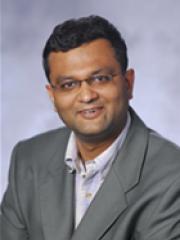
Dr. Deo came to Georgia Tech in August 2007 as an Assistant Professor of Nuclear and Radiological Engineering. Prior, he was a postdoctoral research associate in the Materials Science and Technology Division of the Los Alamos National Laboratory. He studied radiation effects in structural materials (iron and ferritic steels) and nuclear fuels (uranium dioxide). He also obtained research experience at Princeton University (Mechanical Engineering), Lawrence Livermore National Laboratory, and Sandia National Laboratories.

Professor, Woodruff School of Mechanical Engineering
Phone
(404) 385.4928
Additional Research

Nuclear; Thermal Systems; Materials In Extreme Environments; computational mechanics; Materials Failure and Reliability; Ferroelectronic Materials; Materials Data Sciences

Chaitanya
Deo
Show Regular Profile

Saïd Abdel-Khalik

Saïd Abdel-Khalik
said.abdelkhalik@me.gatech.edu
Website

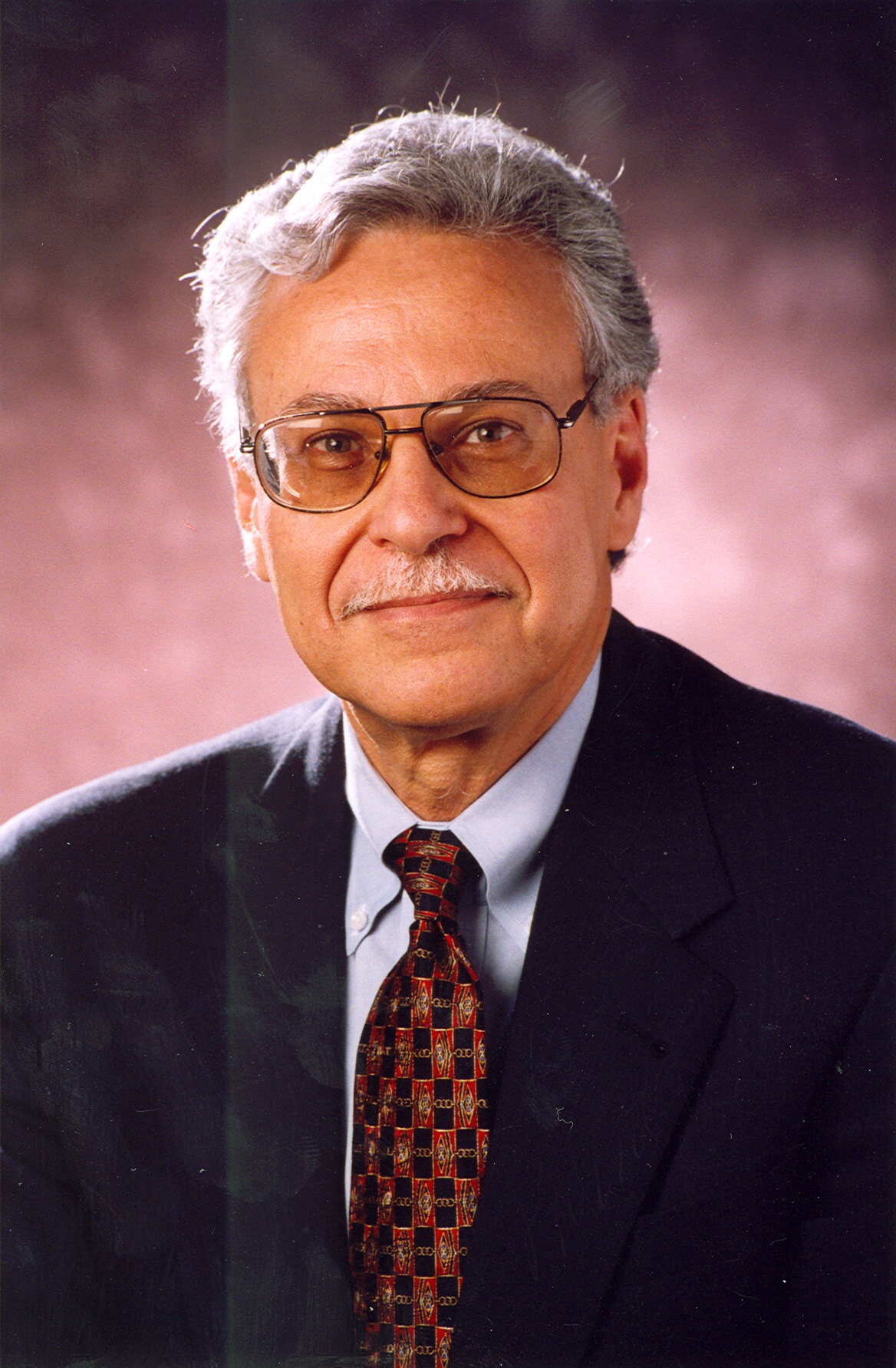
Abdel-Khalik joined the Georgia Tech faculty as the Georgia Power Distinguished Professor in 1987. He was appointed to his current position as the Southern Nuclear Distinguished Professor in 1993. He served as Associate Director of the Woodruff School of Mechanical Engineering between 1990 and 1992 and as the Georgia Tech Secretary of the Faculty between 2002 and 2006. He served as a member of the USNRC Advisory Committee on Reactor Safeguards (ACRS) between 2006 and 2012, including two years as Chairman (2009-2011).  Prior to joining the Georgia Tech faculty, Abdel-Khalik served as a faculty member in the Nuclear Engineering and Engineering Physics Department (1976-1987) and as a Postdoctoral Fellow in Chemical Engineering (1973-1975) at the University of Wisconsin-Madison. Abdel-Khalik also served as a Senior Engineer at Babcock and Wilcox Nuclear Power Generation Division (1975); as a Guest Research Scientist at the Nuclear Research Center in Karlsruhe, Germany (1979); and as an Invited Professor at EPFL, Lausanne, Switzerland (1982).

Abdel-Khalik currently serves as a member of the External Advisory Boards for the School of Nuclear Engineering at Purdue University and the Mechanical Engineering Department of King Saud University in Riyadh, Saudi Arabia. He also serves as a member of the Board of Trustees for Badr University in Cairo, Egypt.

Professor, Woodruff School of Mechanical Engineering
Southern Nuclear Distinguished Professor
Phone
(404) 894-3719
Additional Research

Thermal Systems; Nuclear

University, College, and School/Department
Said
Abdel-Khalik
Show Regular Profile

Andrei Fedorov

Andrei Fedorov
AGF@gatech.edu
Fedorov Lab

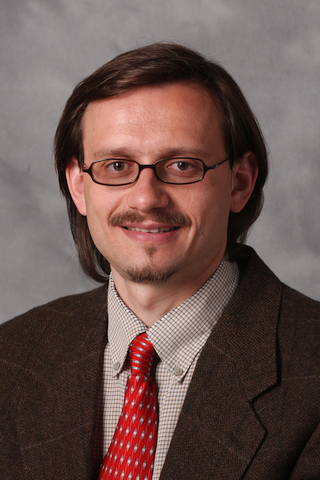
Fedorov's background is in thermal/fluid sciences, chemical reaction engineering as well as in applied mathematics. His laboratory works at the intersection between mechanical and chemical engineering and solid state physics and analytical chemistry with the focus on portable/ distributed power generation with synergetic CO2 capture; thermal management of high power dissipation devices and electronics cooling; special surfaces and nanostructured interfaces for catalysis, heat and moisture management; and development of novel bioanalytical instrumentation and chemical sensors. Fedorov joined Georgia Tech in 2000 as an assistant professor after finishing his postdoctoral work at Purdue University.

Professor and Rae S. and Frank H. Neely Chair, Woodruff School Mechanical Engineering
Associate Chair for Graduate Studies, School Mechanical Engineering
Director, Fedorov Lab
Phone
404.385.1356
Office
Love 307
Additional Research

Heat Transfer; power generation; CO2 Capture; Catalysis; fuel cells; "Fedorov's research is at the interface of basic sciences and engineering. His research portfolio is diverse, covering the areas of portable/ distributed power generation with synergetic carbon dioxide management, including hydrogen/CO2 separation/capture and energy storage, novel approaches to nanomanufacturing (see Figure), microdevices (MEMS) and instrumentation for biomedical research, and thermal management of high performance electronics. Fedorov's research includes experimental and theoretical components, as he seeks to develop innovative design solutions for the engineering systems whose optimal operation and enhanced functionality require fundamental understanding of thermal/fluid sciences. Applications of Fedorov's research range from fuel reformation and hydrogen generation for fuel cells to cooling of computer chips, from lab-on-a-chip microarrays for high throughput biomedical analysis to mechanosensing and biochemical imaging of biological membranes on nanoscale. The graduate and undergraduate students working with Fedorov's lab have a unique opportunity to develop skills in a number of disciplines in addition to traditional thermal/fluid sciences because of the highly interdisciplinary nature of their thesis research. Most students take courses and perform experimental and theoretical research in chemical engineering and applied physics. Acquired knowledge and skills are essential to starting and developing a successful career in academia as well as in many industries ranging from automotive, petrochemical and manufacturing to electronics to bioanalytical instrumentation and MEMS."

Google Scholar
https://scholar.google.com/citations?hl=en&user=_X-PrRkAAAAJ&view_op=list_works&sortby=pubdate
LinkedIn ME Profile Page
Andrei
Fedorov
G.
Show Regular Profile

Qi Tang

Portrait of Qi Tang
qtang@gatech.edu
Departmental Bio

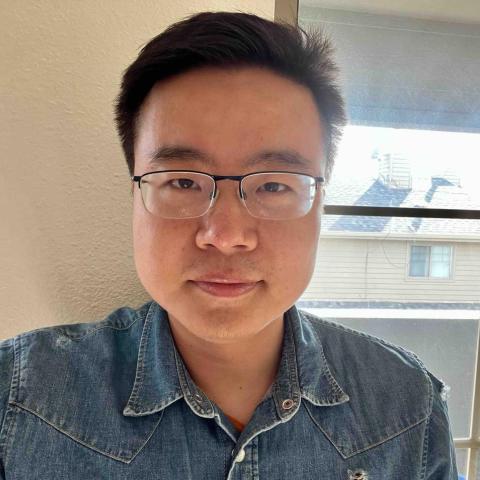
Qi Tang comes to Georgia Tech from Los Alamos National Laboratory where he was a staff scientist in the Applied Mathematics and Plasma Physics Group. Before joining LANL in 2018, he was an Eliza Ricketts Foundation Postdoctoral Fellow at Rensselaer Polytechnic Institute. Tang completed his Ph.D. at Michigan State University in 2015. His research interests include: computational plasma physics, fusion simulations, scalable numerical algorithms, multi-physics and multi-scale problems, and scientific machine learning.

Assistant Professor, School of Computational Science and Engineering
IRI And Role
Qi
Tang
Show Regular Profile

Richard Neu

Richard Neu
rick.neu@me.gatech.edu
ME Profile Page

Neu's research involves the understanding and prediction of the fatigue behavior of materials and closely related topics, typically when the material must resist degradation and failure in harsh environments. Specifically, he has published in areas involving thermomechanical fatigue, fretting fatigue, creep and environmental effects, viscoplastic deformation and damage development, and related constitutive and finite-element modeling with a particular emphasis on the role of the materials microstructure on the physical deformation and degradation processes. He has investigated a broad range of structural materials including steels, titanium alloys, nickel-base superalloys, metal matrix composites, molybdenum alloys, high entropy alloys, medical device materials, and solder alloys used in electronic packaging. His research has widespread applications in aerospace, surface transportation, power generation, machinery components, medical devices, and electronic packaging. His work involves the prediction of the long-term reliability of components operating in extreme environments such as the hot section of a gas turbine system for propulsion or energy generation. His research is funded by some of these industries as well as government funding agencies.

Professor, School of Materials Science and Engineering, Woodruff School of Mechanical Engineering
Director, Mechanical Properties Characterization Facility
Phone
404.894.3074
Office
MRDC 4104
Additional Research

Nanomaterials; micro and nanomechanics; Thermoelectric Materials; fracture and fatigue

Research Focus Areas
Google Scholar
https://scholar.google.com/citations?hl=en&user=60ZYazgAAAAJ&view_op=list_works&sortby=pubdate
Mechanical Properties Characterization Facility
Richard
Neu
Show Regular Profile

Martha Grover

Martha Grover
martha.grover@chbe.gatech.edu
Grover Group

Grover’s research activities in process systems engineering focus on understanding macromolecular organization and the emergence of biological function. Discrete atoms and molecules interact to form macromolecules and even larger mesoscale assemblies, ultimately yielding macroscopic structures and properties. A quantitative relationship between the nanoscale discrete interactions and the macroscale properties is required to design, optimize, and control such systems; yet in many applications, predictive models do not exist or are computationally intractable.

The Grover group is dedicated to the development of tractable and practical approaches for the engineering of macroscale behavior via explicit consideration of molecular and atomic scale interactions. We focus on applications involving the kinetics of self-assembly, specifically those in which methods from non-equilibrium statistical mechanics do not provide closed form solutions. General approaches employed include stochastic modeling, model reduction, machine learning, experimental design, robust parameter design, and estimation.

Professor, School of Chemical and Biomolecular Engineering
James Harris Faculty Fellow, School of Chemical and Biomolecular Engineering
Member, NSF/NASA Center for Chemical Evolution
Phone
404.894.2878
Office
ES&T 1228
Additional Research

Colloids; Crystallization; Organic and Inorganic Photonics and Electronics; Polymers; Discrete atoms and molecules interact to form macromolecules and even larger mesoscale assemblies, ultIMaTely yielding macroscopic structures and properties. A quantitative relationship between the nanoscale discrete interactions and the macroscale properties is required to design, optimize, and control such systems; yet in many applications, predictive models do not exist or are computationally intractable. The Grover group is dedicated to the development of tractable and practical approaches for the engineering of macroscale behavior via explicit consideration of molecular and atomic scale interactions. We focus on applications involving the kinetics of self-assembly, specific those in which methods from non-equilibrium statistical mechanics do not provide closed form solutions. General approaches employed include stochastic modeling, model reduction, machine learning, experimental design, robust parameter design, estIMaTion, and optimal control, monitoring and control for nuclear waste processing and polymer organic electronics

Google Scholar
https://scholar.google.com/citations?hl=en&user=PgpLoqIAAAAJ&view_op=list_works&sortby=pubdate
ChBE Profile Page
Martha
Grover
A.
Show Regular Profile

Farzad Rahnema

Farzad Rahnema
farzad.rahnema@nre.gatech.edu
Website
Georgia Power Company Distinguished Professor, Woodruff School of Mechanical Engineering
Director, Computational Reactor and Medical Physics (CRMP) Laboratory
Phone
(404) 894-3731
Additional Research

Nuclear

University, College, and School/Department
Farzad
Rahnema
Show Regular Profile

Margaret Kosal

Margaret Kosal
margaret.kosal@inta.gatech.edu
Website

Margaret E. Kosal's research explores the relationships among technology, strategy, and governance. Her research focuses on two, often intersecting, areas: reducing the threat of weapons of mass destruction (WMD) and understanding the role of emerging technologies for security. Her work aims to understand and explain the role of technology and technological diffusion for national security at strategic and operational levels. In the changing post-Cold War environment, the most advanced military power no longer guarantees national or international security in a globalized world in which an increasing number of nation-states and non-state actors have access to new and potentially devastating dual-use capabilities. The long-term goals of her work are to understand the underlying drivers of technological innovation and how technology affects national security and modern warfare. She is interested in both the scholarly, theoretical level discourse and in the development of new strategic approaches and executable policy options to enable US dominance and to limit the proliferation of unconventional weapons. On the question of understanding the impact of emerging technology on national and international security her research considers what role will nanotechnology, cognitive science, biotechnology, and converging sciences have on states, non-state actors, balance of power, deterrence postures, security doctrines, nonproliferation regimes, and programmatic choices. Through examination of these real applications on the science (benign and defensive) and potential (notional) offensive uses of nanotechnology, she seeks to develop a model to probe the security implications of this emerging technology. The goal of the research is not to predict new specific technologies but to develop a robust analytical framework for assessing the impact of new technology on national and international security and identifying policy measures to prevent or slow proliferation of new technology - the next generation “WMD” - for malfeasant intentions. Kosal is the author of Nanotechnology for Chemical and Biological Defense (Springer Academic Publishers, 2009), which explores scenarios and strategies regarding the benefits and potential proliferation threats of nanotechnology and other emerging sciences for international security. She is also Director of the Sam Nunn Security Fellows Program and Co-Director of the Program on Emerging Technology within the Center for International Strategy, Technology, and Policy (CISTP).  Kosal was recently appointed Adjunct Scholar to the Modern War Institute at the US Military Academy/West Point. From 2012-2013, she as a senior advisor to the Chief of Staff of the US Army as part of his inaugural Strategic Studies Group (SSG). Before joining the Sam Nunn School of International Affairs, she was Science and Technology Advisor within the Office of the Secretary of Defense (OSD). Kosal also served as the first liaison to the Biological and Chemical Defense Directorate at the Defense Threat Reduction Agency (DTRA). She has been recognized for her leadership across the U.S. federal government, specifically for efforts to coordinate across the DoD as part of the interagency Nonproliferation and Arms Control Technology Working Group, reporting to the National Security Council (NSC), and as member of the interagency federal group charged with leading the National Nanotechnology Initiative (NNI). Kosal was nominated to and led the U.S. involvement in the NATO Nanotechnology for Defense Working Group. Her awards include the 2015 CETL/BP Junior Faculty Teaching Excellence Award, 2014 Georgia Tech Junior Faculty Outstanding Undergraduate Research Mentor Award, 2012 Ivan Allen Jr Legacy Award, 2010 INTAGO Faculty Award, CETL Class of 1969 Teaching Scholar, the OSD Award for Excellence, 2007 UIUC Alumni Association Recent Alumni Award, the President’s Volunteer Service Award, American Association for the Advancement of Science (AAAS) Defense Policy Fellow, and the Society of Porphyrins and Phthalocyanines Dissertation Research Award. Currently, she serves on the editorial board of the scholarly journals Studies in Conflict and Terrorism, the Journal of Strategic Security, the Journal of Defense Management, and Global Security: Health Science and Policy. Education: Ph.D., Chemistry, University of Illinois at Urbana-Champaign B.S., Chemistry, University of Southern California Awards and Distinctions: Senior Adjunct Scholar to the Modern War Institute at the U.S. Military Grand Challenges Faculty Fellow, AY2015-2016 & AY 2016-2017 2015-2016 CETL Class of 1969 Teaching Scholar 2015 CETL/BP Junior Faculty Teaching Excellence Award Gold Star Award in Recognition of the Highest Level of Accomplishment in Research, Ivan Allen College of Liberal Arts Dean Griffith Teaching Recognition – “Thank a Teacher” Award 2014 Georgia Tech Junior Faculty Outstanding Undergraduate Research Mentor Award Ivan Allen Jr. Legacy Faculty Award, 2012 INTAGO Faculty of the Year, 2010 Office of the Secretary of Defense Award for Excellence, 2007 University of Illinois at Urbana-Champaign Recent Alumni Award, 2007 President’s Volunteer Service Award, 2007 American Associatio for the Advancement of Science (AAAS) Science & Technology Fellowship, 2005-2007 American Chemical Society’s Chemical and Engineering News Top 2002 Supramolecular Chemistry research paper Areas of Expertise: Biotechnology Emerging Technology Military Nanotechnology National Security Nonproliferation Nuclear Weapons Terrorism US Foreign & Defense Policy

Professor, Sam Nunn School of International Affairs
Director, Sam Nunn Security Program
Editor-in-Chief, Politics and the Life Sciences
Phone
404-894-9664
Office
Habersham 303
Additional Research

Defense / National Security; Cyber Technology; Policy/Economics

Google Scholar
https://scholar.google.com/scholar?hl=en&q=margaret+Kosal&btnG=&as_sdt=1,11&as_sdtp=&oq=margaret
Related Site
Margaret
Kosal
E.
Show Regular Profile

Anna Erickson

Anna  Erickson
anna.erickson@me.gatech.edu
Website
Professor, Woodruff School of Mechanical Engineering
Woodruff Professor
Additional Research

Nuclear

Departmental Bio
Anna
Erickson
Show Regular Profile