Christopher Jones

Christopher Jones
cjones@chbe.gatech.edu
ChBE Profile Page

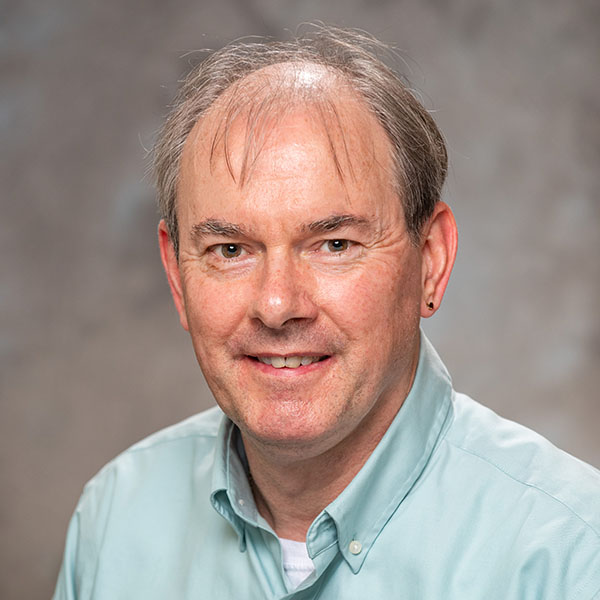
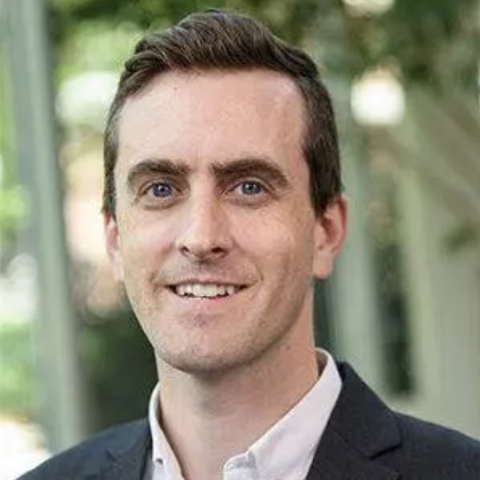
Chris Jones was born in suburban Detroit, Michigan in July of 1973. After his primary and secondary schooling and 14 years living Troy, Michigan, he enrolled as a chemical engineering student at the University of Michigan. In route to earning a BSE in chemical engineering, Chris carried out research on transition metal carbide and nitride catalytic materials under the direction of Levi Thompson. After graduating in 1995, Chris moved to Pasadena, California, to study inorganic materials chemistry and catalysis under Mark E. Davis at Caltech. There he earned M.S. and Ph.D. degrees in chemical engineering in 1997 and 1999, respectively. Subsequently, he studied organometallic chemistry and olefin polymerization under the direction of both Davis and John E Bercaw at Caltech. He started as an assistant professor at Georgia Tech in the summer of 2000 and was promoted to associate professor in July 2005. In May, 2005, he was appointed the J. Carl and Sheila Pirkle Faculty Fellow, followed by a promotion to professor in July 2008. He was named New-Vision Professor of Chemical and Biomolecular Engineering in July 2011. In 2015, he became the Love Family Professor of Chemical and Biomolecular Engineering, and in 2019 the William R. McLain Chair. Chris was named the associate vice president for research at Georgia Tech in November 2013. In this role, he directed 50% of his time on campus-wide research administration with a primary focus on interdisciplinary research efforts and policy related to research institutes, centers and research core facilities. In 2018, he served as the interim executive vice-president for research, before returning full time to his research and teaching roles in chemical and biomolecular engineering in 2019.

Jones directs a research program focused primarily on catalysis and CO2 separation, sequestration and utilization. A major focus of his laboratory is the development of materials and processes for the removal of CO2 from air, or “direct air capture” (DAC). In 2010 he was honored with the Ipatieff Prize from the American Chemical Society for his work on palladium catalyzed Heck and Suzuki coupling reactions. That same year, he was selected as the founding Editor-in-Chief of ACS Catalysis, a new multi-disciplinary catalysis journal published by the American Chemical Society. In 2013, Chris was recognized by the North American Catalysis Society with the Paul E. Emmett Award in Fundamental Catalysis and by the American Society of Engineering Education with the Curtis W. McGraw Research Award. In 2016 he was recognized by the American Institute of Chemical Engineers with the Andreas Acrivos Award for Professional Progress in Chemical Engineering, distinguishing him as one of the top academic chemical engineers under 45. In 2020, after ten years building and leading ACS Catalysis, he was selected as the founding Editor-in-Chief of JACS Au by an international editorial search committee commissioned by the ACS. Dr. Jones has been PI or co-PI on over $72M in sponsored research in the last seventeen years, and as of December 2020, has published over 300 papers that have been cited >28,000 times. He has an H-Index of 82 (Google Scholar).

Professor and John F. Brock III School Chair, School of Chemical and Biomolecular Engineering
Phone
404.385.1683
Office
ES&T 2202
Additional Research

CO2 capture, catalysis, membrane and separations, separations technology, catalysis, carbon capture, biofuels

Google Scholar
https://scholar.google.com/citations?hl=en&user=ltWKpYgAAAAJ&view_op=list_works&sortby=pubdate
Jones Group Website
Christopher
Jones
Show Regular Profile

Ryan Lively

Ryan Lively
ryan.lively@chbe.gatech.edu
Website

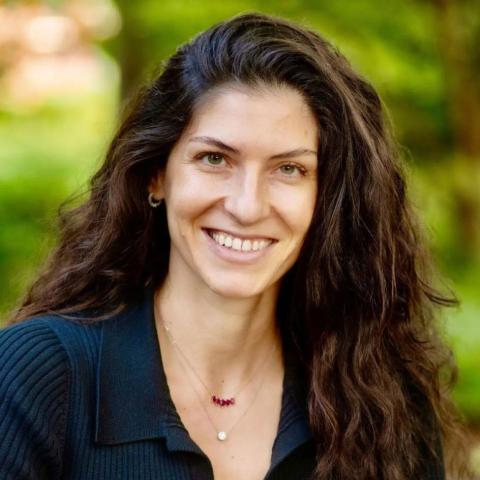
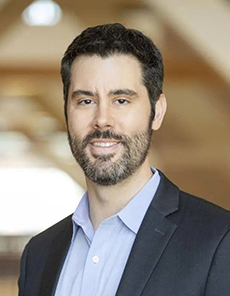
Ryan Lively was born in 1984. He spent approximately 16 years in Gainesville, FL and attended almost every home football game at The Swamp. He enrolled at Georgia Tech in 2002 as an eager Chemical Engineering student and has been a Yellow Jacket at heart ever since. During his studies at Georgia Tech, Ryan worked on research projects as diverse as ab initio quantum mechanical methods to estimate molecular binding energies, fresh Georgia peach preservation, composite spinneret design, dual-layer hollow fiber membrane spinning, and sorbent-loaded fiber spinning. Ryan introduced a rapid temperature swing adsorption (RTSA) approach for post-combustion CO2 capture, which was successfully demonstrated by adapting knowledge developed in membrane science to design unique nanoscale composite adsorbent/heat exchangers. After his Ph.D. (awarded in 2010), he spent almost 3 years as a post-doctoral research engineer at Algenol Biofuels, where he published 25 papers and filed two U.S. patent applications. His work at Algenol focused on developing energy-efficient liquid and vapor separation systems for downstream biofuel purification. 

He is now the Thomas C. DeLoach Professor in the School of Chemical & Biomolecular Engineering at the Georgia Institute of Technology. His current research seeks to revolutionize fluid separation processes critical to the global energy and carbon infrastructure. He has a specific focus on membrane- and adsorbent-based science and technology to address some of the most difficult chemical separations. His group’s research activities range from fundamental material science and discovery to translational engineering applications focusing on making and testing separation devices. 

Ryan has received a variety of awards for his research efforts including the 2020 Allan P. Colburn Award from AIChE, and the 2022 Curtis W. McGraw Award from ASEE. He is currently an Editor for the Journal of Membrane Science and is the Secretary of the North American Membrane Society. He is the Director of the Center for Understanding & Controlling Accelerated and Gradual Evolution of Materials for Energy (UNCAGE-ME), an Energy Frontier Research Center of the US Department of Energy. He has over 160 publications in the field of separations including articles in Science, Nature and other impactful venues.

Professor, School of Chemical and Biomolecular Engineering
Thomas C. DeLoach Jr. Endowed Professorship
Phone
(404) 894-8795
Additional Research

Biofuels; Carbon Capture; Separations Technology; Membranes; Adsorbents;Polymers; Microporous Materials

Google Scholar
https://scholar.google.com/citations?hl=en&user=1ktJriEAAAAJ&view_op=list_works&sortby=pubdate
Research Website
Ryan
Lively
Show Regular Profile

David Flaherty

David Flaherty
dflaherty3@gatech.edu
Website

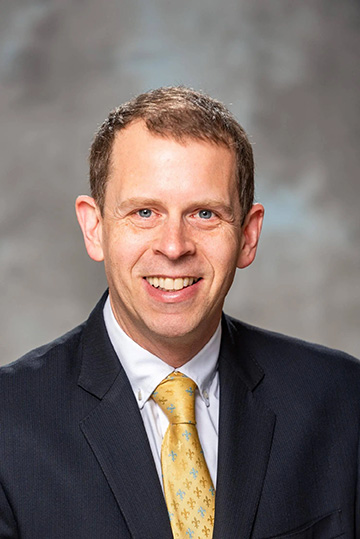
David Flaherty, PhD is a Professor in the School of Chemical and Biomolecular Engineering at Georgia Tech since June 2023 (starting Summer 2023, previously at the University of Illinois, Urbana-Champaign). His research focuses on developing the science and application of catalysis in the pursuit of sustainability. In recent years, his group’s contributions have been featured in Science, Nature Catalysis, Journal of the American Chemical Society, ACS Catalysis, Journal of Catalysis and other prestigious journals. Dr. Flaherty has received several recognitions for excellence and innovation in catalysis including the Eastman Foundation Distinguished Lecturer in Catalysis, Department of Energy Early Career Award, and the National Science Foundation CAREER Award. Dr. Flaherty engages frequently with industry to translate the groups scientific achievements from the lab into practice. Through university-industry partnerships, the group has filed multiple patents disclosing synthesis of catalytic materials and development of processes. Beyond his research activities, Dr. Flaherty enjoys teaching topics in chemical engineering in the classroom (kinetics, separations, transport, reaction engineering) and mentoring the next generation of research leaders and educators.

Prof. Flaherty received his B.S. in Chemical Engineering from the University of California, Berkeley and his Ph.D. in Chemical Engineering from the University of Texas at Austin under the direction of Prof. C. Buddie Mullins. He conducted postdoctoral work at the University of California, Berkeley with Prof. Enrique Iglesia.

Thomas C. DeLoach Jr. Professor, School of Chemical and Biomolecular Engineering
Phone
404-894-5922
Office
Ford ES&T 2204
ChBE Profile
David
Flaherty
Show Regular Profile

Pamela Peralta-Yahya

Pamela Peralta-Yahya
pperalta-yahya@chemistry.gatech.edu
Chem & BioChem Profile Page

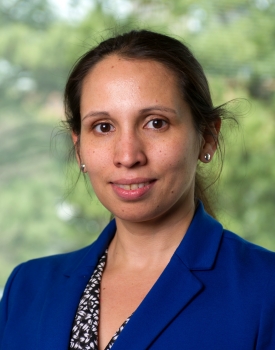
Peralta-Yahya has been part of Georgia Tech since 2012. Her diverse research group composed of chemists, biologists, and chemical engineers works in the area of engineering biology, drawing from principles of biochemistry and engineering to build systems for chemical detection and production. Specifically, her group focuses on the development of G protein-coupled receptors for biotechnology and biomedical applications, and the engineering of biological systems for the production of fuels and functionalized plant natural products. Early on, her work was recognized with several awards including a DARPA Young Faculty Award, a DuPont Young Professor Award, a Kavli Fellowship by the US Academy of Science, and an NIH MIRA award. Her group’s key accomplishments are 1) the standardization of GPCR-based sensors in yeast to reduce the cost and accelerate the pace of drug discovery for these receptors, which are the target of over 30% of FDA approved drugs, and 2) the development of advanced biofuels, including pinene, which, when dimerized, has sufficient energy content to power rockets and missiles.  Today, her group is funded to work on these and other cutting edge areas – including how to power a rocket returning from Mars and how to make synthetic cells learn without evolution – by the National Institutes of Health, the National Science Foundation, the Department of Energy, and NASA.

Associate Professor, School of Chemistry and Biochemistry
Phone
404.894.4228
Office
MoSE 2100P
Additional Research

Bio-Inspired Materials; Biofuels; Cell biophysics; Cellular Materials; Biochemistry; Biomanufacturing; Energy; Biomaterials

Google Scholar
https://scholar.google.com/citations?hl=en&user=yUlt4sYAAAAJ&view_op=list_works&sortby=pubdate
Peralta-Yahya Group
Pamela
Peralta-Yahya
Show Regular Profile

Carsten Sievers

Carsten Sievers
carsten.sievers@chbe.gatech.edu
ChBE Profile Page

Sievers’ research interests are in heterogeneous catalysis, reactor design, applied spectroscopy, and characterization and synthesis of solid materials. Combining these interests he seeks to develop processes for the production of fuels and chemicals. His research program combines fundamental and applied research.

In fundamental studies, a suite of analytical and spectroscopic techniques (e.g. IR, NMR) is used to gain knowledge on structure-reactivity relationships of heterogeneous catalysts. Moreover, surface reactions are studied on a molecular level to identify reaction pathways over different catalysts. Information obtained from these studies provides the foundation for designing innovative catalysts.

Applied studies focus specific catalytic processes. For these projects, continuously operated flow reactor systems are designed. Different catalysts are tested for reactivity, selectivity and stability and the influence of the operating conditions is investigated. Catalyst deactivation is studied in detail to develop suitable regeneration methods or to avoid deactivation entirely by improved catalyst design. Specific projects include hydrodeoxygenation of pyrolysis oils, selective hydration of polyols, conversion of sugars into lactic acid and ethylene glycol, and selective oxidation of methane.

An important goal of Sievers’ research is to enable technology for utilization of alternative resources in order to reduce the current dependence of oil. Among these biomass is a particularly promising candidate because it is renewable and can be produced CO2 neutral.

Sievers has contributed to 80 peer reviewed publications on heterogeneous catalysis in petroleum refining (isobutane/2-butene alkylation, fluid catalytic cracking, hydrotreating), alkane activation, supported ionic liquid as catalysts for fine chemical synthesis, and biomass processing.  He is Director and Past President of the Southeastern Catalysis Society, former Program Chair and Director of the ACS Division of Catalysis Technology & Engineering, former Director of the AIChE Division of Catalysis and Reaction Engineering, and Editor of Applied Catalysis A: General.
Professor, School of Chemical and Biomolecular Engineering
Phone
404.385.7685
Office
ES&T 2218
Additional Research

Biomass; Biofuels; Catalysis; Advanced Characterization; Gasification; Biorefining; Lignin Upgrading; Catalysis; Energy & Water; Separation Technologies; Chemical Feedstocks; Sugars; Lignin & Hemicellulose

Google Scholar
https://scholar.google.com/citations?hl=en&user=qeq3njwAAAAJ&view_op=list_works&sortby=pubdate
Sievers Research Group
Carsten
Sievers
Show Regular Profile

Thomas Orlando

Thomas Orlando
thomas.orlando@chemistry.gatech.edu
School of Chemistry and Biochemistry Profile Page

Our group is primarily a surface chemistry and physics group which focuses on the use of high-powered pulsed lasers, low-energy electron scattering, micro-plasmas, mass spectrometry and ultrahigh vacuum surface science techniques. We use this "tool-set" as well as some scattering theory to unravel the details of non-thermal processes occurring under a variety of non-equilibrium conditions. Our group is based upon an interdisciplinary approach and thus our research programs span the realm of fundamental investigations in molecular physics, surface physics and chemistry, bio-physics, bio-polymer formation under pre-biotic conditions as well as working in applied areas of relevance to analytical technique developments, atmospheric chemistry, catalysis and molecular hydrogen generation.

Professor, School of Chemistry and Biochemistry
SEI Senior Advisor: Energy Minor
Phone
404.894.4012
Office
MoSE G209C
Additional Research

Surfaces and Interfaces; Catalysis; Advanced Characterization; Hydrogen; Nuclear

Google Scholar
https://scholar.google.com/citations?hl=en&user=6cbXFpkAAAAJ&view_op=list_works&sortby=pubdate
Electron and Photon Induced Chemistry on Surfaces Lab
Thomas
Orlando
Show Regular Profile

Comas Haynes

Comas Haynes
comas.haynes@gtri.gatech.edu
Website
Principal Research Engineer, Georgia Tech Research Institute
SEI Lead: Hydrogen
Phone
(404) 407-7578
Additional Research

Building Technologies; System Design & Optimization; Thermal Systems

GTRI
Geogia Tech Research Institute
Comas
Haynes
Show Regular Profile

Matthew Realff

Matthew Realff
matthew.realff@chbe.gatech.edu
Departmental Bio

Dr. Realff’s broad research interests are in the areas of process design, simulation, and scheduling. His current research is focused on the design and operation of processes that minimize waste production by recovery of useful products from waste streams, and the design of processes based on biomass inputs. In particular, he is interested in carbon capture processes both from flue gas and dilute capture from air as well as the analysis and design of processes that use biomass.

Professor, School of Chemical and Biomolecular Engineering
David Wang Sr. Fellow
Associate Director for Interdisciplinary Education
SEI Senior Advisor: Circular Carbon Economy; RBI Lead: Next Generation Refinery
Phone
(404) 894-1834
Additional Research

Biofuels; Carbon Capture; Separations Technology; System Design & Optimization; SMART Manufacturing; Energy & Water; Separation Technologies; Biochemicals; Chemical Feedstocks; Sugars; Lignin & Hemicellulose; Biofuels

2023 Initiative Lead Profile
Matthew
Realff
Show Regular Profile

Patricia Stathatou

patricia@gatech.edu
Assistant Professor, School of Chemical & Biomolecular Engineering
Office
Renewable Bioproducts Institute, Room 423
Additional Research

Environmental remediation, Renewable energy sources, Lifecycle Impact Assessment & Techno-economic Assessment of Sustainable Technologies, Processes & Products

School Page
Patricia
Stathatou
Show Regular Profile