Suhas Jain

Suhas Jain
suhasjain@gatech.edu
Profile of Dr. Suhas Jain

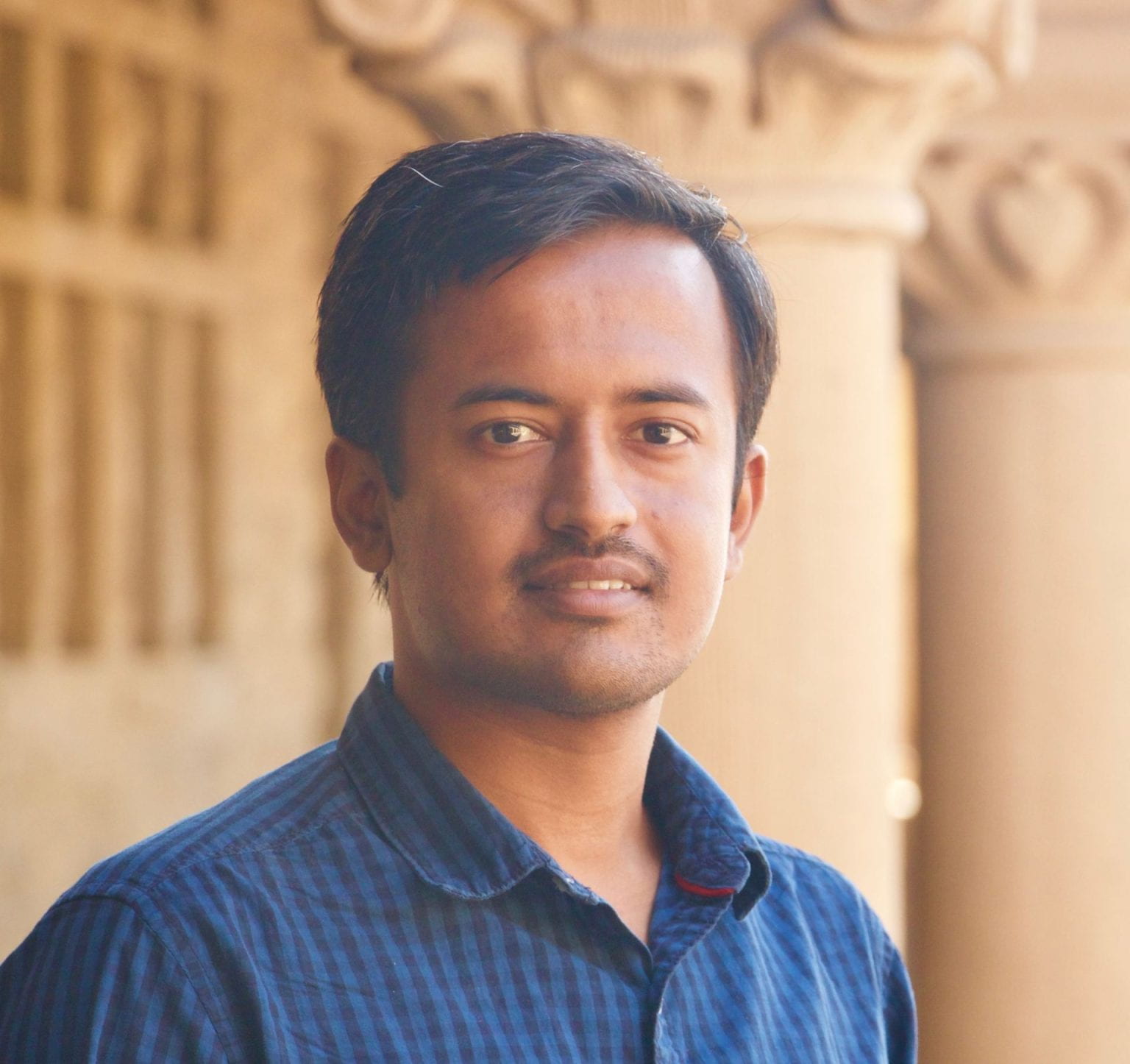
Suhas S. Jain is an Assistant Professor in the Woodruff School of Mechanical Engineering at Georgia Tech. He received his bachelor’s from NIT-Karnataka (India) in 2014, M.S. and Ph.D. from Stanford University in 2018 and 2022, respectively, all in mechanical engineering. Before coming to Georgia Tech, he was a postdoctoral fellow at the Center for Turbulence Research, Stanford University (2022-2023), a researcher at the Institute of Fluid Dynamics, Helmholtz-Zentrum Dresden-Rossendorf, Germany (2014-2015), and a project assistant at the Indian Institute of Science (2015-2016).

His research interests include computational modeling of fluid flows (multiphase flows; turbulent flows; compressible flows; and fluid-structure interaction) with a current focus on modeling atomization, sprays, and phase change for propulsion applications; ice accretion and aerodynamics for sustainable energy and aerospace design; and air-sea interaction modeling for understanding climate change; and modeling of fluid-solid and solid-solid systems for biomedical and high-speed applications. Through the integration of numerical modeling, high-performance computing, and data-driven approaches, Suhas and his group aim to address key challenges in these areas.

Assistant Professor
Additional Research
  • Computational Modeling
  • Machine Learning
Suhas
Jain
Show Regular Profile

Felix Herrmann

Felix Herrmann
felix.herrmann@gatech.edu
Website

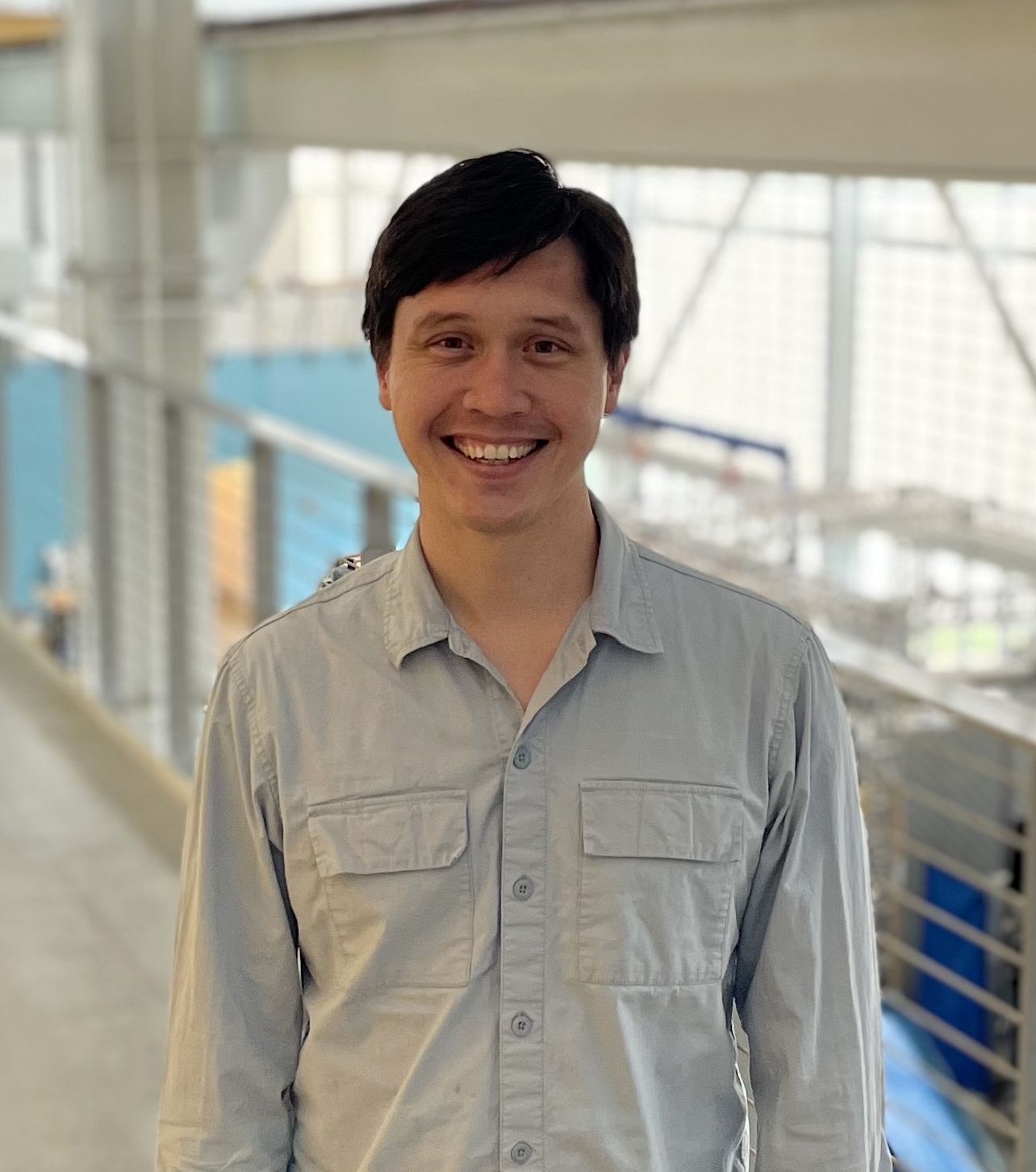
Dr. Felix J. Herrmann is Georgia Research Alliance Eminent Scholar in Energy and a professor at the Georgia Institute of Technology with appointments in the Schools of Earth and Atmospheric Sciences, Computational Science and Engineering, and Electrical and Computer Engineering. Dr. Herrmann will be the 2019 Distinguished Lecturer of the Society of Exploration Geophysicists (SEG). 

Dr. Herrmann holds a M.Sc. and Ph.D. in Engineering Physics from the Delft University of Technology. He completed his postdoctoral studies at Stanford University and MIT before becoming a professor at the University of British Columbia's Department of Earth, Ocean, and Atmospheric Sciences. He joined the faculty of the Georgia Institute of Technology in October 2017. 

During his career, Dr. Herrmann has worked on the development of the next-generation of industrial acquisition and computational imaging technologies designed to improve the image quality in complex geological areas at vastly reduced costs and environmental impact. Aside from driving innovations, by leveraging recent developments in the mathematical and computational sciences, Dr. Herrmann has extensive experience working with industry. At the University of British Columbia, he was the founder and director of the Seismic Laboratory for Imaging and Modelling (SLIM), which hosted the industry Consortium SINBAD. Under his guidance, SLIM became a world leader in the successful integration of transformative scientific developments, such as compressive sensing, randomized linear algebra, and machine learning, into innovative approaches that tackle the most challenging imaging problems. With his move to the Georgia Institute of Technology, Dr. Herrmann plans to broaden his research program to include other imaging modalities. Dr. Herrmann was a long program participant at UCLA's Institute for Pure and Applied Mathematics in the Fall of 2004 and has been involved in public-private partnerships around the world. He serves on the editorial board of Geophysical Prospecting and on the SEG Research Committee.

Professor, Georgia Research Alliance Eminent Scholar in Energy
Additional Research
  • Inverse Problems
  • Seismic Modeling
Research Focus Areas
University, College, and School/Department
Felix
Herrmann
Show Regular Profile

Benjamin Emerson

Benjamin Emerson
bemerson@gatech.edu
Departmental Bio

Ben Emerson completed his Ph. D. in Aerospace Engineering from Georgia Tech in August, 2013. Since then, Ben has worked as a Research Engineer at the Ben T. Zinn Combustion Lab at Georgia Tech. Ben’s research portfolio includes projects on combustion instabilities, alternative fuels, and combustion system R&D with a core focus and motivation of cleaner combustion. Ben’s research primarily consists of three core competencies, which are experimental combustion system development, combustor diagnostics, and combustion theory and modeling. Ben’s combustion system development work spans a wide variety of applications, from small lab-scale burners to combustor rigs that test full-scale gas turbine combustor hardware. His combustor diagnostics work encompasses the state of the art optical diagnostic techniques for reacting flow field measurements and imaging, and aims to implement those techniques in both laboratory-scale and large-scale rig tests. Finally, Ben’s combustion theory and modeling work is geared towards analysis of experimental datasets, development of reduced-order engineering tools, and the development of a suite of hydrodynamic stability analysis tools. Together, these core competencies form the pillars of Ben’s research, which facilitates the design of cleaner-burning combustion systems.

Senior Research Engineer, Guggenheim School of Aerospace Engineering
Phone
404-385-0413
Office
CNES, 216
Additional Research

Hydrogen Utilization, Hydrogen combustion in gas turbines, combustion instabilities, alternative fuels, cleaner combustion system R&D, experimental combustion system development, combustor diagnostics, and combustion theory and modeling

Benjamin
Emerson
Show Regular Profile

Shannon Yee

Shannon Yee
shannon.yee@me.gatech.edu
ME Profile Page

Shannon Yee began as an Assistant Professor in the George W. Woodruff School of Mechanical Engineering in January 2014. He completed his Ph.D. at the University of California - Berkeley under the supervision of Prof. Arun Majumdar, Prof. Chris Dames, and Prof. Rachel Segalman. In 2010, he was named the first fellow to the U.S. Dept. of Energy 's Advanced Research Project Agency - Energy (ARPA-E) assisting to form the agency in its inaugural year. In 2008 he was awarded the prestigious Hertz Fellowship to support his graduate studies and research in energy. Yee received his Master 's degree in Nuclear Engineering in 2008 from The Ohio State University where he was a U.S. Dept. of Energy Advanced Fuel Cycle Initiative Fellow. He received his Bachelor 's degree in Mechanical Engineering in 2007, also from The Ohio State University.

Professor, Woodruff School of Mechanical Engineering
Phone
404.385.2176
Office
Love 307
Additional Research

Heat Transfer; Combustion and Energy Systems; Micro and Nano Engineering; Nuclear & Radiological Engineering

Google Scholar
https://scholar.google.com/citations?hl=en&user=GSDT2XYAAAAJ&view_op=list_works&sortby=pubdate
The Scalable Thermal Engineering Lab (STEEL)
Shannon
Yee
Show Regular Profile

Meilin Liu

Meilin Liu
meilin.liu@mse.gatech.edu
MSE Profile Page

Liu's primary interests lie in fundamental understanding of the effect of structure, defects, and microstructure on transport and electrical properties of surfaces and interfaces. In particular, he is interested in developing new materials for energy storage and conversion, for chemical sensing, and for hydrogen production and separation In addition, he is interested in mathematical modeling of mass and charge transport in solid electrochemical systems and polarization at interfaces.

Liu's current research activities include (1) in-situ characterization of gas-solid interactions using FTIR/Raman spectromicroscopy, impedance spectroscopy, and mass spectrometry; (2) study of transport phenomena and kinetics in ionic and electronic conductors and the effect of imperfections on electrophysical and electrochemical properties; (3) fabrication and characterization of ceramic membranes, thin films, and coatings; mesoporous and nanostructured electrodes and interfaces; and solid-state ionic devices; and (4) development of new materials for high-selectivity gas sensors, for high-energy-density batteries, for low-temperature solid-state fuel cells, and for high temperature PEM fuel cells.

Liu holds 20 U.S. patents and a number of patent applications, co-edited seven proceedings volumes, and published more than 250 papers in reputed journals, book chapter, and conference proceedings. He has also been the co-organizer of 11 international symposia/workshops on materials for energy storage and conversion devices, sensors, and gas separation.

Liu is a fellow of the American Ceramic Society (ACerS) and the Electrochemical Society (ECS). He is the recipient of a Ross Coffin Purdy Award (American Ceramic Society, 2010), an NASA Tech Brief Award (2007), an invited participant, US-Japan Frontiers of Engineering (National Academy of Engineering, 2007); a Crystal Flame Innovation Award in Research (FuelCell South, 2005); an Outstanding Achievement in Research Program Development Award (Georgia Tech, 2003), A Sustained Research Award (Sigma Xi, 2003), a senior Teaching Fellow (Georgia Tech, 2002), a Best Faculty Paper Award (Sigma Xi, 2001), an Outstanding Faculty Research Author Award (Georgia Tech, 1999), an invited participant, Frontiers of Engineering (National Academy of Engineering, 1997), a Best MS Thesis Advisor Award (Sigma Xi, 1996), a National Young Investigator Award (NSF, 1993-98), and a Scholastic Achievement Award (Golden Gate Chapter of ASM, 1986).

Regents' Professor, School of Materials Science and Engineering
Hightower Chair, School of Materials Science and Engineering
Phone
404.894.6114
Office
Love 258
Additional Research

Energy Storage; Energy Conversion; Fuel Cells; Batteries; Thin Films; Hydrogen

Google Scholar
https://scholar.google.com/citations?hl=en&user=1YvZ8LAAAAAJ&view_op=list_works&sortby=pubdate
Liu Research Group
Meilin
Liu
Show Regular Profile

Adam Stulberg

Adam Stulberg
adam.stulberg@inta.gatech.edu
Website

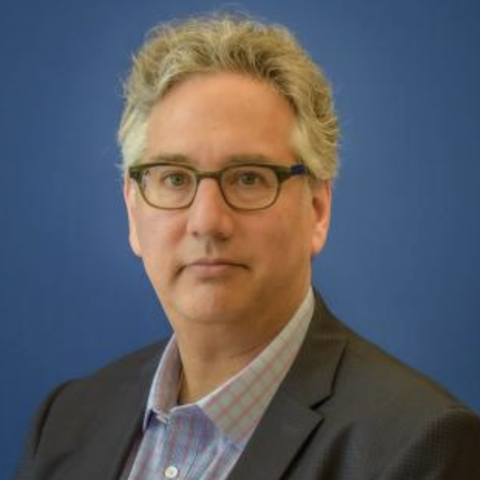
Dr. Stulberg is the Sam Nunn School Chair and Professor in the Sam Nunn School of International Affairs. He teaches undergraduate and graduate courses on international security, Russia/Eurasian politics and security affairs, nuclear (non)proliferation, and energy and international security, as well as inter-disciplinary courses on science, technology, and international security policy. His current research focuses on the geopolitics of oil and gas networks, energy security dilemmas and statecraft in Eurasia, Russia and "gray zone" conflicts, new approaches to strategic stability, internationalization of the nuclear fuel cycle, and implications of emerging technologies for strategic stability and international security.

Dr. Stulberg earned his Ph.D. in Political Science from the University of California, Los Angeles (UCLA), as well as holds an M.A. in International Affairs from Columbia University, an M.A. in Political Science from UCLA, and a B.A. in History from the University of Michigan. He served as a Political Consultant at RAND from 1987-1997, and as a Senior Research Associate at the Center for Nonproliferation Studies (CNS), Middlebury Institute of International Studies at Monterey (1997-1998). He has worked closely with former Senator Sam Nunn drafting policy recommendations and background studies on future directions for the U.S. Cooperative Threat Reduction Program, building regional and energy security regimes in Central Asia and the South Caucasus, and engaging Russia’s regional power centers. Dr. Stulberg was a post-doctoral fellow at CNS; policy scholar at the EastWest Institute; and has been a consultant to the Carnegie Corporation of New York and the Office of Net Assessment, Office of the U.S. Secretary of Defense. Dr. Stulberg has authored and edited five books, and has published widely in leading academic and policy journals.  In addition, he served on the Executive Committee of the Nuclear Nonproliferation Technical Group, American Nuclear Society (2012-14).

Dr. Stulberg maintains a conspicuous presence both inside and outside of the classroom at Georgia Tech. He is a two-time recipient of the INTA Graduate Student Association’s “Professor of the Year,” and has received the same honor from Sigma Iota Rho, the international affairs undergraduate honor society. Dr. Stulberg was a CETL teaching fellow, and a Hesburgh Teaching Fellow.  He also was the recipient of the 2010 Ivan Allen Jr. Legacy Faculty Award in recognition for his scholarship, as well as a “demonstrated commitment to serving students at the College, the Institute, and in the Community.”  Dr. Stulberg has served on numerous school, college, and campus-wide committees, including as Chair of the Sam Nunn-Bank of America Policy Forum (2008, 2010, 2012, 2014, 2016, 2020-21).  He was previously on the Faculty Advisory Board and is currently an Associate Director of the Strategic Energy Institute (a GT Institute-wide Center). In 2016, the Neal Family Endowed Chair was bestowed upon Dr. Stulberg; he was appointed Chair of the Sam Nunn School of International Affairs in July 2019.

Chair, Sam Nunn School of International Affairs
Professor, Sam Nunn School of International Affairs
Co-Director, Center for International Strategy, Technology, & Policy
SEI Senior Advisor: Social Sciences Liaison
Phone
(404) 385-0090
Additional Research

Nuclear; Policy/Economics

Adam
Stulberg
Show Regular Profile

Scott Duncan

Scott Duncan Portrait
sduncan@asdl.gatech.edu
Departmental Bio

Dr. Scott Duncan is part of the Research Faculty within the School of Aerospace Engineering at the Georgia Institute of Technology, where he is a member of ASDL’s Digital Engineering Division. In his current position, Dr. Duncan leads and manages multi-disciplinary research teams in projects relating to terrestrial infrastructure systems, including community energy systems comprising grid-interactive efficient buildings, district thermal systems, distributed energy resources (DERs), and microgrids. These teams assess and support the design of these systems by applying techniques from systems engineering, data analysis, modeling and simulation, visualization, optimization, digital twinning, and model-based systems engineering. Dr. Duncan co-manages, with Dr. Jung-Ho Lewe, the Energy Infrastructure and Data Engineering group, which is part of the long-running Smart Campus Initiative between ASDL and GT Infrastructure & Facilities. Dr. Duncan is a Member of the American Institute of Aeronautics and Astronautics (AIAA), serving on its the Terrestrial Energy Systems (TES) Technical Committee. He is also the Initiative Lead for GT’s Strategic Energy Institute (SEI) overseeing research operations for the Tech Square Microgrid.

Senior Research Engineer, Guggenheim School of Aerospace Engineering
SEI Lead: Microgrids
Phone
(404) 385-7707
Additional Research

Smart Infrastructure

Scott
Duncan
Show Regular Profile

Dan Molzahn

Dan Molzahn
molzahn@gatech.edu
Website

Daniel Molzahn joined the faculty of the School of Electrical and Computer Engineering at Georgia Tech in Spring 2019. Prior to this position, Dr. Molzahn was a computational engineer at Argonne National Laboratory in the Center for Energy, Environmental, and Economic Systems Analysis (CEEESA), where he currently holds an affiliate position. He was a Dow Postdoctoral Fellow in Sustainability in the Electrical Engineering and Computer Science Department at the University of Michigan. He received the B.S., M.S., and Ph.D. degrees in Electrical Engineering and the Master’s of Public Affairs degree from the University of Wisconsin-Madison, where he was a National Science Foundation Graduate Research Fellow. In his spare time, Dr. Molzahn enjoys hiking, waterskiing, and climbing. Also, as a shareholder of the world's greatest sporting franchise, he keeps an eye on his investment by watching and attending football games of the 13-time-champion Green Bay Packers football team.

Assistant Professor, School of Electrical and Computer Engineering
SEI Lead: Energy Club
Phone
(404) 894-1876
Additional Research

Building Technologies; Nuclear

Dan
Molzahn
Show Regular Profile