Usha Nair-Reichert

Usha Nair-Reichert
usha.nair@gatech.edu
Curriculum Vitae

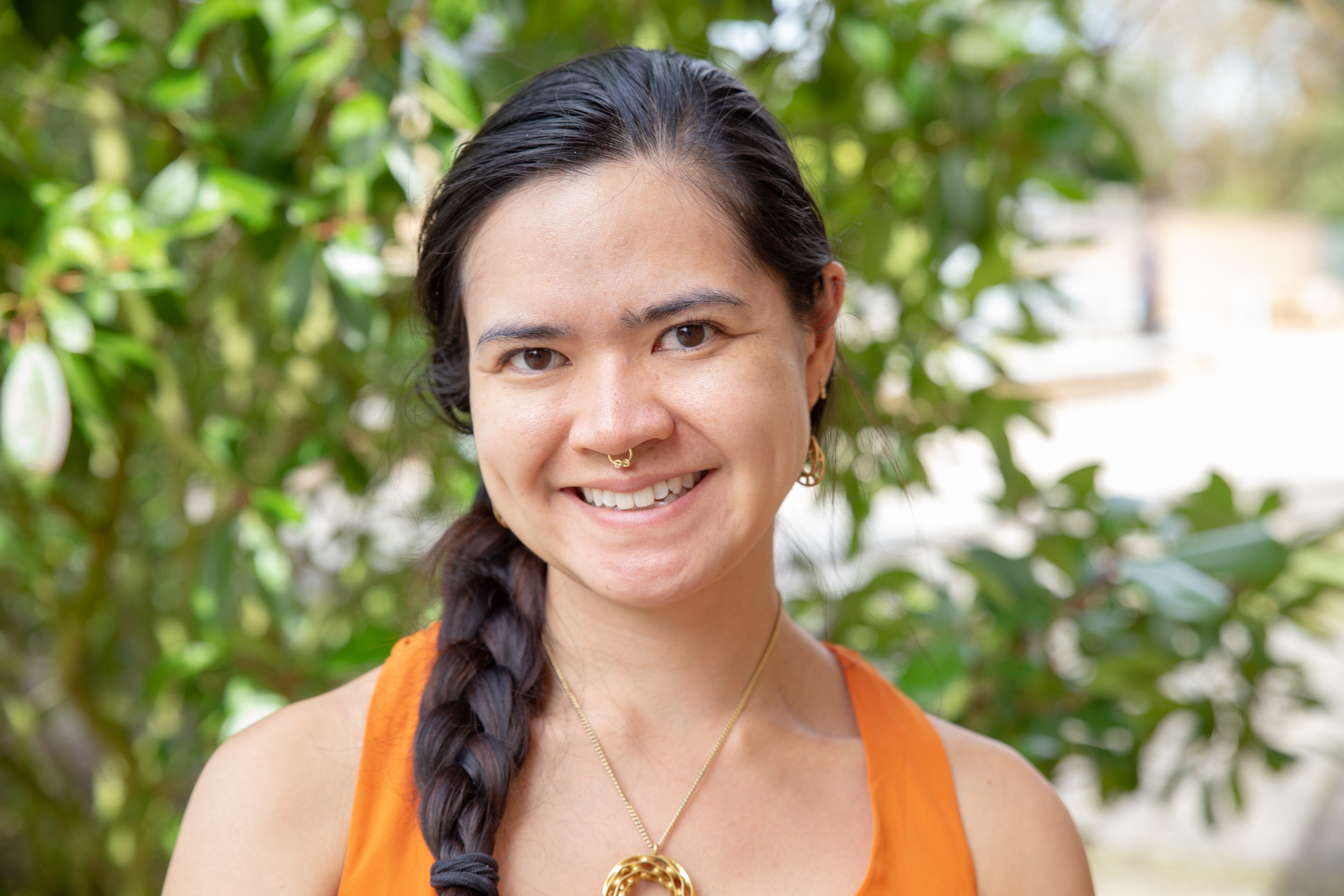
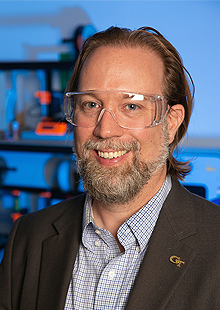
Usha Nair-Reichert is an Associate Professor in the School of Economics. Her current research interests include (i) innovation ecosystems (ii) firm strategies related to innovation, globalization of R&D, trade, foreign direct investment, technology licensing and acquisition, and sustainability (iii) environmental regulations and their impact on firm strategy, innovation, trade and foreign direct investment (iv) partnerships, policies and collaborations for economic development, with specific focus on education, infrastructure, and health care.

Nair-Reichert worked on funded projects related to supply chains, innovation and efficiency gains in the pulp and paper industry, biotechnology, telecommunications, energy, affirmative action, and educational outcomes.  She has received funding from sources such as the Center for Paper Business and Industry Studies, Center for International Business Education and Research, and Power4Georgians. She recently received a Fulbright Specialist’s award for a project in Poland.

Nair-Reichert has published in peer reviewed journals including the Journal of International Economics, Review of Economics and Statistics, Oxford Bulletin of Economics and Statistics, Research Policy, International Organization, World Development and Review of International Economics. She is a member of the American Economic Association, International Economics and Finance Society, the European Economics and Finance Society, and the Association of Indian Economic and Financial Studies. She also serves on the Advisory Board of the European Economics and Finance Society. 

Nair-Reichert obtained her Ph.D. in Economics from the Krannert School of Management at Purdue University specializing in international trade, international business, econometrics and economic development. She joined the faculty at the School of Economics at Georgia Institute of Technology in 1995.  She served as interim School Chair during the academic year 2011-12.  As part of a select leadership program of the University System of Georgia, she was also an Executive Leadership Institute Scholar from Georgia Tech during 2011-2012.  She is a faculty associate with the Science, Technology and Innovation Policy Program at Georgia Tech and a core faculty member at the Center for International Business Education and Research (CIBER) at Georgia Tech. 

Prior to her graduate work at Purdue, she was employed in the banking sector in India where she has worked in areas related to trade and foreign exchange regulations, imports and exports, multinational investment, technology transfer, and introduction and integration of computerized check processing technologies.

Nair-Reichert has served as a trustee at The Westminster Schools,  the Trinity School  and the Georgia Tech Athletics Association Board. She is also a member of SHECON, a nonprofit group working with micro finance lending and economic development projects in Haiti. She enjoys reading, traveling, and experiencing new cultures. She is an ardent believer in the power of education to inspire people, change lives, and transform society.

Associate Professor
Office
Old CE Building, Room 206
Research Affiliations
Economic Development
Education
Foreign Direct Investment
Immigration
Innovation
International Trade
Technology Transfer
Usha
Nair-Reichert
Show Regular Profile

Florian Schäfer

Florian Schafer
florian.schaefer@cc.gatech.edu
Website

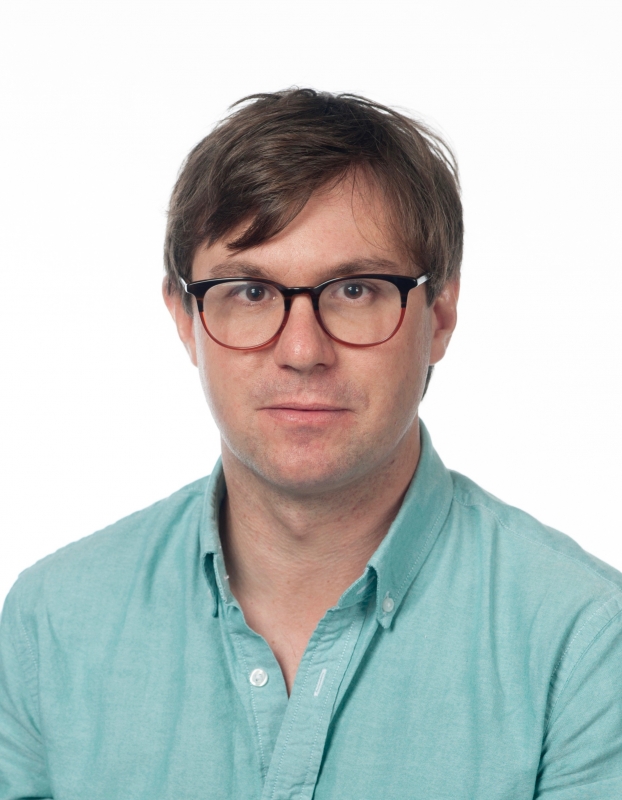
Florian Schäfer is an assistant professor in the School of Computational Science and Engineering at Georgia Tech. Prior to joining Georgia Tech, he received his Ph.D. in applied and computational mathematics at Caltech, working with Houman Owhadi. Before that, he received Bachelor’s and Master’s degrees in Mathematics at the University of Bonn. His research interests lie at the interface of numerical computation, statistical inference, and competitive games.

Assistant Professor
Research Affiliations
numerical analysis, computational statistics, multi-agent optimization, game-theoretic approaches in deep learning
Florian
Schäfer
Show Regular Profile

Richard Barke

Richard Barke
barke@gatech.edu

Richard Barke is an Associate Professor in the School of Public Policy. He received his BS in Physics from the Georgia Institute of Technology with a minor in geophysics, launching an interest in the many intersections between science and public policy. He obtained his MA and PhD in Political Science from the University of Rochester. He taught at the University of Houston before returning to Georgia Tech where he chaired the creation of the Ivan Allen College and the School of Public Policy and has served as school chair and as Associate Dean of IAC. He was a consultant to the Carnegie Commission on Science, Technology, and Government on reforming the congressional science budget process and the processes by which Congress receives scientific and technology advice and was a visiting scholar on similar matters at the University of Ghent, Belgium. His consulting and sponsored research has included companies subject to federal and state regulations; the Houston Area Research Center; the US Departments of Commerce, Energy, and the Army; the Belgian National Fund for Scientific Research; the Alfred P. Sloan Foundation; and seven National Science Foundation grants. 

His research interests focus on the regulation of risk, the roles of politics within science, and of science within politics. He has presented his work at more than one hundred scholarly panels and conferences. In addition to a dozen book chapters Dr. Barke has published in Risk Analysis; Minerva; Social Science Quarterly; Policy Studies Journal; Science, Technology, and Human Values; and Public Choice and is the author of Science, Technology, and Public Policy (CQ Press) and co-author of Governing the American Republic (St. Martin's). Among his awards are Georgia Tech's Outstanding Service Award, the IAC Faculty Legacy Award, ANAK Faculty of the Year, and the Georgia Tech Student Government Association Faculty of the Year Award (twice). He teaches courses on political processes, intergenerational policy, ethics and risk, and regulatory policy, and has team-taught courses with faculty from all six colleges at Georgia Tech. His current work is on long-term policy-making.

Associate Professor, School of Public Policy
Office
DM Smith G07
Research Affiliations
American and Comparative Regulatory Policy, American Politics: Political Processes, Elections, Higher Education Policy, Long-term Policy, Political Culture, Research Policy, Risk Analysis
Ivan Allen College Profile
Richard
Barke
Show Regular Profile

D. Zeb Rocklin

D. Zeb Rocklin
zeb.rocklin@physics.gatech.edu
Research Website

I have a broad range of interests in soft condensed matter physics and adjacent fields like statistical physics, physics of living systems and hard condensed matter. My particular focus is on the relationship between the geometric structure of a system and its mechanical response. Both biological and engineered systems often have some structure, such as networks of struts, particles jammed together or patterns of creases in thin sheets, that grant them flexibility and strength with a minimum of weight. These structures can lead to subtle and surprising mechanical response:

Assistant Professor, School of Physics
IMS Initiative Lead, Mechanical Metamaterials
Phone
404.385.8104
Additional Research

Condensed matter physics, statistical physics, physics of living systems, and hard condensed matter.

University, College, and School/Department
Zeb
Rocklin
Show Regular Profile

Arash Yavari

Arash  Yavari
arash.yavari@ce.gatech.edu
Geometric Solid Mechanics Group

Professor Yavari joined the School of Civil and Environmental Engineering at the Georgia Institute of Technology in January 2005. He received his B.S. in Civil Engineering from Sharif University of Technology, Tehran, Iran in 1997. He continued his studies at The George Washington University where he obtained an M.S. in Mechanical Engineering in 2000. He then moved to Pasadena, CA and obtained his Ph.D. in Mechanical Engineering (Applied Mechanics option with minor in Mathematics) from the California Institute of Technology in 2005. Professor Yavari is a Fellow of the Society of Engineering Science and a member of the American Academy of Mechanics.

Professor Yavari's interests are in developing systematic theories of discrete mechanics for crystalline solids with defects. Defects play a crucial role in determining the properties of materials. The development of atomistic methods including density functional theory, bond-order potentials and embedded atom potentials has enabled a detailed study of such defects. However, much of the work is numerical and often with ad hoc boundary/far-field conditions. Specifically, a systematic method for studying these discrete yet non-local problems is lacking. Design in small scales requires solving inverse problems and this is not possible with purely numerical techniques. From a mechanics point of view, defective crystals are modeled as discrete boundary-value problems. The challenging issues are extending the existing techniques from solid state physics for non-periodic systems, new developments in the theory of vector-valued partial difference equations, existence and uniqueness of solutions of discrete boundary-value problems and their symmetries, etc. The other efforts in this direction are understanding the geometric structure of discrete mechanics and its link with similar attempts in the physics and computational mechanics literatures and investigating the rigorous continuum limits of defective crystals

Professor, School of Civil and Environmental Engineering
Phone
404.894.2436
Office
Mason 4164
Additional Research

Data AnalyticsModelingStructural MaterialsNonlinear elasticity and anelasticityGeometric mechanicsComputational mechanicsMechanics of bulk and surface growth (accretion)

Research Focus Areas
Google Scholar
https://scholar.google.com/citations?hl=en&user=c3D1_uQAAAAJ&view_op=list_works&sortby=pubdate
CEE Profile Page
Arash
Yavari
Show Regular Profile

Amanda Stockton

Amanda Stockton
astockto@gatech.edu
https://sites.gatech.edu/stocktonlab/

Education
B.S., Chemistry, Massachusetts Institute of Technology, 2004; B.S., Aerospace Engineering, Massachusetts Institute of Technology, 2004; M.A., Chemistry, Brown University, 2006; Ph.D., Chemistry, University of California Berkeley, 2010

Research
Dr. Stockton joined the School of Chemistry and Biochemistry at the Georgia Institute of Technology in January 2015. Her research plans include (1) instrument development for in situ organic analysis in the search for extraterrestrial life, (2) microfluidic approaches to experimentally evaluating hypotheses on the origin of biomolecules and the emergence of life, and (3) terrestrial applications of these technologies for environmental analysis and point-of-care diagnostics.

Associate Professor
Phone
(404) 894-4090
Office
MoSE 1100K
Google Scholar
https://scholar.google.com/citations?user=CQ7x2L4AAAAJ&hl=en
Amanda
Stockton
Show Regular Profile

Sabetta Matsumoto

Sabetta Matsumoto
sabetta@gatech.edu
Matsumoto Lab

Sabetta Matsumoto received her B.A., M.S. and Ph.D. from the University of Pennsylvania. She was a postdoctoral fellow at the Princeton Center for Theoretical Sciences and in the Applied Mathematics group and Harvard University. She is a professor in the School of Physics at the Georgia Institute of Technology. She uses differential geometry, knot theory, and geometric topology to understand the geometry of materials and their mechanical properties. She is passionate about using textiles, 3D printing, and virtual reality to teach geometry and topology to the public.

Associate Professor
University, College, and School/Department
Sabetta
Matsumoto
Show Regular Profile

Martin Maldovan

Martin Maldovan
maldovan@gatech.edu
ChBE Profile Page

Martin Maldovan is an associate professor in the School of Chemical and Biomolecular Engineering and the School of Physics at the Georgia Institute of Technology. He received his Ph.D. at the Massachusetts Institute of Technology (MIT) in the Department of Materials Science and Engineering. He was also a postdoctoral associate and research scientist at MIT.  Maldovan’s group is developing novel heat and mass transport processes as an enabling technology for energy converter materials and devices, micro and nanoelectronics, chemical and biological separations, and catalysis. His group focuses on designing, predicting, and controlling heat and mass transfer in rationally engineered systems with length scales ranging from macro to nano, to advance new paradigms for energy saving materials and devices.  

Associate Professor, School of Chemical and Biomolecular Engineering and School of Physics
Phone
404.385.3753
Office
ES&T L1226
Additional Research

Thermal Management; Energy Storage; Energy Conversion; Thermal Systems

University, College, and School/Department
Google Scholar
https://scholar.google.com/citations?hl=en&user=kEMlX3sAAAAJ&view_op=list_works&sortby=pubdate
Maldovan Research Group
Martin
Maldovan
Show Regular Profile

Mark Losego

Mark Losego
losego@gatech.edu
Research Website

Mark D. Losego is a professor in the School of Materials Science and Engineering at Georgia Tech. The Losego research lab focuses on materials processing to develop novel organic-inorganic hybrid materials and interfaces for microelectronics, sustainable energy devices, national security technologies, and advanced textiles. The Losego Lab combines a unique set of solution and vapor phase processing methods to convert organic polymers into organic-inorganic hybrid materials, including developing the science to scale these processes for manufacturing.  Prof. Losego’s work is primarily experimental, and researchers in his lab gain expertise in the vapor phase processing of materials (atomic layer deposition, physical vapor deposition, vapor phase infiltration, etc.), the design and construction of vacuum equipment, interfacial and surface science, and materials and surface characterization. Depending on the project, Losego Lab researchers explore a variety of properties ranging from electrical to electrochemical to optical to thermal to sorptive to catalytic and more.

Professor, MSE Faculty Fellow, and Dean’s Education Innovation Professor
Phone
404.385.3630
Additional Research

Catalysis; Cellulose Nanomaterials; Coatings; Coatings and Barriers; Corrosion & Materials Engineering; Corrosion and Reliability; Energy; Films and Coatings; Microporous Materials; Nanocellulose Applications; Nanomaterials; New Materials; Polymers; Vapor Phase Processing

Related Site
Mark
Losego
Show Regular Profile

Martin Mourigal

Martin Mourigal
mourigal@gatech.edu
Physics Profile Page

Martin Mourigal received the B.S in Materials from Ecole des Mines de Nancy in 2004. He later received his M.S. and Ph.D. in physics from Ecole Polytechnique Federale (EPFL) located in Lausanne, Switzerland in 2007 and 2011, respectively. He was also a postdoctoral research fellow in John Hopkins University from 2011 until 2014. He joined Georgia Tech in 2015 and is currently an assistant professor in the School of Physics. Mourigal's lab focuses on the study of collective electronic and magnetic phenomena in quantum materials. His research exploits the unique strengths of neutron and X-ray scattering to probe the organization and the dynamics of matter at the nanoscale.In addition to his own lab research, Mourigal is the co-director of the Georgia Tech Quantum Alliance, a university wide program that will work towards solving problems in optimization, cryptography, and artificial intelligence. Mourigal was awarded the Cullen Peck Faculty Scholar Award from Georgia Tech in 2019. He was also awarded the National Science Foundation CAREER Award for excellence as a young educator and researcher in 2018.

Professor, School of Physics
Initiative Lead, Georgia Tech Quantum Alliance
Phone
404.385.5669
Office
Howey C202
Additional Research

Quantum Materials, Micro and Nanomechanics, Ferroelectronic Materials, Materials Data Sciences, Electronics

University, College, and School/Department
Google Scholar
https://scholar.google.com/citations?hl=en&user=utYY3jYAAAAJ&view_op=list_works&sortby=pubdate
Mourigal Lab
Martin
Mourigal
Show Regular Profile