Donggang Yao

Donggang Yao
yao@gatech.edu
Website

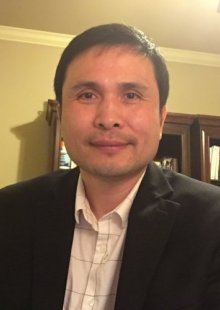
Donggang Yao is a professor in the School of Materials Science and Engineering at Georgia Institute of Technology. He received his Ph.D. and Master’s degrees both from University of Massachusetts Amherst, and his B.S. degree from Shanghai Jiao Tong University, China. He teaches and directs research in the broad area of polymer engineering. His current research focuses on polymer micromolding, fiber spinning, single-polymer composites, constitutive modeling, and process modeling and simulation. He has published over 60 journal papers and 80 conference papers on polymer processing. He was a recipient of NSF Career Award in 2003 for his research on polymer micromolding. He chaired the ASME Composites and Textile Engineering Technical Committee from 2009 to 2011. He currently serves as an associate editor for ASME Journal of Manufacturing Science and Engineering and an editorial board member for Polymer Engineering and Science.

Professor, School of Materials Science and Engineering
Phone
404.894.9076
Office
MRDC, Room 4407
Additional Research

Biocomposites; Biomanufacturing; Biomaterials; Bioprocessing; Bioproducts; Fiber Properties; Forming; Lignin & Hemicellulose; Manufacturing; Mechanics of Materials; Microfluidics; Microporous Materials; New Materials for 3D Printing; Polymer & Fiber; Process Modeling; Non-Newtonian Fluid Mechanics

About his research
Donggang
Yao
Show Regular Profile

David Rosen

David Rosen
david.rosen@me.gatech.edu
Website

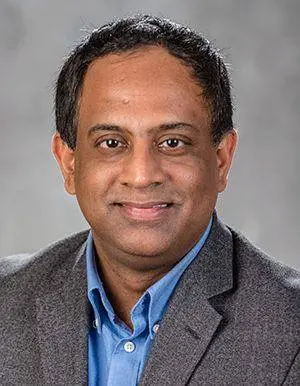
When Dr. Rosen arrived at Georgia Tech, he helped form the Systems Realization Laboratory, along with Drs. Janet Allen, Bert Bras, and Farrokh Mistree. In August 1995, Dr. Rosen was appointed the Academic Director of the Georgia Tech Rapid Prototyping and Manufacturing Institute (RPMI), where he has responsibility for developing educational and research programs in rapid prototyping. In 1998, he was appointed the Director of the RPMI. He began at Tech in Fall 1992 as an Assistant Professor.

Professor
Associate Chair for Administration
Phone
404.894.9668
Office
Callaway Manufacturing Research Center, Room 252
Additional Research
Papermaking; Energy & Water; Separation Technologies; New Materials for 3D Printing; Paper & Board Mechanics; Microfluidics; Computer-Aided Engineering; Design and Manufacturing; Virtual and rapid prototyping; intelligent CAD/CAM/CAE
David
Rosen
Show Regular Profile

Sankar Nair

Sankar Nair
sankar.nair@chbe.gatech.edu
ChBE Profile Page
Professor, School of Chemical and Biomolecular Engineering
James F. Simmons Faculty Fellow, School of Chemical and Biomolecular Engineering
Associate Chair for Industry Outreach, School of Chemical and Biomolecular Engineering
Phone
404.894.4826
Office
ES&T 2224
Additional Research

Nanomaterials; Biofuels; Carbon Capture; Catalysis; Separations Technology; Chemical Recovery; Energy & Water

Google Scholar
https://scholar.google.com/citations?hl=en&user=DCrJnGIAAAAJ&view_op=list_works&sortby=pubdate
Nair Research Group
Sankar
Nair
Show Regular Profile

Todd Sulchek

Todd Sulchek
todd.sulchek@me.gatech.edu
Sulchek Lab

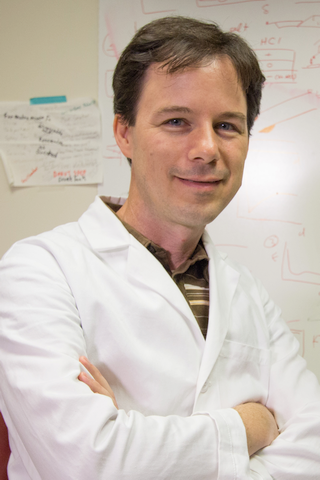
Todd Sulchek is an associate professor in Mechanical Engineering at Georgia Tech where he conducts fundamental and applied research in the field of biophysics. His research program focuses on the mechanical and adhesive properties of cell and biological systems and the development of microsystems to aid in their study. His research employs tools, including, MEMS, microfluidics, imaging, and patterning to understand or enable biological systems. His interests include cancer diagnostics, stem cell biomanufacturing, novel therapeutics, and ultracheap engineering tools. He is a member of the interdisciplinary Institute for Bioengineering and Bioscience. Dr. Sulchek also holds program faculty positions in Bioengineering and Biomedical Engineering and has a courtesy appointment in the School of Biology. He received his Ph.D. from Stanford in Applied Physics under Calvin Quate and received a bachelors in math and physics from Johns Hopkins. He was a postdoc and staff scientist at Lawrence Livermore National Lab. He joined Georgia Tech in 2008 as an Assistant Professor of Mechanical Engineering. He is a recipient of the NSF CAREER award, the BP Junior Faculty Teaching Excellence Award, the Lockheed Inspirational Young Faculty award, and the 2012 Petit Institute Above and Beyond Award. To date he has published 42 journal papers and has filed or been issued 7 patents. Prof. Sulchek is a strong supporter of undergraduate research, and he participates in a variety of undergraduate education activities including the Undergraduate Research Opportunities Program (UROP) and includes over 8 undergraduate authors in the past year.

Professor, Woodruff School of Mechanical Engineering
Appointments in Bioengineering, Biomedical Engineering, and Biology
Phone
404.385.1887
Office
Petit 2309
Additional Research

Biomedical Devices; bio-MEMS; biosensors; Drug Delivery; Advanced Characterization. Dr. Sulchek's research focuses primarily on the measurement and prediction of how multiple individual biological bonds produce a coordinated function within molecular and cellular systems. There are two complementary goals. The first is to understand the kinetics of multivalent pharmaceuticals during their targeting of disease markers; the second is to quantify the host cell signal transduction resulting from pathogen invasion. Several tools are developed and employed to accomplish these goals. The primary platform for study is the atomic force microscope (AFM), which controls the 3-D positioning of biologically functionalized micro- and nanoscale mechanical probes. Interactions between biological molecules are quantified in a technique called force spectroscopy. Membrane protein solubilized nanolipoprotein particles (NLPs) are also used to functionalize micro/nano-scale probes with relevant biological mediators. This scientific program requires the development of enabling instrumentation and techniques, which include the following: Advanced microscopy and MEMs; Nanomechanical linkers, which provide a convenient platform to control biomolecular interactions and study multivalent molecular kinetics; Biological mimetics, which provide a simple system to study cell membranes and pathogens. UltIMaTely, this work is used to optimize molecular drug targeting, improve chem/bio sensors, and develop more efficient pathogen countermeasures.

Google Scholar
https://scholar.google.com/citations?hl=en&user=J2TW91AAAAAJ&view_op=list_works&sortby=pubdate
ME Profile Page
Todd
Sulchek
Show Regular Profile

H. Jerry Qi

H. Jerry Qi
qih@me.gatech.edu
Active Materials & Additive Manufacturing Lab

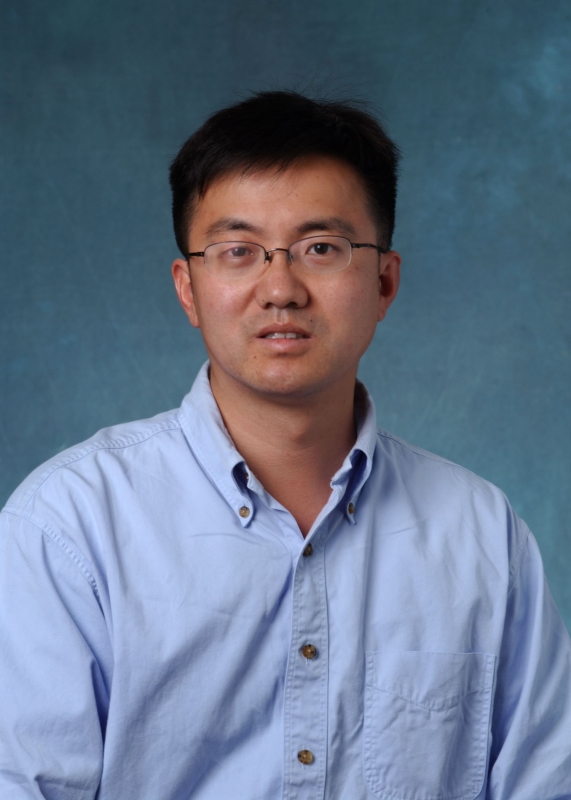
H. Jerry Qi is a professor and the Woodruff Faculty Fellow in the George W. Woodruff School of Mechanical Engineering at Georgia Institute of Technology. He received his bachelor degrees (dual degree), master and Ph.D. degree from Tsinghua University (Beijing, China) and a ScD degree from Massachusetts Institute of Technology (Boston, MA, USA). After one year postdoc at MIT, he joined University of Colorado Boulder as an assistant professor in 2004, and was promoted to associate professor with tenure in 2010. He joined Georgia Tech in 2014 as an associate professor with tenure and was promoted to a full professor in 2016. Qi is a recipient of NSF CAREER award (2007). He is a member of Board of Directors for the Society of Engineering Science. In 2015, he was elected to an ASME Fellow. The research in Qi's group is in the general area of soft active materials, with a focus on 1) 3D printing of soft active materials to enable 4D printing methods; and 2) recycling of thermosetting polymers. The material systems include: shape memory polymers, light activated polymers, vitrimers. On 3D printing, they developed a wide spectrum of 3D printing capability, including: multIMaTerial inkjet 3D printing, digit light process (DLP) 3D printing, direct ink write (DIW) 3D printing, and fused deposition modeling (FDM) 3D printing. These printers allow his group to develop new 3D printing materials to meet the different challenging requirements. For thermosetting polymer recycling, his group developed methods that allow 100% recycling carbon fiber reinforced composites and electronic packaging materials. Although his group develops different novel applications, his work also relies on the understanding and modeling of material structure and properties under environmental stimuli, such as temperature, light, etc, and during material processing, such as 3D printing. Constitutive model developments are typically based on the observations from experiments and are then integrated with finite element through user material subroutines so that these models can be used to solve complicated 3D multiphysics problems involving nonlinear mechanics. A notable example is their recent pioneer work on 4D printing, where soft active materials is integrated with 3D printing to enable shape change (or time in shape forming process). Recently, his developed a state-of-the-art hybrid 3D printing station, which allows his group to integrate different polymers and conduct inks into one system. Currently, his group is working on using this printing station for a variety of applications, including printed 3D electronics, printed soft robots, etc.

Professor, Woodruff School of Mechanical Engineering
Woodruff Faculty Fellow, Woodruff School of Mechanical Engineering
Phone
404.385.2457
Office
MRDC 4104
Additional Research

Additive/Advanced Manufacturing; micro and nanomechanics; Recycling; Soft Materials; Conducting Polymers

Google Scholar
https://scholar.google.com/citations?hl=en&user=JSjlLTgAAAAJ&view_op=list_works&sortby=pubdate
ME Profile Page
H. Jerry
Qi
Show Regular Profile