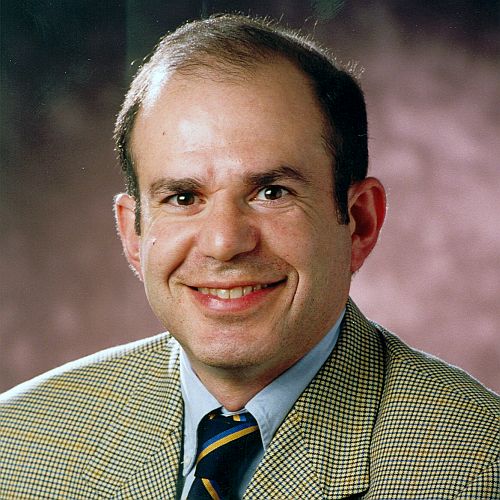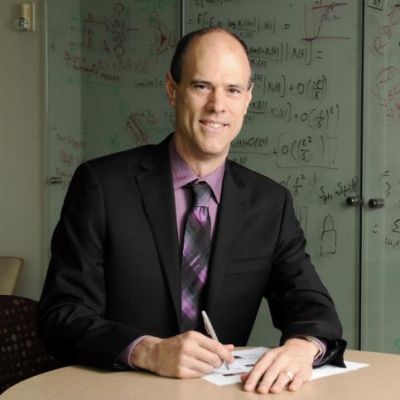
Anthony Yezzi

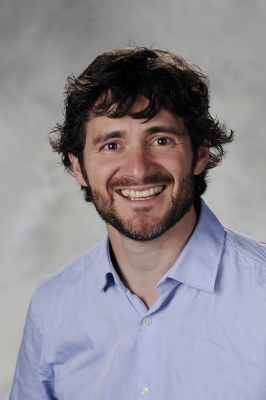
Anthony Yezzi's profile picture
anthony.yezzi@ece.gatech.edu

Professor Yezzi was born in Gainsville, Florida and grew up in Minneapolis, Minnesota. He obtained both his Bachelor's degree and his Ph.D. in the Department of Electrical Engineering at the University of Minnesota with minors in mathematics and music. After completing his Ph.D., he continued his research as a post-Doctoral Research Associate at the Laboratory for Information and Decision Systems at Massachusetts Institute of Technology in Boston, MA. His research interests fall broadly within the fields of image processing and computer vision. In particular he is interested in curve and surface evolution theory and partial differential equation techniques as they apply to topics within these fields (such as segmentation, image smoothing and enhancement, optical flow, stereo disparity, shape from shading, object recognition, and visual tracking). Much of Dr. Yezzi's work is particularly tailored to problems in medical imaging, including cardiac ultrasound, MRI, and CT. He joined the Georgia Tech faculty in the fall of 1999 where he has taught courses in DSP and is working to develop advanced courses in computer vision and medical image processing. Professor Yezzi consults with industry in the areas of visual inspection and medical imaging. His hobbies include classical guitar, opera, and martial arts.

Julian T. Hightower Chair; School of Electrical and Computer Engineering
Professor; School of Electrical and Computer Engineering
Phone
404.385.1017
Office
TSRB 427
Additional Research

Computer Vision; Image Processing; Shape Optimization; Geometric PDE's
Research Focus Areas
IRI And Role
Google Scholar
https://scholar.google.com/citations?hl=en&user=CZiW6c8AAAAJ&view_op=list_works&sortby=pubdate

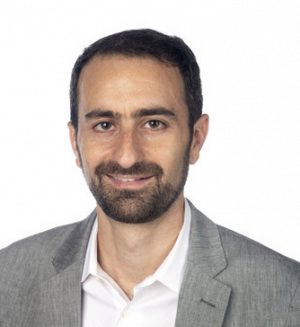
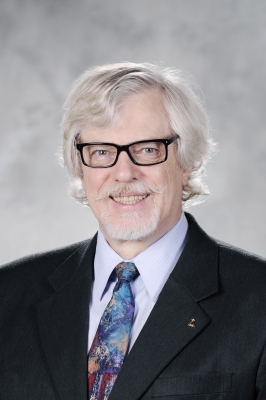
Erik Verriest

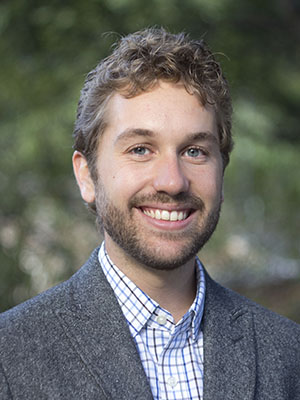
Erik Verriest's profile picture
erik.verriest@ece.gatech.edu

Erik I. Verriest received the degree of 'Burgerlijk Electrotechnisch Ingenieur' from the State University of Ghent, Ghent, Belgium in 1973, and the M.Sc. and Ph.D. degrees from Stanford University in 1975 and 1980, respectively. He was employed by the Control Systems Laboratory and the Hybrid Computation Centre, Ghent, Belgium, where he worked on process simulation and control in 1973-74. His doctoral research at Stanford was on the algebraic theory and balancing for time varying linear systems and array algorithms. He joined the faculty of Electrical and Computer Engineering at Georgia Tech in 1980. He spent the 1991-92, 1993-94 and 1994-95 academic years at Georgia Tech Lorraine. He has contributed to the application of the theory of systems over finite fields in cryptography, data compression, sensitivity analysis of array algorithms with applications in estimation and control, algorithms for optical computing. More recently he contributed to the theory of periodic and hybrid systems, delay - differential systems, model reduction for nonlinear systems, and control with communication constraints. He served on several IPC's and is a member of the IFAC Committee on Linear Systems.

Professor; School of Electrical and Computer Engineering
Phone
404.894.2949
Office
VL 492
Additional Research

Mathematical system theory

Research Focus Areas
IRI And Role
Google Scholar
https://scholar.google.com/citations?hl=en&user=fD01GVsAAAAJ&view_op=list_works&sortby=pubdate

Patricio Vela

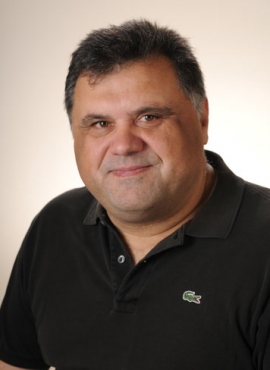
Patricio Vela's profile picture
pvela@gatech.edu

Patricio Vela was born in Mexico City, Mexico and grew up in California. He earned his bachelor of science degree in 1998 and his doctorate in 2003 at the California Institute of Technology, where he did his graduate research on geometric nonlinear control androbotics. Dr. Vela came to Georgia Tech as a post-doctoral researcher in computer vision and joined the ECE faculty in 2005. His research interests lie in the geometric perspectives to control theory and computer vision. Recently, he has been interested in the role that computer vision can play for achieving control-theoretic objectives of (semi-)autonomous systems. His research also covers control of nonlinear systems, typically robotic systems.

Associate Professor; School of Electrical and Computer Engineering
Phone
404.894.8749
Office
TSRB 441
Additional Research

Computer Vision; Control Theory

Research Focus Areas
IRI And Role
Google Scholar
https://scholar.google.com/citations?hl=en&user=qL6ycTgAAAAJ&view_op=list_works&sortby=pubdate

Samuel Coogan

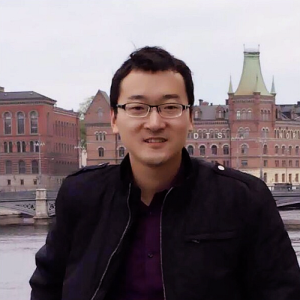
Samuel Coogan's profile picture
sam.coogan@gatech.edu

Sam Coogan received the B.S. degree in Electrical Engineering from Georgia Tech and the M.S. and Ph.D. degrees in Electrical Engineering from the University of California, Berkeley. In 2015, he was a postdoctoral research engineer at Sensys Networks, Inc., and in 2012 he spent time at NASA's Jet Propulsion Lab. Before joining Georgia Tech in 2017, he was an assistant professor in the Electrical Engineering department at UCLA from 2015–2017. His awards and recognitions include the 2020 Donald P Eckman Award from the American Automatic Control Council recognizing "an outstanding young engineer in the field of automatic control", a Young Investigator Award from the Air Force Office of Scientific Research in 2019, a CAREER Award from the National Science Foundation in 2018, and the Outstanding paper award for the IEEE Transactions on Control of Network Systems in 2017.

Demetrius T. Paris Junior Professor; School of Electrical and Computer Engineering
Associate Professor
Phone
404.385.2402
Office
TSRB 437
Additional Research

Control Theory; Formal Methods; Cyber-Physical Systems; Transportation Systems

Research Focus Areas
IRI And Role
Google Scholar
https://scholar.google.com/citations?hl=en&user=mTf9sk8AAAAJ&view_op=list_works&sortby=pubdate

Spyros Reveliotis

Spyros  Reveliotis's profile picture
spyros@isye.gatech.edu

Spyros Reveliotis is a professor in the Stewart School of Industrial & Systems Engineering at Georgia Tech. Dr. Reveliotis' research interests are primarily in discrete event systems theory and its applications, especially in the control of flexibly automated workflows and the traffic management of multi-agent systems evolving over graphs. He also has an active interest in machine learning theory and its applications. Dr. Reveliotis is an IEEE Fellow, and a member of INFORMS. Dr. Reveliotis completed his Ph.D. studies in industrial engineering at the University of Illinois at Urbana-Champaign. He also holds a B.Sc. degree in Electrical Engineering from the National Technical University of Athens, Greece, and an M.Sc. degree in Computer Systems Engineering from Northeastern University.

Professor; School of Industrial & Systems Engineering
Phone
404.894.6608
Office
Groseclose, 325
Additional Research

Discrete Event Systems; Scheduling Theory; Markov Decision Processes; Machine Learning

Research Focus Areas
Google Scholar
https://scholar.google.com/citations?hl=en&user=s-V2M-0AAAAJ&view_op=list_works&sortby=pubdate

Ye Zhao

Ye Zhao's profile picture
ye.zhao@me.gatech.edu

Dr. Ye Zhao started as an Assistant Professor at the George W. Woodruff School of Mechanical Engineering in January 2019. Previously he was a Postdoctoral Fellow at Harvard University and obtained his Ph.D. from UT Austin, where he worked on robust motion planning and decision-making for robot manipulation and locomotion problems with frictional contact behaviors. At Georgia Tech, he directs the Laboratory for Intelligent Decision and Autonomous Robots. His research interests lie broadly in planning, control, decision-making, and learning algorithms of highly agile, contact-rich, and human-cooperative robots. Dr. Zhao is especially interested in computationally efficient optimization algorithms and formal methods for challenging robotics problems with formal guarantees on robustness, safety, autonomy, and real-time performance. The LIDAR group aims at pushing the boundary of robot autonomy, intelligent decision, robust motion planning, and symbolic planning. The long-term goal is to devise theoretical and algorithmic underpinnings for collaborative humanoid and mobile robots operating in unstructured and unpredictable environments while working alongside humans. Robotic applications primarily focus on agile bipedal and quadrupedal locomotion, manipulation, heterogeneous robot teaming, and mobile platforms for extreme environment maneuvering.

Assistant Professor; School of Mechanical Engineering
Phone
404.894.3061
Office
GTMI 437
Additional Research

Robotics; Formal Methods; Optimization; Robust Motion Planning; Control

Research Focus Areas
IRI And Role
Google Scholar
https://scholar.google.com/citations?hl=en&user=YkWi5xoAAAAJ

Nader Sadegh

Nader  Sadegh's profile picture
nader.sadegh@me.gatech.edu

Dr. Sadegh's early research work was in the field of robotics and automation. His major contribution to this field was the development of a class of adaptive and learning controllers for nonlinear mechanical systems including robotic manipulators. This work, which evolved from his doctoral research, enables a robot to learn a repetitive task through practice, much like a human being, and without requiring a precise model. He later demonstrated that implementing this learning controller can significantly improve the performance of industrial robots without significantly increasing their cost or complexity, and has the potential to improve the accuracy, autonomy, and productivity of automated manufacturing systems. In addition to robotics, he developed a similar learning controller for speed regulation of copier photoreceptors as part of a project sponsored by the Xerox Corporation. Dr. Sadegh began at Tech in 1988 as an Assistant Professor.

Professor; School of Mechanical Engineering
Associate Director & Education Director; Robotics Ph.D. Program
Phone
404.894.8172
Office
GTMI, Room 475M
Additional Research

Controls; Robotics; AI; Data Analysis; Epidemiology

Research Focus Areas
Google Scholar
https://scholar.google.com/citations?hl=en&user=TS4freMAAAAJ&view_op=list_works&sortby=pubdate

Jonathan Rogers

Jonathan  Rogers's profile picture
jonathan.rogers@me.gatech.edu

Jonathan Rogers joined the Georgia Tech faculty in Fall 2013 as an Assistant Professor of Mechanical Engineering. Prior to joining Georgia Tech, he was an Assistant Professor of Aerospace Engineering at Texas A&M University from 2011 to 2013.

Associate Professor; School of Mechanical Engineering
Phone
404.385.1600
Office
MRDC Building, Room 4503
Additional Research

Automation/Mechatronics; Robotics; applied dynamics; computational automation; nonlinear control and estimation

Research Focus Areas
IRI And Role

Kinsey Herrin

Kinsey  Herrin's profile picture
kinsey.herrin@me.gatech.edu

Kinsey Herrin is a Senior Research Scientist in the Woodruff George W. Woodruff School of Mechanical Engineering. She supports a number of wearable robotics research efforts across Georgia Tech's campus and holds the ABC credential for a Certified Prosthetist/Orthotist. Kinsey is passionate about advancing state of the art technology available to individuals with physical challenges and amputations as well as the exploration of wearable technology to augment and enhance human performance. She was the former Clinical Liaison & Coordinator and academic faculty within the Georgia Tech MSPO program. She completed her residency training in orthotics and prosthetics at Children's Healthcare of Atlanta and the University of Michigan, respectively, and has over 10 years of experience working with and treating a wide variety of patients in clinical and research settings.

Principal Research Scientist; School of Mechanical Engineering
Phone
404.894.6269
Office
555 14th St Building
Additional Research

wearable technology to augment and enhance human performance.

Research Focus Areas
IRI And Role

Harish Ravichandar

Harish Ravichandar's profile picture
harish.ravichandar@cc.gatech.edu

Harish is an Assistant Professor in the School of Interactive Computing at Georgia Institute of Technology. He is also a core faculty member of Georgia Tech’s Institute for Robotics and Intelligent Machines (IRIM). His research interests span the areas of robot learning, human-robot interaction, and multi-agent systems. He directs the Structured Techniques for Algorithmic Robotics (STAR) Lab, where he and his team works on structured algorithms that help robots reliably operate and collaborate in unstructured environments alongside humans.

Assistant Professor; School of Interactive Computing
Additional Research

Robot Learning; Human-Robot Interaction; Multi-Agent Systems

Research Focus Areas
IRI And Role
Google Scholar
https://scholar.google.com/citations?hl=en&user=d2HP6SMAAAAJ&view_op=list_works&sortby=pubdate