Dhruv Batra

Dhruv Batra's profile picture
dbatra@gatech.edu

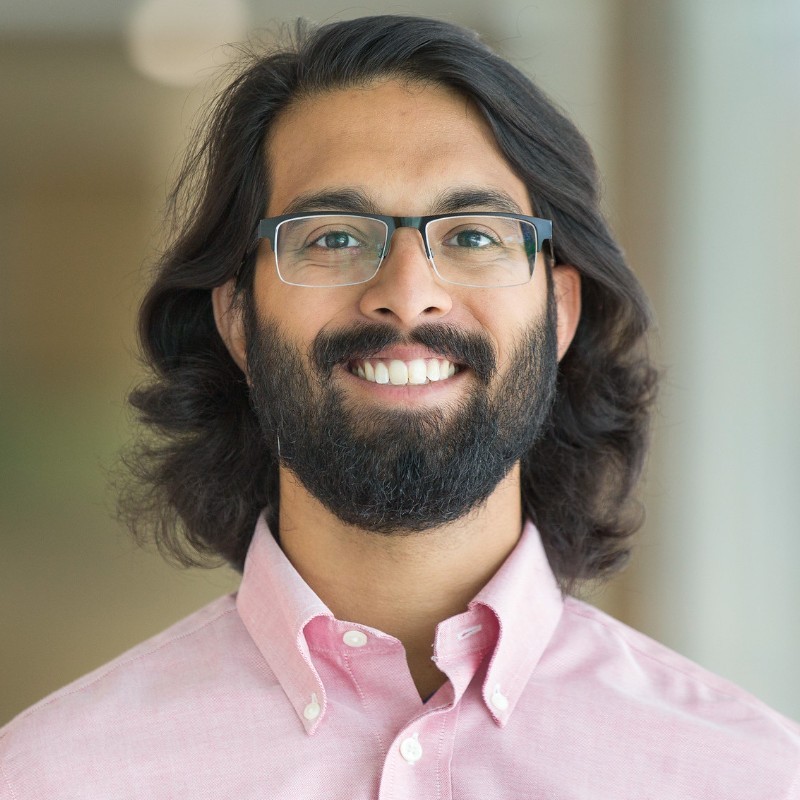
Dhruv Batra is an Associate Professor in the School of Interactive Computing at Georgia Tech. His research interests lie at the intersection of machine learning, computer vision, natural language processing, and AI, with a focus on developing intelligent systems that are able to concisely summarize their beliefs about the world with diverse predictions, integrate information and beliefs across different sub-components or `modules' of AI (vision, language, reasoning, dialog), and interpretable AI systems that provide explanations and justifications for why they believe what they believe. In past, he has also worked on topics such as interactive co-segmentation of large image collections, human body pose estIMaTion, action recognition, depth estIMaTion, and distributed optimization for inference and learning in probabilistic graphical models. He is a recipient of the Office of Naval Research (ONR) Young Investigator Program (YIP) award (2016), the National Science Foundation (NSF) CAREER award (2014), Army Research Office (ARO) Young Investigator Program (YIP) award (2014), Virginia Tech College of Engineering Outstanding New Assistant Professor award (2015), two Google Faculty Research Awards (2013, 2015), Amazon Academic Research award (2016), Carnegie Mellon Dean's Fellowship (2007), and several best paper awards (EMNLP 2017, ICML workshop on Visualization for Deep Learning 2016, ICCV workshop Object Understanding for Interaction 2016) and teaching commendations at Virginia Tech. His research is supported by NSF, ARO, ARL, ONR, DARPA, Amazon, Google, Microsoft, and NVIDIA. Research from his lab has been extensively covered in the media (with varying levels of accuracy) at CNN, BBC, CNBC, Bloomberg Business, The Boston Globe, MIT Technology Review, Newsweek, The Verge, New Scientist, and NPR. From 2013-2016, he was an Assistant Professor in the Bradley Department of Electrical and Computer Engineering at Virginia Tech, where he led the VT Machine Learning & Perception group and was a member of the Virginia Center for Autonomous Systems (VaCAS) and the VT Discovery Analytics Center (DAC). From 2010-2012, he was a Research Assistant Professor at Toyota Technological Institute at Chicago (TTIC), a philanthropically endowed academic computer science institute located on the University of Chicago campus. He received his M.S. and Ph.D. degrees from Carnegie Mellon University in 2007 and 2010 respectively, advised by Tsuhan Chen. In past, he has held visiting positions at the Machine Learning Department at CMU, CSAIL MIT, Microsoft Research, and Facebook AI Research.

Associate Professor; School of Interactive Computing
Additional Research

Machine Learning; Computer Vision; Artificial Intelligence
Google Scholar
https://scholar.google.com/citations?hl=en&user=_bs7PqgAAAAJ&view_op=list_works&sortby=pubdate

Frank Dellaert

Frank  Dellaert's profile picture
frank.dellaert@cc.gatech.edu

Dr. Dellaert does research in the areas of robotics and computer vision, which present some of the most exciting challenges to anyone interested in artificial intelligence. He is especially keen on Bayesian inference approaches to the difficult inverse problems that keep popping up in these areas. In many cases, exact solutions to these problems are intractable, and as such he is interested in examining whether Monte Carlo (sampling-based) approxIMaTions are applicable in those cases.

Professor; School of Interactive Computing
Robotics Ph.D. Coordinator; College of Computing
Phone
404.385.2923
Office
GVU Center
Additional Research

Advanced sequential Monte Carlo methods; Spatio-Temporal Reconstruction from Images; Simultaneous Localization and Mapping; Robotics; Computer Vision

Google Scholar
https://scholar.google.com/citations?hl=en&user=ZxXBaswAAAAJ&view_op=list_works&sortby=pubdate

Jaydev Desai

Jaydev Desai's profile picture
jaydev@gatech.edu

Jaydev P. Desai, Ph.D, is currently a Professor and BME Distinguished Faculty Fellow in the Wallace H. Coulter Department of Biomedical Engineering at Georgia Tech. Prior to joining Georgia Tech in August 2016, he was a Professor in the Department of Mechanical Engineering at the University of Maryland, College Park (UMCP). He completed his undergraduate studies from the Indian Institute of Technology, Bombay, India, in 1993. He received his M.A. in Mathematics in 1997, M.S. and Ph.D. in Mechanical Engineering and Applied Mechanics in 1995 and 1998 respectively, all from the University of Pennsylvania. He was also a Post-Doctoral Fellow in the Division of Engineering and Applied Sciences at Harvard University. He is a recipient of several NIH R01 grants, NSF CAREER award, and was also the lead inventor on the "Outstanding Invention of 2007 in Physical Science Category" at the University of Maryland, College Park. He is also the recipient of the Ralph R. Teetor Educational Award. In 2011, he was an invited speaker at the National Academy of Sciences "Distinctive Voices" seminar series on the topic of "Robot-Assisted Neurosurgery" at the Beckman Center. He was also invited to attend the National Academy of Engineering's 2011 U.S. Frontiers of Engineering Symposium. He has over 150 publications, is the founding Editor-in-Chief of the Journal of Medical Robotics Research, and Editor-in-Chief of the Encyclopedia of Medical Robotics (currently in preparation). His research interests are primarily in the area of image-guided surgical robotics, rehabilitation robotics, cancer diagnosis at the micro-scale, and rehabilitation robotics. He is a Fellow of the ASME and AIMBE.

Professor and Distinguished Faculty Fellow, Wallace H. Coulter Department of Biomedical Engineering
Associate Director, Institute for Robotics and Intelligent Machines
Director, Georgia Center for Medical Robotics
Phone
404.385.5381
Office
UA Whitaker Room 3112
Additional Research

Image-guided surgical robotics, Rehabilitation robotics; Cancer diagnosis at the micro-scale.

Google Scholar
https://scholar.google.com/citations?hl=en&user=hpbQN-AAAAAJ&view_op=list_works&sortby=pubdate

W. Hong Yeo

W. Hong Yeo's profile picture
woonhong.yeo@me.gatech.edu

Dr. Yeo holds the titles of G.P. "Bud" Peterson and Valerie H. Peterson Endowed Professor, as well as Harris Saunders Jr. Endowed Professor, in the Woodruff School of Mechanical Engineering and the Coulter Department of Biomedical Engineering at Georgia Tech. He is also the director of the Wearable Intelligent Systems and Healthcare Center (WISH Center) and the KIAT-Georgia Tech Semiconductor Electronics Center (K-GTSEC). Dr. Yeo's research focuses on understanding the fundamentals of soft materials, deformable mechanics, interfacial physics, manufacturing, and the integration of hard and soft materials for the development of biomedical systems. He earned his Ph.D. in mechanical engineering and genome sciences from the University of Washington in Seattle and subsequently worked as a postdoctoral research fellow at the University of Illinois at Urbana-Champaign. With over 180 peer-reviewed publications, Dr. Yeo has contributed to many prestigious journals, including Nature Materials, Nature Machine Intelligence, Nature Communications, and Science Advances. He is an IEEE Senior Member and has received numerous awards, including the Visiting Professorship from the Institute Jean Lamour at the Université de Lorraine in France, the Lucy G. Moses Lectureship Award at the Mount Sinai School of Medicine, the NIH Trailblazer Young Investigator Award, the IEEE Outstanding Engineer Award, the Emory School of Medicine Research Award, the Imlay Innovation Award, the American Heart Association Innovative Project Award, the Sensors Young Investigator Award, the Med-X Young Investigator Award, and the Outstanding Service Award from the Korea Institute for Advancement of Technology, as well as the Outstanding Yonsei Scholar Award. Dr. Yeo is also the founder of two startup companies: Huxley Medical, Inc. and WisMedical, Inc.

Professor, Woodruff School of Mechanical Engineering
Faculty, Wallace H. Coulter Department of Biomedical Engineering
Director, WISH Center
Phone
404.894.9425
Office
Marcus Nano 4133
Additional Research

Human-machine interface; hybrid materials; bio-MEMS; Soft robotics. Flexible Electronics; Human-machine interface; hybrid materials; Electronic Systems, Devices, Components, & Packaging; bio-MEMS; Soft robotics. Yeo's research in the field of biomedical science and bioengineering focuses on the fundamental and applied aspects of biomolecular interactions, soft materials, and nano-microfabrication for the development of nano-biosensors and soft bioelectronics.

Google Scholar
https://scholar.google.com/citations?hl=en&user=ryhsv18AAAAJ&view_op=list_works&sortby=pubdate

Alper Erturk

Alper Erturk's profile picture
alper.erturk@me.gatech.edu

Erturk began at Georgia Tech in May 2011 as an Assistant Professor, he was promoted to Associate Professor with tenure in 2016 and became a full Professor in 2019. Prior to joining Georgia Tech, he worked as a Research Scientist in the Center for Intelligent Material Systems and Structures at Virginia Tech (2009-2011). His postdoctoral research interests included theory and experiments of smart structures for applications ranging from aeroelastic energy harvesting to bio-inspired actuation. His Ph.D. dissertation (2009) was centered on experimentally validated electromechanical modeling of piezoelectric energy harvesters using analytical and approxIMaTe analytical techniques. Prior to his Ph.D. studies in Engineering Mechanics at Virginia Tech, Erturk completed his M.S. degree (2006) in Mechanical Engineering at METU with a thesis on analytical and semi-analytical modeling of spindle-tool dynamics in machining centers for predicting chatter stability and identifying interface dynamics between the assembly components.

Woodruff Professor, Woodruff School of Mechanical Engineering
Phone
404.385.1394
Office
Love 126
Additional Research

Structural Dynamics; Vibrations; Smart Materials & Structures; Energy Harvesting; Acoustic Metamaterials; Acoustics and Dynamics; Smart materials; Piezoelectronic Materials; Metamaterials; Energy Harvesting

Research Focus Areas
Google Scholar
https://scholar.google.com/citations?hl=en&user=OwypZqcAAAAJ&view_op=list_works&sortby=pubdate

Lena Ting

Lena Ting's profile picture
lting@emory.edu

I am an engineer and neuroscientist focused on how the brain and body cooperate to allow us to move. Fundamental abilities like standing and walking appear effortless until we–or someone we love–loses that ability. Movement is impacted in a wide range of diseases because it involves almost all parts of the brain and body, and their interactions with the environment. How we move is also highly individualized, changing across our lifetimes as a function of our experiences, and adapting in different situations. As such, assessing and treating movement impairments remains highly challenging. My approach is to dissect the complexities of how we move in health and disease by bridging what may seem to be disparate fields across engineering, neuroscience, and physiology. Our current application areas are Parkinson’s disease, stroke, aging and cerebral palsy, and we are interested in extending our work toward mild cognitive impairment and concussion.

My lab uses robotics, computation, and artificial intelligence to identify new physiological principles of sensing and moving that are enabling researchers to personalize rehabilitation and medicine. Primarily, we study people in the lab, studying brain and muscle activity in relationship to the body’s biomechanics in standing and walking. We use and develop robotic devices for assessing and assisting human movement, while interpreting brain and muscle activity to personalize the interactions. Our novel computer simulations of muscle, neurons, and joints establish a virtual platform for predicting how movements change in disease and improve with interventions. Recently, we have demonstrated the critical role of cognitive function motor impairment that may increase fall risk, suggesting that how we move and how we think may be closely related. Current projects include developing physiologically-inspired controllers to enable exoskeletons to enhance user balance, identifing individual differences that predict response to gait rehabilitation in stroke survivors, and developing more precise and physiologically-based methods to interpret clinical motor test outcomes.

Professor, McCamish Foundation Distinguished Chair in Biomedical Engineering
Co-Director, Georgia Tech and Emory Neural Engineering Center
Professor, Rehabilitation Medicine, Division of Physical Therapy
Phone
404-727-2744
Office
Emory Rehabilitation Hospital R225
Additional Research

Neuroscience Human-robot interaction

Google Scholar
https://scholar.google.com/citations?user=bCR6nLcAAAAJ&hl=en&oi=sra

Shreyas Kousik

Shreyas Kousik's profile picture
shreyas.kousik@me.gatech.edu

Shreyas Kousik is an assistant professor in the George W. Woodruff School of Mechanical Engineering. Previously, Shreyas was a postdoctoral scholar at Stanford University, working in the ASL under Prof. Marco. Kousik completed a postdoc with Prof. Grace Gao in the NAV Lab. He received his Ph.D. in Mechanical Engineering at the University of Michigan, advised by Prof. Ram Vasudevan in the ROAHM Lab and received his undergraduate degree in Mechanical Engineering at Georgia Tech, advised by Prof. Antonia Antoniou.

Kousik’s research is focused on guaranteeing safety in autonomy via collision avoidance methods for robots. His lab’s goal is to translate safety in math to safety on real robots by exploring ways to model uncertainty from autonomous perception and estimation systems and ensure that these models are practical for downstream planning and control tasks

Assistant Professor
Google Scholar
https://scholar.google.com/citations?hl=en&user=cb0xkZ4AAAAJ&view_op=list_works&sortby=pubdate

Tom Sammon

Tom Sammon's profile picture
tom.sammon@innovate.gatech.edu

Tom Sammon focuses on implementing lean manufacturing practices and helping companies develop capital equipment applications.

Project Manager; Georgia Manufacturing Extension Partnership
Phone
770.301.2100
Additional Research

Automation; Robotics; Conveyor Systems; Equipment Design; Lean Manufacturing; Plant Layout and Design; Plant Management; Project Management; Problem Solving.

Research Focus Areas
IRI And Role

N Apurva Ratan Murty

N Apurva Ratan Murty's profile picture
ratan@gatech.edu

Ratan is an Assistant Professor of Cognition and Brain Science in the School of Psychology at Georgia Tech, and the Director of the Murty Lab (murtylab.com). He obtained his PhD from Indian Institute of Science (IISc) Bangalore and was a postdoctoral researcher in the Kanwisher and DiCarlo labs at MIT before moving to Georgia Tech. Research in the Murty Lab aims to uncover the neural codes and algorithms that enable us to see. The central theme of the lab's work is to integrate biological vision with artificial models of vision. The lab combines the benefits of closed-loop experimental testing (using 3T/7T human functional-MRI) with cutting-edge computational methods (like deep neural networks, generative algorithms, and AI interpretability) toward a new computationally precise understanding of human vision. This research also guides the development of neurally mechanistic biologically constrained models aimed to uncover a better understanding of the neurobiological changes that underlie perceptual abnormalities such as agnosias.

Assistant Professor
Office
131, JS Coon Building
Research Focus Areas

Jun Ueda, Ph.D.

Jun Ueda, Ph.D. 's profile picture
jun.ueda@me.gatech.edu

Jun Ueda received his B.S., M.S., and Ph.D. degrees from Kyoto University, Japan, in 1994, 1996, and 2002 all in Mechanical Engineering. From 1996 to 2000, he was a Research Engineer at the Advanced Technology Research and Development Center, Mitsubishi Electric Corporation, Japan. He was an Assistant Professor of Nara Institute of Science and Technology, Japan, from 2002 to 2008. During 2005-2008, he was a visiting scholar and lecturer in the Department of Mechanical Engineering, Massachusetts Institute of Technology. He joined the G. W. Woodruff School of Mechanical Engineering at the Georgia Institute of Technology as an Assistant Professor in 2008 where he is currently a Professor. He received Fanuc FA Robot Foundation Best Paper Award in 2005, IEEE Robotics and Automation Society Early Academic Career Award in 2009, Advanced Robotics Best Paper Award in 2015, and Nagamori Award in 2021. 

Professor
Phone
404.385.3900
Office
Love 219